
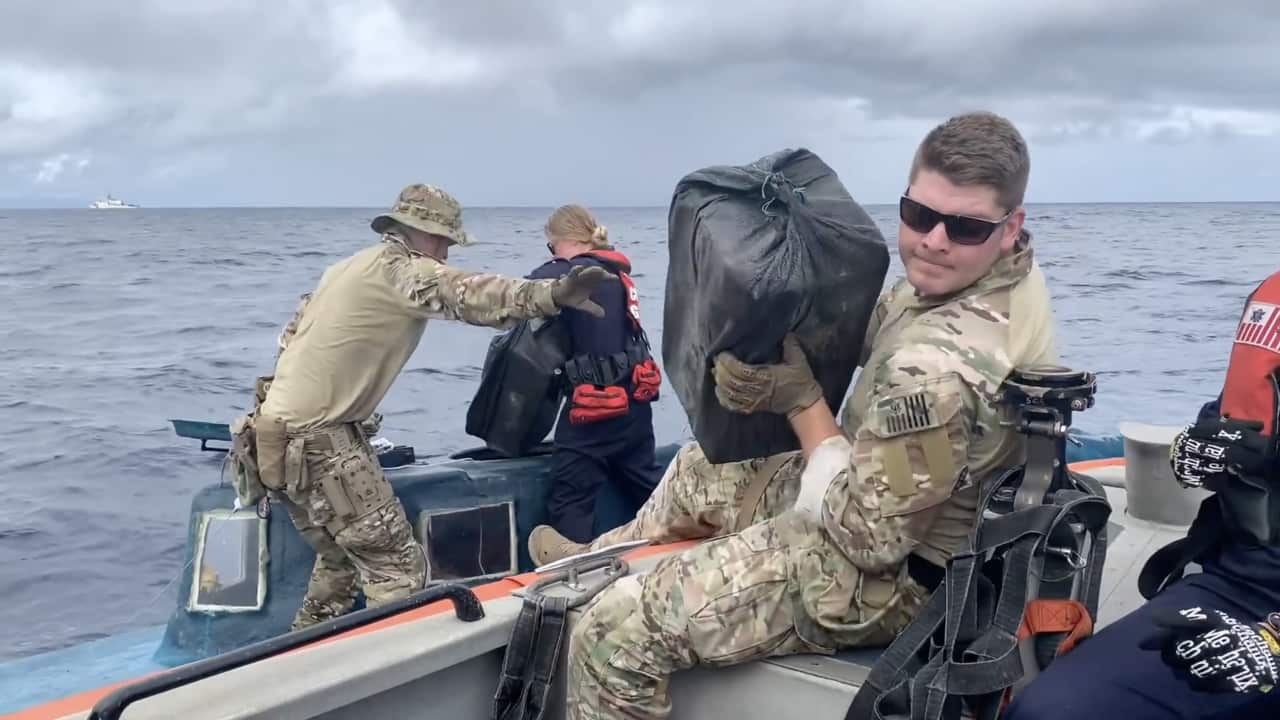

Illicit drug trafficking, diplomatic coalitions, and free trade ideology are drawing Pacific and Latin American countries closer together.
The amount of illicit drugs seized by local and international law enforcement in the Pacific has reached unprecedented levels.
This is the culmination of a developing process for many Pacific countries, which have evolved from drug trafficking routes to distribution nodes to profitable local markets.
The crisis has promoted the establishment of a Special Investigation Unit, funded by Australia and New Zealand, based in Colombia.
But transnational crime is not the only driver behind developing relationships with Pacific Islands Forum member states and Latin America.
The United States has made it very clear that they are expecting more from their allies... like Australia to step up in the region.Anna Powles, Associate Professor in the Centre for Defence and Security Studies, Massey University
With its Pacific territory of Rapa Nui, Chile became a Dialogue Partner to the Pacific Islands Forum in 2021. Four years later, it hosted the South Pacific Defence Ministers' Meeting which included representatives from Fiji, Papua New Guinea, and Tonga. Key discussion points included trends in security challenges facing the region and Chile's proposal to host a military exercise on Rapa Nui.
In March 2026, Argentina revealed it was also interested in becoming a forum Dialogue Partner. The current government follows a strong free trade ideology and is closely aligned with the United States.
But growing interest in the region from countries with limited historical connections, is creating an increasingly cluttered diplomatic environment for Pacific nations. They find themselves trying to navigate the sea lanes between the priorities of external powers and their own aspirations.