


About one in five Australian men will be diagnosed with prostate cancer in their lifetime. Understanding the prostate, your risk and the options for testing can help with early detection and treatment. In this episode of Australia Explained, learn about prostate cancer, PSA testing, treatment and support.
Key Points
- Apart from skin cancer, prostate cancer is the most common cancer in Australia.
- Prostate cancer has no specific symptoms; however benign enlargement of the prostate gland can cause difficulty passing urine.
- The Prostate Specific Antigen (PSA) blood test is the main tool used to detect prostate cancer and is recommended for men from 50 years of age.
- What is the prostate gland and why can it become a problem?
- What are the risk factors for prostate cancer and what testing is available?
- What are the treatment options for prostate cancer?
- What is it like to experience prostate cancer?
- What support is available for men with prostate cancer?
What is the prostate gland and why can it become a problem?
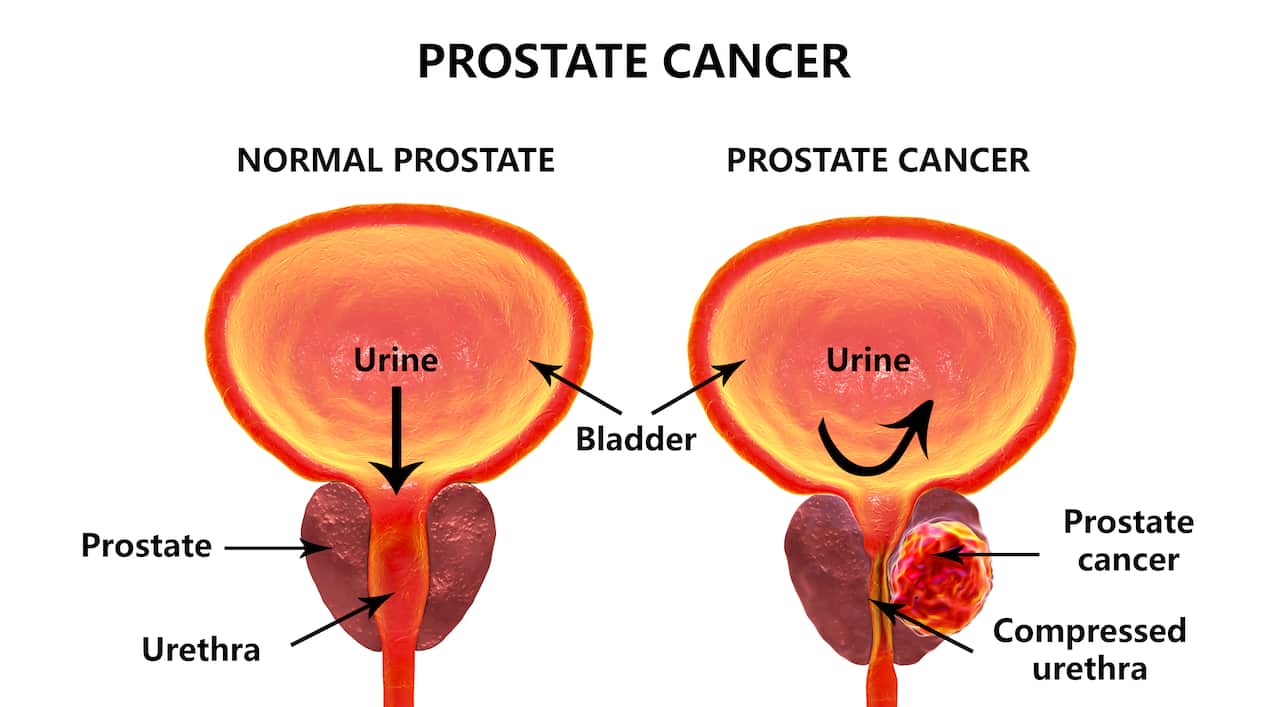
The prostate gland in men is about the size of a walnut and located within the pelvic area.
“The prostate sits just below the bladder and surrounds the tube that us men pee through, it makes the fluid that mixes with sperm to form ejaculate, and this fluid helps protect and nourish the sperm. So its key role is in ejaculation,” explains Professor Declan Murphy, a urologist and Director of Genitourinary Oncology at the Peter MacCallum Cancer Centre in Melbourne.
As men get older, the prostate commonly becomes larger. This benign enlargement can compress the urethra, the tube that carries urine out of the body, and cause changes in urination.
This can cause men to wake several times during the night to have to empty their bladder, as urology nurse practitioner Helen Crowe from the Australian Prostate Centre explains.
“That's just a benign enlargement, meaning it’s not cancer, it's just an ageing process. But this enlargement can interfere with bladder emptying, and that’s when men often become aware that they've got a prostate gland because it's starting to cause them some problems,” Ms Crowe says .
The prostate gland can also become inflamed or infected, called prostatitis, which causes discomfort in the perineal region between the penis and back passage.
“It can be quite an uncomfortable experience, and this will take men to the GP saying, I'm having trouble sleeping because of the discomfort or it's very uncomfortable if I sit down or if I exercise,” Ms Crowe says.
The prostate gland can also develop cancer, a condition which usually has no symptoms, but it’s one of the most common cancers in men in Australia.
“And while for some men, this is not a big deal and can be monitored, for other men, prostate cancer can be very serious and lead to significant symptoms and even death,” Prof Murphy explains.

What are the risk factors for prostate cancer and what testing is available?
Prostate cancer is one of the most commonly diagnosed cancers in Australia. Increasing age, family history and some inherited genetic changes can increase the risk of developing the disease.
“Globally, prostate cancer is a big problem, a recent paper predicted that between 2020 and 2040, the global incidence of prostate cancer will double,” Professor Murphy explains.
Apart from skin cancer, this is the most common cancer diagnosed in men in Australia. The likelihood by the age of 80 of a man in Australia being diagnosed with prostate cancer is about one in five.Professor Declan Murphy
The causes of prostate cancer are not fully understood, Ms Crowe says.
A PSA, or prostate-specific antigen, blood test can help detect signs of prostate cancer before symptoms develop. Australia does not currently have a national population screening program for prostate cancer, so men are encouraged to make an informed decision about PSA testing after discussing the potential benefits and risks with their GP.
From around age 50, men can speak with their GP about whether regular PSA testing is appropriate for them. Men at higher risk may be advised to have that conversation earlier.
“Don't wait for symptoms if you're concerned about prostate cancer,” Professor Murphy says.
“There are specific patients who are at higher risk of being diagnosed with prostate cancer, such as patients with a strong family history, patients with a genetic mutation... In those circumstances, we recommend that they should have a conversation about getting checked from about the age of 45 upwards.”
What are the treatment options for prostate cancer?
The management of prostate cancer depends on the stage and aggressiveness of the cancer when it is diagnosed.
“Patients should be reassured that a diagnosis of prostate cancer no longer means treatment for prostate cancer is inevitable,” Professor Murphy explains.
“Indeed, nowadays, in countries like Australia, where more than 90 per cent of patients have cancer confined to the prostate at the time of diagnosis, it is very common for us to suggest that surveillance or monitoring may be an appropriate way of managing that cancer.”
During active surveillance, patients have regular tests and check-ups to monitor the cancer. Treatment may be recommended if there are signs the cancer is progressing.
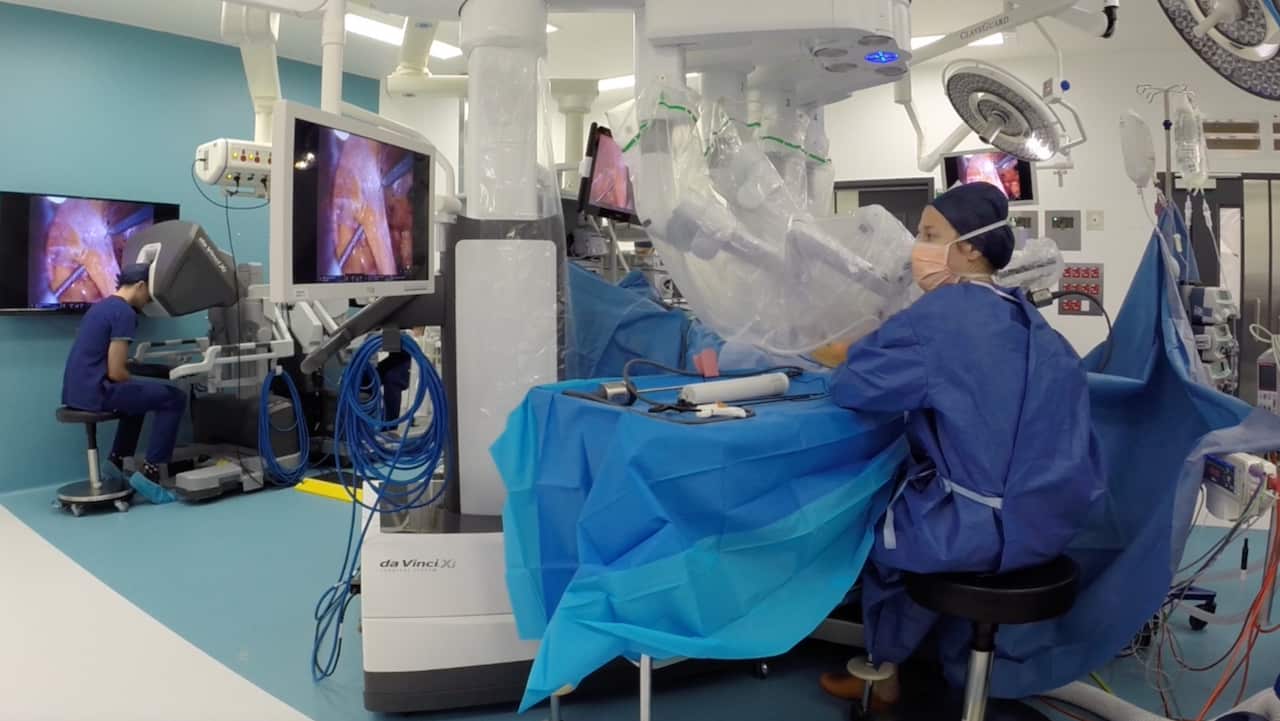
For patients with more aggressive forms of prostate cancer, surgery, radiation therapy, chemotherapy and hormone therapy are some of the treatment options which may be considered.
“There are many different tools that we now use to control this cancer. And it's fair to say that over the past 10 years or so, we have seen dramatic improvements in options available to patients, even if the cancer has already spread to other parts of the body,” Professor Murphy clarifies .
Outcomes vary depending on factors including the type and stage of the cancer, but prostate cancer diagnosed at an early stage generally has a very high survival rate.
What is it like to experience prostate cancer?
Danny Moyle was 65 years old when his GP referred him to see a urologist because his PSA levels had been gradually rising.
“We did further tests and his recommendation was for a full prostatectomy,” Mr Moyle shares.
Being told he needed surgery to remove his prostate came as a shock, for Mr Moyle.
“It really hit home because you're thinking, 'I’m losing a major part of my reproductive organs that's going to have a huge impact on my life sexually' and so on,” he explains.
After surgery, Mr Moyle's PSA began to rise again, prompting concern.
“Which means that the cancer is still there somewhere. Obviously not in the prostate, it's gone. The amazing thing about prostate cancer cells, is that it doesn't matter where they are in the body, they will continue to produce PSA, so it can be anywhere,” Mr Moyle says.
Over the next five years, Mr Moyle's doctors continued to monitor his PSA levels. His radiation oncologist eventually recommended a seven-week course of radiation therapy and six months of hormone therapy.
“That wasn't a nice several months of my life last year. And after that, I was back for regular PSA checks. My last one at the end of last year came back as undetectable, so things are looking up,” Mr Myle recalls.
Ms Crowe says men can experience a range of emotions after a prostate cancer diagnosis, including shock and uncertainty.
“Shock is very common. So we explain that the way they feel right now is absolutely normal, it's very common, but it will get easier once they get some information, once they know what the treatment plan is,” she explains.

What support is available for men with prostate cancer?
Support is available for those diagnosed with prostate cancer. Including specialist nurses who can answer questions, provide specialised care and help patients navigate treatment and ongoing monitoring.
For Mr Molye, having the support of his family was important.
“By far, my best and greatest support was my wife... And my doctors and the specialists I went through, they were all very helpful and supportive in their part of the journey,” he says.
He then went on to set up a local support group in his hometown of Bargara in Queensland
“That's made a huge difference. Having other blokes to talk to that are going through the same journey, we talk about our own personal issues and give support to each other and that's amazing. And the guest speakers that we've had have also been amazing,” Mr Moyle explains.
You can find out more information about prostate cancer and support groups near you, by visiting the Australian Prostate Centre and the Prostate Cancer Foundation of Australia.
Subscribe to or follow the Australia Explained podcast for more valuable information and tips about settling into your new life in Australia.
Do you have any questions or topic ideas? Email australiaexplained@sbs.com.au