

Supporting your child’s connection with the world’s oldest continuing living culture is one of the greatest gifts you can offer them while raising them in Australia. But if you’re new to the country, you may be unsure where to begin. Here are some starting points and ideas to help you and your child learn about Aboriginal and Torres Strait Islander peoples, cultures and history.
Key Points
- Learning about Australia’s First Nations is a process involving both child and parent
- There is a range of age-appropriate resources online to support your child’s engagement with Indigenous Australia
- Attending events, travelling mindfully and doing your own research are ways to connect with First Nations people in your area and beyond
- Making mistakes is part of the learning process, so stay curious and ask for help to understand Aboriginal and Torres Strait Islander protocols
- How can I introduce my child to Indigenous culture and history?
- How do I find events celebrating Aboriginal and Torres Strait Islander culture?
- Is there educational content on Indigenous Australia for children online?
- How can we get to know First Nations culture during a family trip?
- What if I say or do something wrong?
Understanding and valuing Aboriginal and Torres Strait Islander heritage and contemporary experiences is key to reconciliation, the process towards strengthening relationships between Australia’s First Nations and non-Indigenous peoples.
That’s why supporting your child’s connection with the world’s oldest continuing living culture is one of the greatest gifts you can offer them while raising them in Australia.
How can I introduce my child to Indigenous culture and history?
Esma Livermore is a Bigambul woman, working for Reconciliation Australia, the country’s lead body for reconciliation.
She recommends looking for learning opportunities as a family.
Start from activities that are educational, but also fun and easy to access, like a TV show.
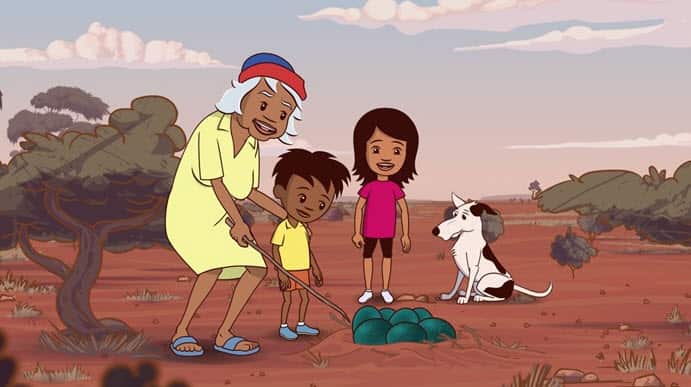
“NITV have a range of programmes that share Aboriginal and Torres Strait Islander stories, cultures, histories and contemporary experiences,” Ms Livermore says.
If you prefer streaming, you can also find a verity of First Nations content to stream for free on SBS On Demand, including animated children’s series, documentaries and films.
“You want something that’s going to be friendly for younger children, looking at a range of age-appropriate content that celebrates Aboriginal and Torres Strait Islander cultures and the diversity of Aboriginal and Torres Strait Islander peoples.
“That's just that gentle first step into learning about ‘who are the First Peoples of this country?"
How do I find events celebrating Aboriginal and Torres Strait Islander culture?
Beyond the screen, you can look for family-friendly events and activities hosted by Aboriginal and Torres Strait Islander organisations in your local area. Check out your local council events and reach out to your closest Local Aboriginal Land Council for what’s happening in your area.
There are two main occasions to watch out for annually, Ms Livermore says: NAIDOC Week in the first week of July and National Reconciliation Week, celebrated between 27 May and 3 June.
“That's where I find a lot of people who come into this country learn about perspectives of First Nations peoples, the art, the land, the people and also the cultures,” Ms Livermore says.
Events during those dates may also offer opportunities to attend a Welcome to Country and understand the difference from an Acknowledgment of Country.
Is there educational content on Indigenous Australia for children online?
It’s easy to access educational resources online to help your child learn about First Nations history, cultures and perspectives.
SBS Learn has a range of such content, tailored to the Australian curriculum, from Foundation to Year 12, that families can explore at home.
At Reconciliation Australia, Ms Livermore is a manager in the Narragunnawali: Reconciliation in Education program.
The program offers online toolkits to support different community members, including teachers, students and parents, engage with reconciliation in meaningful ways.
Examples range from learning about the two flags representing the First Peoples of this country, to guidance around building relationships with the local Aboriginal and Torres Strait Islander community.
“It actually gives you some activities or ideas of how to build relationships and that's going beyond the school gates and out into communities,” Ms Livermore explains.
How can we get to know First Nations culture during a family trip?
Travelling with your child can offer another opportunity to learn more about Indigenous Australia together.
Using the Australian Institute of Aboriginal and Torres Strait Islander Studies (AIATSIS) Map of Indigenous Australia, can help you identify the Aboriginal and Torres Strait Islander language, social or nation groups connected with the area you’re visiting.
You can then research important sites to visit and start learning about the culture of Traditional Custodians living there.
“If I'm travelling to somewhere, I'll probably do a bit of a Google search and see what are some of the significant areas… and have a look at what are some of the Aboriginal and Torres Strait Islander activities that I could do there,” Ms Livermore says.
What if I say or do something wrong?
The fear of getting it wrong is common and understandable for any non-Indigenous person engaging with First Nations culture and people, Ms Livermore says.
“It’s best to try than to not do anything at all.”
Making mistakes is part of the learning process. If a First Nations person points out a mistake you’ve made in an interaction at an event for example, you can reach out to them respectfully for help.
“Use that conversation and work together and say ‘well, what did I get wrong and how can you support me?'... It's about learning, unlearning and relearning and starting those conversations,” Ms Livermore concludes.
Subscribe to or follow the Australia Explained podcast for more valuable information and tips about settling into your new life in Australia.
Do you have any questions or topic ideas? Email australiaexplained@sbs.com.au