
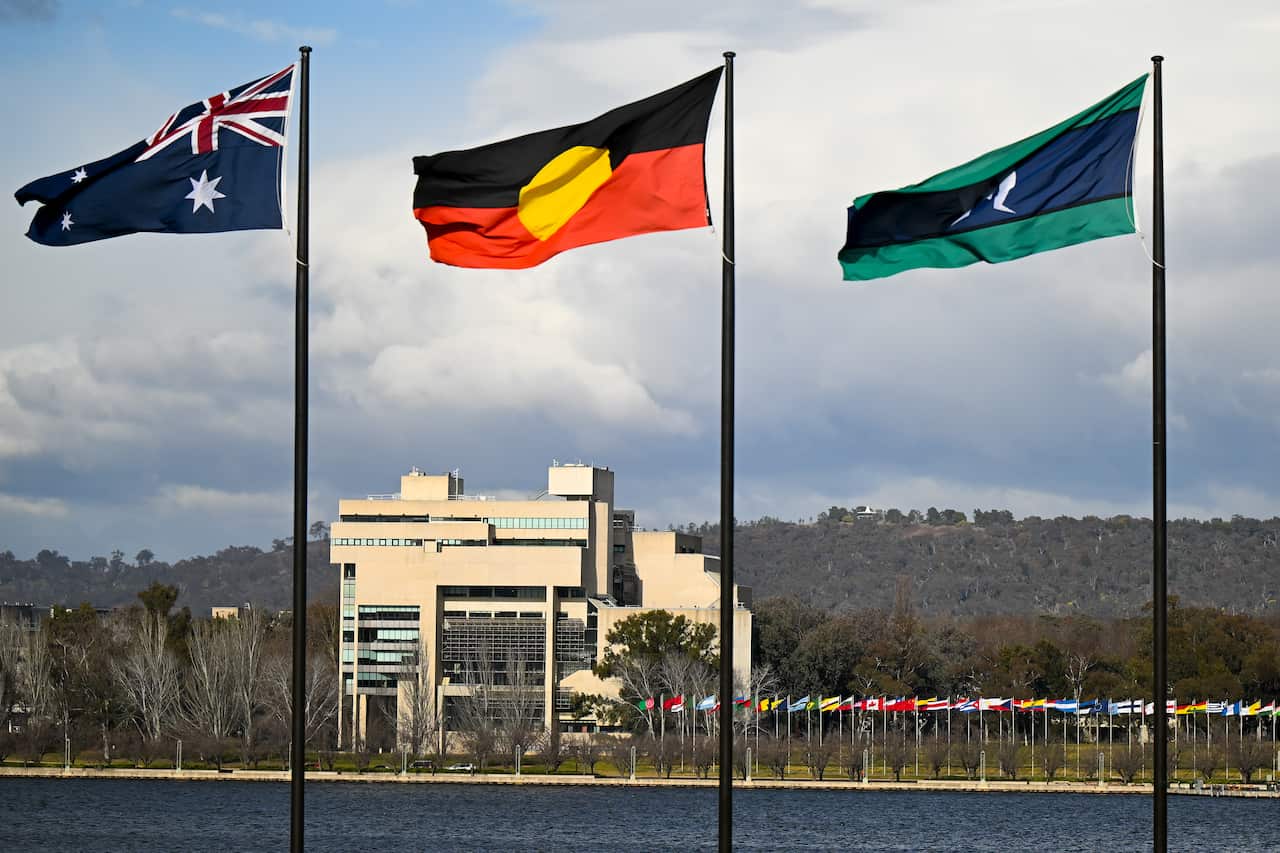
In Australia, you might see three flags flying together: the Australian National Flag, the Aboriginal Flag and the Torres Strait Islander Flag. Aboriginal peoples and Torres Strait Islander peoples are the two distinct Indigenous peoples of Australia, each with their own histories, cultures, languages and flag. For many Torres Strait Islander people, the flag is a powerful symbol of identity and belonging, whether they live on the islands, the mainland or overseas.
Key Points
- The Torres Strait Islander flag represents land, sea and people.
- The flag was designed in 1992 by Torres Strait Islander artist Uncle Bernard Namok Snr and is now one of Australia’s three national flags.
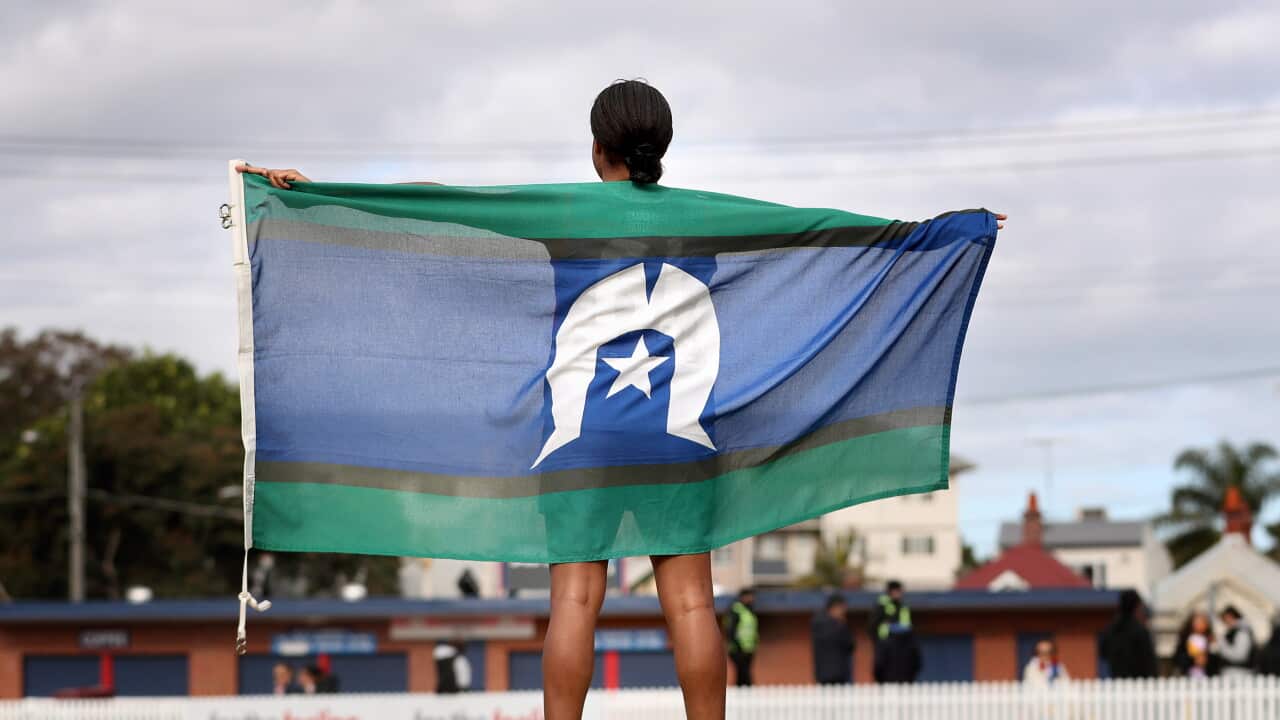
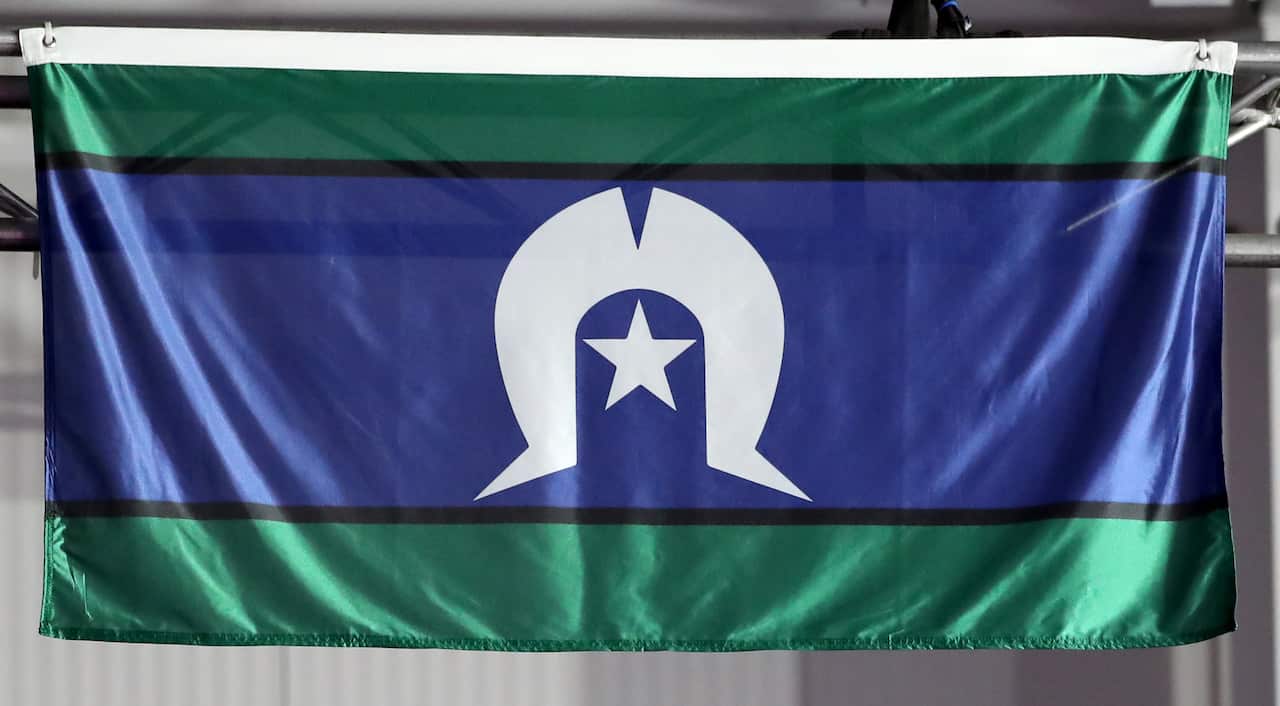
- Its green, blue, black and white design includes a dari (headdress) and a five-pointed star for the five island groups of the Torres Strait.
- For many the flag is a symbol of identity, pride and survival, now visible around the world.
- Where did the Torres Strait Islander Flag come from?
- What does the Torres Strait Islander Flag mean?
- What is it like growing up with the flag?
- Where do we see the flag?
- What does the flag symbolise for the next generation?
Where did the Torres Strait Islander Flag come from?
The Torres Strait Islands are a group of islands between the tip of Cape York in Queensland and Papua New Guinea. These islands are:
- Northern Division (Boigu, Dauan, Saibbai)
- Eastern Islands (Erub, Mer, Ugar)
- Western Division (St Pauls, Kubin, Badu, Mabuiag)
- Central Division (Masig, Poruma, Warraber, Iama)
- Southern Division (Thursday, Horn, Prince of Wales and Hammond Islands, NPA and Mainland Australia.
In 1992, the Island Coordinating Council ran a competition for Torres Strait Islander people to design the community’s flag. The winning entry was by Uncle Bernard Namok from Thursday Island.
Uncle Bernard’s son, Bernard Namok Jnr, remembers watching his dad work on the flag at their kitchen table on Thursday Island, sketching designs at night for the competition.
Uncle Bernard didn’t live to see his design become the symbol of his people, passing away shortly after the competition ended. Bernard Jnr’s connection with his dad is kept alive by the flag, recalling those nights watching his dad draw.
What does the Torres Strait Islander Flag mean?
The colours and symbols each carry meaning:
- Green is the land
- Blue is the waters of the Torres Strait
- Black represents the Torres Strait Islander people
- The white dari (a traditional headdress) represents the Torres Strait Islander cultural identity
- The white five-pointed star represents the five major island groups in the Torres Strait.
Aboriginal and Torres Strait Islander law student Tyrell Viti was born and raised on Thursday Island, and now lives in Townsville, Queensland.
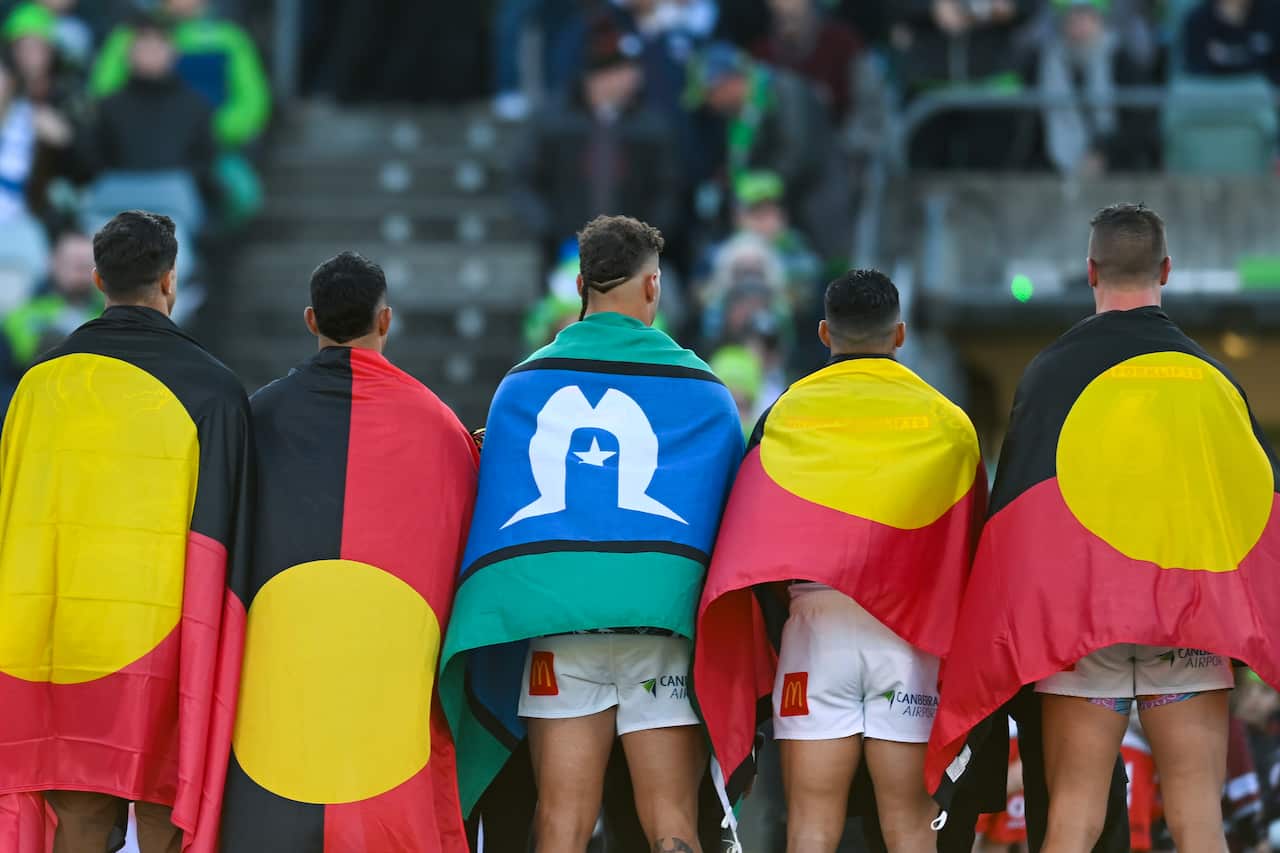
“I feel like it’s a part of our cultural identity in itself,” he says. “It’s a big part of our story. It’s really good to have that sense of representation too. And especially being in a small community, you see this flag, it tells a story of who we are, where we’re going, and how we’re moving forward, past all the injustices since colonisation.
“Our people were considered flora and fauna, and not as people. So for me, this flag speaks for itself. It’s something to make me feel seen as a person, because it’s representing my people.”
What is it like growing up with the flag?
Both Bernard Jnr and Tyrell grew up on Thursday Island, describing it as a small but busy community full of family and culture.
For Tyrell, the flag is a part of everyday life:
“Seeing flags in places such as courtrooms and just everyday places up in the mainland, it just makes me feel so seen, where I can come from a small island off the mainland. But entering mainland, seeing my flag in a courtroom, seeing my flag at your local post office, seeing some people wearing it on their clothing—it makes me feel like people up here in the mainland have so much love and respect for us up there.
"It just makes us all feel a part of Australia, and how we’re connected and trying to move forward as one.”
Bernard Jnr remembers life before the flag was everywhere. He watched it gradually spread across the islands after the competition in the 1990s, and now sees it in places he never expected.
Where do we see the flag?
Today, the Torres Strait Islander flag is flown across Australia. You might see it outside schools, universities, parliaments, local councils and courts, often alongside the Aboriginal and Australian flags.
For Tyrell, this is powerful. Seeing the flag in courtrooms, post offices and on people’s clothing makes him feel recognised and included.
Bernard Jnr has also spotted the Torres Strait Islander flag flying far from home. He has travelled with his documentary, Carrying The Flag, to festivals overseas, and has seen the flag at the Australian Embassy in London, Paris and New York.
Each time, Bernard Jnr says it takes him back to being a child on Thursday Island.
“No matter where I am, when I see the flag, I see my childhood growing up on the island and overlooking my dad's shoulder doing all those sketches.”
What does the flag symbolise for the next generation?
Bernard Jnr wants children to grow up knowing the story behind the Torres Strait Islander flag. He co-authored the children’s book Our Flag, Our Story with Thomas Mayo, illustrated by Tori-Jay Mordey.
Bernard Jnr speaks to the importance of Our Flag, Our Story: “I've had a lot of readings at schools, especially around Reconciliation Week and NAIDOC. All the comments that I have from the teachers and school support workers was, the kids really enjoy reading the book.”

“It’s good that we have a flag dedicated and designed by us, for us, to motivate us to continue our journey and move forward, so that we have pride in acknowledging our cultural identity,” Tyrell says.
When you see the Torres Strait Islander flag, you are looking at a living symbol of land, sea and people, and of cultures that continue today in the Torres Strait Islands, across Australia and around the world.
Subscribe to or follow the Australia Explained podcast for more valuable information and tips about settling into your new life in Australia.
Do you have any questions or topic ideas? Email australiaexplained@sbs.com.au