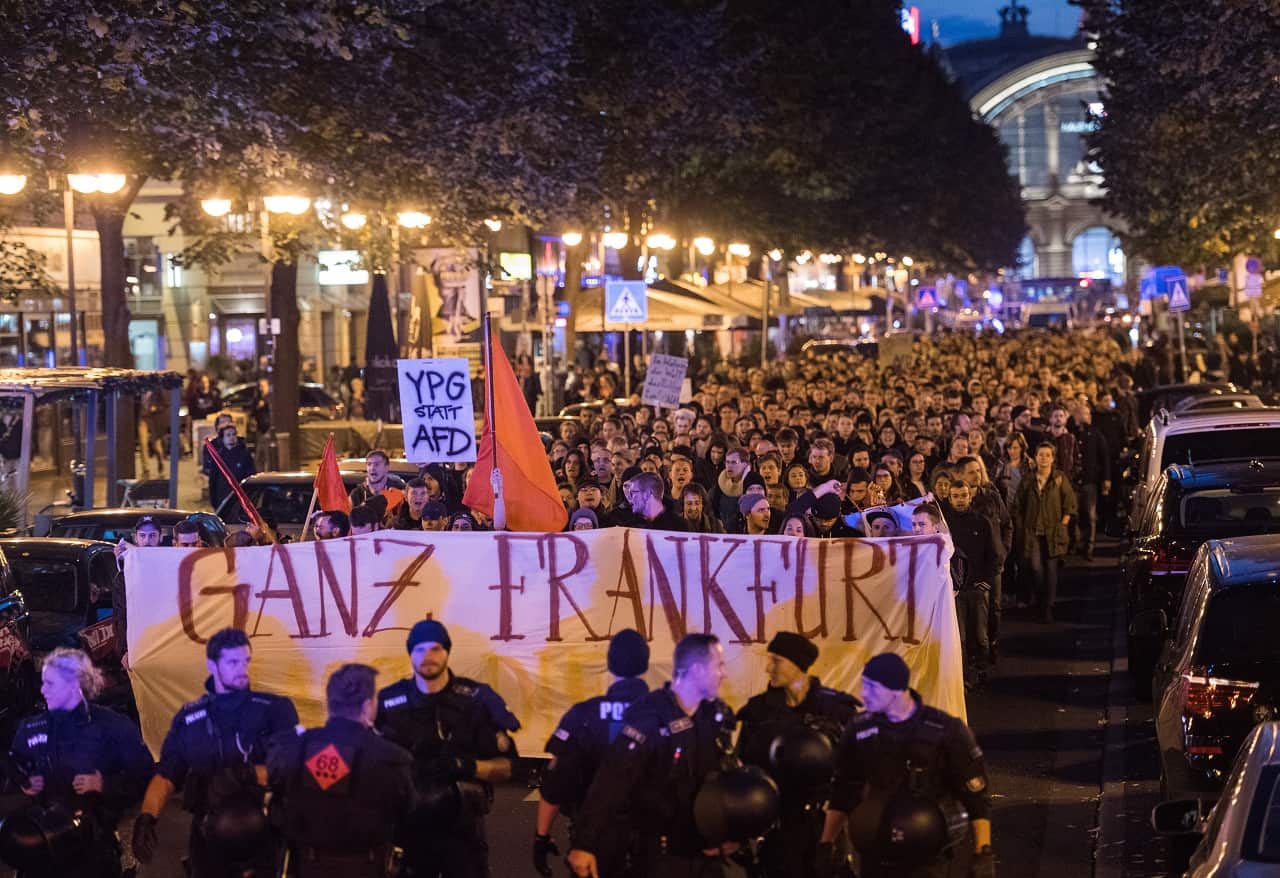


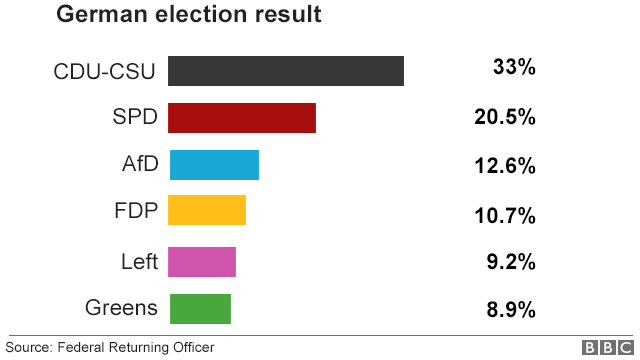
Chancellor Angela Merkel clinched a fourth term in the county's federal election, however the status quo in German politics was left turned upside down. In a bombshell for the establishment, the far-right party AfD managed to become the third biggest political force. SBS German spoke to various Germans around Australia about their thoughts on the result.
Monday morning saw many German migrants getting straight to their laptops and smartphones in order to check on the election outcome, which turned out to be an unpleasant awakening for some.
The hard-right AfD (Alternative für Deutschland or Alternative for Germany party) delivered the best showing for a nationalist force since World War II. A result which has caused widespread concern among Australia's German community.
"I was not willing to believe it, that's why I instantly started checking various news pages," Katharina Lösche, a German mother of three in Brisbane tells SBS German.
"I didn't see the AfD at more than ten per cent. In fact, I hoped they wouldn't have made their way into the Bundestag."
While the result came as a surprise to Ms. Lösche, others were less stunned.
"I expected this outcome, given the latest polls. However, I find the shift to the right seriously alarming,", Dieter Herrmann, editor of the "Neue Woche", Australia´s only weekly newspaper in German, told SBS.
"Even more, when I take a closer look at the statistics. The AfD has gained enormous popularity in the eastern states. Especially among the male population. It's unimaginable in my eyes."
Germany's Social Democrats (SPD), Merkel's junior partner for the last eight years, suffered a setback with just 20.5 per cent. Main candidate Martin Schulz pledged immediately to go into opposition.
Merkel now finds herself in a position where her options to form a government is very limited, with the so-called "Jamaica Coalition" as the most likely one. Angela Merkel said she would seek exploratory talks on an alliance with two smaller parties, the pro-business Free Democrats, and the Greens.
"It's all about forming a stable government now", says Rainhard Struve from Adelaide. "Which is going to be all but an easy challenge.
"I am not sure whether the Jamaica Coalition will be able to deliver proper results. I wish my fellow German countrymen all the best."
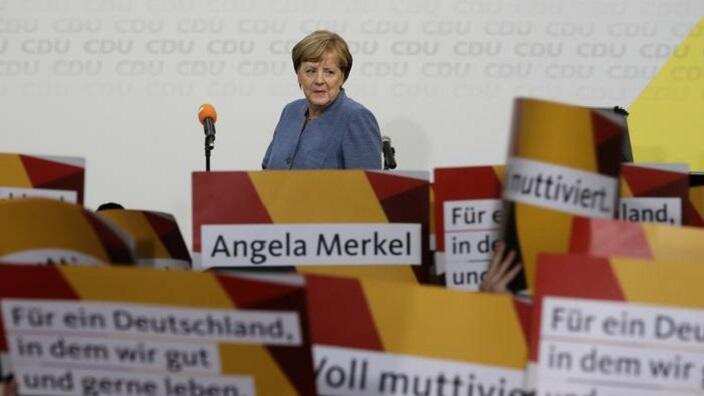
Germany's top-selling tabloid paper "Bild" spoke of a "political earthquake". Both major parties, Merkel's CDU/CSU (Christian Democratic Union of Germany and Christian Social Union in Bavaria) and the SPD (Social Democratic Party, led by Martin Schulz), have suffered from historic loses.
Hans Henkell, a German entrepreneur from Melbourne, points out how "an era of political order has come to an end."
He says, "During my entire life, Germany was being dominated by the two major parties. What we now see is a new political reality. And it´s going to last."
A chance to move forward
Anja Kazmeier, the principal of Melbourne's German Saturday School, speaks of a chance for Germany to move forward, now that the Grand Coalition won't continue. "This might result in a more active government," she says. "Nevertheless, my gut feeling following the rise of the AfD is quite negative."
"I felt relieved seeing that many - six - parties surged into the Bundestag,' says Barbara Barkhausen from Sydney. "This mixture might help Germany moving forward."
"However, I find the rise of the far-right party embarrassing and unpleasantly distressing."