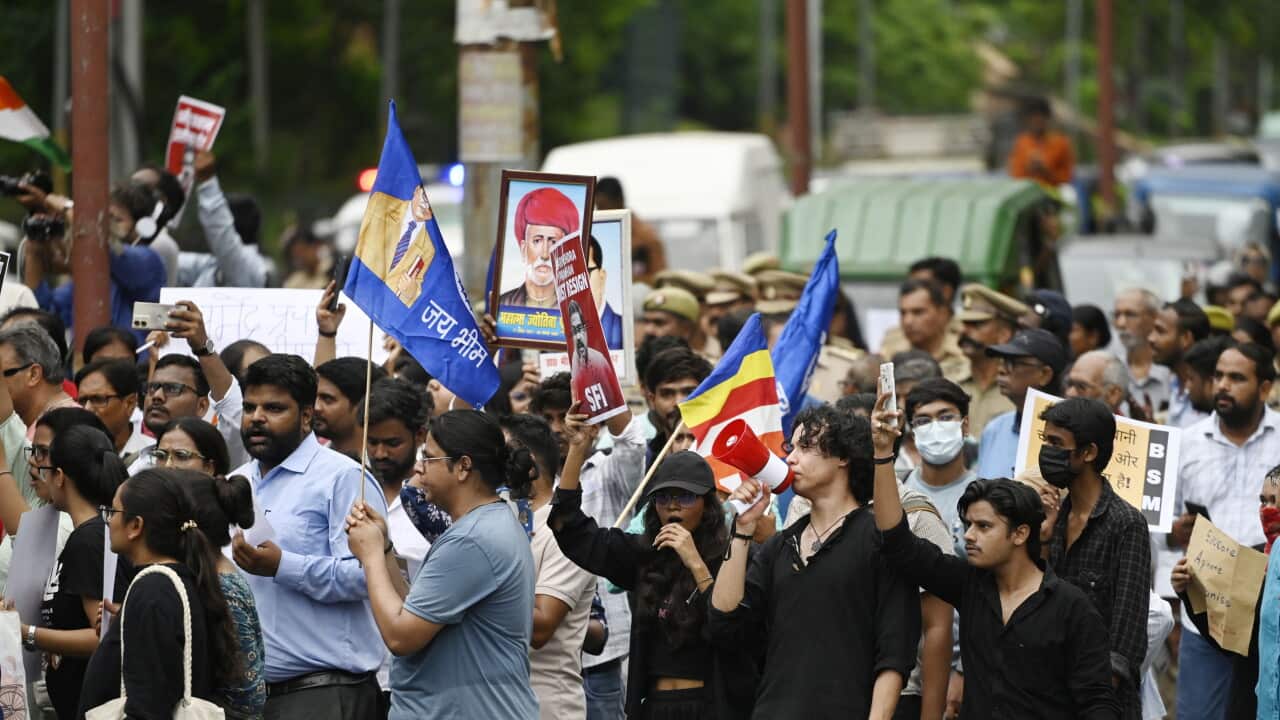


Australia’s out-of-cycle decision to reclassify India as a “higher-risk” country for student visa evidence requirements has left many international students uneasy, with some saying they feel constantly “on edge” due to the unpredictable nature of visa rules.
When Slasha Soporee arrived in Australia as an international student, India was classified at Evidence Level (EL) 2.
Nine months later, an out-of-cycle change has moved India to Level 3, placing it alongside other South Asian nations in the “higher risk” category.
According to the Department of Home Affairs, the move was aimed at more effectively managing emerging “integrity issues.”
However, it has left many international students like Slasha feeling constantly “on edge".
"The federal government keeps changing visa settings, even though we pay high fees and face a high cost of living," she said.

“Many of us are constantly struggling to secure work visas. The sudden changes to visa rules sometimes force us to change our course or even our profession,” she says.
Priyanka Chahal echoes similar sentiments and says "We never feel secure. There’s no stability in these visa policies."
"A student might come here to study a course after taking a huge loan, only to find it removed from the PR list next term, and it’s so frustrating," she said.

"From student visa fees to all other visa expenses, the costs are extremely high. And if the visa is rejected, that money is lost. You never know when fees might change again," she said.
Both Slasha and Priyanka are hoping for more stable visa policies and a greater sense of predictability as international students.
What is an Evidence Level?
Experts say Australia follows the Simplified Student Visa Framework (SSVF), under which countries and Australian education institutions are assessed across three levels - 1 (low risk), 2 (medium risk) and 3 (higher risk).
On 8 January 2026, the Department of Home Affairs (DHA) announced it would adjust the evidence-level classifications for a few South Asian countries, including India, under the SSVF.
"These levels (EL) are determined based on factors such as visa refusal rates, non-genuine student trends, compliance history, document integrity, and the past behaviour of students and education providers," Nishidhar Borra from Association of Australian Education Representatives in India said.
"These levels only decide how much documentation and checking is required for a student visa," he explained.
The DHA reviews Evidence Levels twice a year — in March (using data from 1 January to 31 December) and September (using data from 1 July to 30 June).
A DHA spokesperson confirmed that “education providers and countries are assigned rating based on formulas that use immigration outcome data from the 12-month period preceding the EL update.”
However, the department does not publicly disclose the EL ratings of specific countries or institutions, according to the spokesperson.
Why did the EL rating change?
The DHA said the move reflects the need to ensure Australia’s international education system and Student Visa Program have the right safeguards while maintaining quality and integrity.
“The Australian government wants all students to have a positive study experience during their stay in Australia and receive a high-quality education,” the department stated.
However, discretionary EL updates may occur outside the biannual cycle if the Minister or the Department considers it necessary, particularly in cases involving integrity concerns.
According to former immigration official Abul Rizvi, out of cycle changes to the risk framework are unusual.
"The decision to review must have triggered by factors like Indian regulators uncovering a large number of institutions issuing fake degrees, the minister’s trip to India where he would have received firsthand insights from visa officers, agents, and government officials, or the surge in offshore applications from South Asia and the growing number of South Asian students stuck in immigration limbo," Rizvi said.
How will visa applications be impacted?
Applications already lodged before the recent Evidence Level (EL) changes will not be affected, as EL is determined at the time of visa (Subclass 500) submission.
Borra said there would be no significant impact on genuine applicants, stating that "Australian universities have always maintained strict admission standards and continue to welcome students who demonstrate academic readiness, financial capacity and a clear intention to study."
“There will be no real impact. Australian universities and Australian education remain very popular among Indian students, and this will continue,” he said.
Universities Australia (UA), the sector’s peak body, said it is monitoring the impact of the changes and supports stronger integrity measures to protect genuine students and the reputation of Australia’s world-class education sector.
Find our podcasts here at SBS Hindi Podcast Collection. You can also tune in to SBS Hindi at 5 pm on SBS South Asian on digital radio, on channel 305 on your television, via the SBS Audio app or stream from our website.