


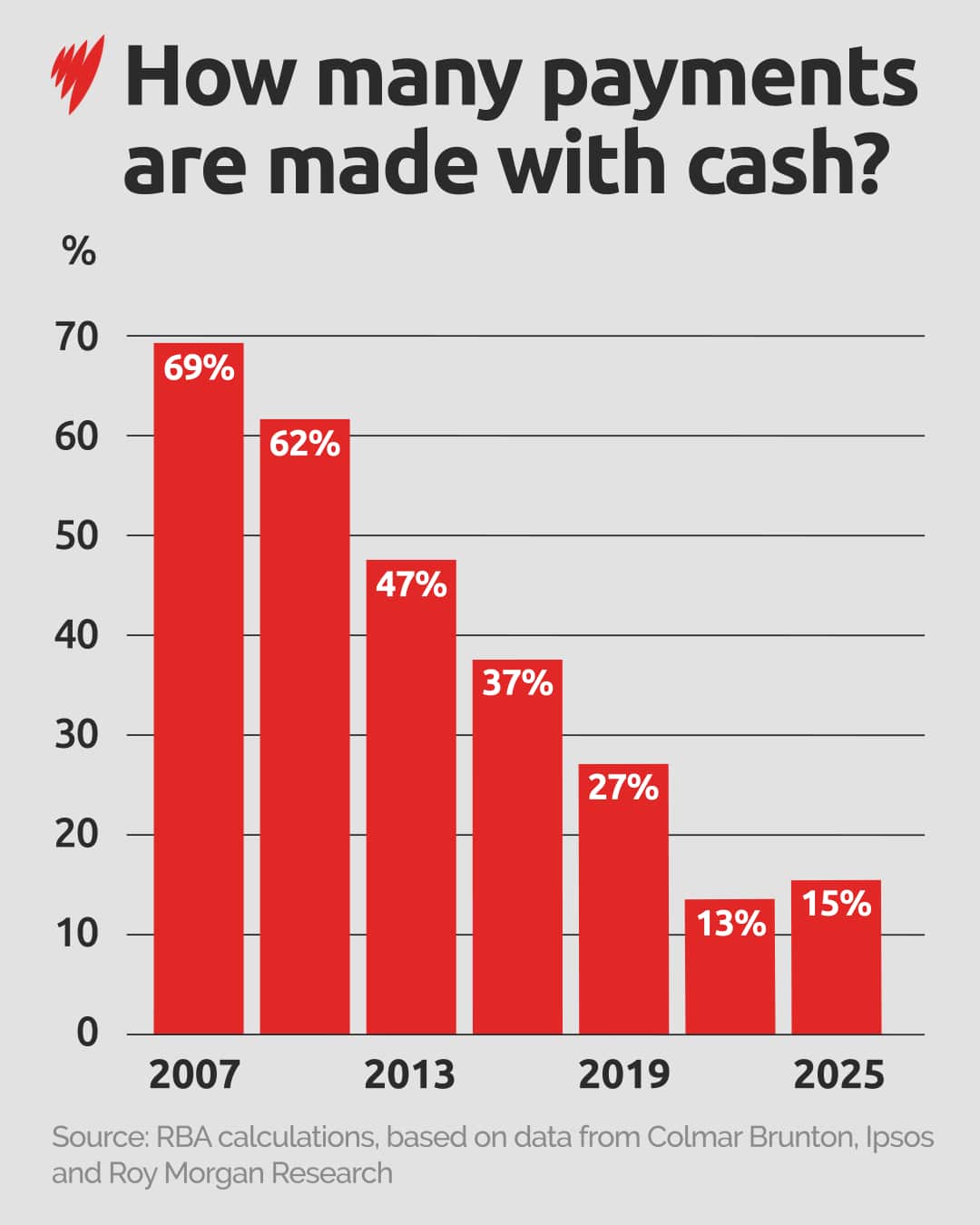
The latest data from the Reserve Bank of Australia (RBA) shows a unique phenomenon in which cash use in Australia has increased for the first time since 2007.
By 2025, the proportion of cash payments rose to fifteen percent versus thirteen percent in 2022, halting a long-term downward trend due to the dominance of digital wallets.
Although RBA Governor Michelle Bullock predicts the cash may only last about another ten years, the instrument remains considered crucial as an emergency backup if electronic systems fail and as a major means of payment for elderly groups, low-income communities, as well as residents in regional areas.
People are turning back to cash for practical reasons such as budgeting to control spending, maintain security privacy, as well as avoid card surcharges that the RBA plans to repeal by the end of this year.
Given a third of Australians will face major barriers without physical access to money, the federal government is taking a firm step by requiring retailers of staples and fuels to accept cash from January 1, 2026.
This policy is designed to protect the inclusiveness of the payment system for vulnerable groups, including First Nations communities and victims of financial abuse, while ensuring Australia remains effectively functioning in the transition to a functionally sound society.
Listen to SBS Indonesian every Monday, Wednesday, Friday and Sunday at 3pm.
Follow us on Facebook and Instagram, and don't miss our podcasts.