
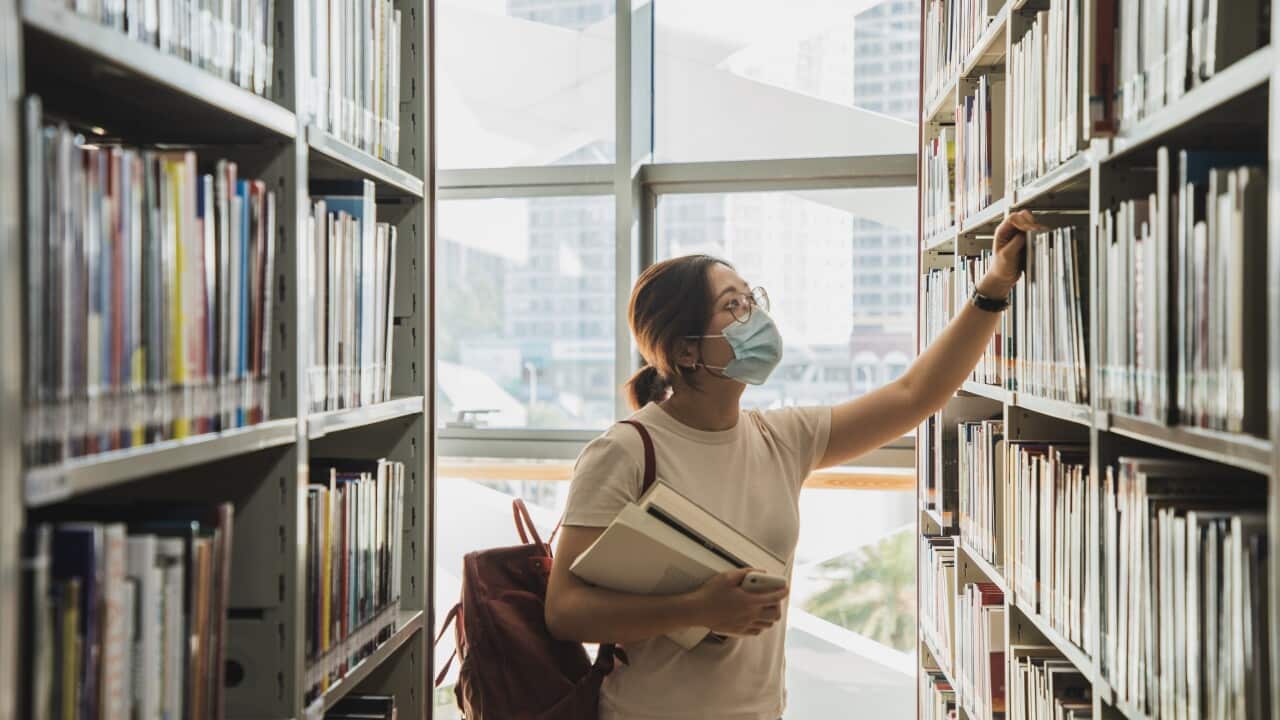

Una nuova iniziativa ideata da e per studenti stranieri mira a rendere i servizi sanitari più facili da trovare, abbattendo al contempo i tabù che circondano la salute sessuale e mentale.
SCARICA la trascrizione col testo a fronte in inglese.
Italiano
In questa università di Melbourne un gruppo di studenti di master sta discutendo del proprio ultimo progetto: lanciare un nuovo strumento destinato a chi arriva dall’estero e cerca di orientarsi nel sistema sanitario dello Stato del Victoria.
Tuhar Yeasmin sta frequentando un master in sanità pubblica ed è una delle responsabili di questo progetto.
"When you're in a new country, you're trying to adapt to this new country's lifestyle, how everything works. It's just a lot of extra stress added onto your studies."
I tre sono tutti studenti stranieri che hanno vissuto in prima persona le lacune del sistema sanitario.
"I was being ping-ponged between my GP and a hospital and different service providers where I had to do two MRIs within a three-week span, because an outpatient MRI wasn't being accepted by a hospital that I was being referred to, and that just caused a lot of undue stress and a lot of financial burden as well."
Originaria dell'India, la dottoranda Aishwarya Patil si è trovata in una situazione simile.
"I was diagnosed with diabetes (type) two a few months back. That's when I realised I was keeping myself from going to the clinic. I was feeling something is wrong and I wasn't sure what. I was just sticking to 'ok what's the issue and how will they diagnose me, who is the financial cost going to hit me?''
Da un recente sondaggio è emerso che ben il 60% degli studenti stranieri teme i costi dell'assistenza sanitaria.
Olipa Tagi, originaria dell'Indonesia, ha dichiarato che si tratta di una mentalità fin troppo diffusa tra i suoi amici.
“Their answer would be just don't get sick, or just make some tea when you're getting sick or get the flu. No need to go to the GP or clinics because it's very hard. We just never know how to use it. Our friends suggest we do it, so we never really thought about it, so it's kind of the biggest gap for most Indonesian students.”
Il gruppo ha contribuito alla realizzazione di un sito web dedicato specificatamente agli studenti stranieri, chiamato "Safe Down Under".
L'iniziativa è promossa da AusWISE, una ONG che ha lo scopo di sostenere gli studenti stranieri in Australia.
La sua presidente è Manorani Guy.
'Students are coming from over 50 countries, and each has a different lens when it comes to seeking health, whether it's mental, whether it's sexual. We have to be able to meet that need.'
Il progetto è sostenuto anche dal Melbourne Sexual Health Centre.
Per il direttore del centro, il professor Jason Ong, circa la metà dei suoi pazienti è nata all'estero.
"One of the key things is access, so we need to get people to the door to do the test. But before that are all these steps about the fear, the ignorance, the stigma and so on, and the uncertainties around who do I go to. Once we get through all these barriers, then we can give them the tests and help them, and a lot of STIs (sexually transmitted infections) are curable so as long as we detect it, we can help the person on the spot."
Manorani Guy di AusWISE ha dichiarato che tra gli studenti stranieri serpeggia un profondo timore riguardo ai risultati dei test sulla salute sessuale, che sono sempre riservati.
"Is it going to go back to the Indian consulate, the Malaysian consulate or whatever. Is it going to go back to immigration, are they going to cancel my student visa, am I going to be put on a plane? So all these fears are genuine, they're real."
Olipa Tagi, studentessa indonesiana, concorda sul fatto che eliminare lo stigma legato all'assistenza sanitaria sia uno dei passi più importanti per colmare il divario.
"Coming from the cultural background of taboo, talking about it, not only mental health but also sexual reproductive health, it's kind of very difficult."
Ed è proprio questa la difficoltà che questo nuovo strumento cerca di superare, indirizzando gli studenti vulnerabili verso servizi a basso costo e culturalmente adeguati.
Inglese
At this Melbourne university a group of masters students are chatting about their latest project: rolling out a new tool for those coming from overseas, and trying to navigate Victoria's healthcare system.
Tuhar Yeasmin is studying her master's degree in public health, and is one of the project team leads.
"When you're in a new country, you're trying to adapt to this new country's lifestyle, how everything works. It's just a lot of extra stress added onto your studies."
The group of three are all international students who have experienced falling through the healthcare gap.
"I was being ping-ponged between my GP and a hospital and different service providers where I had to do two MRIs within a three-week span, because an outpatient MRI wasn't being accepted by a hospital that I was being referred to, and that just caused a lot of undue stress and a lot of financial burden as well."
Originally from India, postgraduate student Aishwarya Patil found herself in a similar position.
"I was diagnosed with diabetes (type) two a few months back. That's when I realised I was keeping myself from going to the clinic. I was feeling something is wrong and I wasn't sure what. I was just sticking to 'ok what's the issue and how will they diagnose me, who is the financial cost going to hit me?''
A recent survey found as many as 60 percent of international students fear the cost of healthcare.
Indonesian-born Olipa Tagi says it's an all-too-common mindset among her friends.
'Their answer would be just don't get sick, or just make some tea when you're getting sick or get the flu. No need to go to the GP or clinics because it's very hard. We just never know how to use it. Our friends suggest we do it, so we never really thought about it, so it's kind of the biggest gap for most Indonesian students.'
The group has helped design a website specifically for international students called Safe Down Under.
The initiative is driven by AusWISE, an NGO aimed at supporting international students in Australia.
Its president is Manorani Guy.
'Students are coming from over 50 countries, and each has a different lens when it comes to seeking health, whether it's mental, whether it's sexual. We have to be able to meet that need.'
The project is also being supported by the Melbourne Sexual Health Centre.
The centre's director, Professor Jason Ong, says about half of his clients are born overseas.
"One of the key things is access, so we need to get people to the door to do the test. But before that are all these steps about the fear, the ignorance, the stigma and so on, and the uncertainties around who do I go to. Once we get through all these barriers, then we can give them the tests and help them, and a lot of STIs (sexually transmitted infections) are curable so as long as we detect it, we can help the person on the spot."
AusWISE's Manorani Guy says there are deeply-held fears among international students, about the results of sexual health tests, which are always confidential.
"Is it going to go back to the Indian consulate, the Malaysian consulate or whatever. Is it going to go back to immigration, are they going to cancel my student visa, am I going to be put on a plane? So all these fears are genuine, they're real."
Indonesian international student Olipa Tagi agrees, that eliminating the stigma around healthcare is one of the biggest steps in bridging the gap.
"Coming from the cultural background of taboo, talking about it, not only mental health but also sexual reproductive health, it's kind of very difficult."
And that is the difficulty this new tool seeks to overcome, steering vulnerable students towards low-cost and culturally-safe services.
Report by SBS News
Ascolta SBS Italian tutti i giorni, dalle 8am alle 10am.
Seguici su Facebook e Instagram o abbonati ai nostri podcast cliccando qui.