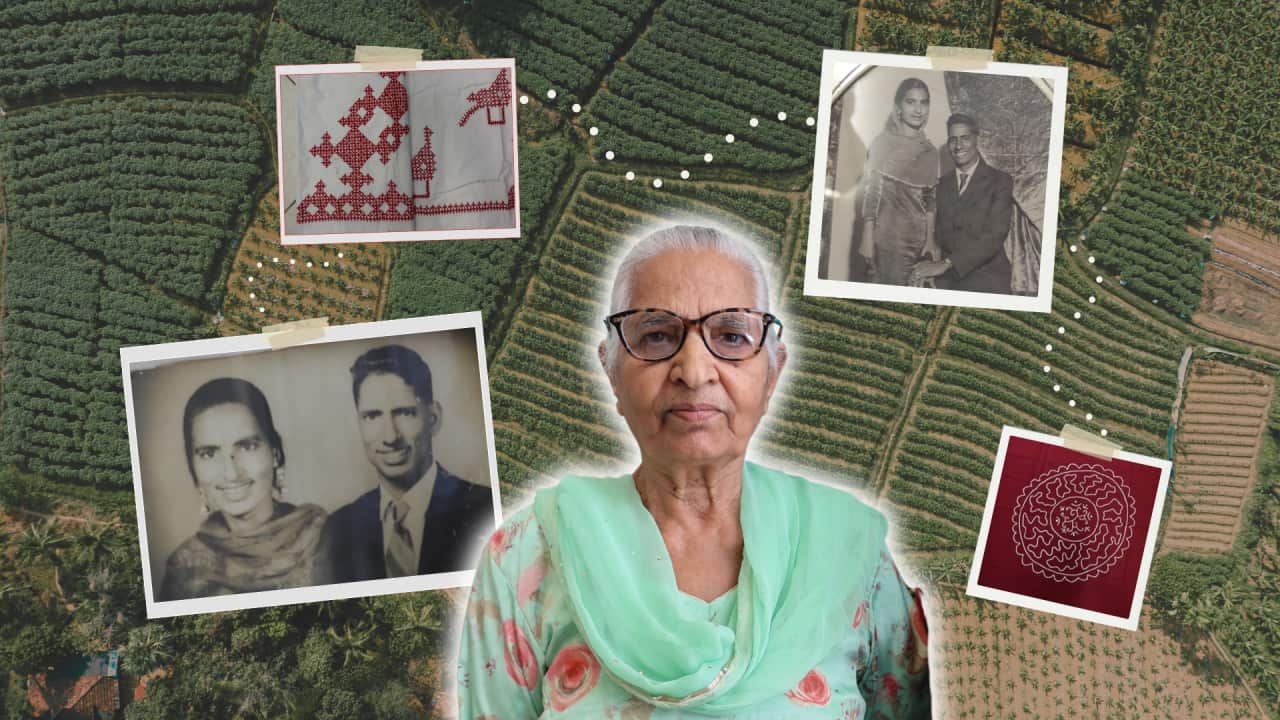

In this episode of Punjabi Pioneers, we hear Devo Singh’s journey from a small village in Nawanshahr, in India’s northern state of Punjab, to Australia in 1964. Devo recalls seeing a plane and telephones for the first time, navigating strict household expectations, and making sure her three daughters received the education she never had. Arriving in Cairns, the sugarcane farmland reminded her of Punjab, grounding her memories as she built a new life. In this interview, she shares her story, reflecting the courage and resilience of Punjabi women who helped shape early Punjabi life in Australia.
HOST: I am Sumeet Kaur, bringing you the untold stories of the earliest Punjabi settlers in Australia, through this podcast series, Punjabi Pioneers. In its first season, you will hear very interesting lived experiences of Punjabi families who have lived for generations in Far North Queensland. But we will hear these stories through the voices of the women who settled here, women whose struggles you may rarely have heard about elsewhere.
Through these interviews, my colleague Manpreet Kaur Singh has brought to light many compelling personal stories of women living in Cairns, Gordonvale and Babinda, as well as several aspects of the early period of Punjabi migration to Australia. Let us listen to Punjabi Pioneers, which charts the stories of\the earliest Punjabi migration to Australia.
Manpreet Kaur Singh: Aunty ji, Sat Sri Akal.
Devo Singh: Sat Sri Akal.
MANPREET: Welcome. I am very pleased to have the opportunity to speak with you today. You came to Australia a very long time ago.
DEVO: Yes.
MANPREET: And when you came, you were not yet married. Your marriage took place after you arrived here. Please tell us about that. But first, please tell us a little about your background in India. Where were you born and raised? What led you to come to Australia?
DEVO: I was born at my maternal grandparents’ village, Garcha, near Nawanshahr. Our own village is Johal. We belonged there. My father’s side of the family came from Pakistan, and after coming from there they settled near Phillaur. Then my father sold the land there and moved. We lived there and life was quite all right. The whole family was together. After that, my sister arranged the match.
MANPREET: How old were you at the time?
DEVO: I was about 22 or 23 when my match was arranged. After the match was fixed, they sent us a photograph.
MANPREET: So you saw the photograph after the match had already been arranged?
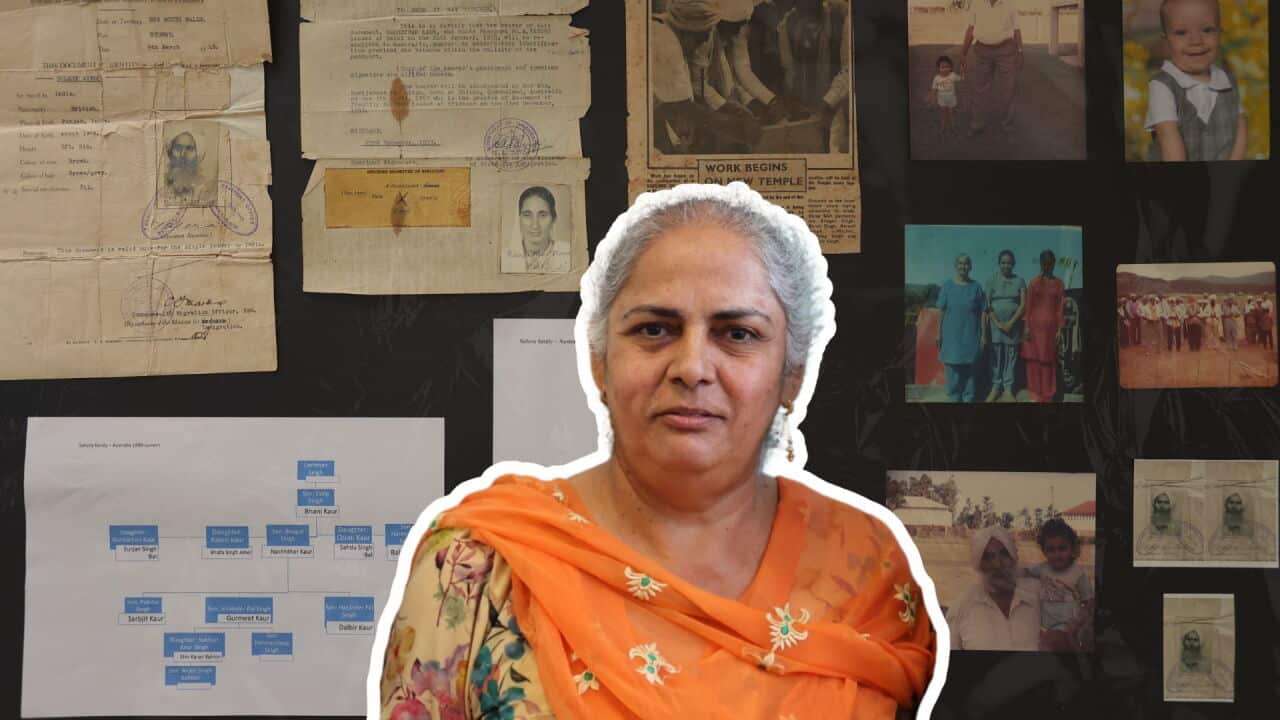
DEVO: Yes, after that. I had not seen him before. My sister’s sister-in-law, the one we call a nanan, was here. My husband’s uncle and aunt were here too. My in-laws’ family had been here for a very long time. First, his grandfather had come, I think around 1895, 1896 or 1898. Then he went back. After that, around 1901, he came here again and stayed.
MANPREET: This was your husband’s grandfather?
DEVO: Yes, his grandfather. In those days families were close-knit. His grandfather had four brothers. One of the brothers came here. At that time there was not much business here, so they worked with their hanDevo. They cut down big trees and cleared the land to make it productive. That was the work they did.
They did not bring their families at first. Later, one of them brought his son here. The boy was not very old. He came here and stayed. Later they bought their own farm and built up their own work. My husband came here earlier, when he was 16. His uncle called him here.
MANPREET: In which year did your husband come?
DEVO: In 1956.
MANPREET: 1956, right.
DEVO: Yes. Then I came here in 1964, after my passport was made and everything was organised. In those days it was not like travelling by plane now. I did not know anything. Girls did not go out. I had never gone anywhere. I first saw the city when the passport was being made.
When I was put on the plane from Delhi, I still did not know much. I do not remember whether the next place was Calcutta or Bombay. When I got off there, people were speaking Hindi, so I thought I was still in India.
MANPREET: You did not understand Hindi properly either?
DEVO: I understood a little, but I could not speak it. I knew only that I was still in India. Then from there I travelled on to Brisbane.
MANPREET: So you reached Brisbane directly?
DEVO: Yes, Brisbane. I stayed there overnight. There was a girl there, and I did not know how to speak with her. She showed me the clock and explained that at four o’clock they would put me on the plane. My husband’s uncle then spoke to me on the telephone in Brisbane. After that I felt a little better.
MANPREET: You spoke on the telephone at that time?
DEVO: Yes, on the telephone. I had barely even seen a telephone before. The woman put it to my ear, and then I realised a voice was coming from it. I spoke to him, said Sat Sri Akal, and did not say much more. They told me they would put me on the plane at four and someone would come to collect me. Then I felt a little happy and more reassured.
MANPREET: Aunty, did you come alone?
DEVO: I came alone.
MANPREET: At such a young age, and you had never been outside the home.
DEVO: No, never.
MANPREET: Were you not frightened?
DEVO: I was frightened in Brisbane. The girl had seated me in a room. In those days we knew nothing. Today even children know everything. Back then we did not know anything. A man came with a trolley and left my things in the room. He showed me the bed where I was to sleep and showed me the toilet and bathroom. He locked the door from inside, took out the key and placed it on the table, as if to show me what to do, and then he left.
I locked the door. At that time, I did not even know that there was a blanket under the bedcover. I had come wearing a coat, and because I did not know about the blanket, I spent the night with only the coat over me. It was very cold in Brisbane. I was also very upset. I kept thinking, I hope someone remembers to come and get me. I hope they do not forget. In the morning, when I got up and began straightening the bed sheet, I saw the blankets underneath. I was very surprised. After that I kept looking out through the door, wondering whether someone would come to take me.
Then the man who had dropped me off, or perhaps another man, came and took my trolley. He brought me down in the lift and seated me downstairs. There was still time. Later the girl came and took me. They had to pass the time until four. They took me to a shop where someone was getting their hair cut. I was seated there. The whole room had women cutting hair and black hair all over the floor. It was the first time I had seen such a thing and I was amazed. At four o’clock we came back, and then I was put on the plane and came home.
MANPREET: And they came to collect you?
DEVO: Yes, they came to collect me. I will not lie. They kept me like their own child. They did not marry me for six months because it was the cane-cutting season and they wanted to finish their work. But they looked after me very well, like their own child. I was happy enough. I stayed in the house for six months. I never spoke to my husband during that time.
MANPREET: For the whole six months, you did not speak at all?
DEVO: No. After that, one morning they told me. They made prasad. They did not invite anyone. No one came to the house. They simply performed the marriage.
MANPREET: Did you know the marriage was going to happen?
DEVO: Yes, they had told me.
MANPREET: Had you brought wedding clothes from home?
DEVO: I had brought two or three suits with me. After six months, some were worn out, but a couple were still new, so I wore those. There was no bridal chooda or those kinds of wedding customs here. But my husband was very good.
MANPREET: Did they tell you in advance that the wedding would be on a particular day?
DEVO: One day before. They said, tomorrow is your wedding, so you can make prasad and get ready. My husband’s aunt, who was also my sister’s sister-in-law, was very good. She did everything. Her husband was very strict. Very strict. Just as people say that not even a leaf moves without Maharaj’s will, in that house nothing happened without his permission. No one could go anywhere. He had a strong command over everyone. But they were also good people. Time passed.
MANPREET: Aunty, I am amazed. You came alone from India. You stayed for six months in someone else’s home, before you were married. Did it not feel strange? What did you do all day? Did you do housework?
DEVO: Yes, I did housework. I helped in the house and in the kitchen. Their daughter-in-law had two or three children who went to school, so there were clothes to wash and other tasks. I stayed involved in the household work. In my mind I always felt that I had come from my homeland to a foreign land and was living in another family’s home. I was careful not to make any mistake.
MANPREET: Why did the wedding not take place in India? Why did you not marry there and then come here afterwards? Why did the family here not go to India, perform the wedding there, and then bring you back?
DEVO: That was their thinking, the thinking of the family who had brought my husband here. They called me directly and married me here.
MANPREET: That is a very unusual thing. It did not usually happen that way. After that, how did you settle here? You had lived in villages in Punjab, and here the way of life was completely different. The language was different. You probably did not know English at all.
DEVO: My husband had lost his parents when he was very young. He had not seen his mother. There were two brothers. Their father had also passed away. Their early life had been very difficult. They did not have their real grandmother either. His grandmother’s younger sister-in-law had brought him up. When he came here, whatever instructions they gave, he had to obey.
Five or six years after our marriage we went to India. The first years were difficult, but we could not do anything. You may be surprised to hear this. This is our wedding-day photograph. After the wedding, his uncle took us into town and had this photograph taken. I had a wish in my heart when I came here, but it was not fulfilled. When a marriage happens, naturally a girl has some wishes in her heart and the boy also has some. I wanted the two of us to have a photograph together, but we could not do it because we did not have permission. Later, when we went to India and I stayed there for a while, I said to myself that I would have to return to the same place.
I went towards Jalandhar with my sister and told the photographer that I wanted a photograph made of the two of us. He asked, who is this? I said, he is my husband. His photo is in the studio; please make a photograph. They took my photo and combined the two. It was my wish to have a photo of both of us. By then I already had two children. I brought the photograph back here and showed it to my husband. He liked it, of course.
We first lived on the farm. After we returned from India, they themselves said we could live outside the family home. White farmers had small two- or three-bedroom places on their farms for the cane cutters, and the workers lived there free. We lived in one of those houses on a white farmer’s property for four years. After that we built our own house.
The people whose place we had been living in free of charge were very good. They even said, rent out your own house and keep living here. But we said, we have finally got our own home, so we will live in it. We lived in our own house for eight or nine months and enrolled the children in school. Then, where my husband worked, the owner built a new house near the high school in Gordonvale. The primary school and high school were close by, so we shifted into that house and rented out our own house. We lived there free.
MANPREET: How did you speak with the white people?
DEVO: I did not. My husband spoke with them. After coming here, he could speak English and could write a little too. I could not speak English properly. At first, I did not go outside at all. Later I thought that if I spoke only Punjabi at home, my children would not learn English. We had not studied ourselves, but we wanted to educate our children.
All three of my daughters studied at university. At that time, Townsville was very far from Cairns. We used to drive the girls there for their studies and bring them back by car.
MANPREET: It is a wonderful thing that you yourself did not study, yet you educated all three daughters and they went to university. Before we speak about them, let me ask: in this photograph, were you both sitting together?
DEVO: Yes, this one was taken on the day of the wedding. We were sitting together.
MANPREET: Aunty, it is a beautiful couple photograph. You both look lovely.
DEVO: He was a very good man. Even if there was hardship, I did not feel it much. A person can bear hardship if the husband is good. That is the biggest thing. Our elders used to say that if a woman’s husband is good, even a hut made of straw is a palace. If the husband is not good, even a palace feels unbearable. That is a great saying. He was very good.
MANPREET: What was the most difficult thing for you after leaving India and coming here?
DEVO: I mostly found life here easier. The only thing I felt in the beginning was that we could not go into town whenever we wanted. If we could go, we could buy cloth or shoes. That is what I missed: a sense of freedom. When I went to India in the fifth year, I had one child. My eldest daughter, who later became a high-school teacher, was one and a half years old. I had a strong wish to have one or two nice frocks for her, so she could be dressed beautifully. It was the first time I was going to my in-laws’ home, and then I would go to my parents’ home too. These were small wishes in my heart. Some were fulfilled, many were not.
Still, Maharaj gave us a great deal. The children studied and settled into their own work. All three daughters were married in India.
MANPREET: Were there things you gained by coming to Australia that you may not have gained in India?
DEVO: Yes. I felt that life here was easier than in India. I never thought, why did I come to Australia? But when I first came and saw the cane cutting, all done by hand, it felt very hard. This photo shows my husband and one of his aunt’s sons. When they cut cane, all the soot and ash would fall on them. They wore hats, and their clothes and faces would become black. Sometimes I felt this did not look like the Australia I had imagined. In India, we had many dreams about Australia, and then coming here and seeing this work felt very different.
MANPREET: Did you have other women or friends to speak with at that time?
DEVO: When we lived on the farm for four or five years, no. There was no one. I did feel lonely. There was no one I could speak to freely, and I did not want anything I said to reach the family.
MANPREET: Did you ever share that loneliness with your husband?
DEVO: No, never.
MANPREET: You have described many hardships and difficulties, and also a story of success: how you came here and settled. Let us speak about your children. There were many boundaries around your own life, many rules about staying within limits. What did you hope for your children?
DEVO: For the children, the main thing was that there was no gurdwara here. That was a big thing. We longed to bow before Maharaj. At home we had gutke and scriptures, and we had recorded tapes. Not every day, but on Sundays we would play the Sukhmani Sahib path. We would seat the children, place a picture, make prasad, and not let them get up until the path was complete. Then we would do ardas. We tried to keep the children connected to that side of life.
Sometimes we told them sakhis, religious stories. My husband and I explained as much as we understood ourselves: stories of Guru Nanak Dev Ji, writings about the Tenth Guru, and texts connected with the Fifth Guru. I still have some of those books, kept safely. We taught the children from them. It was also my daily rule that before going to school, the children had to bow their heads and say, Maharaj, give us guidance and protect us. After they studied and grew up, our hope was that their thoughts and lives would remain on a good path.
MANPREET: Why did you arrange your daughters’ marriages in India? Why not find boys here?
DEVO: At that time there were not many suitable boys here. People often went to India for marriage. For men it sometimes worked that a boy here would bring a girl from India. But for girls living here, there were not many options then. So I married two daughters in India after seeing suitable boys there. The youngest daughter married someone born and raised here. By then we had realised that children raised here often have similar ways of thinking. Now I have granddaughters and grandsons of marriageable age, and we say it is all right for them to marry here. Not necessarily in India.
MANPREET: Aunty, you have lived in Australia for so many decades, yet you still carry your Punjabi identity fully. Do you think of yourself as Indian or Australian? How do you see your thoughts, lifestyle and identity?
DEVO: The lifestyle should suit the place where a person lives. But I think we should also keep our own values and thoughts. We should not forget our country. We should not forget our faith and Maharaj. As much as we could, we tried to keep our children connected to those values.
MANPREET: You said something very thoughtful: that children born and raised here have a different way of thinking. Do you feel their thinking is different?
DEVO: The children’s thinking is all right. The girls are educated and working, and their thoughts still match ours. But you know, it takes no time for things to change. The younger generation has different ideas, and elders have different ideas. If a household is to run well, elders must also change. They should listen to the children. If something is very wrong, you can sit with them and explain. But you do have to accept the children’s views too. The ideas of an 80-year-old will not always work now. We must listen to the children.
MANPREET: Looking to the future, your children know Punjabi and speak Punjabi. You have your next generation too. If you look four or five generations ahead, what advice would you give today’s parents about preserving Punjabi culture and passing it on?
DEVO: Today’s parents have to give up a little of their own comfort. If they say, we will enjoy our own lives fully, go wherever we like, and not pay attention to the children, then something will be lost. That is the big point. You have to reduce your own priorities if you want to look after your children. This does not mean you should not dress well or eat well. But there are many other things. If children are left to wander and parents are busy enjoying themselves, that will not work. We must make time for children. We must guide them, whether they accept it or not. Good things have to be explained, and children do understand.
MANPREET: Aunty, I feel we could keep talking with you for many more hours. We have learned so much, and you have shared such beautiful memories today. I thank you from the bottom of my heart.
DEVO: We were also very happy to meet you.
MANPREET: Thank you.
SUMEET (Host Closing): You were listening to a memorable interview conducted by my colleague Manpreet Kaur Singh. I hope you enjoyed the conversation. Search for SBS’s Punjabi Pioneers podcast on the SBS Audio app, or on whichever platform you use to listen to podcasts. Join me, in this first season as we hear some untold, unheard and deeply moving stories from Far North Queensland.
[Outro music]
Click on the audio icon to listen to the full report and interview in Punjabi.
Find all our podcasts and stories that matter here at SBS Punjabi Podcast Collection.
For news, information and interviews in Punjabi from across Australia and homeland, you can tune in to SBS Punjabi live from Monday to Friday at 4 pm on SBS South Asian on digital radio, on channel 305 on your television, via the SBS Audio app or stream from our website. Also, follow us on Facebook and Instagram.