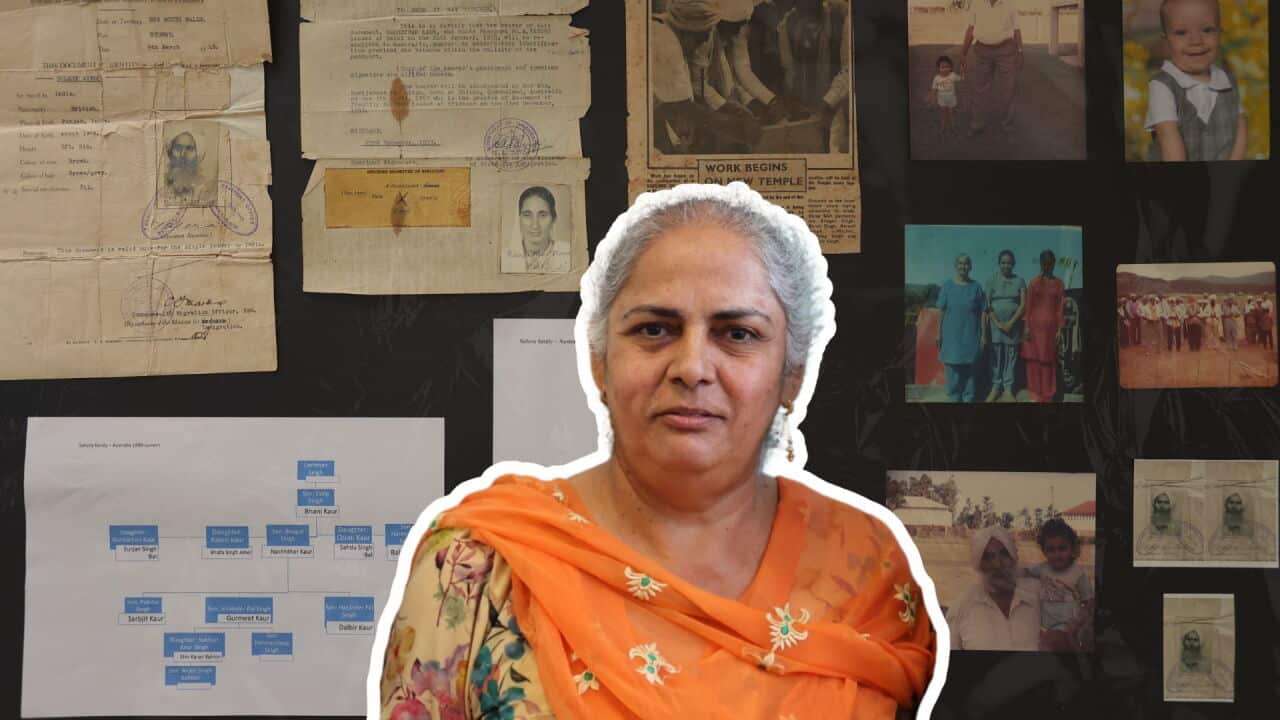
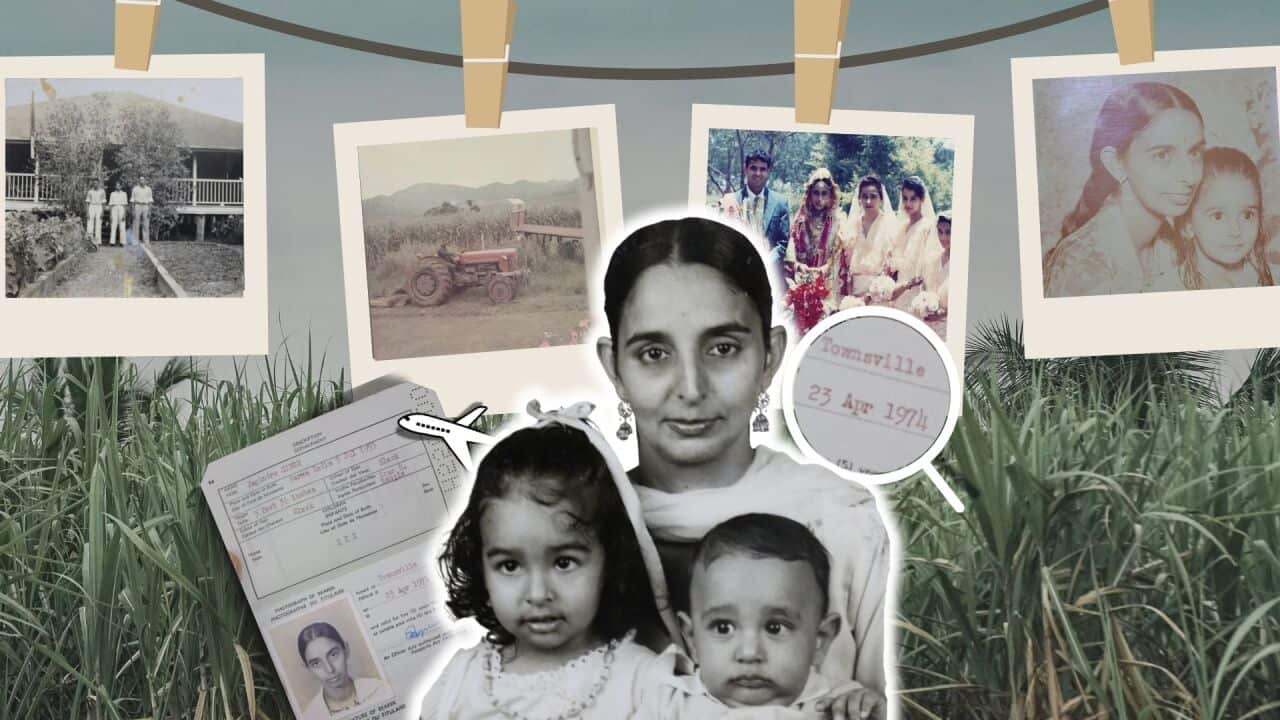

Jagindro Kalkat’s family’s connection to Australia goes back generations when her father’s nana ji, Mangal Singh, arrived in Australia by ship in 1878 and worked for years cutting trees and clearing land for vegetation and cultivation in Gordonvale and the Tablelands in Far North Queensland. In this episode, she reflects on her own migration journey, arriving in Australia as a two-year-old with her mother to join her father in regional Queensland. She shares hardships women faced on remote farms, hard work of the Sikh families and why many Punjabi women like her and her mum were recorded as 'Singh' instead of 'Kaur' in official records.
Sumeet Kaur: I am Sumeet Kaur, bringing you the untold stories of Australia's earliest Punjabi settlers. This podcast series is called Punjabi Pioneers. In its first season, you will hear fascinating stories from Punjabi families who have lived in Far North Queensland for generations. You will also hear directly from women whose struggles and experiences have rarely been documented. Through these interviews, my colleague Manpreet Kaur Singh has spoken with women living in Cairns, Gordonvale and Babinda, uncovering remarkable personal stories while shedding light on the early history of Punjabi migration to Australia.
Today, we hear from Jagindro Kalkat.
Interview
Manpreet Kaur Singh: Jagindro ji, Sat Sri Akal.
Jagindro Kalkat: Sat Sri Akal, Manpreet.
Manpreet: Thank you for joining me today. It is wonderful to have the opportunity to speak with you and learn more about your family's history, because your family's connection to Far North Queensland stretches back a very long way. Tell us, who was the first member of your family to arrive here?
Jagindro: The first person from my family to come to Australia was my father's grandfather, Mangal Singh. He arrived in 1878.
Manpreet: 1878. So he was your father's grandfather?
Jagindro: Yes.
Manpreet: What was his name?
Jagindro: Mangal Singh.
Manpreet: He would have travelled by ship in those days.
Jagindro: Yes, he came by ship.
Manpreet: Do you know of any stories or memories from those early days that were passed down through the family?
Jagindro: Yes. In those days, men generally travelled alone. Families did not accompany them. After settling here, he began sponsoring other family members to come to Australia.
First, he brought my father's uncle, Dalip Singh. After that, he sponsored my father's cousin, Gyan Singh, then my father, Sakhdev Singh. Later he sponsored Dev Singh and then Tarsem Singh.
Manpreet: Around what period was this? We're talking about the early twentieth century?
Jagindro: Yes, around the early 1900s.
Manpreet: So after arriving, he gradually brought other members of the family over?
Jagindro: Yes. That's how it happened in those days. People sponsored relatives as opportunities arose.
Before that, he spent many years here on his own.He worked on the Atherton Tablelands and around Gordonvale, helping clear the land. They cut down trees and prepared the land for cultivation.
My father's uncle also worked in the same way.
Later they purchased farmland, but initially their work involved clearing and developing land for farming.
Manpreet: How did your great-grandfather end up in Gordonvale? Most migrants at that time seem to have gone to Victoria or New South Wales.
Jagindro: Before coming to Australia, he had actually travelled to France.
Later he returned to India, and somehow Australia became the place he decided to settle.
Manpreet: That's fascinating.
Let's move forward to your own family's story. Your father came here, and then you came as a child. Tell us about that journey.
Jagindro: My father arrived on 3 May 1955.
My mother and I arrived on 16 June 1957.
Manpreet: So you've spent almost your entire life in Australia.
Jagindro: Yes. I was only two years old.
Manpreet: You were very young. When your parents came here, was there any requirement to demonstrate English language skills?
Jagindro: No, none at all. We didn't know English. We learned English once we started school.
Manpreet: Your father was already here when your mother arrived. What impression did she have of Australia before coming?
Jagindro: It was a difficult journey. My father's cousin, Gyan Singh, went to collect the family. They travelled by train through India before eventually flying from Calcutta. From Calcutta they flew to Darwin and then continued by train. It took many days to reach their destination.
Manpreet: Was it a farming life when they arrived?
Jagindro: Yes, entirely. There were very few Punjabi families here at the time. We hardly knew anyone. People rarely travelled anywhere, and there were very few social connections outside the immediate community.
Manpreet: What about relationships with local Australians?
Jagindro: There was some interaction, but nothing like today. People knew one another, but there wasn't a great deal of socialising. There was always someone visiting the farm or passing through, but broader social connections were limited.
Manpreet: Tell us about your own experience growing up. You attended school here.
Were there many other children from Punjabi backgrounds?
Jagindro: No. There was only my cousin, the daughter of Gyan Singh. That was all.
Manpreet: Did you ever face difficulties because of your background?
Jagindro: Not really. At home we spoke Punjabi, so Punjabi was the language we knew best. When we started school, we didn't know English. We learned English once we began attending classes.
Manpreet: Did other children ever tease you for not speaking English?
Jagindro: A little bit. Children tease one another even today. There was some teasing, but nothing serious.
Manpreet: Did you have much interaction with Aboriginal or Torres Strait Islander children?
Jagindro: Yes. There was an Aboriginal girl in our primary school class. We studied together. There was no difference between us. We were simply classmates.
Manpreet: Growing up here, you've managed to maintain a strong connection to Punjabi culture. How much of your Punjabi identity remains with you today, and how Australian do you feel?
Jagindro: (Laughs.) We were taught to read and write Punjabi at home. We had exercise books and pencils, and during the summer we would wash our school bags, spread them out under a tree and sit in the shade learning Punjabi. That's where we learned to read and write.
Manpreet: Who taught you?
Jagindro: My father and my uncle, Gyan Singh.
Manpreet: Was it just you they taught?
Jagindro: No, all of us. My cousin and I learned together. Later my brothers joined in as well. My younger sister was born much later, in 1973, so she wasn't part of those early lessons. There were several of us children learning together.
Manpreet: So all the children would come home from school and then have Punjabi lessons?
Jagindro: Yes, particularly on weekends. On Sunday mornings we were also taught our prayers.
Manpreet: Really?
Jagindro: Yes. We would be woken up at four o'clock in the morning and told to sit on the floor and recite our prayers. In those days, our elders believed prayers should be done sitting on the floor. Nowadays people often sit on beds or chairs, but back then it was always on the floor.
Manpreet: So you learned Japji Sahib and other prayers?
Jagindro: Yes, all of them.
Manpreet: That's wonderful.
Jagindro: Yes.
Manpreet: How did you maintain your faith when there wasn't a Gurdwara nearby?
Jagindro: There was no Gurdwara in those days. Several families worked together to preserve our traditions. The Edmonton Gurdwara was established in 1985 and the Gordonvale Gurdwara followed in 1986.
Manpreet: So you arrived in the 1950s and spent almost thirty years without a Gurdwara?
Jagindro: That's right.
Manpreet: Everything happened at home?
Jagindro: Yes. Later my father brought Guru Granth Sahib here, around 1980. Before that we relied on prayer books and family gatherings.
Manpreet: That's remarkable. Despite not having a Gurdwara, you managed to preserve your faith and culture.
Jagindro: Yes.
Manpreet: You told me there wasn't much discrimination at school and that your family ensured you stayed connected to your culture. Did anyone ever question your Sikh identity, perhaps asking why you kept your hair long?
Jagindro: Occasionally people would ask. We simply explained that it was part of our religion and that we did not cut our hair.
Manpreet: Looking back, what were some of the biggest differences between life then and life now?
Jagindro: There were no shopping centres in those days. We weren't deprived of necessities, but many things simply weren't available.
Manpreet: What about food? If you wanted to cook Punjabi food, where did you get spices from?
Jagindro: You couldn't get them. We made do with whatever was available. We often made flatbread using plain flour. There was a product called Biscuitine that we mixed with flour and water to make dough. Then we rolled it out and cooked our rotis.
It's been many years since I've done it, but I could still make them that way today.
Manpreet: That's incredible. What about dals and curries? How did you cook without spices like turmeric and cumin?
Jagindro: We couldn't get those ingredients. The only thing available was Keen's Curry Powder. We used butter and curry powder.
Manpreet: No ghee either?
Jagindro: No ghee.
Manpreet: So butter and Keen's Curry Powder became Punjabi cooking.
Jagindro: That's right.
Manpreet: And it tasted good?
Jagindro: It did.
Manpreet: (Laughs.)
Jagindro: We also didn't have pressure cookers. Families grew vegetables in their gardens instead. The women worked incredibly hard. My mother and the other women grew vegetables, managed the household, cared for the children and kept everything running.
Manpreet: Tell us more about your mother.
Jagindro: Women did everything. Most didn't drive. Usually only the men drove. My mother looked after the children, got us ready for school, managed the home and maintained the garden.
During winter we grew mustard greens, carrots and cauliflower. We also grew tomatoes and lettuce.
Manpreet: So everything was organic.
Jagindro: Yes. We also had fruit trees: mangoes, lychees, mandarins and oranges.
Manpreet: You didn't witness your parents' wedding, of course, but I assume they married in India?
Jagindro: Yes, they did.
Manpreet: Tell us about your own marriage.
Jagindro: Mine also took place in India.
Manpreet: So your husband was living in India?
Jagindro: Yes.
Manpreet: Tell us about that experience.
Jagindro: My parents found the match and arranged the marriage.
(Laughs.)
Things were very different then.
Manpreet: Were you asked for your opinion?
Jagindro: Not really.
(Laughs.)
Manpreet: Not at all?
Jagindro: Not really.
Manpreet: Did they at least show you a photograph?
Jagindro: Yes, they did.
Manpreet: And did you like him?
Jagindro: Yes.
Manpreet: He seemed suitable?
Jagindro: Yes.
Manpreet: Did you exchange letters or speak before the wedding?
Jagindro: No. It was a very different era.
Manpreet: Was there a matchmaker involved?
Jagindro: My uncle in India arranged everything.
Manpreet: So your family trusted his judgement?
Jagindro: Yes.
Manpreet: And that was enough.
Jagindro: Yes.
Manpreet: How did your husband find Australia when he first arrived?
Jagindro: It felt different, of course, but he had already spent time away from home in India. He had studied away from his village and worked in different places, so he had some experience of the wider world.
Manpreet: So he adapted fairly quickly?
Jagindro: Yes.
He had already lived independently and held jobs for several years before migrating.
Manpreet: That would certainly have helped.
Jagindro: Yes, it did.
Manpreet: You showed us photographs of your children earlier. Did they marry according to Punjabi traditions?
Jagindro: Yes. Our eldest daughter married at the Gordonvale Gurdwara and held her reception at the casino. Our son became engaged here, but his wedding took place in India. Our younger daughter also married here. Her husband had come to Australia to study.
Manpreet: Among people of your generation, do children still go to India for marriage?
Jagindro: Many still do.
Others marry here, but plenty continue to travel to India.
Manpreet: So that connection remains strong.
Jagindro: Very much so.
Manpreet: Your family's migration story is remarkable because it spans such a long period of Australian history. Australia federated in 1901, there were two world wars, and so many major events took place. Did your family ever speak about those historical periods?
Jagindro: One thing I remember is that my mother wasn't allowed to keep "Kaur" as her surname. Her passport said "Suvinder Kaur", but when she arrived in Australia the authorities changed her name to Singh on official documents.
Manpreet: Why?
Jagindro: That was simply the practice at the time. Women were recorded as Mrs Singh.
My own documents didn't include Kaur either. For most of my life I was officially recorded as Singh. Later, when my husband and I married, we ensured our children had Singh and Kaur included in their names. But in those earlier years everyone was simply recorded as Singh.
Manpreet: That must have been quite strange for your mother.
Jagindro: She was very young. She was only eighteen when she arrived in Australia. My father was twenty. They had both already experienced enormous upheaval because their families had been displaced during Partition and moved from what became Pakistan into Indian Punjab. They were still very young when they started a new life here.
Manpreet: Looking back, what would you say is the biggest difference between migration then and migration now?
Jagindro: The difference is enormous. Back then life was very hard. Many things simply weren't available. There were no Indian groceries, very little choice of clothing and very few support networks.But people adapted because they had to.
Today things are much easier. If something isn't available, people often complain. Fifty years ago there was no alternative. You simply found a way to manage. If we wanted pakoras, we had to grind chickpeas ourselves before we could even make gram flour. Today everything is readily available.
Manpreet: The difference really is extraordinary.
Jagindro: It is. Today if a family member or friend arrives, there is a whole community ready to help. Back then people often arrived completely alone.
Manpreet: Technology must have transformed things too.
Jagindro: Absolutely. Even in 1990 it was difficult to telephone India. When I married, international calls were still very difficult to make. My father-in-law sometimes travelled to Delhi simply to place phone calls.
Today people can make video calls instantly. The difference is incredible.
Manpreet: Finally, you've raised your children here and passed on your culture and traditions. I assume they still speak Punjabi?
Jagindro: Yes, they do.
Manpreet: They learned Punjabi and Sikh traditions as well?
Jagindro: Yes. We didn't wake them up at four o'clock in the morning the way our parents did. (Laughs.)
But we did teach them prayers and Punjabi.
Manpreet: Did they ever feel their culture was too different from mainstream Australian culture?
Jagindro: No. Living here teaches you to appreciate both cultures. If someone celebrates Christmas, that's fine. If someone celebrates Easter, that's fine too.
We exchange gifts with friends and family, and they do the same for us.
Our children wanted Christmas trees when they were young, so we had Christmas trees. Our grandchildren probably will too. That's perfectly fine.
Manpreet: My final question is for new migrants arriving in Australia today. Many people talk about challenges, discrimination or difficulties settling in. Based on your family's long history here, what advice would you give?
Jagindro: Complaining doesn't achieve much. You simply get on with life and work hard. If people could experience what life was like fifty years ago, they would realise how much easier things are today.
The opportunities available now are extraordinary compared with what earlier generations experienced. You have to appreciate that and make the most of it.
Manpreet: It has been wonderful speaking with you. Thank you for sharing such beautiful memories and such an important part of Australia's Punjabi history.
Jagindro: Thank you, Manpreet.
Manpreet: Thank you so much.
Jagindro: Sat Sri Akal.
Manpreet: Sat Sri Akal.
Sumeet Kaur: You have been listening to a memorable interview conducted by my colleague Manpreet Kaur Singh. I hope you enjoyed the conversation.Search for Punjabi Pioneers on the SBS Audio app or wherever you listen to podcasts. Join me, throughout this first season as we bring you some of the untold, unheard and deeply moving stories of Far North Queensland's Punjabi pioneers.
🔊 Find all our podcasts and stories that matter here at SBS Punjabi Podcast Collection.
💻 For news, information and interviews in Punjabi from across Australia and the homeland, you can tune in to SBS Punjabi live from Monday to Friday at 4pm on SBS South Asian on digital radio, on channel 305 on your television, via the SBS Audio app or stream from our website.
📲 Also, follow us on Facebook and Instagram.