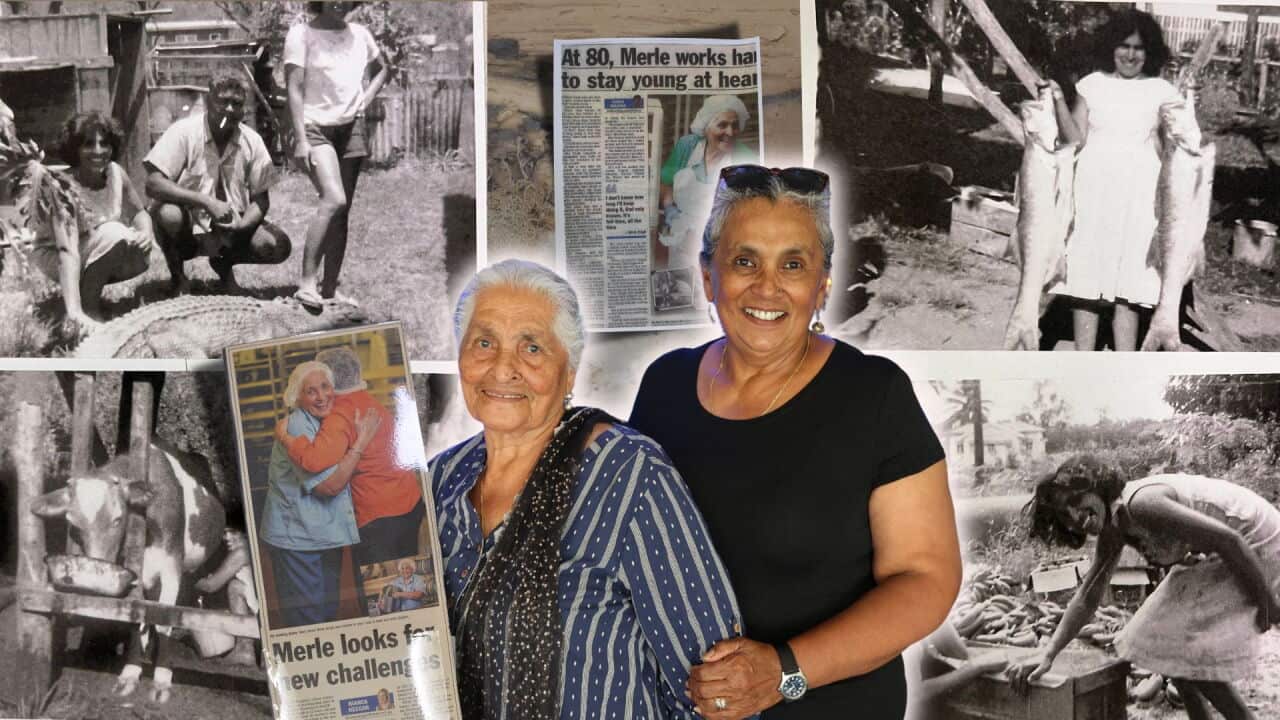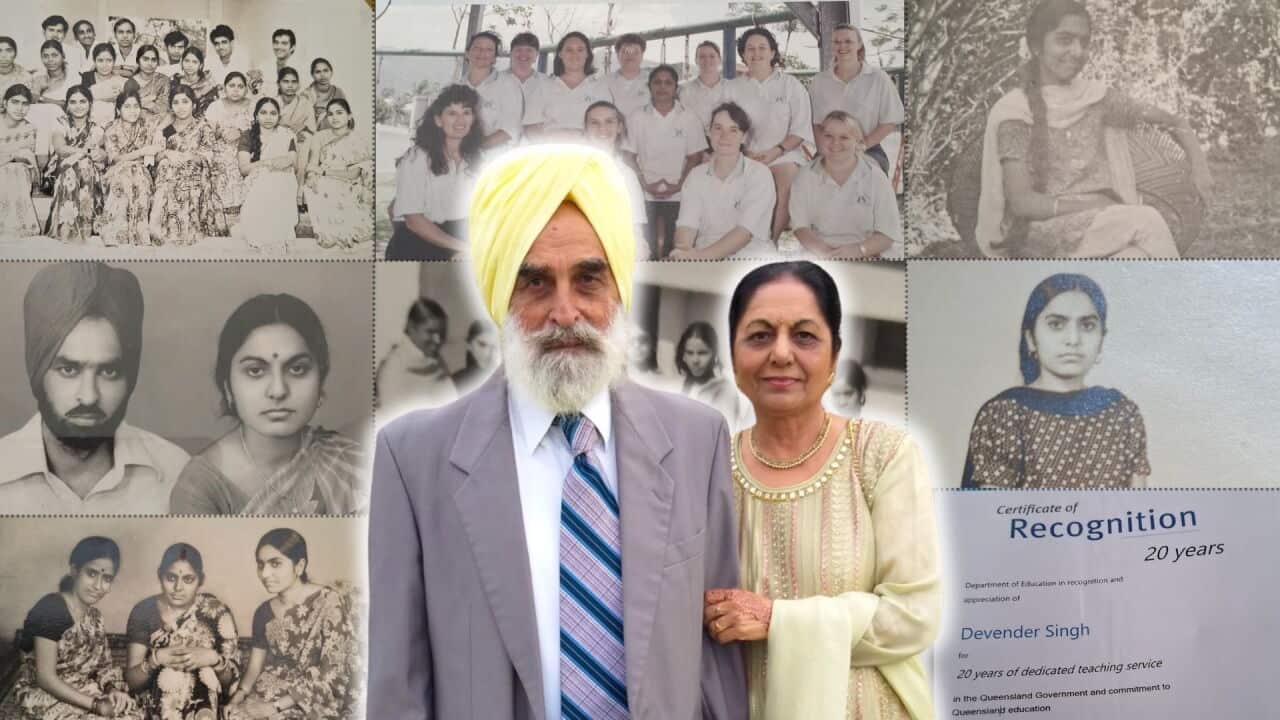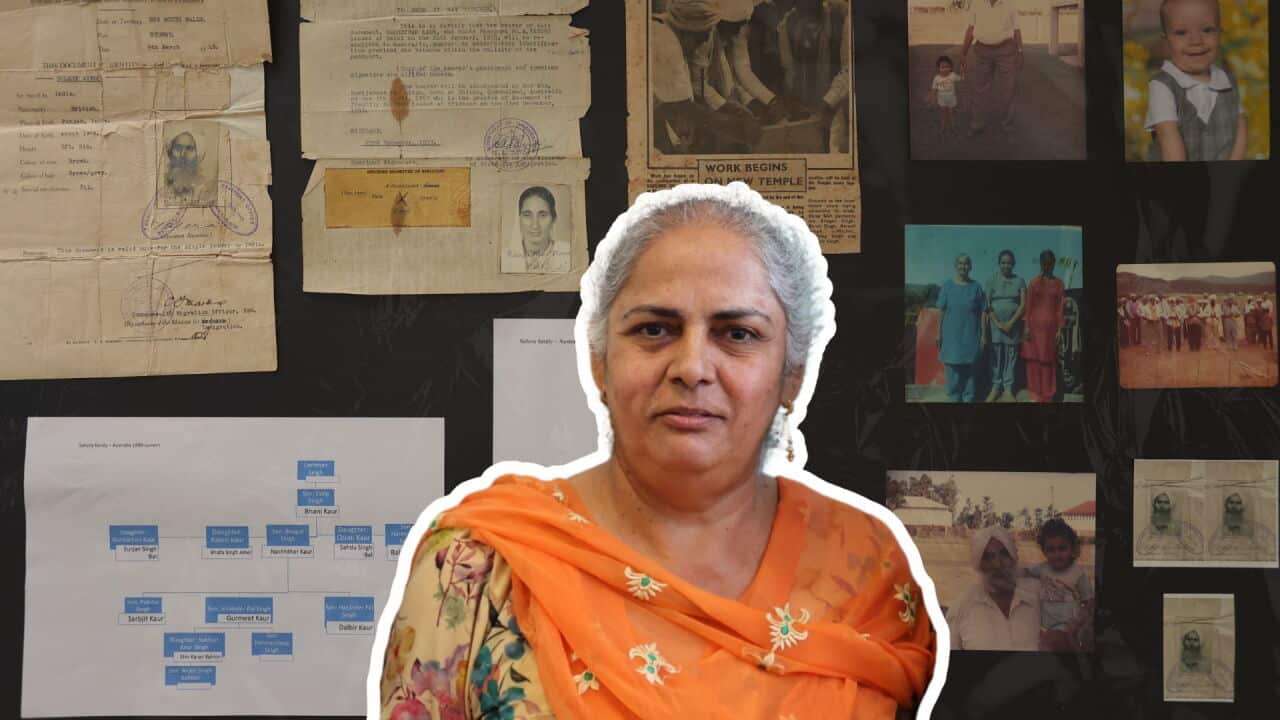
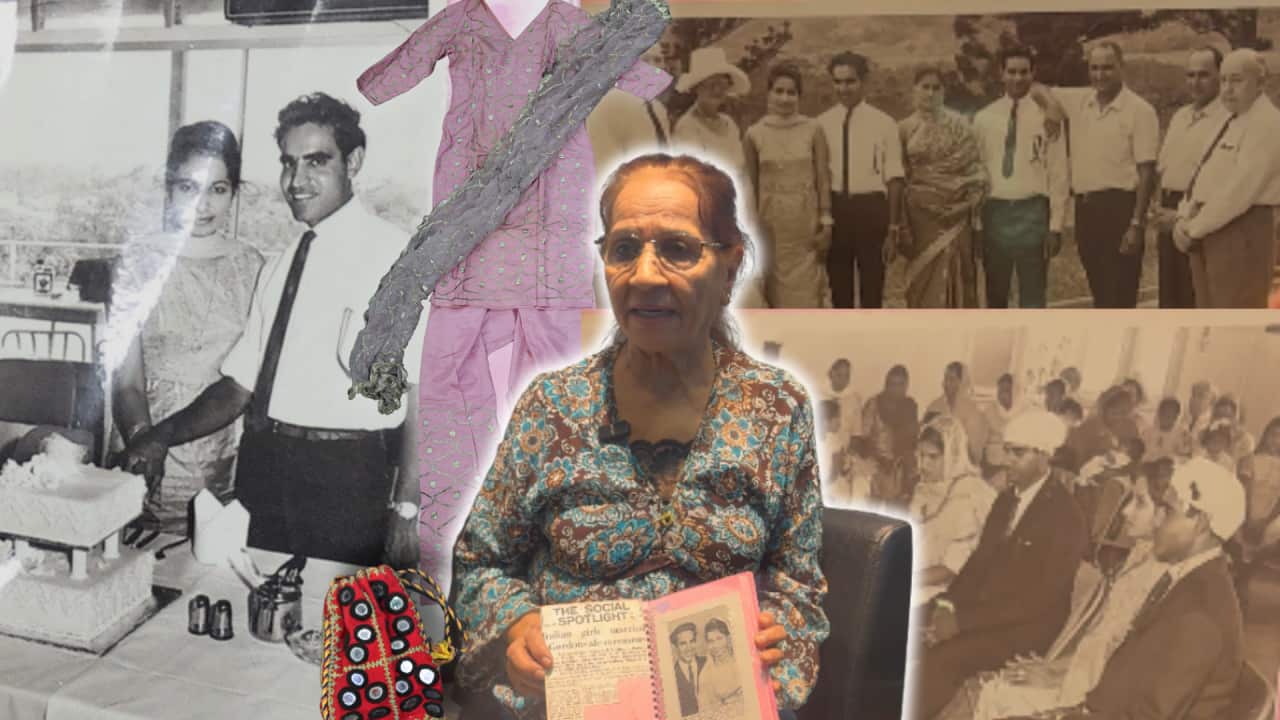

In 1967, Surinder Kaur Sodhi migrated from Hoshiarpur, Punjab, to Far North Queensland, at a time when the White Australia Policy was still in place. In this interview, she reflects on her unique one of a kind grand wedding in regional Queensland, her early experiences of arriving in Australia, her husband’s family’s Punjabi roots dating back to 1888, their transition from hawking to sugarcane farming in North Queensland, and the ways she held on to her identity in a new land.
HOST: I am Sumeet Kaur, bringing you the untold stories of the earliest Punjabi settlers in Australia, through this podcast series, Punjabi Pioneers. In its first season, you will hear very interesting lived experiences of Punjabi families who have lived for generations in Far North Queensland. But we will hear these stories through the voices of the women who settled here, women whose struggles you may rarely have heard about elsewhere.
Through these interviews, my colleague Manpreet Kaur Singh has brought to light many compelling personal stories of women living in Cairns, Gordonvale and Babinda, as well as several aspects of the early period of Punjabi migration to Australia. Let us listen to Punjabi Pioneers, which charts the stories of\the earliest Punjabi migration to Australia.
Manpreet Kaur Singh: Could you please tell us your full name?
Surinder Kaur Sodhi: My full name is Surinder Kaur Sodhi. I was born in Hoshiarpur district in the state of Punjab, India. I completed a Bachelor of Arts through a three-year degree course at Punjab University.
MANPREET:
Wonderful.
SURINDER:
From a Punjab University college.
MANPREET:
I understand that you came to Australia a very long time ago.
SURINDER:
Yes.
MANPREET:
It has been many decades now.
SURINDER:
Yes.
MANPREET:
Let's talk about your migration story.
SURINDER:
Okay.
MANPREET:
Tell me, in which year did you come to Australia from India?
SURINDER:
I arrived in Australia on the last day of 1966, but my wedding took place on 1 January 1967. So I generally count myself as arriving in 1967.
MANPREET:
I see.
SURINDER:
Yes.
Manpreet Kaur Singh:
At that time, the White Australia Policy was still in place.
SURINDER:
Yes.
MANPREET:
And you came to Far North Queensland.
SURINDER:
Yes.
MANPREET:
A very remote part of Australia.
SURINDER:
Yes.
MANPREET:
Could you share some memories from that time?
SURINDER:
I have many memories. The first thing I would like to share is what happened when my plane landed in Brisbane at seven o'clock in the morning. It was summer. The last flight to Cairns was not until seven o'clock that evening. So I asked the air hostess, "What should I do? I have twelve hours to wait."
She said, "Oh no, we'll look after you. I'll take you to my house."
She took us to her home. My future sister-in-law was travelling with me because it was a double wedding. It was a beautiful apartment on the banks of the Brisbane River. I had only seen places like that in Bollywood films.
MANPREET:
(Laughs)
SURINDER:
It was a beautiful apartment. She told us, "Freshen up in the bathroom. Change your clothes. Have some snacks and get some rest."
When it was time for our evening flight, she drove us back to the airport, put us on the plane and sent us on our way to Cairns. That remains one of the highlights of my journey.
I have always admired Australians because of the kindness they showed me from the moment I first set foot in Australia.
MANPREET:
You mentioned that it was a double wedding. Two of you came from India and both of you were getting married here.
SURINDER:
Yes.
MANPREET:
Can you explain how that happened? Had you already been engaged in India? Was there a formal arrangement?
SURINDER:
Yes. The engagement had already taken place in India. In those days, it was common to arrange marriages through photographs.
My husband Avatar's village was Malla Bediyan in Nawanshahr district. The engagement ceremonies and exchange of gifts had already taken place there. My future sister-in-law was marrying my husband's younger brother. A relative was asked to find a suitable girl for him as well.
My husband and his brother were close in age, only about a year apart.
MANPREET:
So this family was already settled in Far North Queensland?
SURINDER:
Yes.
MANPREET:
There were two brothers who needed to get married.
SURINDER:
Yes.
MANPREET:
And both brides came from India.
SURINDER:
Yes.
MANPREET:
From Punjab.
SURINDER:
Yes, from Punjab.
MANPREET:
So your engagement took place around 1963?
SURINDER:
Yes. Both engagements took place in India.
MANPREET:
Then you spent three years corresponding with each other?
SURINDER:
Yes. We became pen friends and exchanged letters.
MANPREET:
You wrote letters to each other.
SURINDER:
Yes. I wanted to be certain about my decision. No one pressured me. My father was very liberal-minded.
For three years I wrote letters and asked all kinds of questions. I wanted to know about life in Australia, the political situation, and how Indian people were treated.I asked whether there was discrimination.
He answered everything honestly. He even sent photographs of himself with his English friends.
MANPREET:
So you completed your degree first.
SURINDER:
Yes.
MANPREET:
And only then decided it was time to come.
SURINDER:
Only after the matchmaker returned again.
(laughs)
He used to visit every year. My father finally said to me:
"Look, you need to make a decision now. I'm not forcing you. If you're not ready, that's perfectly fine. But I need to give them an answer, yes or no."
I said, "Yes, I will go."
MANPREET:
Did you ever speak on the telephone during those three years?
SURINDER:
No. Telephones were very rare in those days, especially in 1967. Even in Australia there were not many telephones. Hardly anyone knew anything about Australia back then.
MANPREET:
That's true. Most people had never even heard much about it.
SURINDER:
Exactly. Very few people knew about Australia.
MANPREET:
Most migrants were going to the United States or the United Kingdom.
SURINDER:
Yes, people generally went to England. Back then people would simply say they were going to "Vilayat" (abroad), meaning England.
I didn't even tell most people that I was engaged. Instead, I would talk hypothetically and say, "There's a girl who has the opportunity to go to Australia. What do you think?"
Most people would reply, "Oh, that's far too far away." I would say, "Distance doesn't worry me. I'm only asking for opinions. I'll make my own decision."
MANPREET:
So you and your future sister-in-law came to Australia together. Your parents didn't accompany you for the wedding?
SURINDER:
No. By the time I married into the family, they were already third-generation Australians.
Their grandfather had come first, then their father, and then my husband belonged to the third generation.
After the wedding I moved into their home. I must mention that when I first arrived, I was amazed by the house. It was beautiful.
There were shelves filled with books. National Geographic, Reader's Digest, Preet Lari magazine, and many other publications arrived every month.
My husband loved reading, and so did my father-in-law. There were even books by Dale Carnegie on the shelves.
I felt completely comfortable because I came from a similar background that valued education and reading.
MANPREET:
That's remarkable. They had lived in Australia for three generations but had preserved their culture so beautifully.
It sounds as though you immediately felt at home.
SURINDER:
Absolutely. Back in India, if I wanted to read Preet Lari, I had to go to the university library. Here, it was arriving directly at my home every month. I was delighted.
MANPREET:
Tell us about your wedding. Where did it take place and how was it organised?
SURINDER:
Everything had already been prepared in Gordonvale.
The family already had a copy of Guru Granth Sahib. Sardar Teja Singh, who was very well known in Woolgoolga, performed the ceremony and read the Anand Karaj. I think he may still be alive.
The entire hall was decorated beautifully. My father-in-law was very progressive and well educated.
He had apparently seen arrangements overseas where people did not sit on the floor, so he had an extremely high stage built for Guru Granth Sahib.
MANPREET:
How high?
SURINDER:
Almost the height of two or three storeys.
MANPREET:
For Guru Granth Sahib?
SURINDER:
Yes.
The stage was very high. Then small chairs were placed below because the hall had a bare floor. People needed somewhere to sit comfortably.
That was where the wedding took place.It was organised beautifully. One gentleman objected, however. My father-in-law kept telephoning him.
The gentleman said, "The stage is very high. You've shown great respect to Guru Granth Sahib, but there are no cushions or proper seating arrangements nearby."
Eventually my father-in-law convinced him, and he attended.
MANPREET:
Your wedding was actually reported in the local newspaper.
SURINDER:
Yes, it was. It appeared in the local paper.
SURINDER:
Yes, they published it.
MANPREET:
That's wonderful.
SURINDER:
The newspaper's social pages reported that Mr and Mrs A.S. Sodhi had married at the CWA Hall in Gordonvale.
It mentioned that SURINDER Kaur, eldest daughter of Mr and Mrs Rajinder Singh Sandher of Hoshiarpur, Punjab, India, had married Avatar Singh, eldest son of Mr and Mrs D.S. Sodhi.
MANPREET:
So you were something of a local celebrity at the time.
SURINDER:
(Laughs) I suppose so.
MANPREET:
Someone whose wedding was important enough to be written about in the newspaper.
SURINDER:
Yes.
MANPREET:
Your marriage took place in 1967 while the White Australia Policy was still in effect.
Yet in the photographs we've seen, you seem surrounded by white Australian friends and neighbours.
Did you ever experience discrimination or racism?
SURINDER:
Personally, I did not.
However, I heard stories from earlier generations.
My husband Avatar's grandfather wanted to purchase a farm at Redlynch.
At that time, because of the White Australia Policy, people like him could not easily buy land. Fortunately, their chartered accountant, E.M. Borden, was a very honest man.
He purchased the property in his own name and later transferred it to my husband's grandfather.
MANPREET:
That required a great deal of trust.
SURINDER:
Yes, complete honesty.
He didn't want my husband's grandfather to miss the opportunity. Avatar's grandfather was a very capable and successful man. He was determined to own farmland.
The farm eventually became a gathering place for other Punjabi migrants.Many would spend weekends there resting, sharing meals and enjoying company.In those days many workers lived in extremely poor accommodation, old barracks and converted sheds.
So the farm became a place where they could relax and feel at home.As for me, I never personally experienced those hardships. By the time I arrived, the family was already established and doing well.
MANPREET:
Did your parents ever come to Australia to visit you?
SURINDER:
That's an interesting story.
The matchmaker suggested that my brother should accompany me to Australia.He said, "You're travelling alone. Let's send your brother with you."
I replied, "No, I don't want anyone accompanying me." People kept saying, "Who knows why they're sending the brother..."
MANPREET:
(Laughs)
To make sure everything was legitimate?
SURINDER:
Exactly.
I said, "If my brother has to come, then I won't go."
After that, the matchmaker stopped raising the issue. Later, after I settled in Australia, I sponsored my brother myself and he came here. My father, however, never wanted to migrate. I asked him many times.
He always replied: "No, daughter. I want to stay in my own home. I don't want to die overseas."
MANPREET:
Aunty, we're running a little short on time, but I know you've brought some photographs with you today.
SURINDER:
Yes.
MANPREET:
Could you show them to us? And tell us about them?
SURINDER:
Certainly.
You asked earlier whether anyone from my family ever came to visit me. This photograph is of my father.
MANPREET:
You've kept this photograph with you all these years?
SURINDER:
Yes. I took it out of my family album to bring here today.
MANPREET:
That's lovely.
SURINDER:
And these are photographs of children from our extended family. They were very young when I first arrived in Australia. They would all be much older now.
MANPREET:
These were close family members?
SURINDER:
Yes, close relatives.
I think Bobby's mother was supposed to come here today as well.
(laughs)
They're all relatives.
MANPREET:
Very nice.
SURINDER:
This photograph was taken during a picnic after our wedding.
I think it was somewhere along the Gillies Highway.
MANPREET:
My goodness. This takes us right back to the 1960s.
Everyone is there enjoying the picnic.
Aunty, I noticed you're wearing trousers in the photograph.
Did you ever wear trousers in India?
SURINDER:
Not really.
In Punjab, women weren't generally allowed to wear trousers publicly.
We liked them, of course. Sometimes we would secretly wear our brothers' clothes at home for fun. But it wasn't considered acceptable outside the house.
MANPREET:
So do you feel you had more freedom after coming to Australia?
SURINDER:
Yes, definitely.
In fact, one of the first things my father-in-law said was:
"Let's go and buy some Western clothes for you."
(laughs)
I couldn't believe it.
MANPREET:
(Laughs)
SURINDER:
This photograph here shows my husband sitting on a tractor.
MANPREET:
Wow.
SURINDER:
Because we were living and working on the farm.
MANPREET:
Aunty, my final question is about culture.
I can see that you've successfully maintained your traditions and cultural identity within your family.
Your children have followed those traditions as well.
SURINDER:
Yes, absolutely.
MANPREET:
How have you managed to preserve your culture so strongly in such a remote part of Queensland, where there were not many Punjabi families around?
SURINDER:
Books played a very important role. We bought Punjabi comic books and books on Sikh history. My youngest son would wake up every morning and read comics.
First he would read English comics, and then we would do our prayers.We played shabads and Gurbani in the mornings.
Then, during the early 1980s, particularly around 1983 and 1984, there was a great deal of activity around building the Gurdwara. We regularly took the children there.
Children absorb things like sponges. You don't always need to lecture them. They grow up surrounded by those values and traditions. They absorb them naturally. And they learn everything.
MANPREET:
That's beautiful.
You sound like the matriarch of your family, someone who has kept the family connected and passed on important values.
You've contributed so much.
If you were to summarise your life's experiences for future generations, what would you say?
SURINDER:
In Australia?
MANPREET:
Yes, in Australia.
What would your message be?
SURINDER:
I would say that every generation faces its own challenges.
One of the challenges facing younger generations today is finding life partners.
There are expectations around speaking Punjabi and maintaining cultural traditions.
My advice is this:
Stay connected to your culture.
Never abandon it.
Your culture enriches your life.
But at the same time, bring other cultures into your own culture as well.
MANPREET:
So you're saying people should also integrate and adapt?
SURINDER:
Yes.
That makes us richer as people.
We're living here.
This is our home.
I've never believed in separating cultures.
The two cultures should merge.
They should enrich each other.
We can learn from Western culture just as others can learn from ours.
MANPREET:
It's interesting that your son's name is Paul.
That's perhaps an example of that Western influence.
SURINDER:
Yes.
MANPREET:
While still maintaining your Punjabi identity.
SURINDER:
Exactly.
MANPREET:
So what you're really saying is that the two cultures can coexist and merge.
SURINDER:
Absolutely.
They should merge.
SURINDER:
There is still discrimination in society.
We have to acknowledge that.
Punjabi people have sometimes experienced discrimination.
But language remains important.
By the fifth generation, it becomes much harder for children to hold on to Punjabi.
They try their best.
They maintain good manners.
They attend the Gurdwara.
They respect their heritage.
But English is their first language.
Sometimes newly arrived migrants from India place a great deal of pressure on children to learn Punjabi.
That can make children anxious.
Even finding suitable partners becomes difficult.
People often insist that a future husband or wife must speak Punjabi.
I believe we need to open our hearts.
As long as young people can comfortably live in both cultures, we should give them the freedom to make their own choices.
MANPREET:
Going back to history, I think it's very important that we understand where these stories began.
Your husband's family migrated to Australia many generations ago.
What do you know about their migration story? When did they come? How did they arrive? What challenges did they face, particularly in such a remote part of Australia?
SURINDER:
My husband's grandfather was only sixteen years old when he decided he wanted to come to Australia.
There were six or seven brothers in the family.
His parents did not want him to leave.
But he was adventurous and determined.
Eventually they agreed to let him go.
I believe he arrived in 1888.
MANPREET:
1888.
So we're talking about the nineteenth century.
SURINDER:
Yes.
The very beginning of Punjabi migration to Australia.
MANPREET:
Remarkable.
SURINDER:
After arriving, many Punjabis worked as hawkers.
They travelled around selling vegetables and produce.
At that time Townsville was larger than Cairns.
The Atherton Tablelands were still heavily forested.
Large areas of bushland had to be cleared before they could become farmland.
MANPREET:
So the region looked very different from today.
SURINDER:
Completely different.
It was mostly forest.
People worked extremely hard.
But my husband's grandfather was very intelligent and very ambitious.
He wanted to establish himself.
Eventually he bought a farm in Redlynch.
Even during the White Australia Policy, a trusted accountant helped him secure the property.
MANPREET:
So we're talking about the early 1900s.
SURINDER:
Yes.
The family first worked hard, earned money, and gradually improved their circumstances.
MANPREET:
So they began as hawkers and eventually became landowners.
SURINDER:
Yes.
Although they helped clear land, many of the farms had already been developed by Italian migrants.
The Punjabis worked, saved their money and purchased established farms.
MANPREET:
What did they grow?
SURINDER:
Sugar cane.
Bananas only became common much later.
At that time sugar cane was the major industry.
MANPREET:
That's very similar to Punjab, where sugar cane is also an important crop.
SURINDER:
Exactly.
Most of them were Punjabi Jat farmers.
Farming was already part of their background.
MANPREET:
Did you ever hear stories about the difficulties they faced?
SURINDER:
Not many.
Mostly they talked about working hard and finding ways to get ahead.
Language was one challenge.
Many of the early migrants didn't speak English.
There was a man called Teja Singh who used to tell a funny story.
He said that when they wanted to buy eggs, they didn't know the English word.
So they would go into a shop and make chicken sounds.
"Coo, coo, coo, coo."
MANPREET:
(Laughs)
SURINDER:
And somehow the shopkeeper would understand and hand them eggs.
The same thing happened with milk and other items.
Those who didn't know English had to find creative ways to communicate.
MANPREET:
That's a wonderful story.
It shows both the challenges and the determination of those early migrants.
MANPREET:
Aunty, what you've described is an extraordinary life.
It's a story of courage, resilience, opportunity and success.
I think there is so much that all of us can learn from your experiences.
SURINDER:
Thank you.
MANPREET:
Thank you so much for sharing your story with us.
SURINDER:
Thank you very much.
Has the time already finished?
We could have talked all day.
(laughs)
MANPREET:
I could have listened all day.
(laughs)
SURINDER:
(Laughs)
MANPREET:
It's been absolutely wonderful.
SURINDER:
Thank you very much, MANPREET.
It has been an honour to speak with you and to share my story.
MANPREET:
The privilege has been mine.
Thank you.
SUMEET (Host Closing): You were listening to a memorable interview conducted by my colleague Manpreet Kaur Singh. I hope you enjoyed the conversation. Search for SBS’s Punjabi Pioneers podcast on the SBS Audio app, or on whichever platform you use to listen to podcasts. Join me, in this first season as we hear some untold, unheard and deeply moving stories from Far North Queensland.
[Outro music]
Click on the audio icon to listen to the full interview in Punjabi.
Find all our podcasts and stories that matter here at SBS Punjabi Podcast Collection.
For news, information and interviews in Punjabi from across Australia and homeland, you can tune in to SBS Punjabi live from Monday to Friday at 4 pm on SBS South Asian on digital radio, on channel 305 on your television, via the SBS Audio app or stream from our website. Also, follow us on Facebook and Instagram.