

‘Guru Nanak’s doctrine of Ek Onkar changed the destiny of South Asia and has a great role to play in countries like Australia as well’, says Harinder Singh, in a wide-ranging interview with SBS Punjabi about the Guru's philosophy and it’s relevance in the modern world.
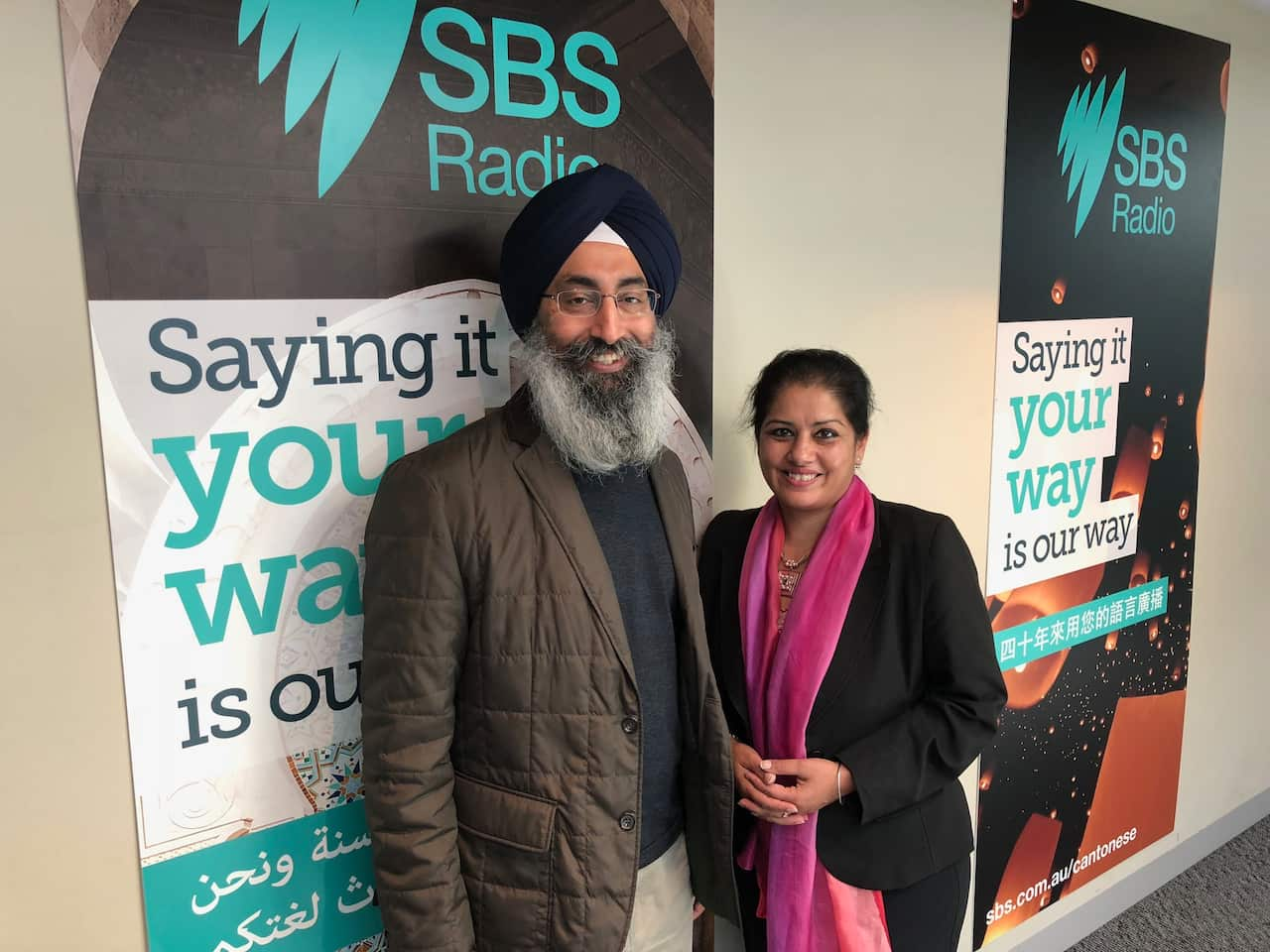
Harinder Singh, founder of the US-based Sikh Research Institute, who has also been working on the Punjab Digital Library, was recently on a tour of Australia.
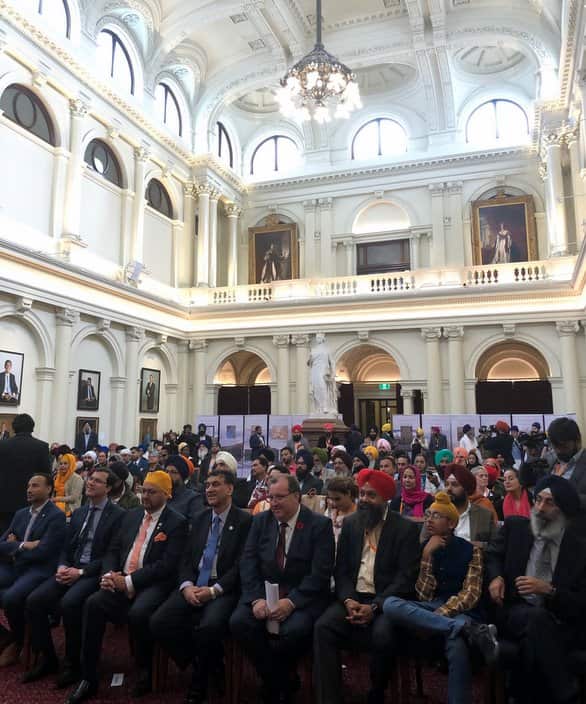
Amongst many engagements for Guru Nanak’s 550th celebrations, he was the keynote speaker at Australia’s federal parliament in Canberra, as well as the Victorian parliament house in Melbourne.
In a wide-ranging interview with SBS Punjabi, Mr Singh bemoaned the fact that even Sikhs today “don’t have clarity on who was Guru Nanak or what was the purpose of his life and teachings.”
“They are far more influenced by popular culture and an artist’s imaginative representation of what he looked like, rather than personalising his basic ideals and teachings.”
“Guru Nanak’s doctrine of Ek Onkar applies to governments around the world because it speaks of politics and governance, with the clear understanding that there should be no racism or sexism; it applies to Sikhs and inspires them to personalise the Guru for themselves; and it applies to families who want to learn more about relationships,” he says.
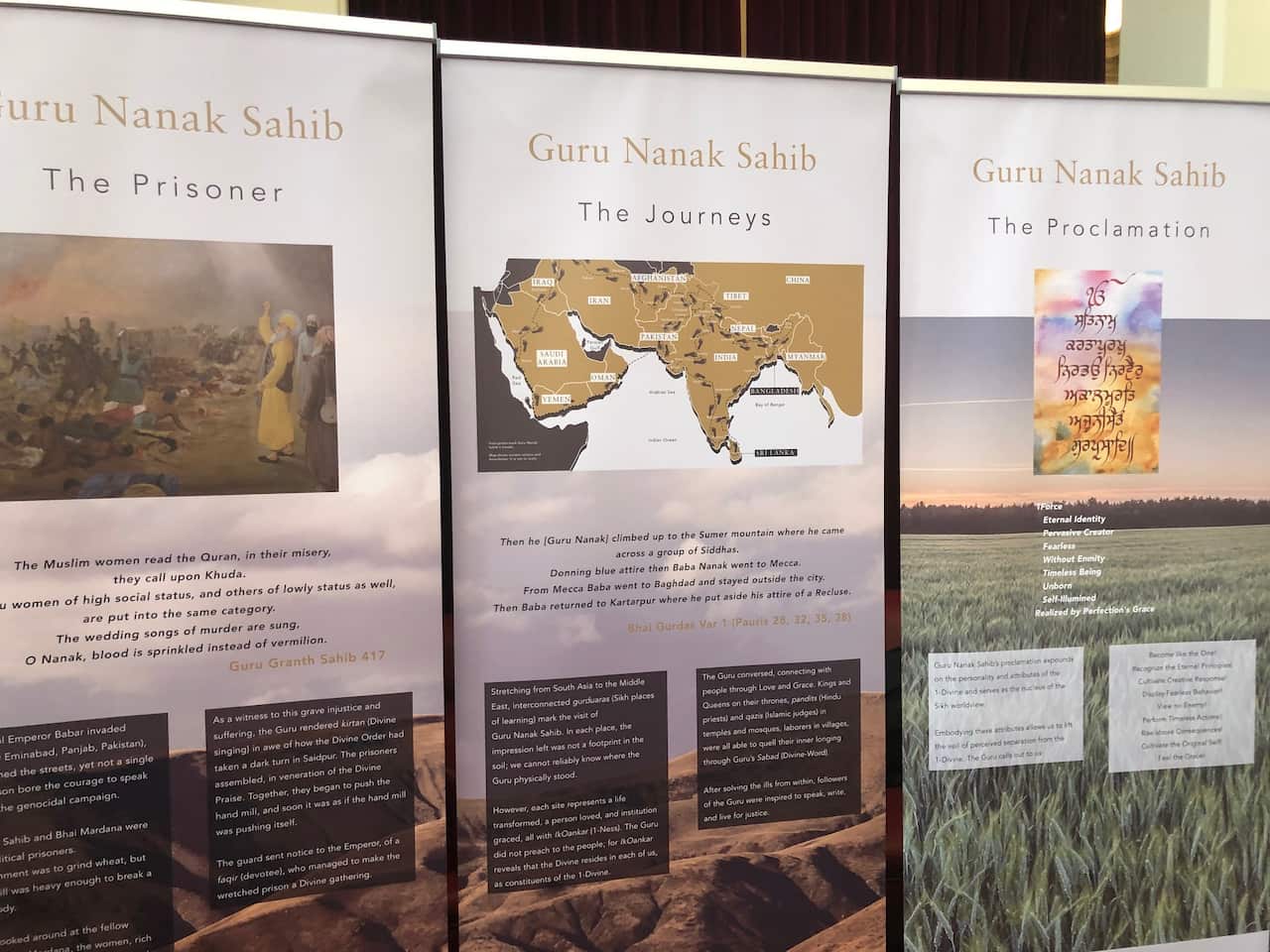
Mr Singh underlines that it’s Guru Nanak's philosophy of ‘Oneness’ that has brought two countries like India and Pakistan together for the Kartarpur corridor project.
“His doctrine of Ek Onkar changed the destiny of South Asia in the 16th century and can heavily inspire countries like Australia today as well,” he adds.
“Guru Nanak’s life began at Nankana Sahib (now in Pakistan), and he travelled to religious and political centres in many countries and started a dialogue,” he explains.
“He spent his last 24 years at Kartarpur teach it’s inhabitants to be truth exemplars. His vision was, that if the world doesn’t understand the philosophy of Ek Onkar, then at least the people of Kartarpur should and should go on to apply that philosophy to every aspect of life.”
According to Mr Singh, this same philosophy should and must be applied to countries like Australia.
“The number one political paralysis in the world is the rise of religious bigotry and ultra-nationalism. This comes from the mindset of ‘Otherness’, which is the antithesis of Oneness.”
“Guru Nanak’s governance model assumes that every policy must ensure the protection of economic and political rights of all.”
“This applies to a state like Victoria, which is progressive in so many ways, but its taken 230 years for the First Nations Assembly to be formed for the indigenous people.”
‘It’s great that the acknowledgement has come, but the next thing now is the Treaty. The Oneness philosophy of Guru Nanak predicates that this doesn’t remain a declaration – it must become a reality in policy as well.
So after December 10, when these discussions take place, the policies must be formulated and every Sikh should support this process,” says Mr Singh.
Harinder Singh went on to speak about the Guru’s basic philosophy and the meaning of the ‘Mool Mantar’, the first verse in the Guru Granth Sahib. He gave a fascinating insight into when Guru Nanak’s followers began to be known as Sikhs and when Sikhism began to be ‘recognised’ as a religion.
Click on the audio link above to hear the interview.
Listen to SBS Punjabi Monday to Friday at 9 pm. Follow us on Facebook and Twitter.