

Despite Cricket Australia's plan to make the sport more inclusive, many migrant-led local cricket clubs claim to be facing a hard ball.
Cricket "runs in the blood" for Karan Sharma, a founding member of the Adelaide-based Punjab Lions Cricket Club.
"I wanted to keep my love for cricket alive even after migrating to Australia," he told SBS Punjabi.
Sharma — who hails from the north Indian state of Punjab — said he initially played for several "mainstream" clubs in Australia, before deciding to co-found his own club in 2018 along with other migrants from India.
According to Sharma, he was often made to feel "different" when he first started playing cricket in his adopted country. Now, he feels "welcomed".
"When you see people who look like you, who have the same roots as you, it is comforting. It breaks a lot of barriers, especially for new migrants," he said.
But Sharma said his road hasn't been easy, even after starting his own club.
'Lack of resources'
Despite lifting the LO1 (limited over division 1) trophy in Adelaide at the beginning of 2025, the Punjab Lions' owners claim that they do not have access to sufficient resources.
Cricket Australia allocates funds to states and territories, which are further distributed to clubs in specific suburbs.

Generally speaking, the funds are limited, and there are over 3,000 registered multicultural clubs across the nation.
It's a multi-tiered system with Cricket Australia at the top, and it goes down to the council level, with a lot of bureaucratic processes along the way.
"We do not have the resources that many of our peers, who formed clubs even after us, have access to," Sharma said.
We do not have an oval, we do not have nets, we put in money from our own pockets for the basic things.Karan Sharma
According to Sharma, unlike many clubs, the Punjab Lions have also not been allocated a place to train in their suburb, and players are currently paying rent for a nearby facility.
"Even our home ground is 19 kilometres away. It is not in our home [suburb]. We share the ground with other teams."
He believes funding for this should have been allocated by the South Australian Cricket Association (SACA) or the Adelaide Turf Cricket Association (ATCA).
Sharma said the club meets these organisations' funding criteria.

SBS Punjabi has viewed several emails that Punjab Lions wrote to SACA seeking funds without success.
When approached, SACA refused to comment.
'A lot of learning and unlearning'
Some members of other multicultural cricket teams have shared similar difficulties with SBS Punjabi.
Shankarettan Valibans — a migrant from the south Indian state of Kerala — has been playing club cricket in Melbourne for over 19 years now.
The 42-year-old all-rounder believes he found "mates for life" through grassroots cricket.
But it did not come without "a lot of learning and unlearning from both sides".
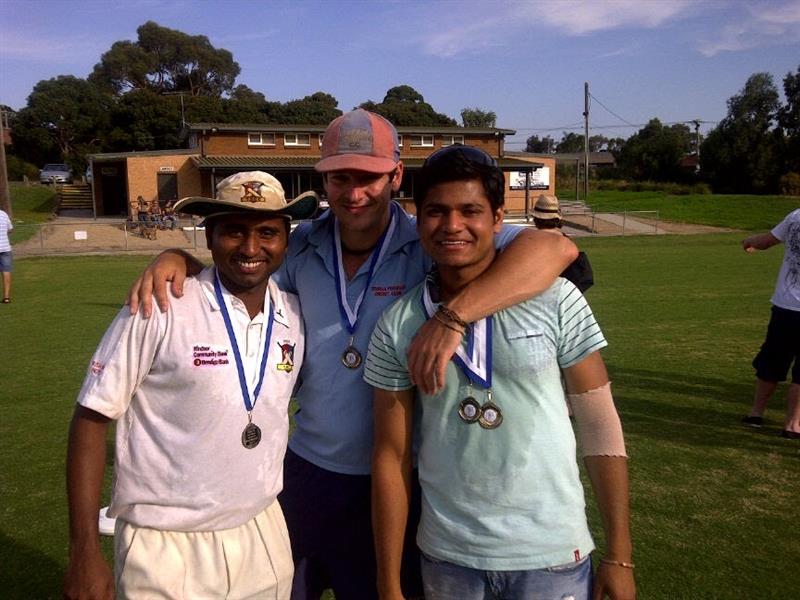
His Australian teammates introduced him to the local barbeque culture, while he introduced them to samosas and veggie burgers, he told SBS Punjabi.
Valibans said that, while funds were not an issue for the first team he played for — an established club in the well-heeled suburb of Toorak — when he moved to another suburban team across the city in Thornbury, the contrast was stark.
The newer club has many players from the South Asian community.
"We do not even have a clubroom. We are struggling for funds," he said.
For the past two seasons, we did not have toilets next to our club, and we had to go across the Yarra to the other side of the river to access the community toilets.Shankarettan Valibans
Representatives of both the Punjab Lions and Valibans' Thornbury club cited difficulties many new migrants have with paying subscription fees.
Players are usually charged roughly $15 to $30 per week, depending on the club, which covers facility rental, use of practice nets and, in some cases, equipment such as bats and balls.
Valibans said that, as a community-based club that aims to offer a safe space to people, they often forgo the registration fee of players who are financially struggling, which reduces club earnings.
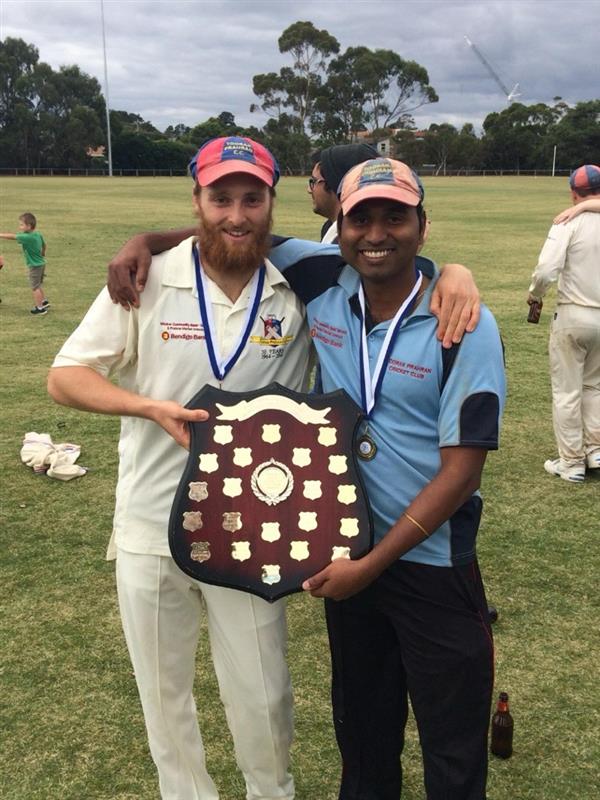
"Many students work part-time and do not have enough to sustain [themselves]. In such cases, we forego the subscription fee to help new migrants," Valibans said.
"For many new migrants who are fighting many financial, cultural, emotional and psychological battles of moving to a new country, cricket becomes the only avenue where they can be themselves."
Access to funds
Cricket Australia, the sport's highest governing body in Australia, has a large pool of funds to support cricket at multiple levels in the country — from the national men's and women's teams to local under-10s clubs.
In a response to queries raised by SBS Punjabi, Cricket Australia acknowledged that some clubs with high multicultural participation "face challenges in accessing facilities and resources".
We acknowledge that some clubs with high multicultural participation do face challenges in accessing facilities and resources.A Cricket Australia spokesperson
"Cricket Australia works closely with state and territory associations to support equitable access through The Australian Cricket Infrastructure Fund and The Growing Cricket for Women Fund," the body stated.
"We actively encourage clubs from all backgrounds to apply for these programs, and our community cricket teams regularly assist with the application process."
"We also work with local councils and multicultural organisations to build awareness and secure long-term support for grassroots cricket."
'It's not just a game'
An early 2025 report on Australian club cricket by the Scanlon Foundation Research Institute titled It's Not Just Cricket revealed that "participating in Australian cricket is not as easy or equitable as many South Asian-Australians imagine or hope".
The report states that there are many "intersecting reasons" for this lack of accessibility or equity, including:
- The cost of playing cricket
- A lack of systems literacy
- A clash of cultures and cultural identities
- Visa status and requirements
- Systemic and individual bias
- Discrimination and racism
- Language and religious barriers
- Gender norms
- Inequitable access to resources
- Lack of cultural and psychological safety
- Lack of representation
- Lack of childcare
- Non-inclusive policies and practices, and the Anglocentric nature of the Australian cricketing ecosystem

The report's author, Vanessa Murray, told SBS Punjabi: "Australia is one of the most multicultural countries in the world, but our sporting culture does not always reflect that."
"Some players and clubs are experiencing overt racism and discrimination, others are locked out or are at a disadvantage as they are relative newcomers to Australian cricket.
"In the way that clubrooms and training grounds are allocated is not being done in a way that is inclusive.
"Access at the grassroots level is reflected in who gets to play professionally and at elite levels."
Even though 21 per cent of players registered with Cricket Australia playing around Australia identify as being from a South Asian background, only 4 per cent of players in state and territories teams identify as South Asian Australians and at elite levels, the number is even less.Vanessa Murray
She said that there is a "knowledge gap" created by the difference in how cricket is played in Australia and South Asia.
For those born overseas, it can be difficult to navigate Australia's "complex and bureaucratic" cricket landscape, she said.
However, Murray also asserted that it is not the responsibility of multicultural clubs to "fill the gap" in knowledge.
In her report, she made multiple suggestions to address this issue, including having more people from diverse communities in the boardrooms where decisions regarding cricket are made.
Multicultural Action Plan
There are over 3,000 registered community cricket clubs across Australia. Around 21 per cent of all registered players in these clubs are from a South Asian background.
With a high representation of Indian and South-Asian communities in the Australian population, Cricket Australia released a Multicultural Action Plan to ensure the cricketing landscape also represents the multicultural nature of the population.
Ibrahim Muhammad is a spokesperson for Cricket Australia and also has a South Asian background.
He told SBS Punjabi that, since the release of the Multicultural Action Plan in December 2023, Cricket Australia has "significantly increased" its direct engagement with diverse communities.

This includes having specific cultural stands at big international matches where people are encouraged to bring their culture with them, whether it's bringing a dhol (percussion instrument) into the stadium or wearing the colours of their country of birth.
Outside of the stadium, too, Cricket Australia runs official social media groups, providing relevant updates for multicultural cricket communities, and extends outreach to community-driven events like Diwali and Holi.
This has resulted in "particularly promising" participation from the South Asian communities in grassroots-level cricket, he said.
According to Muhammad, the participation of boys from a South Asian background in the five-12 year age group has increased by 20 per cent, while participation for girls in this range increased by 23 per cent as of May 2025.
"While progress is evident, increasing representation across all levels of cricket requires sustained and strategic efforts," he said.
"Cricket Australia remains committed to growing the game through strategic partnerships, focused on breaking down barriers, building trust and relationships, and creating opportunities for all Australians to participate and thrive in cricket.
"While national selection remains merit-based, we are pleased to see increasing diversity in our high-performance pathways. Players like Usman Khawaja, Tanveer Sangha and Alana King reflect how inclusive systems can help talent rise from any background.
"We believe a more diverse representation at the elite level is emerging naturally — and will continue to grow as inclusive pathways, role models, and access improve across Australian cricket."
🔊 Find all our podcasts and stories that matter here at SBS Punjabi Podcast Collection.
💻 For news, information and interviews in Punjabi from across Australia and the homeland, you can tune in to SBS Punjabi live from Monday to Friday at 4pm on SBS South Asian on digital radio, on channel 305 on your television, via the SBS Audio app or stream from our website.
📲 Also, follow us on Facebook and Instagram.