


You might not have heard of the "NEH Algorithm," but did you know that you might be benefitting from it every day? The algorithm is being used in several industries including health services, emergency scenarios, communications, car-sharing planning and computing.
It was in 1983, that the Pakistani origin Australian academic at RMIT, Muhammad Nawaz's research article, ‘A heuristic algorithm for the m-machine, n-job flow-shop sequencing problem’ was published in the International Journal of Management Science journal, OMEGA. The article proposed a solution, the ‘NEH algorithm’ for scheduling problems for doing tasks primarily in a manufacturing setting. He published his research work when he was teaching in Pakistan.
The five-page research work is now being used in many industries and forms the basis of theoretical solutions for small to large scale problems.
What is the research about?
Australia’s primary scientific agency is the Commonwealth Scientific and Industrial Research Organisation, or CSIRO. Researcher, Vahid Riahi, who works in Health Intelligence explains that the Nawaz algorithm is an “inseparable” part of any optimised solution in research.
“The main significance of the NEH algorithm, besides the efficiency, is the simplicity, flexibility and adaptability that make it possible to be used in different domains such as manufacturing process, scheduling flight missions in a military aviation unit, and operating room scheduling in hospitals, among many.
He adds that he published around 12 research academic papers during his PhD, and mentioned the NEH algorithms in almost all of them.

Mr Nawaz’s research work has also won praise internationally and is being used by scholars worldwide.
At the Universitat Politècnica de València in Valencia, Spain, Rubén Ruiz García is a Professor of the Statistics and Operations Research who taught for over two decades, and his research experience includes more than 100 published papers in academic journals, along with more than 30 projects with industrial partners.
Prof Ruiz Garcia says that the NEH algorithm was “ahead of its time.”
“It introduced a very simple, yet extremely effective, heuristic for a complex combinatorial problem: the flowshop scheduling problem. The flowshop is at the base of many other more complex scheduling problems and having a simple, easy to understand and easy to code effective heuristic has been proven very useful.
I have used it as an initial solution for advanced scheduling algorithms for different industries, like car manufacturing, ceramic tile production, etc.
Who is Muhammad Nawaz?
Seventy-two-year-old Muhammad Nawaz currently enjoys a retired life in Melbourne and one of his daily activities is to drop off and pick up his grandchildren from school.
“It is great to spend time with children and family,” he tells SBS Urdu.
The Australian academic has spent the last 30 years teaching local and international students Aerospace Engineering, Mechanical Engineering, Automotive and Manufacturing Engineering programs in Australia. But his name is recognised through his research commonly called the ‘Nawaz algorithm’ or ‘NEH – algorithm.’
The retired lecturer says that it is a unique research work as it talks about the simplification of tasks in any work.
“Initially it [my research] was being used in engineering but as more research work has been done in the last few decades with more ease of publication, my research is now being taken in research work such as health services, computing or even emergency services.”
The theory of the paper is commonly called NEH algorithm, NEH – Nawaz, Enscore and Ham (named after the authors – Muhammad Nawaz, Emory Enscore Jr and Inyong Ham).
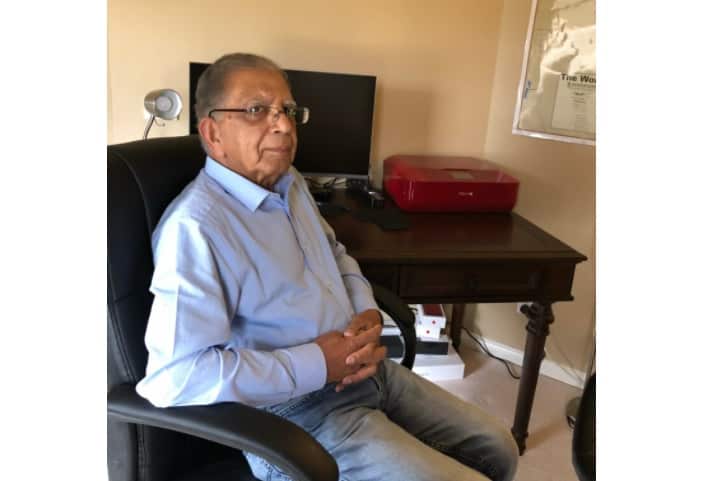
Muhammad Nawaz developed the algorithm as part of his research when he was a postgraduate student at Penn State University. When the paper was published, he was working at the University College of Engineering, Taxila (Now called University of Engineering & Tech. Taxila) in Pakistan. Professor Emory E Enscore Jr was his research supervisor and Professor Inyong Ham was the second supervisor for the research.
“The NEH algorithm is popular in the scheduling field. It is in many textbooks and is part of many university courses. The algorithm itself has become a research topic. Several researchers have developed scores of variants of the NEH algorithm to tackle a variety of scheduling problems.
“Other than so-called ‘hard manufacturing’, the NEH applications include Health Services, Cloud Computing, CPU/GPU operations, Networks, Wireless Communications, Defence Operations, Emergencies, etc.
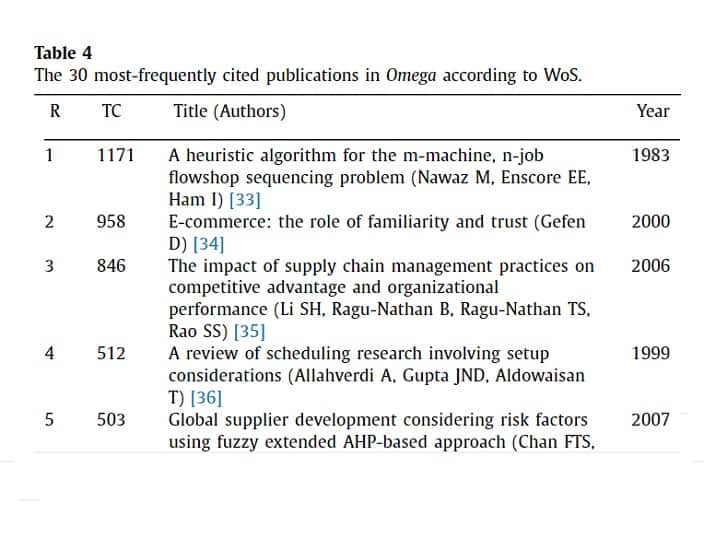
The International Journal of Management Science OMEGA first published the NEH-algorithm article conducted a research on the journal’s evolution and found that during the 40-year period, 1979 – 2018, Nawaz’s article was the “most frequently cited publication” of the journal.
Dr Firoz Alam is a Professor in the School of Aerospace, Mechanical and Manufacturing Engineering at RMIT University in Melbourne, where Muhammad Nawaz worked. A long-time colleague of 22 years, Dr Alam considers him as his “mentor” and terms him “an outstanding thinker.”
“It is a unique innovation,” Dr Alam tells SBS Urdu.
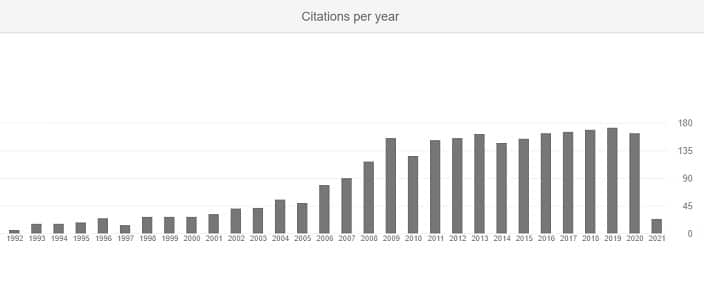
His work [NEH algorithm] has drawn nearly 2,500 citations from around the world. A single piece of work got so many citations and still being cited – this is in one word “extra-ordinary”.
Muhammad Nawaz also worked as a Program Director, and Selection Officer in the School of Aerospace, Manufacturing & Mechanical Engineering, RMIT University.
“In my opinion, Mr Muhammad Nawaz was an outstanding Program Director and Selection Officer at RMIT University. His brilliant and intelligent knowledge in Operation Research helped the School of Aerospace, Mechanical and Manufacturing Engineering to select best young minds for Aerospace Engineering, Mechanical Engineering, Automotive Engineering and Manufacturing Engineering programs,” Dr Alam said.
“Through his smart, well planned and thoughtful selection processes, the School not only attracted best students but also elevated all of its programs’ profile. The void created in this area by his retirement could not be filled to date. He has been formally recognised and honoured for his outstanding services in program management and student selection by all higher managements over the entire duration of his career at RMIT University.”
Nawaz is happy to see his name getting recognised even to this day.
“It is good to see one’s name with the research. I am glad that I did something in my life that is helpful to humanity.”
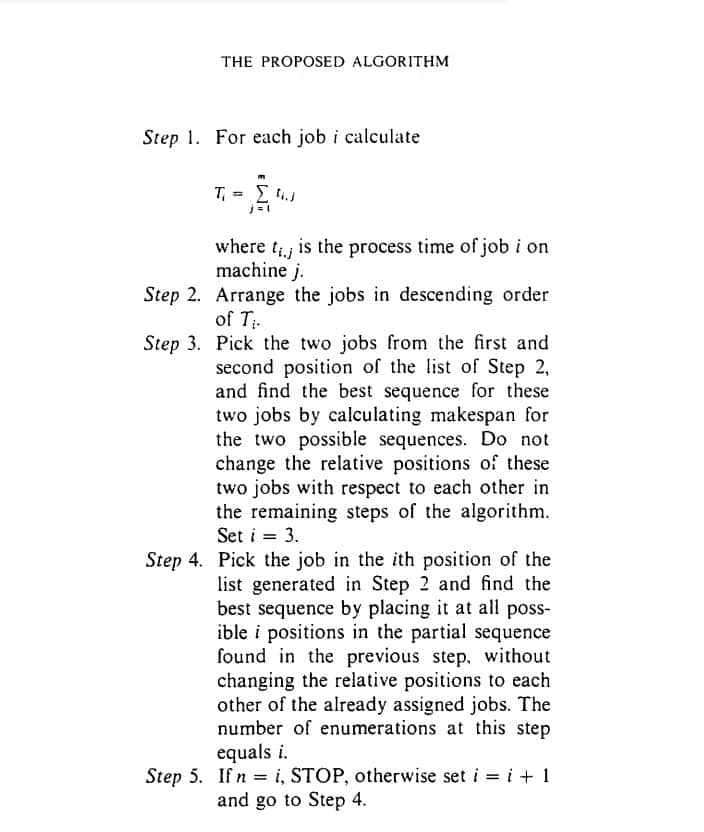
Researchers in several industries around the world that have tasks as part of their operations such as health services, emergency scenarios, communications, car-sharing planning and computing use the Nawaz algorithm.
SBS Urdu program broadcasts every Wednesday and Sunday at 6 PM (AEST)