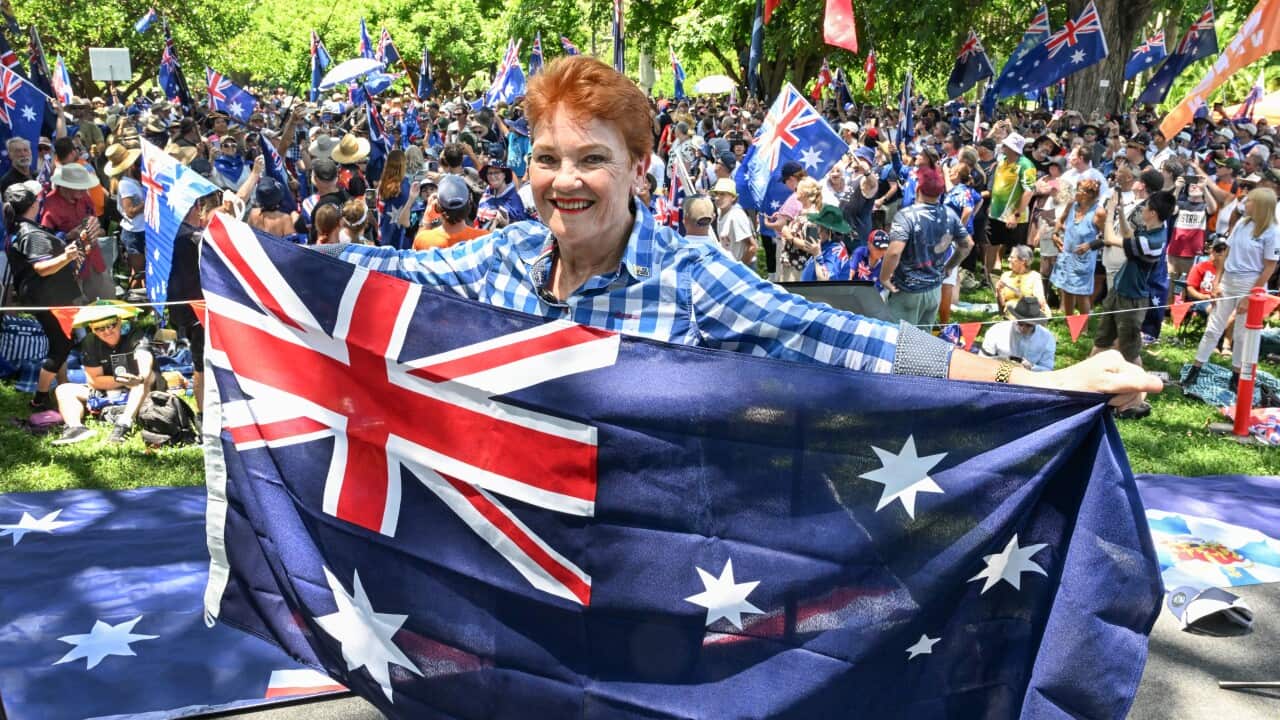
A resurgent Labor government and a fractured conservative vote have emerged as the key takeaways of the South Australian election, with Premier Peter Malinauskas securing a decisive return to office and One Nation surging to historic levels of support.
With the majority of ballots in the state's House of Assembly now counted, Labor has consolidated its power with 39.1 per cent of the primary vote, comfortably ahead of Pauline Hanson's One Nation at 21.6 per cent, while the Liberals are trailing at 18.7 per cent.
In the state's upper house, Labor has, at the time of publishing, secured 36.5 per cent, while One Nation is sitting on 23.8 per cent, and the Liberals at 17.1 per cent.
In the last South Australian election, in 2022, the Liberals won 35.7 per cent of the primary vote in the House of Assembly and 34 per cent of first preference votes in the Legislative Council.
The election result delivers an expanded majority to Malinauskas, who declared himself "humbled" and "overwhelmed with a sense of gratitude" on Saturday night.
News that makes sense
Your trusted source for staying up-to-date with the world around you. Get free daily news updates and analysis, straight to your inbox.
Meanwhile, the scale of the Liberal collapse has prompted deep introspection within the party.
Senior federal Liberal senator Anne Ruston conceded the result carried "sobering lessons" for her party and warned that it had "a lot of work to do to rebuild the trust of Australians".
South Australian Opposition leader Ashton Hurn said it was "a tough night for the Liberals", from which "lessons must be learned".
'Party of disaffection'
Clement Macintyre, an emeritus professor of politics at Adelaide University, said the result mainly reflected voters' expectations of a Labor victory and disaffection with the major parties, and he cautioned against overplaying its long-term significance.
"I'm sure a lot of analysis will be talking of existential threats to the Liberal Party, but … we've got to wait a bit longer before we're confident that we've seen a serious shift in Australian politics," he told SBS News.
While Hanson has long rejected the proposition that her party is one of protest, for Macintyre, these results reflect a clear expression of dissatisfaction with the major parties rather than a wholesale political realignment.
"I'm sticking to my view that it is a party of disaffection, that voters are frustrated with the major parties and [are] expressing that with a vote for One Nation," he said.
He said voters' choices were often not motivated by support for a particular party's policies.
"When you look at the reasons people give when they're asked: 'Why are you thinking of One Nation?', they're not saying: 'I really like the policies of One Nation', they're saying 'I'm fed up with the majors'."
While some voters were likely drawn to One Nation's positions on energy or migration, many were responding to a broader sense of political frustration, he said.
That dynamic, he said, helps explain how One Nation was able to gain ground in a state not traditionally considered part of its support base.
"It's not what we would think of as traditional One Nation heartland … and yet One Nation have touched a nerve with the South Australian voters," he said.
Even so, he cautioned against reading the result as the end of the two-party system, noting similar surges have occurred before under different conditions.
'Leaving some landmines'
In the final days of the campaign, both major parties sought to warn voters about the risks posed by One Nation, but the message failed to stem the flow of support.
At the party's Adelaide headquarters, supporters were embracing one another in jubilation with as little as one per cent of the vote counted, reflecting early confidence in the scale of the result.
There, Hanson delivered a direct message to Malinauskas, warning that One Nation MPs would now play a disruptive role in state politics.
"I will say to Peter Malinauskas … I'm leaving you some landmines ... they're called One Nation members of parliament," she said.
"So, I suggest, don't step on them, because they will explode."
At the time of publishing, the South Australian Electoral Commission had not predicted One Nation would win any lower house seats.
However, the ABC's election tally predicts the party will take the seat of Ngadjuri from the Liberal Party — its first lower house seat outside of Queensland — and puts it ahead in three other electorates, two of which are held by Liberal MPs.
In the seat of MacKillop, the ABC is reporting a 23.4 per cent swing away from the Liberals.
In the upper house, voters' level of support for One Nation will guarantee the party a Legislative Council presence — certainly that of Cory Bernardi, the former federal Liberal senator who announced in February that he had joined One Nation and would lead the party's ticket in the recent election.
Channelling voter frustration
Macintyre said that, on the ground, there were clear signs that voter attitudes had shifted in a more visible and confident way.
"Once upon a time, people who were going to vote One Nation were almost a bit embarrassed about it … but now there's plenty of evidence of people brazenly walking up to One Nation saying, 'I want your ticket' and rejecting the rest of them," he said.
Hanson's appeal, he said, lay in her ability to channel voter frustration into a simple message.
"It's a bit of a cliche, I know, but we often hear people say Pauline Hanson says what a lot of people are thinking. I think that's true," he said.
Support for One Nation was also buoyed by its ability to tap into discontent over cost-of-living, particularly among voters facing acute economic pressures, Macintyre added.
"If you're a single parent renting a house, struggling to get kids to school … and you're watching the price of food in the supermarket go up every week … there's every reason to expect people to be frustrated and turning for political alternatives," he said.
However, he said much of the political messaging has focused on issues that are beyond the scope of state government.
"A lot of the things that One Nation were campaigning on in South Australia actually are federal policies, not state policies," he said.
As a result, he said the party's ability to translate support into meaningful legislative influence in Australia may be limited.
The unpredictable election test
Hanson has been quick to frame One Nation's success in South Australia as part of a broader national shift, saying on Saturday: "I think the rest of Australia is going to be watching what's happening here tonight."
"We're coming to support you down there," she added, referencing her party's candidates who will run in Victoria's November election.
"Where we are tonight, just to let you know, this is the low tide … I believe that our vote will rise even more."
But despite the scale of the result, the conditions in which it was delivered may limit its broader significance, Macintyre said.
Polling throughout the campaign consistently pointed to a comfortable Labor victory, with expectations that Malinauskas would be returned with an increased majority.
That sense of certainty shaped the behaviour of voters and parties alike, with Macintyre speculating it allowed those disillusioned to express frustration without risking a change of government.
"If you're familiar with the phenomenon when we have a by-election, people know that they can express discontent with the government of the day and vote for another party, knowing that it won't tip out the prevailing government," he said.
He said a similar dynamic was at play in South Australia, where "a lot of liberal [voters] who were unhappy with how the Liberal Party was, knew that their vote wasn't going to make a difference, and were able to vote for One Nation, knowing that Malinauskas was going to win and send a message to the Liberal Party".
The question now, and the real litmus test, he said, is whether support for Hanson's party holds in a more competitive contest.
"I want to see One Nation do what they've done in more ordinary electoral circumstances," he said.
For the latest from SBS News, download our app and subscribe to our newsletter.







