
A day after the Uluru climbing ban came into force, closing a long and fraught chapter in Australia's history, traditional Aboriginal owner Reggie Uluru was asked what comes next.
"Learning," he said, speaking in the Pitjantjatjara language of the Anangu people.
"Just come and sightsee and walk around the walk. Learn about the culture."
News that makes sense
Your trusted source for staying up-to-date with the world around you. Get free daily news updates and analysis, straight to your inbox.
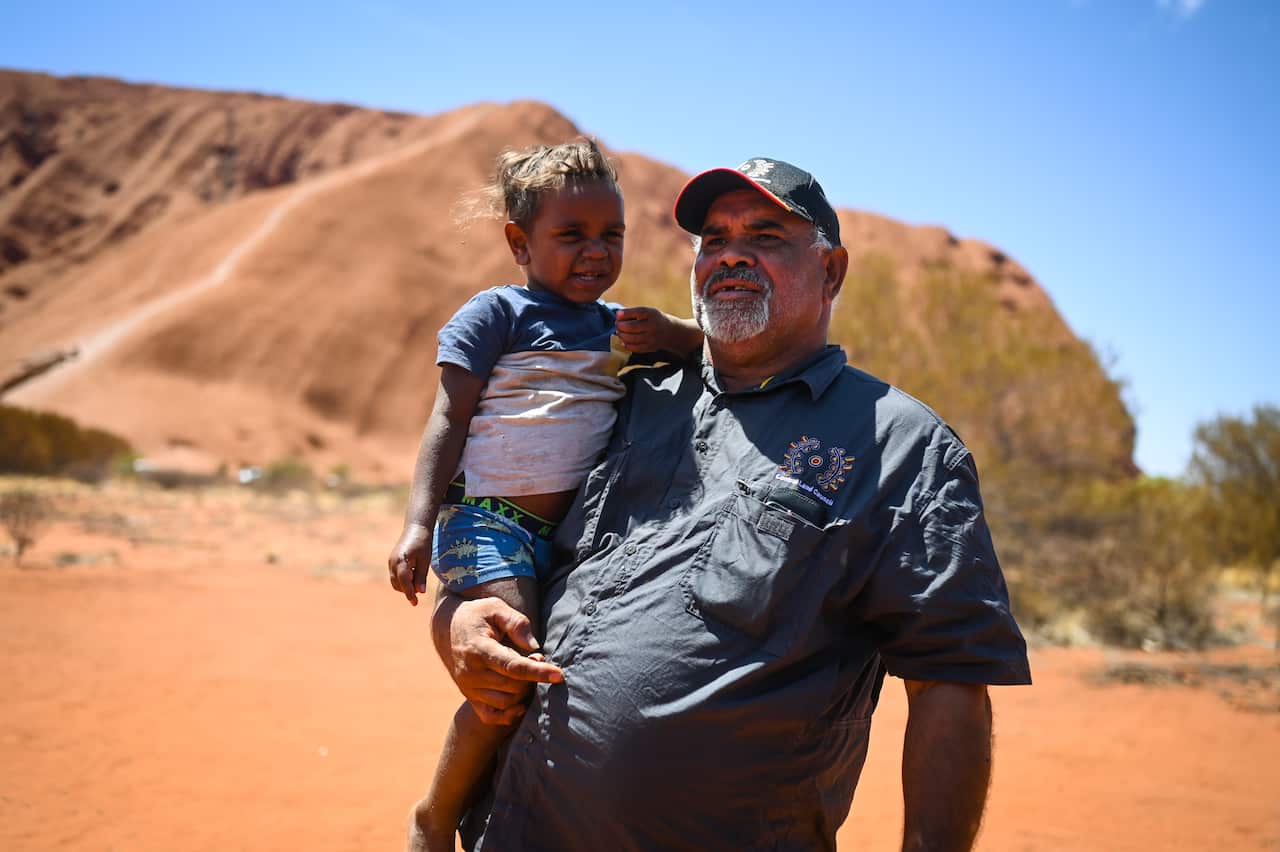
Amid the celebrations and relief, the traditional owners are focusing on new beginnings - the future symbolised by Mr Uluru's great-grandson, Jacob, who came along as his elders addressed the media.
"He is representing our future," traditional owner and chairman of the Central Land Council board Sammy Wilson said.
Mr Uluru later placed the red earth into his great-grandson's hand, recreating the iconic photo of former Prime Minister Gough Whitlam pouring sand into the hand of Gurindji leader Vincent Lingiari, symbolising the victory of Aboriginal land rights.
Saturday not only marked the first day of the climbing ban, it was also the 34th anniversary of the day the Anangu were handed back the rights to their homeland.
It was then, in 1985, that the conversation about stopping people climbing on the rock first began.
Mr Uluru was there for that iconic moment and he's continued the fight ever since.
"Today, everything is in order now and everything is right. We can go forward," he said.
"I'm very happy today. We fought for land rights for a long time, to get the rock back, that was the first battle ... It's another part of the hand-back, closing the climb."
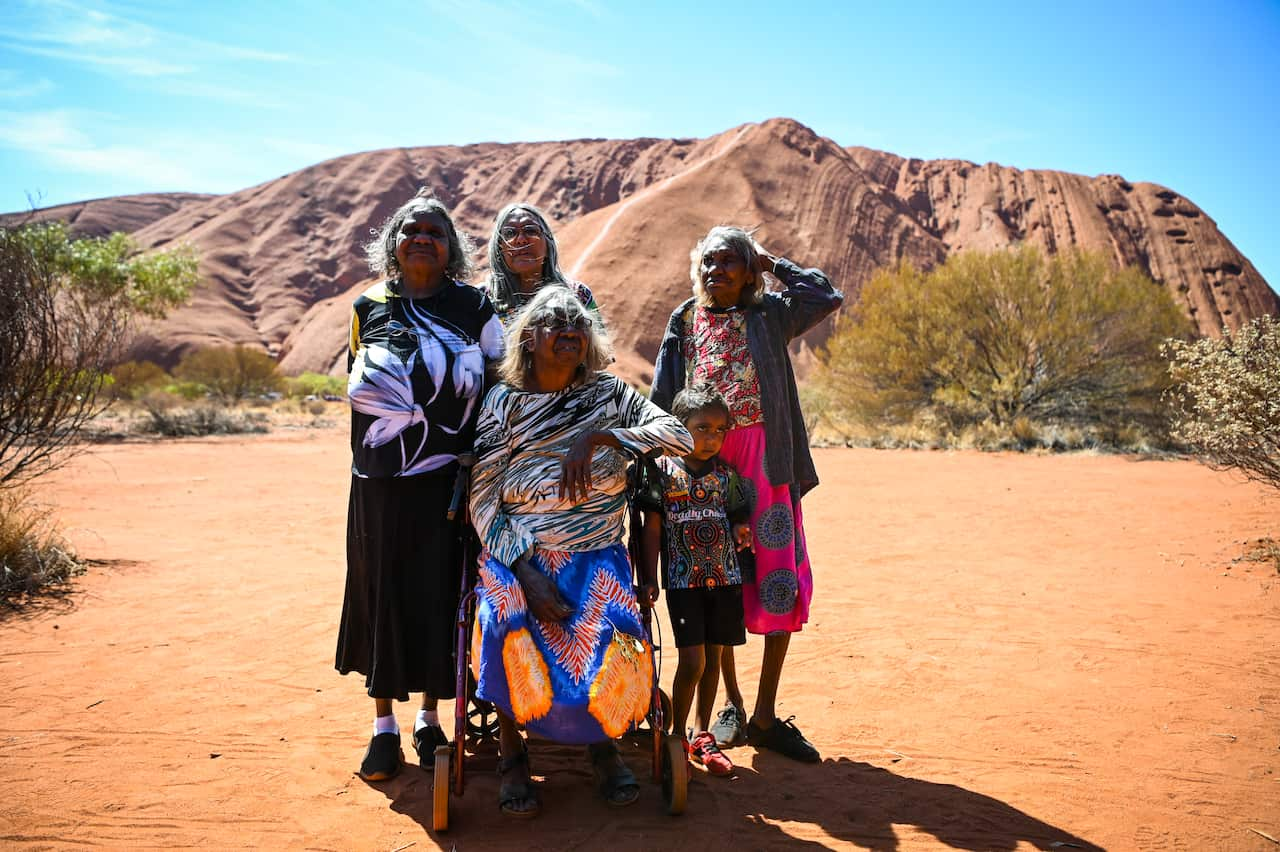
Considering what the next chapter may hold, traditional owners and tourism operators have rejected claims that the closure will mean people stop visiting the Uluru-Kata Tjuta National Park.
One of the prerequisites for the ban going ahead was the number of people choosing to scale the rock had to drop below 20 per cent of visitors to the park.
"If we do good things for the future, visitors will be attracted and they will keep coming," Mr Wilson said in Pitjantjatjara.
"There is no need to be sad and upset ... let's be together, show off our culture and we can move forward from there."
A permanent sign memorialising the closure was erected at the base of Uluru on Friday evening, to cheers and tears from the traditional owners and their supporters.
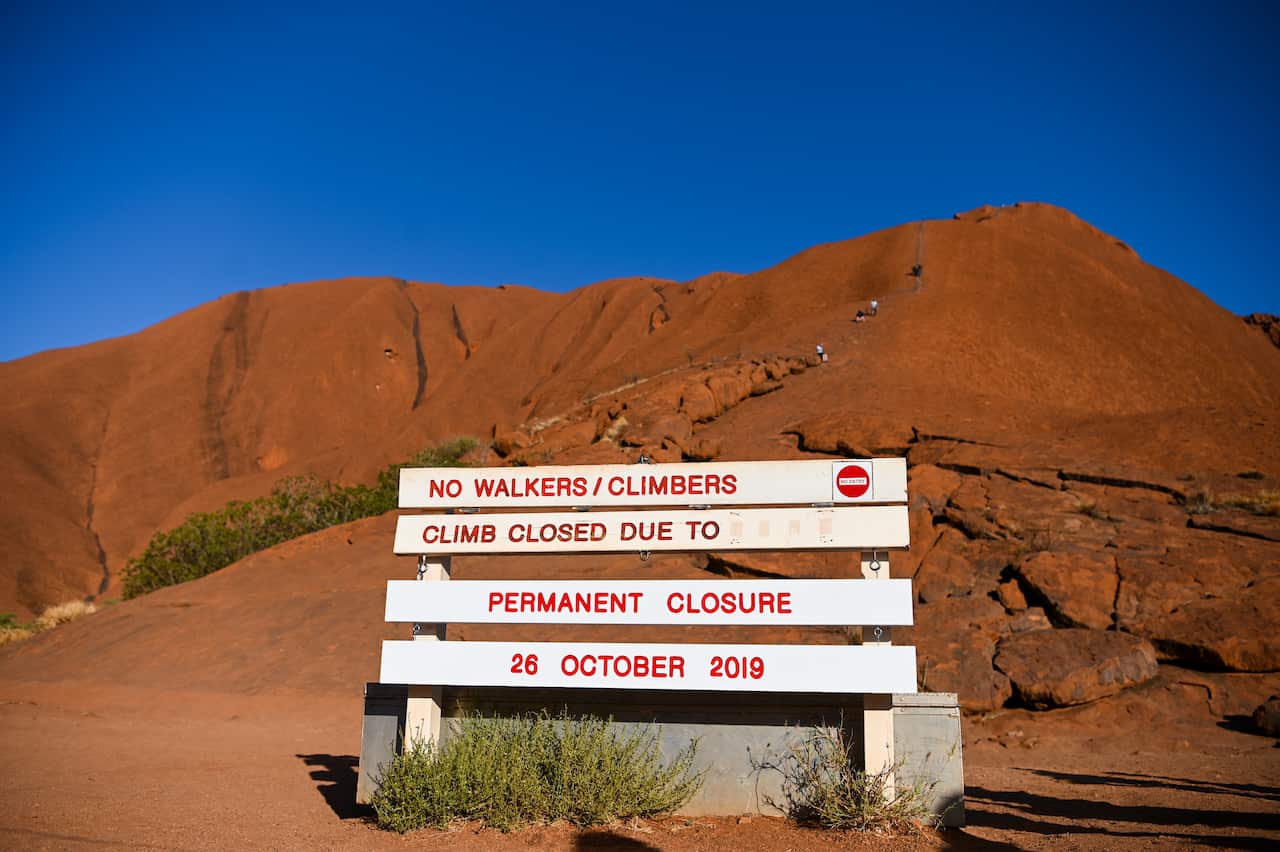
It has been almost two years since the park's managers made the historic decision to close the climb, choosing 26 October due to its significance.
It is now illegal to climb the rock and anyone who breaches the rule could be fined thousands of dollars.
Now that the climbers have stopped for good, traditional owner John Liddle said he hopes the white scar tracing one side of the vast red rock, caused by thousands of sets of feet, will now be able to heal.
"I would like to see that smooth surface go back to what it was before," he said.
"It looks like the rock is crying."
Additional reporting: NITV







