In brief
- A former Australian resident living in Iraq coordinated the Adass Israel synagogue firebombing, ASIO's director-general has revealed.
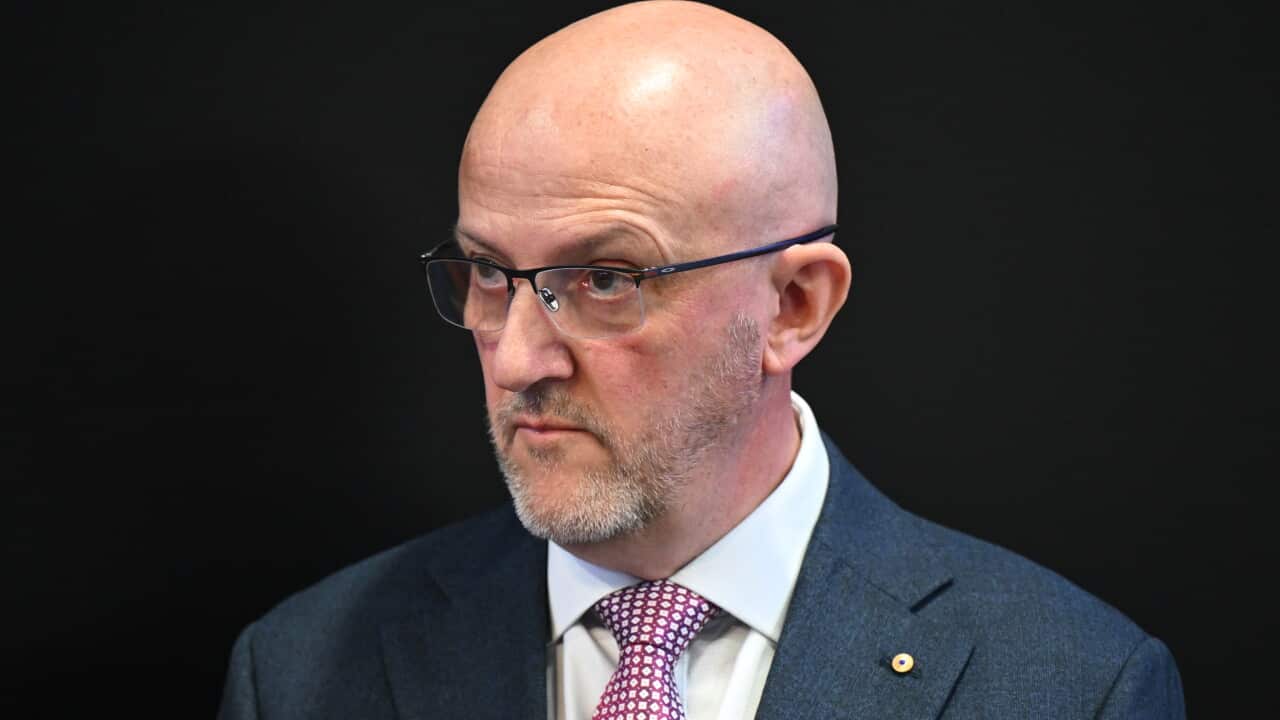
- The news came as ASIO director-general Mike Burgess delivered his annual threat assessment.
A former Australian resident living in Iraq coordinated the Adass Israel synagogue firebombing backed by Iran's Revolutionary Guard (IRGC), Australia's top spy has revealed.
Delivering his annual threat assessment, Australian Security Intelligence Organisation (ASIO) director-general Mike Burgess said the man was now languishing in an Iraqi prison, after Australia publicly named Iran as the driving force behind the "summer of antisemitism" during 2024 and 2025.
The man was recruited through local militia groups, with his "high wealth and criminal connections" valued, Burgess said in Canberra on Wednesday night.
But after Australia singled out Iran last year, expelling its ambassador, his state backers withdrew his protection, and the individual was later imprisoned.
Burgess confirmed an Iran-based Australian citizen, who orchestrated the earlier firebombing of the Lewis Continental Kitchen in Bondi, was understood to be a "senior agent" of the IRGC's Qods force.
News that makes sense
Your trusted source for staying up-to-date with the world around you. Get free daily news updates and analysis, straight to your inbox.
"We know more about him than he realises, including the name of his superior in Iran and the department he works for," Burgess said.
He warned there was a "realistic possibility" Iran-aligned groups accused of a string of attacks across Europe could soon target Australia, conducting or inspiring "acts of arson, vandalism or even assassinations on Australian soil".
"I do worry that one day an Australian will be killed at the hands of a foreign government here in Australia."
In March, ASIO conducted "numerous warranted activities" to assess Australians in contact with the IRGC.
Antisemitism a complex problem, Burgess says
The annual threat assessment from Burgess was delayed by several months following the Bondi Beach terrorist attack.
ASIO's actions have been scrutinised by the Royal Commission on Antisemitism and Social Cohesion, which is currently holding hearings.
Burgess said the agency had thwarted 31 "major" terrorism plots since 2014, but he remains "gravely concerned by its temperature and trajectory", singling out social media and online spaces for "amplifying and accelerating" grievance narratives, and "creating a permissive environment for violence".
He argued that people are now being radicalised in weeks in online spaces, rather than months or years in "prayer halls and backyards".
"Instead of spending time and resources planning sophisticated attacks, radicalised individuals are moving to low-capability attacks with little or no warning," he said.
Australia's terrorist threat level was last raised to probable in August 2024, but Burgess conceded that ranking masked the true likelihood of acts of politically motivated violence of an increasingly varied nature.
Following the Bondi massacre, then-Opposition leader Sussan Ley called for action against "radical Islamist extremism" to be prioritised, while One Nation leader Pauline Hanson has advocated for a ban on immigration from "extremist" Muslim countries, and called for Australia to become a "monoculture".
"In the current climate, it is too simplistic to assume there is a single terrorism threat or a most likely terrorist threat," Burgess said.
He said a greater focus on Sunni violent extremism made sense when the self-proclaimed Islamic State group and al-Qaeda were "principal security threats, but contemporary terrorism is more complex".
Burgess referenced the alleged neo-Nazi-inspired bombing attempt of an Invasion Day rally in Perth, and said the agency handles extremists across the ideological spectrum, including those with extreme Christian beliefs and extreme left-wing ideology.
Burgess said countering antisemitism was more than a "single, or simple, intelligence problem".
He said the views shared by neo-Nazis and Islamic extremists can also be shared by anarchists and revolutionary groups.
"Australian companies with perceived links to Israel are being subjected to repeated acts of vandalism and arson by far-left activists," he warned.
"I recognise criticism of the government of Israel is not of itself antisemitic, but some of the threatening statements made by the perpetrators go well beyond political protest or commentary."
He said the groups vary in ideology and "for the most part, they despise each other", but "they are united by a common hatred".
Coerced repatriation
Burgess revealed five countries had engaged in "coerced repatriation" where foreign governments attempt to force or intimidate individuals, often dissidents, to leave Australia.
In 2023, one "particularly active" country forced at least eight people to leave, including five citizens or permanent residents, with three never returning.
In one case, a man faced a ten year campaign of intimidation to his birth country on unspecified corruption charges, which sending an official on a tourist visa to try and escort him in person, and detaining relatives.
Those regimes were often turning to private investigators and lawyers to monitor potential victims, warned by Burgess to "do your due diligence" if they feel they may be abetting foreign interference.
The spy chief described cyber sabotage as an "evolving threat", detailing one incident where hackers acquired login details and passwords for a critical infrastructure supplier.
He also repeated past warnings about the interest, including from "friendly" nations, around the AUKUS nuclear submarine pact.
In one incident, a foreign spy posed as a consultant to try to gain access to information about the technology from a security clearance holder, who informed ASIO of the attempted infiltration.
For the latest from SBS News, download our app and subscribe to our newsletter.







