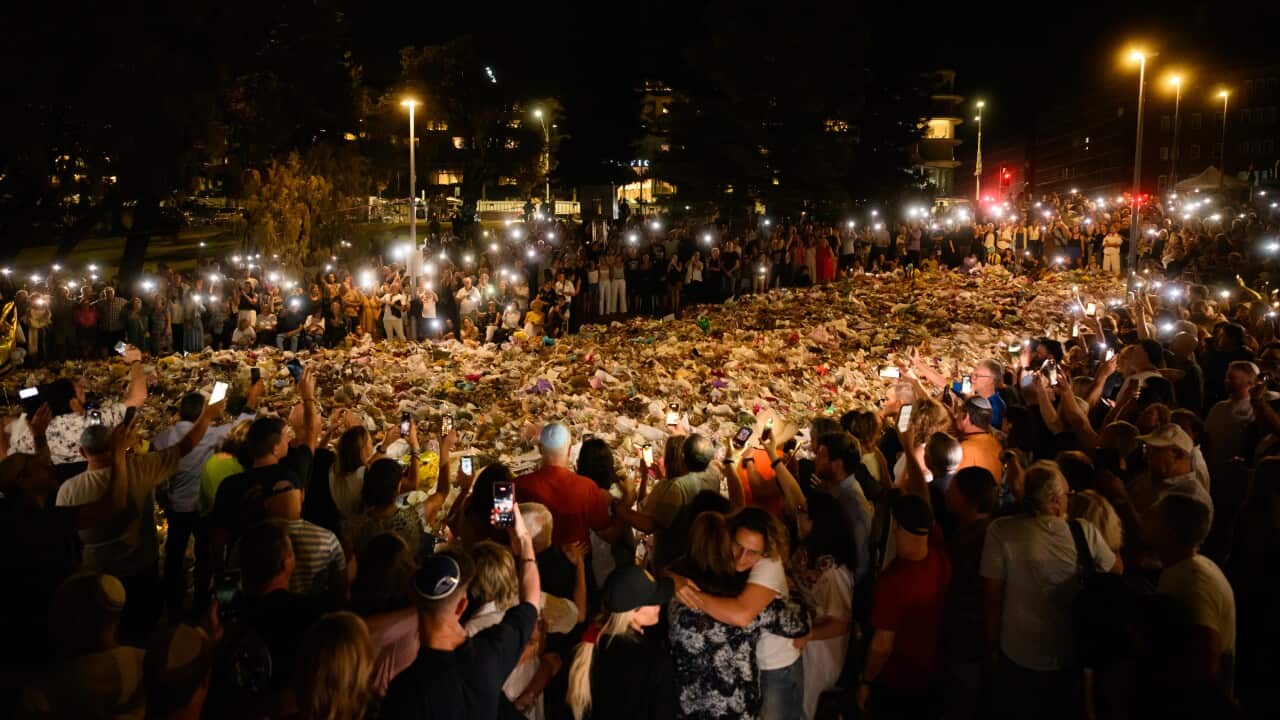
A month since the Bondi terror attack claimed the lives of 15 people, its impact is continuing to ripple across the country, from the streets to the parliament.
At 6.41pm on Sunday 14 December, two gunmen — who police allege were father and son Sajid and Naveed Akram — parked a car near a footbridge overlooking Bondi Beach's Arthur Park, where a Hanukkah event had begun earlier that evening, and opened fire.
50-year-old Sajid was killed during the attack, while his 24-year-old son Naveed has been charged with dozens of offences including murder and terrorism-related charges.
The massacre and its aftermath have indelibly shaped the country. It's in the reverberations felt by those in the community, the changes to a wide range of laws, the political discourse and — among it all — acts of unity and compassion.
Almost immediately after the shooting took place, stories emerged about acts of bravery. There were the emergency responders.
News that makes sense
Your trusted source for staying up-to-date with the world around you. Get free daily news updates and analysis, straight to your inbox.
There were everyday Australians like tobacco shop owner Ahmed al-Ahmed, who ran towards one of the gunmen, tackled him and wrestled his weapon away, being shot twice in the process.
Local Jewish couple Boris and Sofia Gurman also confronted one of the shooters — ultimately paying with their lives.
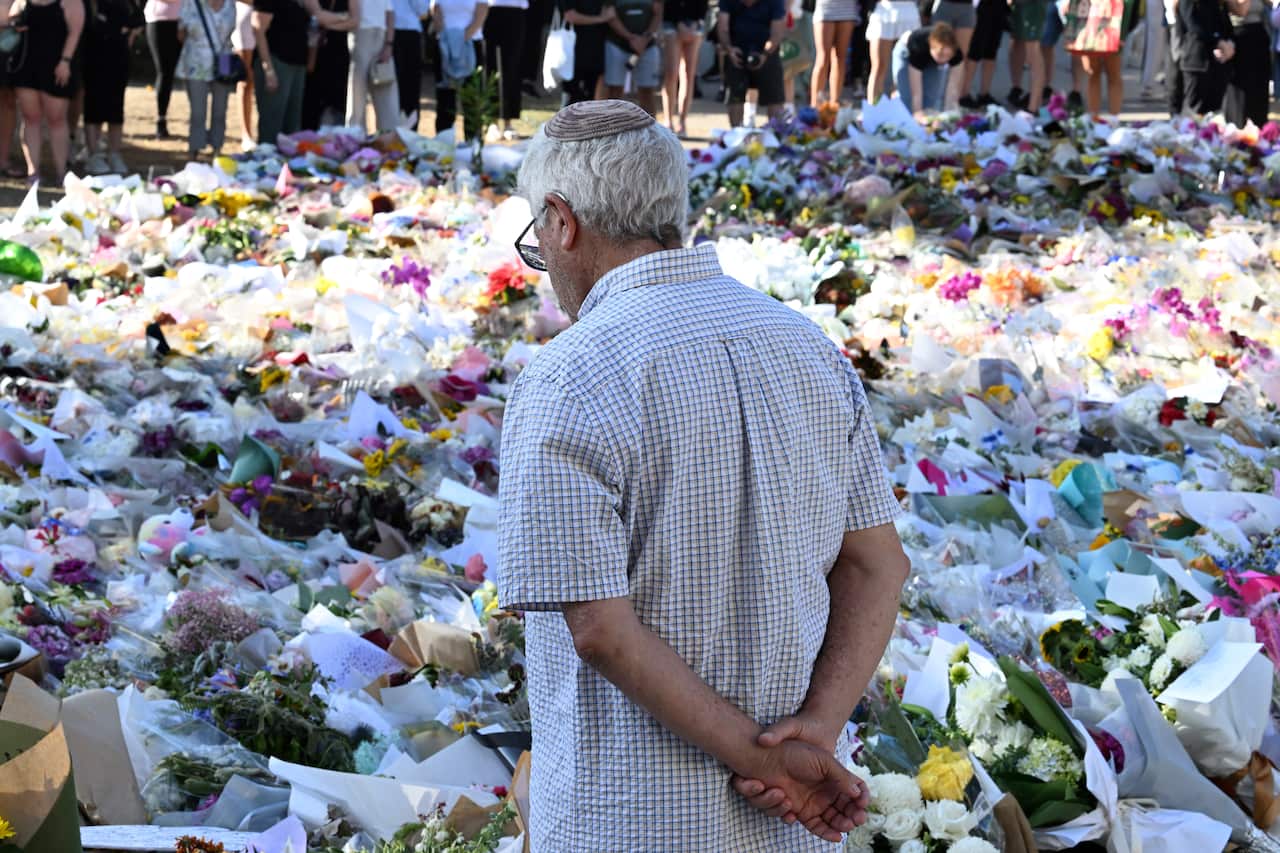
The Red Cross' Lifeblood service recorded record-breaking numbers of people donating blood. Millions of dollars were contributed for al-Ahmed's recovery. And at vigils across the country, Australians paused to remember those who were killed in the attack, laying flowers and other tributes outside Bondi Pavilion.
On Tuesday, Prime Minister Anthony Albanese announced a national day of mourning will be held next week as the country continues to process Australia's deadliest terror attack.
'There is fear, and there is anger'
Daniel Aghion is the president of the Executive Council of Australian Jewry (ECAJ) — the country's peak body of Jewish community organisations. He said the Jewish community in Australia remains "fragile" and is now grappling with the long-term consequences of the "terribly traumatic" attack.
"There is fear, and there is anger. The fear and anger come from the fact that we have been the targets yet again of hate-filled violence — on this occasion as victims of Australia's worst terrorist attack," Aghion told SBS News.
But Aghion said the "outpouring of support" from everyday Australians for the Jewish community, and a recognition that antisemitism is "an Australian problem, not exclusively a Jewish one", had been a source of comfort in the community.
"It tells us that we are valued, that we are part of this community, that we are part of Australian community and society, and that we belong here. It also tells us very strongly that Australians will not let hate win."
Levi Wolff, the rabbi of Bondi's Central Synagogue, said his small and close-knit community has been "exceptional" in its support for each other — whether visiting grieving families, bringing them food, organising support groups, or "simply showing up to lend a hand, a hug, or a kind word".
Wolff said he and other rabbis were trying to ensure spiritual and emotional support was available, and that people had been actively seeking that connection.
"There has been an increase in attendance at services and community events across synagogues in Australia, as people look for strength, comfort and solidarity in one another."
Ohad Kozminsky is an executive member of the Jewish Council of Australia (JCA) — a progressive Jewish group founded in the wake of Hamas' October 7 attacks in 2023, and Israel's retaliatory assault on Gaza.
He said many Jewish people were feeling deeply unsafe in the wake of the "heinous" antisemitic attack, and it would be difficult for the community to recover.
"We also know that racism against Jewish people is often accompanied by racism against other racialised groups, especially Muslim and Palestinian communities — and this is precisely what we have seen," Kozminsky told SBS News, citing an alleged violent attack on Melbourne imam Ismet Purdic and his wife on Saturday.
Those acts of racism have been called out by groups like the Australian National Imams Council (ANIC), which said last month that Muslim communities were being "unfairly scrutinised and implicitly linked to acts of violence they categorically reject".
ANIC president Sheik Shady Alsuleiman said the everyday experience of Australian Muslims had undergone a "marked shift" since the Bondi attack, with "heightened tension and fear over their safety and well-being".
Alsuleiman told SBS News ANIC had observed a sharp rise in Islamophobic hate-driven attacks against the community.
"We have seen instances of verbal assaults upon families while on holiday, physical assaults against community members who are visibly Muslim, both men and women, including recently one of our senior imams in Melbourne, and increased vandalism against mosques, Islamic centres, and Muslim cemeteries across the country," he said.
Alsuleiman called on communities to come together and reject "hatred, collective blame, and fear-based politics".
"We must resist narratives that seek to place Australians in opposition to one another. Communities should work together on the many shared values we hold, which are far greater than our differences."
Changes to gun and hate speech laws, protests
While communities continue to reel from the Bondi massacre and its aftermath, governments have already passed or proposed a raft of legislative changes.
The NSW government passed a bill in the early hours of Christmas Eve, tightening gun controls and controversially restricting public protest.
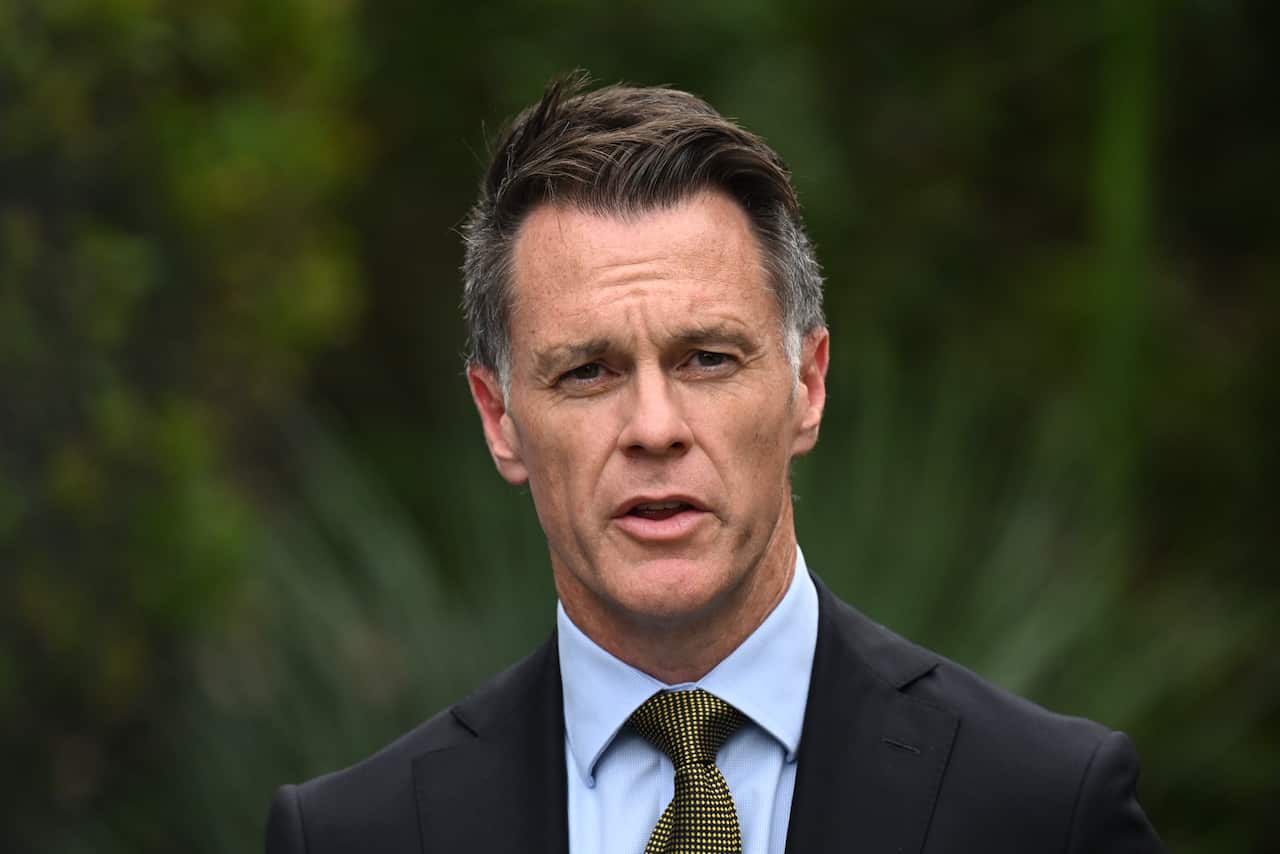
The latter decision — which NSW Premier Chris Minns has defended as necessary to reduce community tensions — has been met with fierce criticism and accusations that it infringes on democratic rights.
Under the law, the police commissioner is given the ability to ban protests in certain areas following a declared terrorist incident, for an initial two-week period that can be extended up to three months.
NSW Police commissioner Mal Lanyon activated that power almost as soon as possible, restricting public assemblies in Sydney's south-west, north-west and central metropolitan areas.
On 6 January, Lanyon extended the restrictions by another two weeks, arguing public assemblies at this time could "cause fear and public safety issues".
Activists and legal services have expressed concern that the legislation will crack down on freedoms and suppress protests for all manner of causes, such as a First Nations-led rally on January 26.
Kozminsky said the measures were "dangerous and anti-democratic", and falsely conflated pro-Palestinian protests in Sydney with the Bondi attack.
Last month, Minns pledged to ban the chant "globalise the intifada", an Arabic word that refers to an uprising or shaking off that has been frequently used by pro-Palestinian activists in the past two years.
Kozminsky said the JCA had consistently opposed what he described as the "cynical politicisation" of the massacre.
He said the group has proposed "another path forward" via a petition it's been circulating, calling for steps like funding grassroots and cross-cultural community initiatives, adopting and fully funding the Australian Human Rights Commission's anti-racism framework, and protecting rights to peacefully protest.
On a federal level, the prime minister has recalled politicians back to Canberra weeks earlier than planned in the hopes of passing sweeping changes to hate speech and gun legislation.
Under the proposals, people who join or support proscribed hate groups would face 15 years in prison. Those who "publicly promote or incite" hatred against a person or group because of their race could face five years behind bars.
Disseminating "ideas of superiority or hatred towards another person or group of people based on their race, colour, or national or ethnic origin" would also be made illegal, the home affairs minister would be given new grounds to refuse or cancel visas, and hate symbol offences would be expanded.
The government would introduce an additional layer of security checks for firearm licenses, and a national buyback scheme could be established.
ECAJ co-CEO Peter Wertheim said the draft legislation was "a significant step in the right direction, but it still suffers some significant shortcomings which will limit its effectiveness".
He particularly welcomed the serious vilification offence, saying in a statement released on Tuesday: "Many previous hate speech cases failed to result in prosecutions because of the impossibility of proving incitement [of an audience] beyond reasonable doubt."
However, he said the bill contained "four serious shortcomings", including a requirement to show proof of intention to promote racial hatred and an exemption for quoting or referencing religious texts for the purposes of religious teaching.
"We hope that the new laws will be passed and strengthened, and that the scourge of antisemitism, hate and extremism in our society will be neutralised," he added.
Albanese calls federal royal commission
In recent weeks, though, what has been given the most attention — at least when it comes to the official response — is how the federal government would investigate the factors that led to the Bondi attack.
Albanese initially dismissed ordering a federal royal commission, instead backing NSW plans for a state-based commission and announcing an inquiry into federal intelligence and law enforcement agencies.
But after a chorus of voices — including the Opposition, independents, former federal ministers, public figures, victims' families and sections of the broader Jewish community — called for a federal commission, Albanese eventually backtracked and announced that one would be set up.
"I've taken the time to reflect, to meet with leaders in the Jewish community, and most importantly, I've met with many of the families of victims and survivors of that horrific attack," the prime minister told reporters in Canberra when announcing a federal royal commission into antisemitism and social cohesion last Thursday.
Wolff said he looked forward to the findings and hoped they would be acted upon decisively to stamp out antisemitism.
"Our hope now is that this moment leads to lasting and meaningful change, so that no other community has to experience this again."
For the latest from SBS News, download our app and subscribe to our newsletter.







