In brief:
- A fourth case of H5 bird flu has been confirmed on the south-west coast of Western Australia.
- A potential fifth case of the deadly virus is awaiting confirmation.
Western Australia has confirmed its third positive bird flu case, the fourth recorded in Australia in one week.
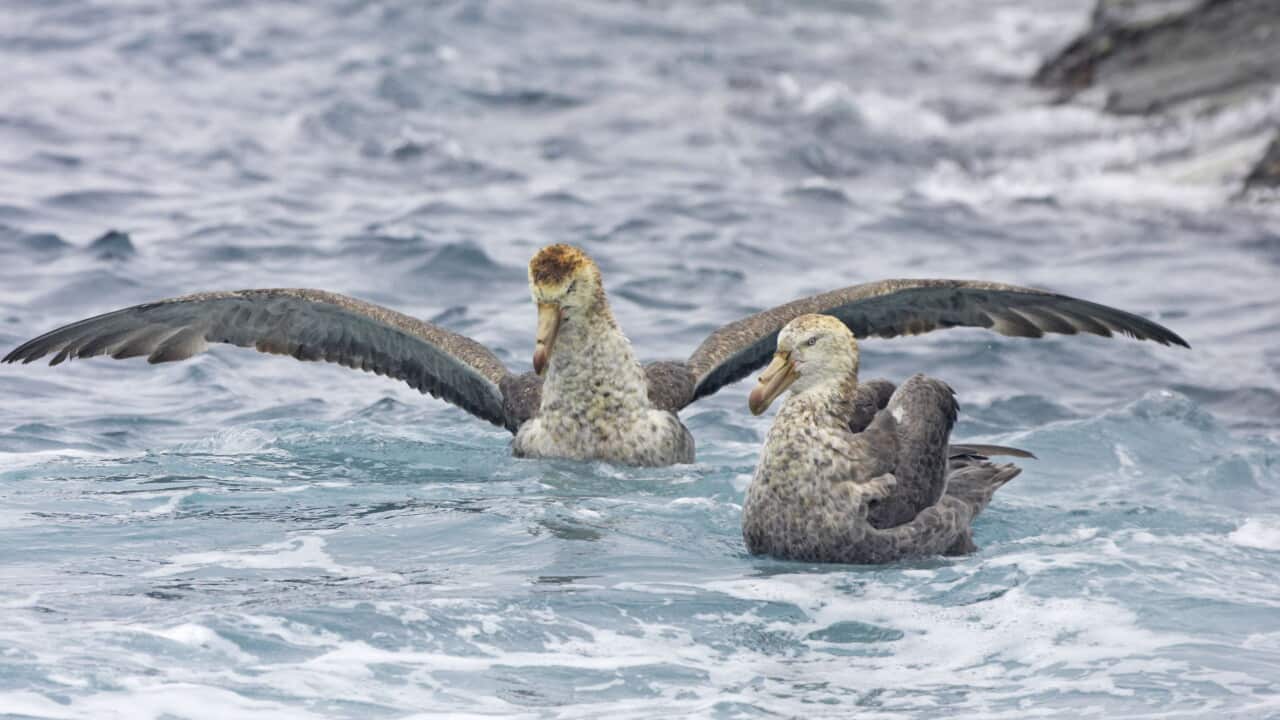
The deadly H5 strain of avian influenza was found in a giant petrel discovered in Quindalup, on the state's south-west coast, and confirmed by the CSIRO's Australian Centre for Disease Preparedness on Saturday morning.
There have been four positive cases of H5 bird flu in Australia since 20 June, when the federal government confirmed that two migratory seabirds suspected to be infected with the virus returned positive results.
These first two cases, a brown skua and a giant petrel, were found in the remote Cape Le Grand area, east of Esperance.
The government said on Saturday that the results of a fifth possible positive case, in another giant petrel found west of Esperance, were pending.
News that makes sense
Your trusted source for staying up-to-date with the world around you. Get free daily news updates and analysis, straight to your inbox.
In the week since reports first emerged of a suspected H5 influenza case on 19 June, Western Australians have made more than 400 reports to the Emergency Animal Disease hotline.
Of these reports, 53 have been prioritised for further investigation by the Department of Primary Industries and Regional Development.
Across the state, 17 negative results have been recorded in the Esperance area, Mid West, Great Southern, South West, Peel and the Perth metropolitan area.
Australia was the last continent to record cases of the highly contagious and deadly strain of bird flu.
So far, three of four confirmed cases were in migratory seabirds found in Western Australia.
South Australia also detected a case in a giant petrel found in the Fleurieu Peninsula on 14 June.
Australia's chief veterinary officer, Dr Beth Cookson, said on Saturday that there was so far no indication the disease had spread to domesticated animals.
"At this stage, there have only been detections in vagrant migratory seabirds that occasionally visit southern Australia," Cookson said.
"There remains no evidence of any mass mortality events and there are no detections in poultry or in our agricultural production system.
"The risk to human health remains low."
Cookson said genomic sequencing indicated that the virus infecting the first confirmed wild bird case in Australia was related to an outbreak on the Heard and McDonald Islands, about 4,100km south-west of Perth.
A recent study found the disease killed 13,000 elephant seal pups on the sub-Antarctic islands, which are Australian external territories.
How serious is the H5 bird flu strain?
The arrival of H5 bird flu in Australia prompted grave concerns from scientists over its potential to devastate native wildlife and domesticated bird species.
In both poultry and wild birds, H5 viruses can spread rapidly and cause severe disease, neurological defects, and sudden death. In chickens, it is generally fatal.
While spread to humans is rare, the virus can infect or cause illness in a range of animal species, including dairy cattle, domestic cats, pigs, goats, horses and seals.
Since H5N1 was first detected in the United States in early 2022, more than 200 million domesticated birds — primarily egg-laying hens — have been killed to prevent its spread, according to the American Veterinary Medical Association.
As the last continent to record H5N1, Australia has had time to prepare an extensive action plan and adapt biosecurity measures in anticipation of the deadly virus.
The Western Australian government urged the public to stay alert for any sick, dying or dead birds and marine mammals, and to report anything suspicious to the Emergency Animal Disease Hotline on 1800 675 888.
"Anyone who sees sick or dead birds or marine mammals should AVOID and not handle the animals, but RECORD and take photos or a video and REPORT to the hotline."
With additional reporting by the Australian Associated Press.
For the latest from SBS News, download our app and subscribe to our newsletter.







