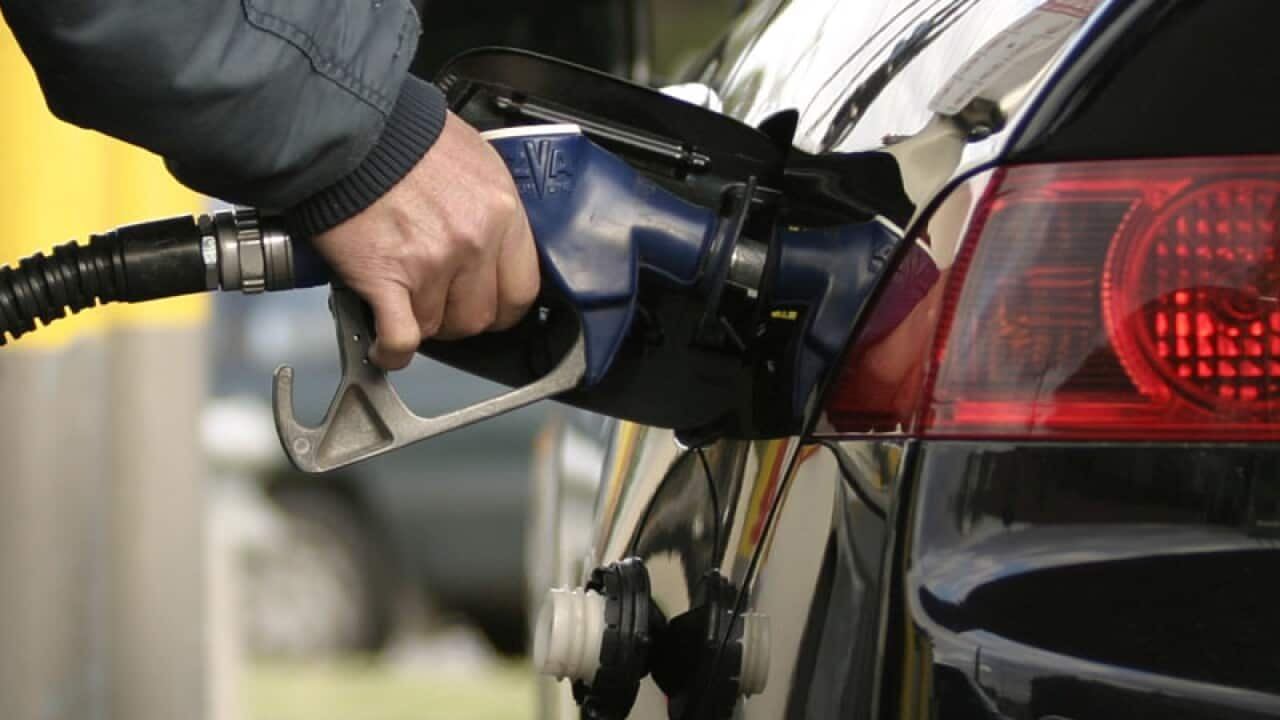
The government has temporarily amended Australia's fuel quality standards to redirect petrol "where it needs to go" in response to panic buying across the nation.
The move will allow higher sulphur levels for the next 60 days, ensuring an additional 100 million litres per month of petrol that would otherwise have been exported, Energy Minister Chris Bowen announced on Thursday.
Bowen said petrol supply will flow through to the domestic market, instead of being exported, where it would be blended into other fuels.
"I have asked for, and received an assurance from Ampol that this extra supply will be prioritised for regional Australia and for the spot market to take pressure off those regional areas," he said in parliament.
Australians have been seen stockpiling with jerry cans in response to images of oil ships unable to pass through the Strait of Hormuz, where a fifth of the world's oil has been blockaded along the Iranian coast, in the worst disruption to energy supplies since the oil shocks of the 1970s.
News that makes sense
Your trusted source for staying up-to-date with the world around you. Get free daily news updates and analysis, straight to your inbox.
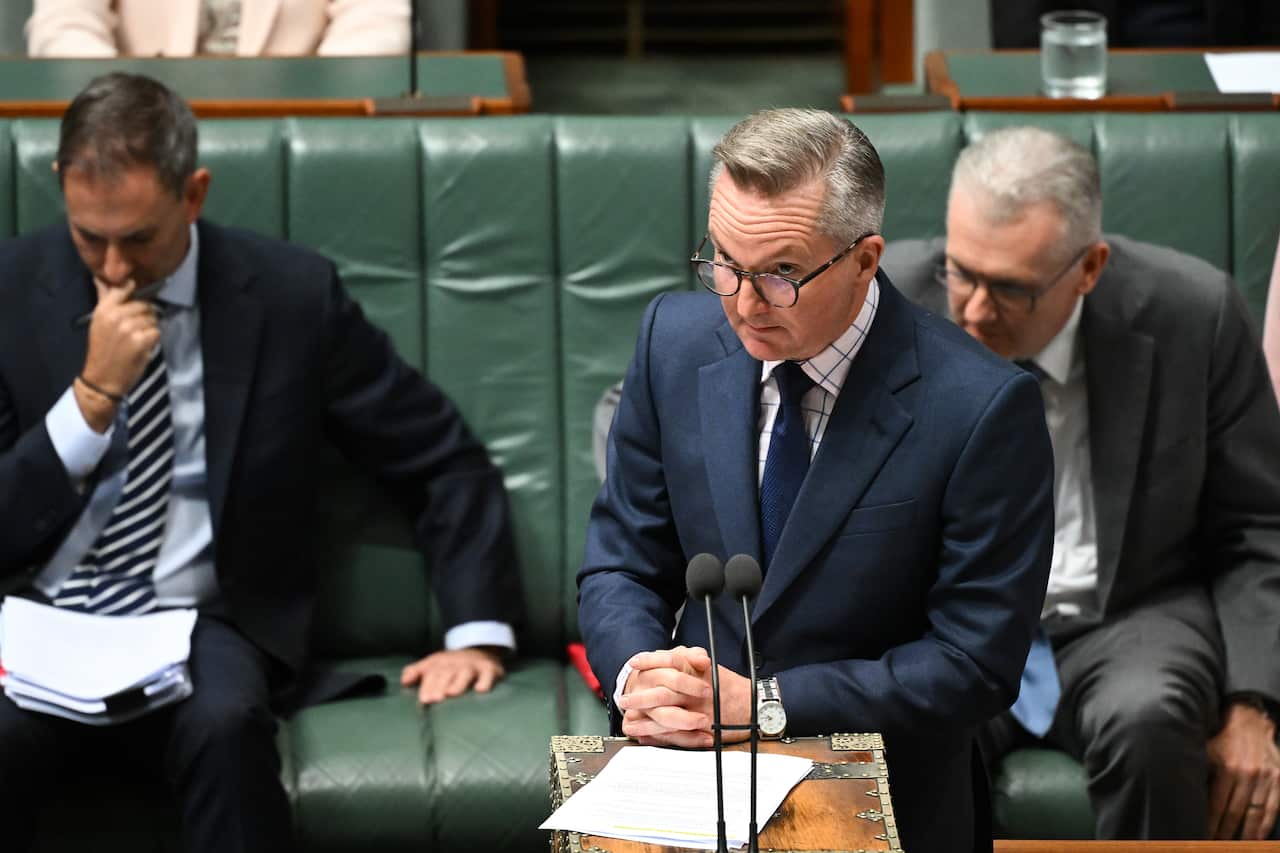
Bowen said the distribution will be felt across rural areas but emphasised assistance to Queensland amid reports petrol stations were running dry, an issue exacerbated by flooding in the region.
He clarified that the measure would only affect an Ampol refinery that typically produces export-grade fuel, which has lower standards, but that quality for the domestic market will "remain high".
Opposition asks if Australia will 'run out of fuel'
Opposition leader Angus Taylor kicked off Question Time, asking the government to guarantee that Australia would not "run out of fuel as a result of the ongoing Iran war".
Prime Minister Anthony Albanese urged Australians not to panic, saying ships with fuel were continuing to arrive "in quantities and frequencies we expect".
"I understand that Australians are following events in the Middle East, and that they're seeing and feeling the consequences here at home," Albanese responded to Taylor's question.
"Our government is looking at every practical measure required to shield our nation and household budgets from the worst of this global uncertainty, ensuring that our farmers, our regional communities and the services all Australians rely on can continue to access the fuel that they need."
Albanese said Australia is meeting its minimum stock obligation, with 36 days of petrol stocks and 29 days for jet fuel.
However, diesel stocks were revised from earlier in the week, down to 32 days.
It follows pressure from the International Energy Agency (IEA) to release oil into the international market in an attempt to rein in crude prices amid fears that Iranian attacks will continue to block Middle East oil exports from reaching markets.
'Plenty of fuel in Australia'
Bowen reassured Australians that while the international situation is "very difficult", "fuel supplies continue to arrive in Australia as scheduled, and our fuel stocks remain very strong".
NRMA spokesperson Peter Khoury reiterated the government's calls that "there is plenty of fuel in Australia".
"The problem we have, which we hope is now being resolved, is that Australians did panic buy," he told reporters in Sydney.
Khoury said that half of the petrol stations across Melbourne, Sydney and Brisbane had raised their prices, despite calls from the NRMA — along with similar warnings from Treasurer Jim Chalmers and the Australian Competition and Consumer Commission (ACCC) — for retailers not to use the war as an excuse to prematurely or opportunistically jack up prices.
Khoury said Australians "understandably" started stocking up when they started seeing prices of $2.30.
He said he had been advised that the fuel supply chain would be stabilised once stockpiling — at both bowsers and fuel terminals — ended.
For the latest from SBS News, download our app and subscribe to our newsletter.







