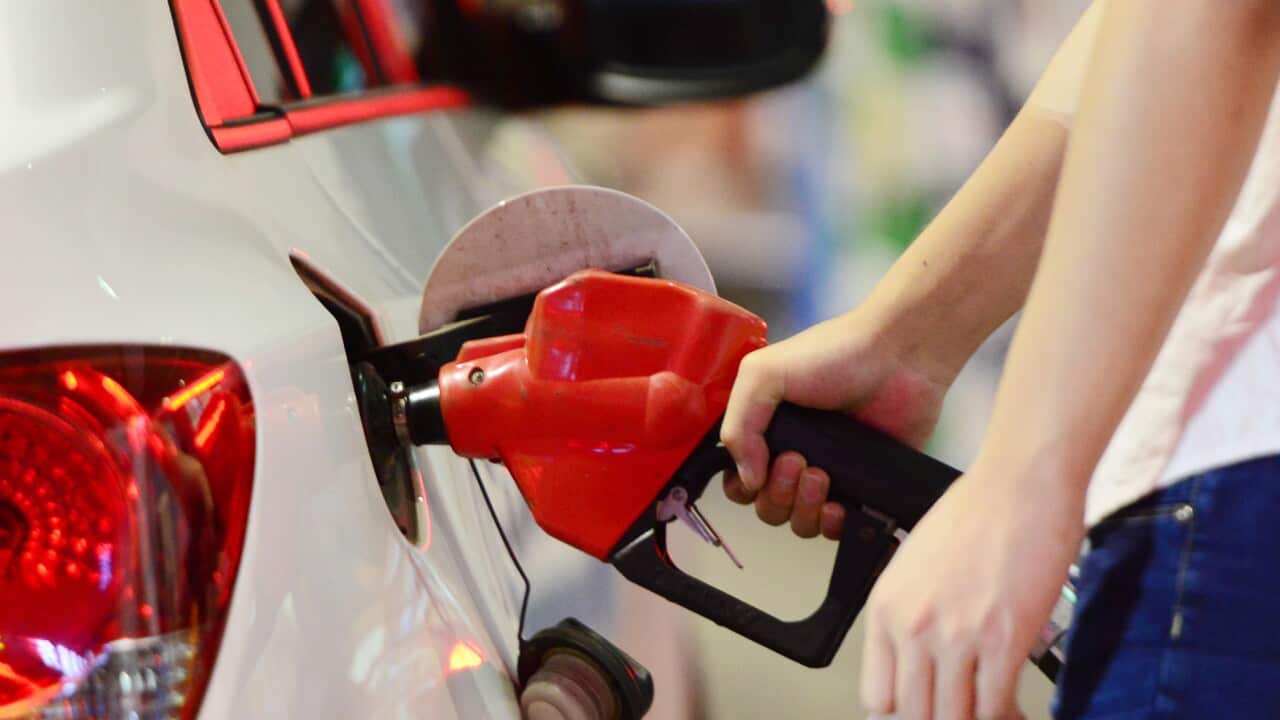
The federal government is considering further economic relief for Australians, after rolling out a new ad campaign urging motorists to limit fuel use in a bid to shore up supply.
Transport Minister Catherine King did not rule out an extension to the fuel excise cut in an interview with the ABC's Insiders program, but said it would be a matter for the May budget considerations.
She said the government was considering additional measures for household and businesses.
"They're all things that we're contemplating as part of the budget process," she said on Sunday.
News that makes sense
Your trusted source for staying up-to-date with the world around you. Get free daily news updates and analysis, straight to your inbox.
She said the government was "realistic" about a longer-term ceasefire in the Middle East.
"This is a complex geopolitical area that's not an easy area for quick and easy resolution, so we've got to be prepared for that and understanding what that means for businesses, for our farming communities, making sure we continue to transport goods and services and provide services for people in communities far and wide."
Her comments were made before US vice president JD Vance announced that peace negotiations between Iran and the United States meet in Pakistan failed to reach a deal six weeks after the war began, amid a fragile temporary ceasefire and the ongoing closure of the vital Strait of Hormuz shipping lane.
"Even if the [Strait of Hormuz] opens tomorrow, there's a long tail to this," King said.
"We don't know what damage has been done to infrastructure. We don't know how quickly shipping can resume as normal, what the consequences of all that are."
Australians urged to slow down to conserve fuel
The government campaign, called "Every little bit helps", will start rolling out on Monday and will include ads on TV, billboards and online.
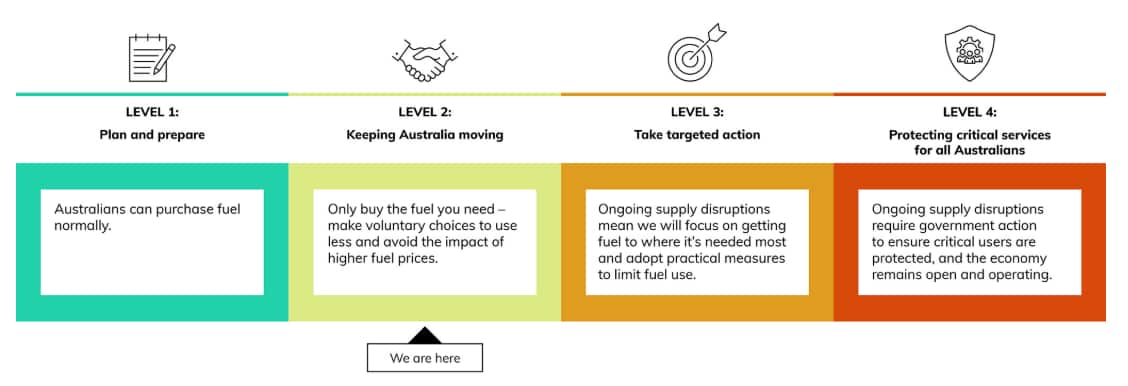
The campaign is designed to inform Australians about the four-level National Security Plan and encourage them to do what they can to help amid the fuel crisis.
The National Security Plan, a guide aimed at managing fuel supply chain pressures, currently sits at Level 2 — or "keep Australia moving" — which means fuel supply is holding up, but the government is taking precautionary measures to shore up supplies.
At this level, the advice is: "Only buy the fuel you need. Make voluntary choices to use less and avoid the impact of higher fuel prices."
Australia would shift to Level 3 if there were ongoing supply disruptions, which would shift focus to "getting fuel to where it's needed most" and adopting "practical measures to limit fuel use".
King emphasised that the global fuel shortage is affecting everyone and every little bit helps.
"From running errands in fewer trips to only filling up with the fuel you need, this will help us keep essential services moving," she said in a press release.
The government's campaign includes a list of actions Australians can take to save fuel.
They include:
- Plan trips and combine errands into one trip, as lots of short trips use more fuel.
- Look after your vehicle's tyres and inflate them to the highest pressure recommended by the manufacturer.
- Minimise cargo your vehicle carries.
- Remove roof racks and spoilers. Increased air resistance can lead to a significant increase in fuel consumption.
- Use air conditioning and heating on low settings. Adjusting temperature levels to reduce fuel consumption.
- Only fill up with the fuel you need.
- Don't overfill the fuel tank — stop at the first click. Additional fuel can be lost in overflow and evaporation.
It also encourages people to minimise engine idling while parked, avoid unnecessary acceleration and driving at high speeds, and harsh breaking — all of which can increase fuel consumption.
Where possible, it recommends Australians to consider using public transport, walking or cycling, carpooling and avoiding peak hour traffic.
The campaign has already drawn Coalition backlash.
"Frankly, I don’t think Australians want to be lectured by taxpayer-funded political propaganda about driving less," Opposition defence spokesperson James Paterson told Sky News.
"They want a government that does its job and makes sure that we are supplied with the refined fuel that we need."
The government announced last month it would halve the fuel excise, a flat tax on petrol and diesel by the federal government, for three months in order to bring relief at the bowser.
For the latest from SBS News, download our app and subscribe to our newsletter.







