
Ferdos had mixed emotions when Australia granted Iran's female football players asylum — relief at their safety but confused at her own visa application being in limbo for 14 years.
The 23-year-old Iranian refugee was sent to Nauru when she was 10, and spent five years in detention with her family before she was transferred to Australia in 2018 with her brother, when they were unwell.
She completed high school in Australia and works as an employment caseworker, but her own situation remains volatile.
Home Affairs Minister Tony Burke granted a handful of women from Iran's football team asylum when they were in Australia for the Asian Cup earlier in March, for fear they would be persecuted back home for failing to sing the national anthem before a match.
"I was really, really happy that Australians really gave that opportunity to such beautiful woman to stay here and feel safe," Ferdos told reporters in Canberra on Tuesday.
News that makes sense
Your trusted source for staying up-to-date with the world around you. Get free daily news updates and analysis, straight to your inbox.
"It was really hard for me to understand how the government has this power to do so in less than 48 hours, but for us, it's been years and decades."
There are about 700 Iranians found to be refugees who remain in limbo, according to the Asylum Seeker Resource Centre.
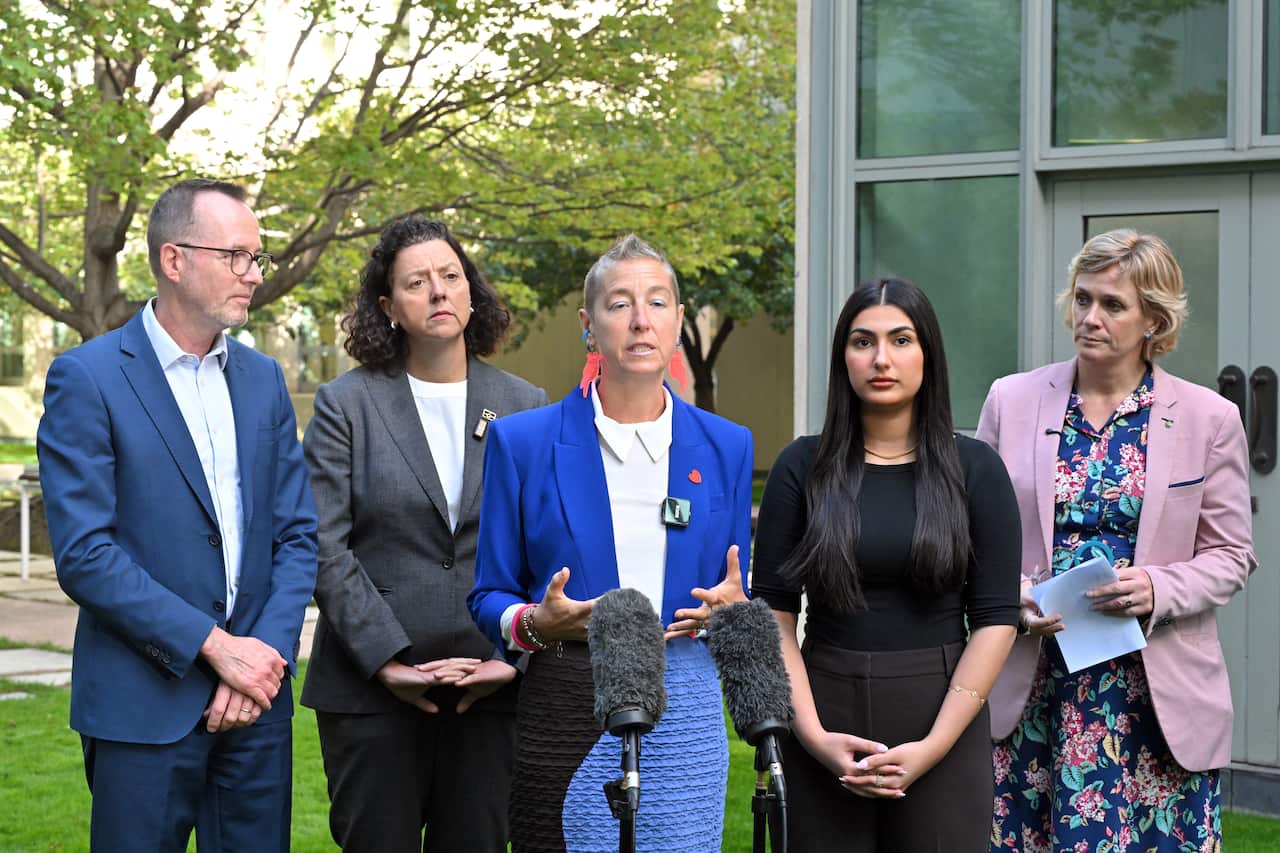
"It's time that Australia shows them the protection that they deserve," the centre's deputy CEO Jana Favero said alongside Ferdos, whose surname is not being used for safety reasons because she has family in Iran.
'The difference is they are not popular sporting identities'
Advocates for Afghan refugees have also pointed at a double standard over the quick processing of the players.
Ghairat Jawahiri had his humanitarian visa application rejected after years of waiting, despite being in hiding with his family in Pakistan in fear of being deported back to face the Taliban's wrath.
He helped NATO forces track the terrorist organisation's camps in the mountains during the Afghan war and was captured and tortured when the Taliban retook control of Afghanistan in 2021 before fleeing to Pakistan.
His daughter Namja worked in the human rights and women's rights sector as an activist, making her return to Afghanistan too risky as the Taliban brutally cracks down on women's rights.
The Taliban believes she co-operated with the Afghan government and international forces during 2001 and 2021 because of her numerous media interviews and human rights projects with international organisations during the Afghanistan war, she said.
Rural Australians for Refugees national president Marie Sellstrom, who is helping the family, offered to resettle them in Shepparton.
"While I am pleased the Iranian women have received support this puts to nonsense the response of the Australian government to the Jawahiri family that 'Australia does not have the capacity to accommodate them'," she said.
"Rural communities can support the Jawahiri family immediately, they were and are in just as much danger if not more than the Iranian women.
"The difference is they are not popular sporting identities."
Sellstrom also pointed to Farzana, who remains in hiding in Iran after she was rejected from joining her family in Shepparton because she was 24 and not 22.
She aged out of being able to be included in her father's family reunion visa by the time his application was put through, Sellstrom said.
Afghan women's rights organisation Azadi-e Zan has made representations to the offices of multiple minsters, outlining a list of high-risk women and families.
Home Affairs secretary Stephanie Foster told a parliamentary hearing in February the department could identify "individuals who might need to be taken out of the queue because of particular circumstances" when representations are made by a minister.
"For example, that might be where we have families where daughters are about to reach an age where they wouldn't be able to travel with their families, and if we processed them in the normal way there would be a perverse outcome," she said.
Favero said the system needed reform as organisations couldn't be expected to make a case-by-case representation for hundreds of cases.
There are more than 300,000 refugee and humanitarian visa applications, including more than 270,000 that are offshore, which amounts to unprecedented demand due to increasing global instability, according to Home Affairs.
For the latest from SBS News, download our app and subscribe to our newsletter.







