
In brief
- China's global trade position makes it increasingly exposed to international disruptions like the war in Iran.
- Chinese government officials have expressed their disapproval of United States actions in the Middle East.
China has made its boldest diplomatic intervention yet in the ongoing US-Israeli war with Iran, warning that the United States' naval blockade is "dangerous and irresponsible".
The Asian superpower urged an upholding of the ceasefire and said that the US' latest intervention, which began on Monday night, would only prolong the conflict in the region, now in its seventh week.
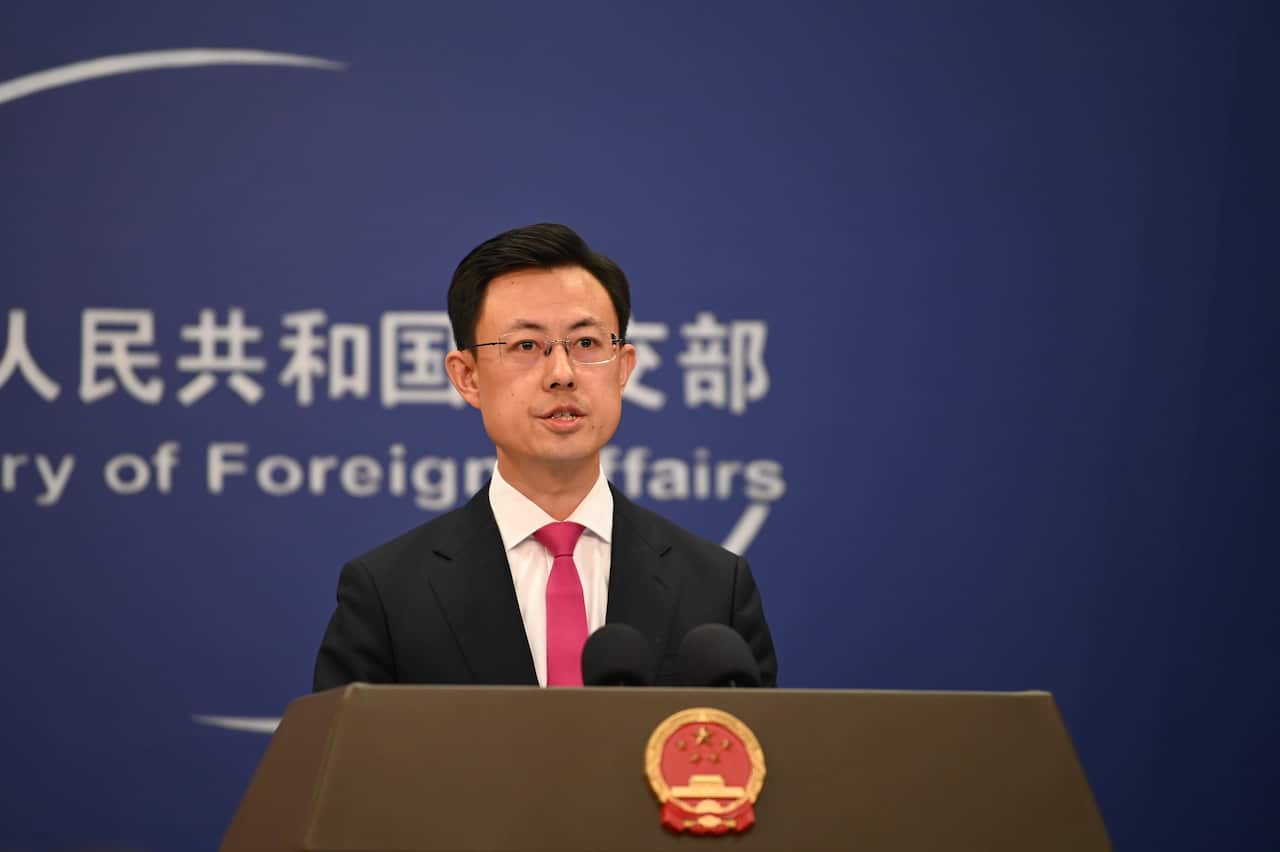
"[The blockade] will only aggravate confrontation, escalate tension, undermine the already fragile ceasefire and further jeopardise safe passage through the Strait of Hormuz," Chinese foreign ministry spokesperson Guo Jiakan said on Tuesday. "It is a dangerous and irresponsible move."
Despite the US blockade of Iranian ports and the strategic Strait of Hormuz, container ships have continued to trickle through, including those of Chinese origin. The country is the largest buyer of Iranian oil, which has been under intermittent US sanctions for decades.
On Tuesday, Chinese President Xi Jinping made a rare public comment on the conflict, saying that the world could not be allowed to "revert to the law of the jungle".
News that makes sense
Your trusted source for staying up-to-date with the world around you. Get free daily news updates and analysis, straight to your inbox.
"The international system with the United Nations at its core, the international order based on international law, and the basic norms governing international relations based on the purposes and principles of the UN Charter must be firmly upheld," Xi said during a meeting with Sheikh Khaled bin Mohamed, crown prince of Abu Dhabi, in Beijing.
The meeting saw China advance a "four proposal" strategy for peace and stability in the Middle East, including adherence to the principles of peaceful coexistence and national sovereignty.
China has been subtly increasing its diplomatic interventions in the Middle East in recent years. Notably, it facilitated 2024 talks between the rival Hamas and Fatah groups in Gaza, as well as the 2023 talks between Saudi Arabia and Iran that resulted in a normalisation of their relations before the outbreak of the war.
With European Council on Foreign Relations data earlier this year reflecting that China's global influence is growing among thousands of survey respondents as the United States slips behind, experts are now saying that the conflict in the Middle East will only hasten Chinese ascendancy.
China's involvement in the war so far
China is Iran's largest trading partner and the pair maintain a close strategic relationship. In 2021, they signed a 25-year cooperation agreement, which brought Iran into China's flagship Belt and Road Initiative. China has also continued to buy roughly 80 per cent of its oil exports while Western sanctions are in place, according to data from shipping analytics firm Kpler — about 1.38 million barrels a day.
However, Chinese foreign policy is built around its "five principles of peaceful coexistence," which theoretically makes the country highly risk-averse to international interference. So far, its role in the conflict in the Middle East has been fairly mute, although that could change depending on how long the conflict drags on.
"They definitely are more frustrated in comparison to one month ago," Dr Andrea Ghiselli, lecturer in international politics at the University of Exeter in the UK and head of research at the ChinaMed Project, told SBS News. "They really want the conflict to end as quickly as possible because they are aware the repercussions on their economy are going to be great."
The New York Times and CNN have both made unverified reports recently that China has provided Iran with military weapons to aid its war efforts. Shoulder-fired anti-aircraft missiles capable of taking down low-flying aircraft are reported to have been sent, according to unnamed US officials. Chinese government officials have since strongly denied the claim, describing it as "sensationalist" and "baseless."
Asked about the reports on Saturday, US President Donald Trump cautioned the country against getting involved. "If China does that, China will have big problems, okay?" Trump told reporters.
China's Ministry of Foreign Affairs told the ABC that the suggestion that an AI tool used by the Chinese company MizarVision to tag military bases could be being used to help Iran was sensationalist and that Chinese companies are required to operate in accordance with laws and regulations.
Speaking from Shanghai, Ghiselli suggested the reports about Chinese shoulder-mounted missiles being delivered to Iran could be designed to sow discontent between the rival world leaders, and that the supply of military aid would be uncharacteristic for China.
"China will probably adopt a wait-and-see approach, especially waiting for the second round of negotiations in Pakistan," he said. "I think they will see what to do, but I don't think there will be any military intervention."
Blockading the Strait of Hormuz
Asian nations are particularly exposed to disruptions to global oil flows in the Middle East. The International Energy Agency estimates that 80 per cent of the oil that passed through the Strait of Hormuz in 2025 was destined for the continent.
That said, China may be better positioned to weather the storm than most of its neighbours. The country has been vastly increasing its oil reserves in recent years, which are now thought to comprise some 1.4 billion barrels, according to Columbia University's Center on Global Energy Policy, enough to withstand disruption for several months.
Still, it also has more to lose in the disruption. Aluminium exports are down 5 per cent and steel exports are down 13 per cent as Middle Eastern nations pause their imports from the country, according to reports from Bloomberg.
Chinese state media broadcaster CGTN has revealed the country's first-quarter figures for 2026, which show that foreign trade is up 15 per cent year-on-year, the fastest it has grown in five years. Total imports and exports for the first three months of the year were valued at 11.84 trillion yuan ($2.44 trillion), something Ghiselli said the country is keen to protect.
"China is increasingly exposed to global geopolitical consequences, mostly because of the greater costs for certain industrial imports, which are already really pushing up inflation in China, but also because of the destruction of the global demand for Chinese products," he said.
In contrast, the country's renewable energy sector is also expected to get a boost.
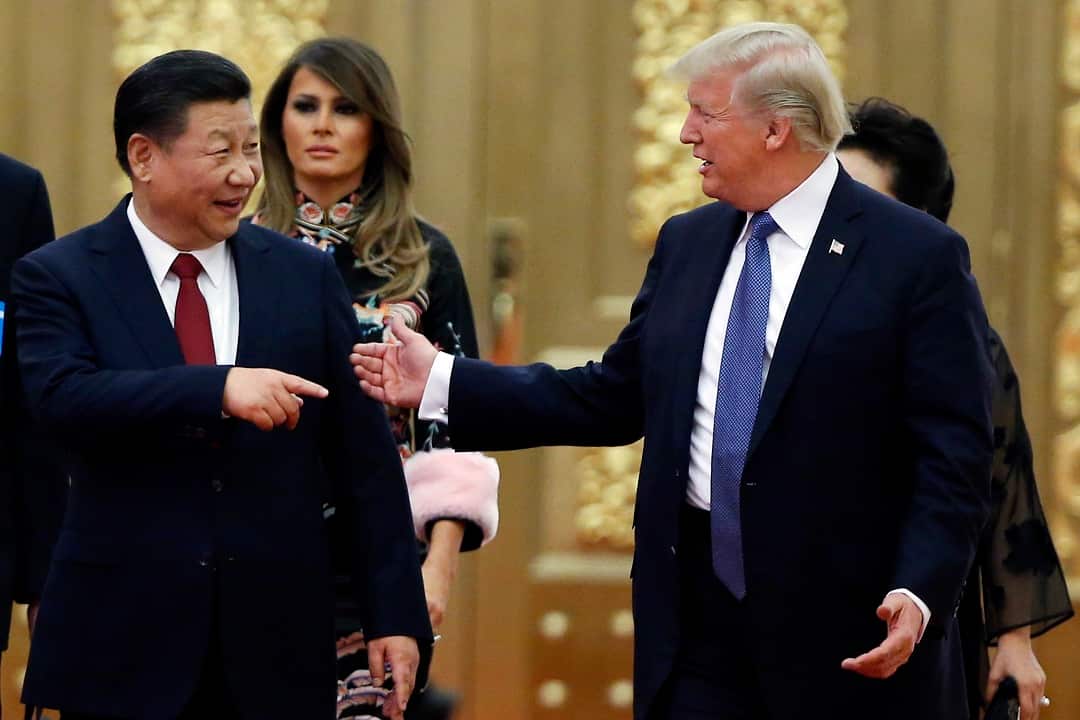
The US president is due to travel to China next month following turbulent diplomatic relations. The trip will be the first by an American leader in eight years and is aimed at smoothing out disagreements that have emerged in the wake of US tariff policies.
If the conflict in Iran is still going by the mid-May meeting, it will no doubt weigh heavily on discussions.
"This really cannot be seen as China's victory but more like America's loss," Ghiselli said.
For the latest from SBS News, download our app and subscribe to our newsletter.







