
in brief
- The United States has said that it will start a blockade of the Strait of Hormuz, potentially elongating the conflict.
- The blockade is scheduled to begin at 12am Tuesday, Australian Eastern Standard Time.
United States President Donald Trump has threatened to blockade the Strait of Hormuz after ceasefire negotiations between the US and Iran ended over the weekend without resolution.
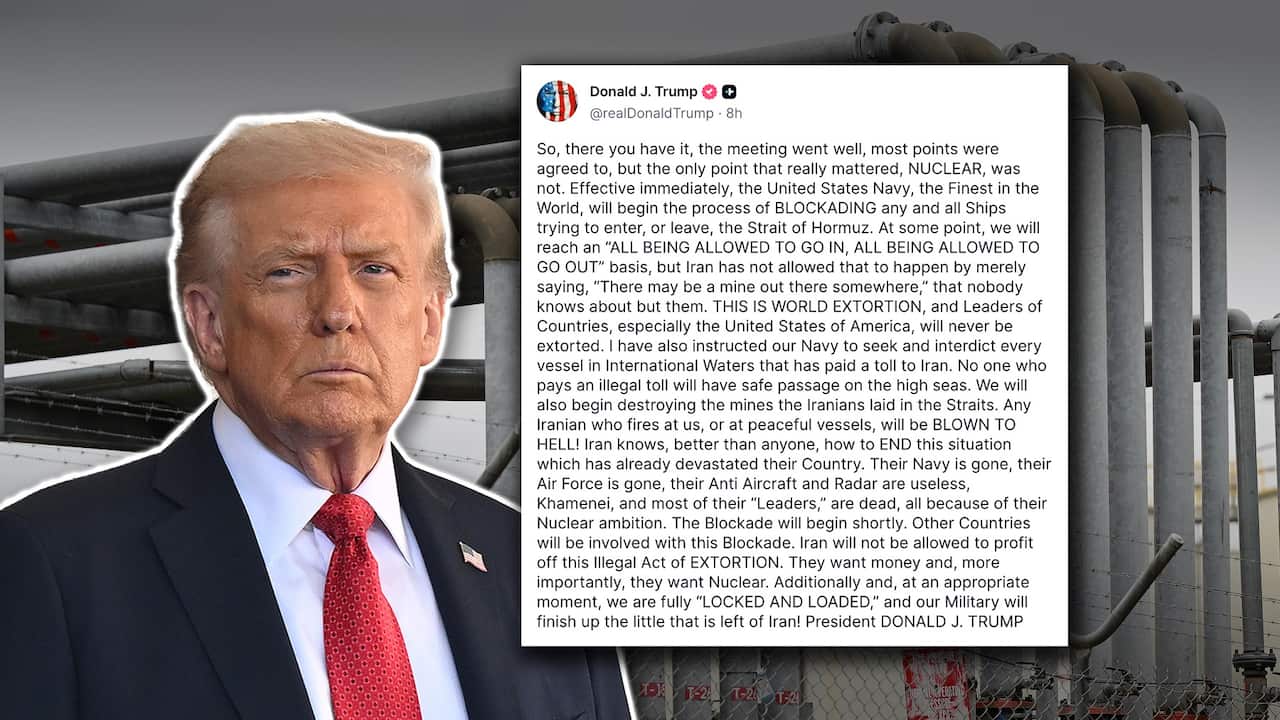
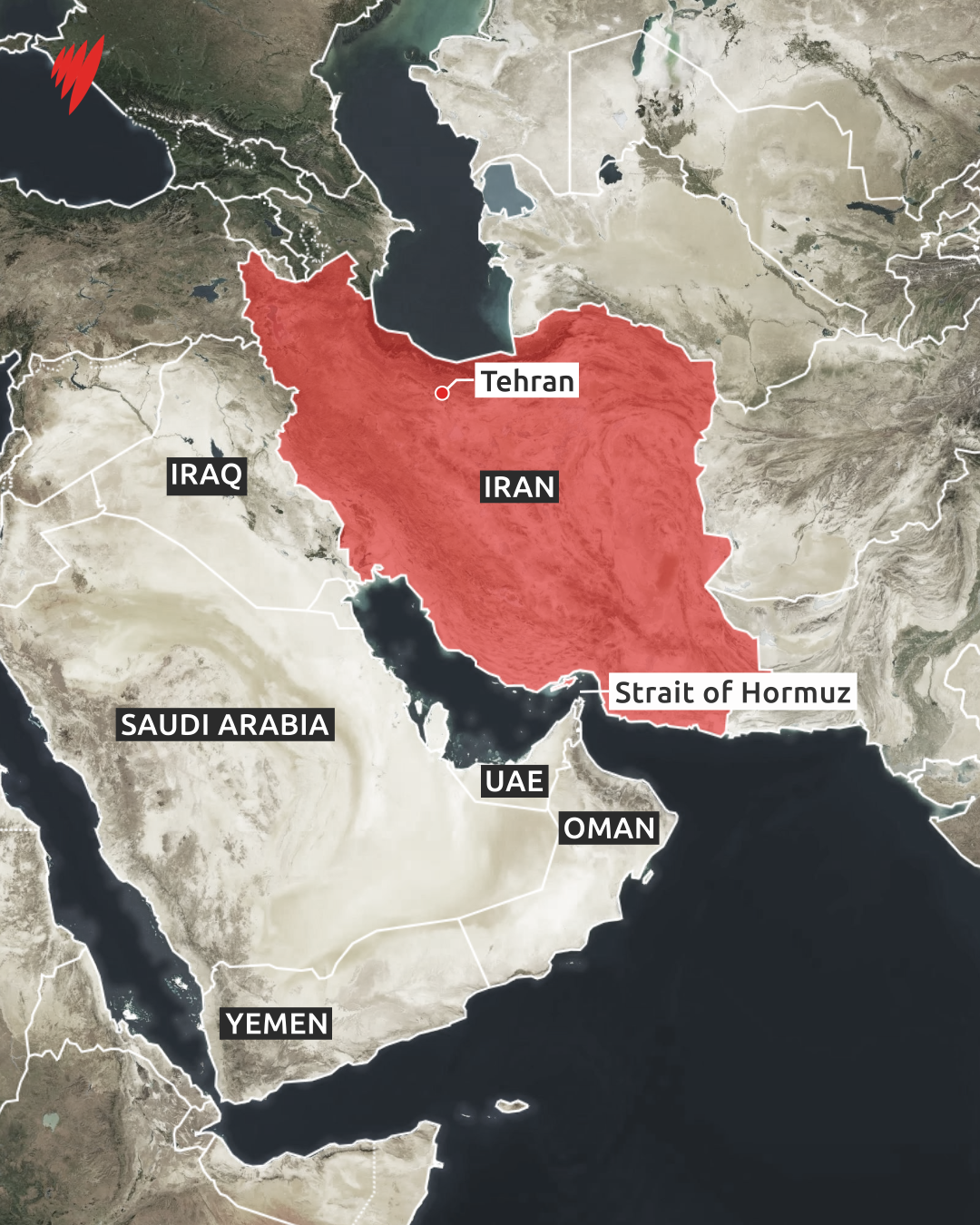
"Effective immediately, the United States Navy, the Finest in the World, will begin the process of BLOCKADING any and all Ships trying to enter, or leave, the Strait of Hormuz," Trump wrote on Truth Social on Sunday night.
Trump noted that Iran's determination to retain its nuclear enrichment capabilities was a key sticking point in discussions held in the Pakistani capital Islamabad over the weekend. In addition, the continued assault on Lebanon by Israeli forces, the unfreezing of seized Iranian assets, and a winding back of international sanctions, are all at the centre of the now-paused discussions.
"They were very unyielding as to the single most important issue and, as I have always said, right from the beginning, and many years ago, IRAN WILL NEVER HAVE A NUCLEAR WEAPON!" Trump continued.
News that makes sense
Your trusted source for staying up-to-date with the world around you. Get free daily news updates and analysis, straight to your inbox.
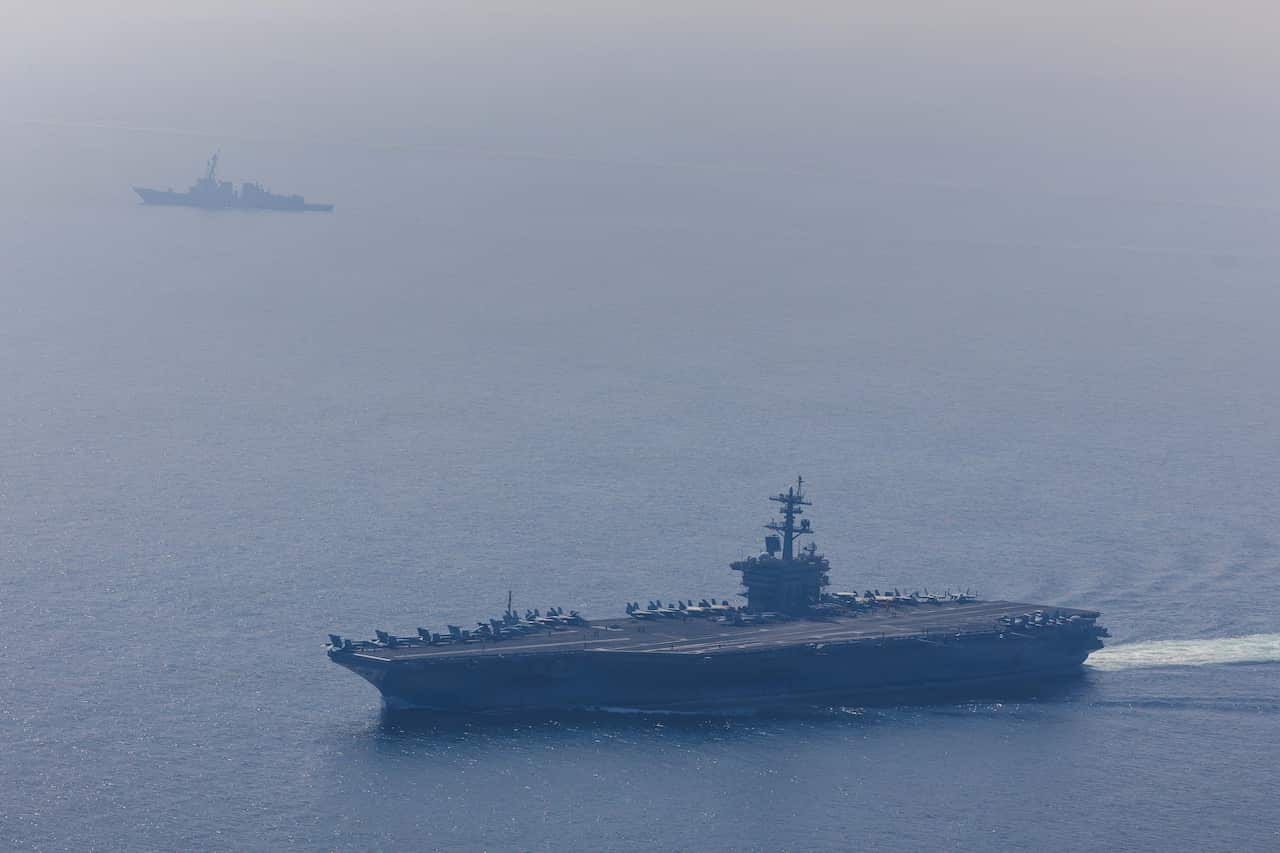
According to the US military, a blockade of all maritime traffic entering and exiting Iranian ports will be implemented from 10am ET (12am Tuesday AEST), affecting vessels of all nations. However, contrary to Trump's announcements, the US Central Command said in a statement that it will not impede "freedom of navigation for vessels transiting the Strait of Hormuz to and from non-Iranian ports".
In response, Iran's Revolutionary Guards Corps warned it had traffic in the strategic waterway under its full control and would trap any enemy who tried to challenge it "in a deadly vortex". Iran's parliamentary speaker Mohammad Bagher Ghalibaf, who led the Iranian delegation in Pakistan, said upon arriving back in Tehran that the country would "not bow to any threats" from the US.
Iran has been restricting traffic through the strait — a key route for global oil and gas shipments — since the start of the conflict while allowing allied vessels such as those from China to pass. There have been unconfirmed reports that Iran plans to charge tolls for all ships seeking to transit through the channel.
A few ships did pass through the waterway while ceasefire negotiations were upcoming — down from the up to 130 that normally pass each day — however the maritime data company Lloyd's List said on Tuesday that traffic in the strait has once again come to a complete standstill.
Pakistan have urged both sides to continue to respect the temporary truce which was announced on Wednesday and scheduled to last two weeks.
The collapse of negotiations has raised concerns that fighting could resume, hampering global trade and driving up cost of living pressures across the world.
Impact on the global economy
The price of oil and the US dollar rose on Monday off the back of the breakdown in negotiations while benchmark brent crude futures surged 8 per cent to US$146.43 ($207.91) a barrel.
"The market is now largely back to conditions before the ceasefire, except now the US will block the remaining up to (2 million barrels) Iranian-linked flows through the Strait of Hormuz as well," MST Marquee analyst Saul Kavonic told the Reuters news agency.
"The key remaining question is if the US renews strikes on Iran, raising the risk of strikes on energy infrastructure across the region, which could have a further lasting impact beyond the duration of the war."
Asked by Fox News whether he thought fuel prices would return to normal in the United States by the upcoming midterm elections scheduled for November, Trump said he hoped so but that they could also be higher by then.
"It should be around the same," he said. "I think [the war] won't be that much longer."
Experts have cautioned that the longer the conflict drags on, the greater its impact on global trade and the higher prices consumers may end up paying for everyday items.
"I think the situation is going to get worse before it gets a little bit better," Dr Vinh Thai, professor of logistics and supply chain management at RMIT University, told SBS News. "Commercial confidence is not there yet in order to facilitate normal operation of the strait."
Oil and gas will continue to be stranded in the Persian gulf, with the Abu Dhabi National Oil Company stating last week that it had 230 ships loaded with fuel and ready to sail that were unable to do so. The strait is also a major transport route for fertiliser, urea, helium, and other essential items. Then there are the shipping containers themselves.
"With containers stuck over there, in Asia there will be shortage of empty containers," Thai said. "Shipping lines will have to do a reshuffling of their network, leading to an increase in the freight rate."
With negotiations having broken down, Dr Jessie Moritz, lecturer at the Centre for Arab and Islamic Studies at the Australian National University, told SBS News that the conflict is at risk of expanding, with even greater economic consequences.
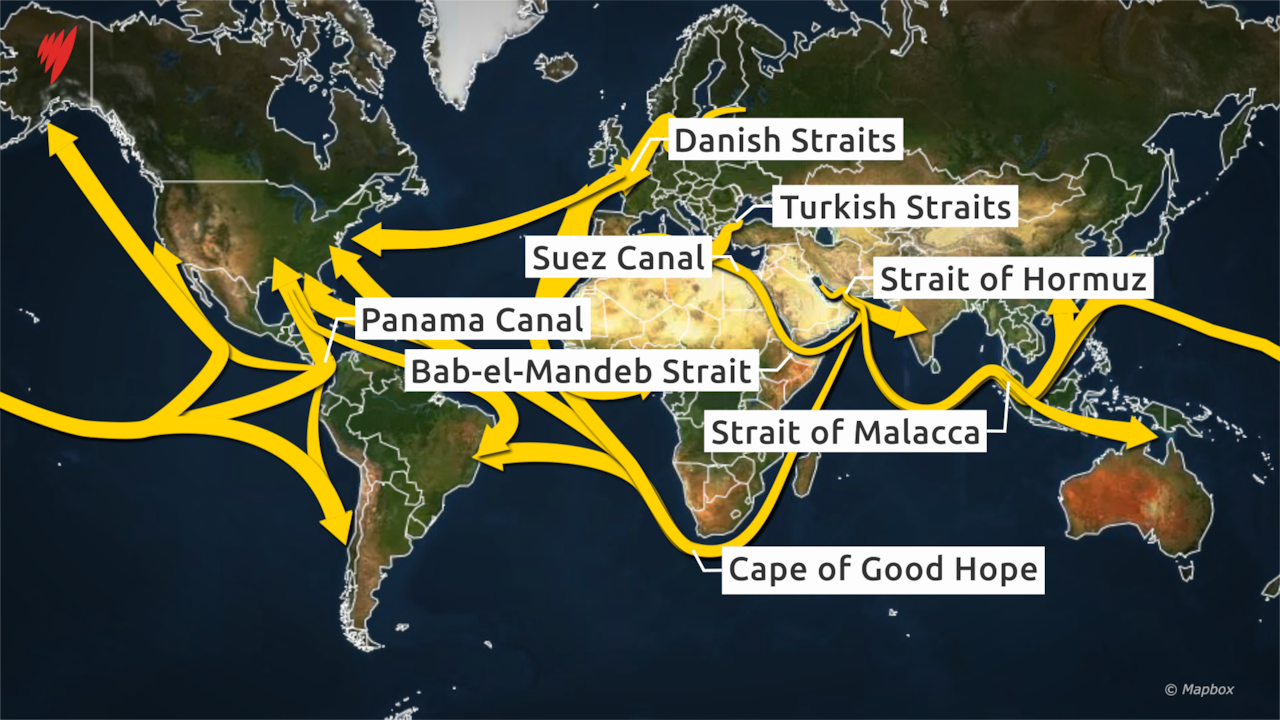
"Iran has already threatened that they're now going to close the Bab al-Mandab Strait [between Yemen and Africa]," Moritz said. "I don't think we're quite there yet, but the Iranians are deciding how they want to escalate in return, and some of the options available to them are disastrous for international trade."
Australia's recession fears
A million Australians out of work and inflation surpassing 6.5 per cent is possible if crude oil hits US$150 ($213) a barrel, according to modelling by Deloitte Access Economics. If it climbs to US$175 ($248) following a protracted conflict, it would tip the country into deep recession, with unemployment rising to 6.8 per cent and inflation hitting 7.5 per cent.
If the Strait of Hormuz is not opened in the coming weeks, that US$150 a barrel mark could be reached, analysts from AMP and Oxford Economics have warned, with manufacturing and tourism likely to be the sectors hit hardest.
Moritz explained that Australia has yet to even experience the true impact of the disruption as fuel the country has been using so far had mostly been on-shore before the outbreak of the conflict on 28 February. Australia imports roughly 85 per cent of its fuel and is now buying it on an increasingly competitive global market.
"We should expect that commercial shipping is not going to take off under this US blockade on top of threats from Iran," she said. "On the basis of that restricted supply, I'd expect prices to go up and stay up."
Crude oil and natural gas are foundational to more than 6,000 products used every day which are derived from petrochemicals. Roughly 96 per cent of manufactured items are reliant on oil and natural gas byproducts, ranging from electronics to clothing, cosmetics to construction equipment.
The disruption to those supply chains is yet to be felt in consumer pricing but will start to kick in if the conflict is not resolved soon. That is why, Thai says, he would not expect consumers to see immediate relief for at least the next nine to 12 months — if Australia manages to avoid a recession.
"If you ask me personally whether recession will happen this year given the current situation, I would say the chance is less than 50 per cent," he said. "If the situation goes on for the next two months, for example, without any resolution, then we'll start seeing some signs of economic downturn toward the end of the year.
"If they can resolve it within the next month or so, then the situation can be salvaged."
What happens now
With ceasefire talks suspended, Moritz argues that the most likely outcome is the "continued escalation" and a potential expansion of the war.
Israel and Lebanon are scheduled to hold peace talks in Washington DC, on Tuesday, however the continuing conflict, and the insistence of Israeli Prime Minister Benjamin Netanyahu that his neighbour is not part of a ceasefire deal, is likely to further incentivise Iran to continue exercising control over the strait.
Disruption to the Bab al-Mandab Strait, which carries some 12 per cent of the world's oil and has seen increased shipping as cargo vessels look for alternatives to the Hormuz route, could cause a very significant worsening of the global energy crisis. Yemeni-based Houthi groups aligned with Iran have previously demonstrated their capability to disrupt shipping in the 30km wide using drones and missiles.
"That has gone from being in the extremely unlikely basket into the possible basket," Moritz said. "The window of opportunity for off-ramps is narrowing every day. It's still there, and that's where I hope we go, but I'm not feeling super optimistic."

Whether or not the international community allows Iran to charge tolls on the Strait of Hormuz would set a precedent for other strategic shipping choke points. These include the Straits of Malacca, between Indonesia, Singapore, and Malaysia, where 35 per cent of sea-borne oil passes, which could become relevant in the event of a future conflict in the Indo-Pacific region.
Thai said he expects the current war in the Middle East will lead to nations and corporations shifting their supply chains toward more local sourcing, which will have both positive and negative impacts.
"If the world of trade is now turning back to regionalisation, protectionism, and trade barriers then, yes, you will be able to respond better to future geopolitical shocks, but at the same time it comes at the cost of trade," he said.
"But we cannot just rely on self-sufficiency, because it's not going to be economically efficient.
"We need to have a combination of both government interventions with a strategic reserve of critical supplies and at the same time, we need flexible and resilient supply chain strategy at a firm level."
Even if some resolution to the conflict can be found relatively quickly, Moritz says that regional instability and similar flare-ups are likely to continue as Israel attempts to establish itself as the "new regional hegemon" in the Middle East.
"The Netanyahu regime has been quite clear about seeing this as a historic opportunity," she said. "They're hoping to reshape how Middle East politics works in Israel's favour and have demonstrated a clear inclination to intervene militarily in most of their neighbours in order to try to create those conditions."
As such, both experts spoken to for this story agree that a rapid transition away from the reliance on fossil fuels for both transportation and manufacturing is both wise and necessary to ensure national security in the future.
"We are doing it now, but we do need to accelerate that in order to prepare for future shocks that may happen," Thai said.
"We don't have to come out of this conflict being as exposed to international oil supply as we were when we went into it and it would be incredibly silly of us to do so," Mortiz added.
"We should be planning right now for the assumption that there's going to be continued disruption."
— With additional reporting from Reuters.
For the latest from SBS News, download our app and subscribe to our newsletter.







