A United States official said on Wednesday that a 10-point ceasefire plan published by Iran is not the same set of conditions the White House agreed to for pausing the war.
"The document being reported by media outlets is not the working framework," the senior official said on condition of anonymity.
The official gave no further comment, saying: "We're not going to negotiate in public out of respect for the process."
The statement adds to concerns over the fragility of the truce declared on Tuesday — hours before a deadline set by US President Donald Trump for Iran to meet US demands or face what he called an end to its "whole civilisation".
Trump had said in his declaration of a two-week truce for further negotiations that "we received a 10-point proposal from Iran, and believe it is a workable basis on which to negotiate".
News that makes sense
Your trusted source for staying up-to-date with the world around you. Get free daily news updates and analysis, straight to your inbox.
Iranian state media then published a 10-point plan that notably included continued Iranian control over the strategic Strait of Hormuz, an end to international sanctions on the country, and "acceptance" of uranium enrichment.
These items would run contrary to the White House's public statements about what it wants Iran to do.
Later on Wednesday, Trump took to his Truth Social platform to assail those releasing incorrect reports about agreements or letters that he said are not part of the actual deal.
"In many cases, they are total Fraudsters, Charlatans, and WORSE," he said.
"There is only one group of meaningful 'POINTS' that are acceptable to the United States, and we will be discussing them behind closed doors during these Negotiations," Trump said, without providing details. "These are the POINTS that are the basis on which we agreed to a CEASEFIRE."
Later in the day, vice president JD Vance said Iran's negotiators thought the US-Iran ceasefire agreed to on Tuesday included Lebanon, but the US had in fact not agreed to that.
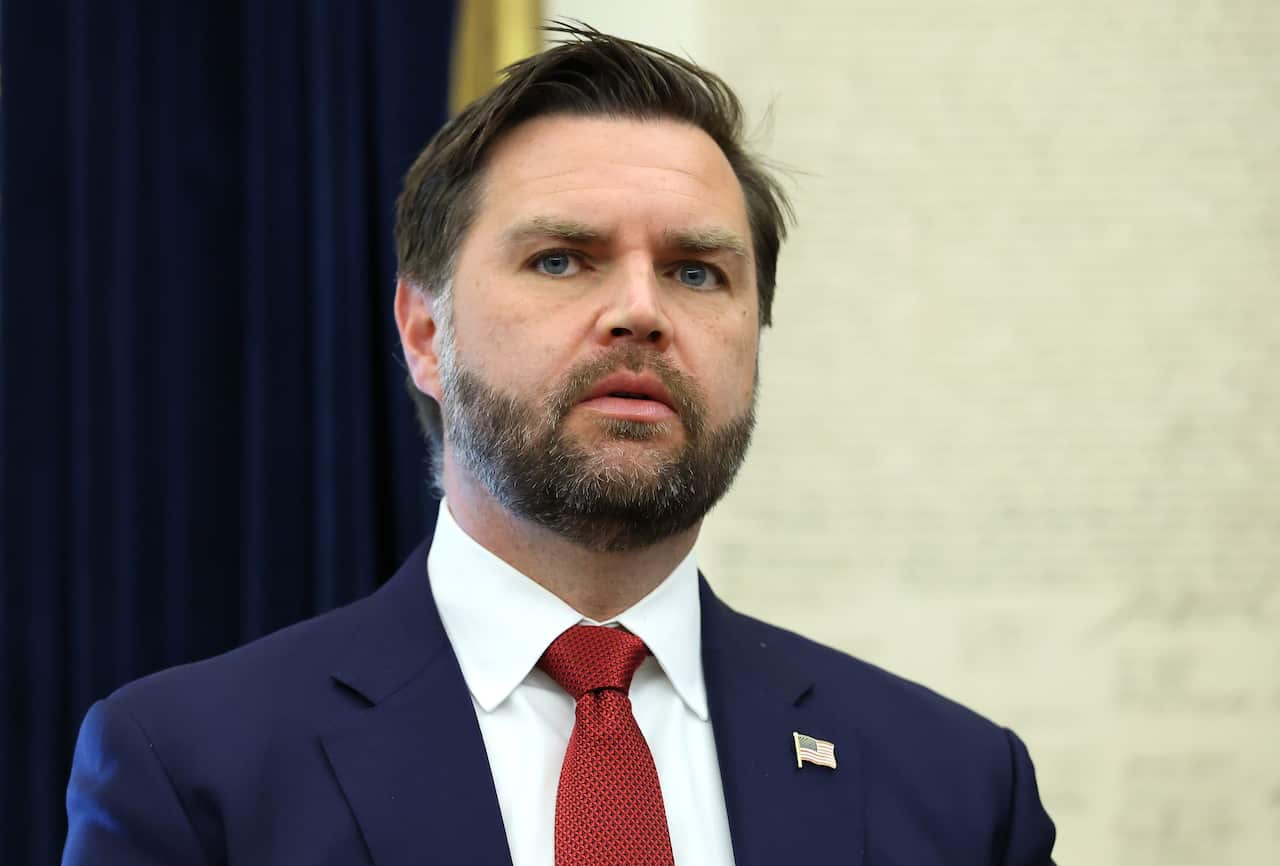
"I think this comes from a legitimate misunderstanding. I think the Iranians thought that the ceasefire included Lebanon, and it just didn't," Vance told reporters in Budapest.
The US position was that the ceasefire would focus on Iran and US allies, including Israel and the Gulf Arab states, he added. That position contradicts comments by Pakistani Prime Minister Shehbaz Sharif, a key intermediary in the US-Iran ceasefire talks, who had said the truce would include Lebanon.
Vance said Israel had agreed to show restraint in Lebanon, without providing details.
"The Israelis, as I understand it ... have actually offered to, frankly, to check themselves a little bit in Lebanon, because they want to make sure that our negotiation is successful," Vance said.
For the latest from SBS News, download our app and subscribe to our newsletter.







