This audio is voiced by AI and may occasionally mispronounce words.
Share your feedback and help us improve this feature. Read more about how we use AI at SBS here.
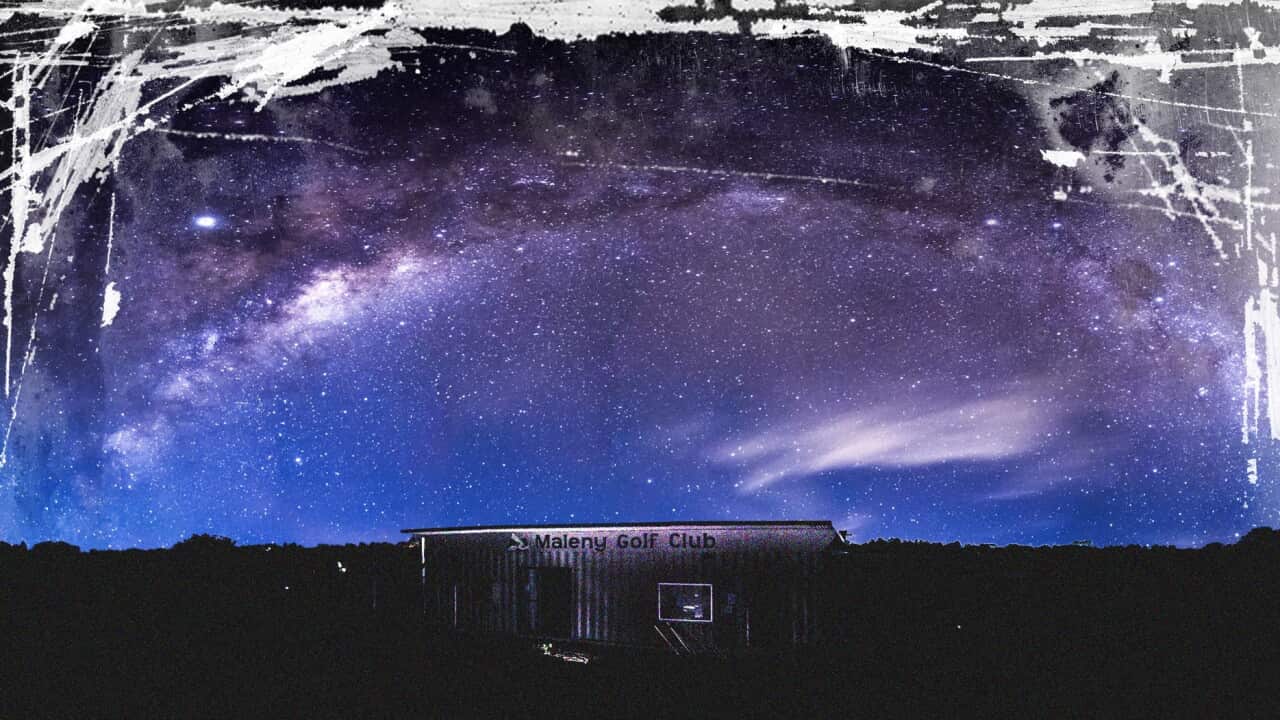
Kai Lane says the last thing he sees before he settles in for sleep is the stars — or at least what's left of them.
For the 24-year-old Yorta Yorta and Barapa Barapa man, the night sky has become both a memory and a warning. A reminder of what's at stake, as artificial light erases the stars above many Australian towns and cities.
"I never shut my curtains … I sort of lay on the side and look out the window and up at the stars. Then I slowly doze off," Lane tells SBS News.
Across Australia, scientists and ecologists increasingly say that light pollution is not just a loss of scenery.
It's a cultural and ecological shift, altering ecosystems, wildlife behaviours, and in some cases, obscuring First Nations knowledge systems that have relied on the night sky for tens of thousands of years.
News that makes sense
Your trusted source for staying up-to-date with the world around you. Get free daily news updates and analysis, straight to your inbox.
A sky of stories
Lane was raised in Kerang, in north-central Victoria, where the clear night sky reveals dense constellations. He describes this nightscape as a "living classroom", where stories are encoded in darkness just as much as light.
Among them is Emu in the Sky, an Indigenous constellation traced through the dark patches of the Milky Way rather than its stars.
"We are the only culture in the world that looks for dark spots in the Milky Way. Usually, the constellations are just connecting stars to stars, like lines. But the emu is just a dark spot in the sky," Lane says.
For the Barapa Barapa people, the constellation carries practical lessons as well as cultural meaning. Lane says the emu's position can signal when it's appropriate to collect eggs or when breeding season has begun.
"When it's sitting down, you can go collect the eggs, and when the emu starts to stand, you're not allowed to crack the eggs because they're starting to become chicks."
Lane is also a trainee ecologist and says these stories reveal deeper lessons about connection to Country, seasons and ecological change.
But he believes this knowledge is under threat, as artificial light increasingly brightens city centres, parts of regional and rural Australia alike.
Lights outside the city
Lane now lives in the Victorian city of Geelong, where only a handful of stars are visible on a clear night.
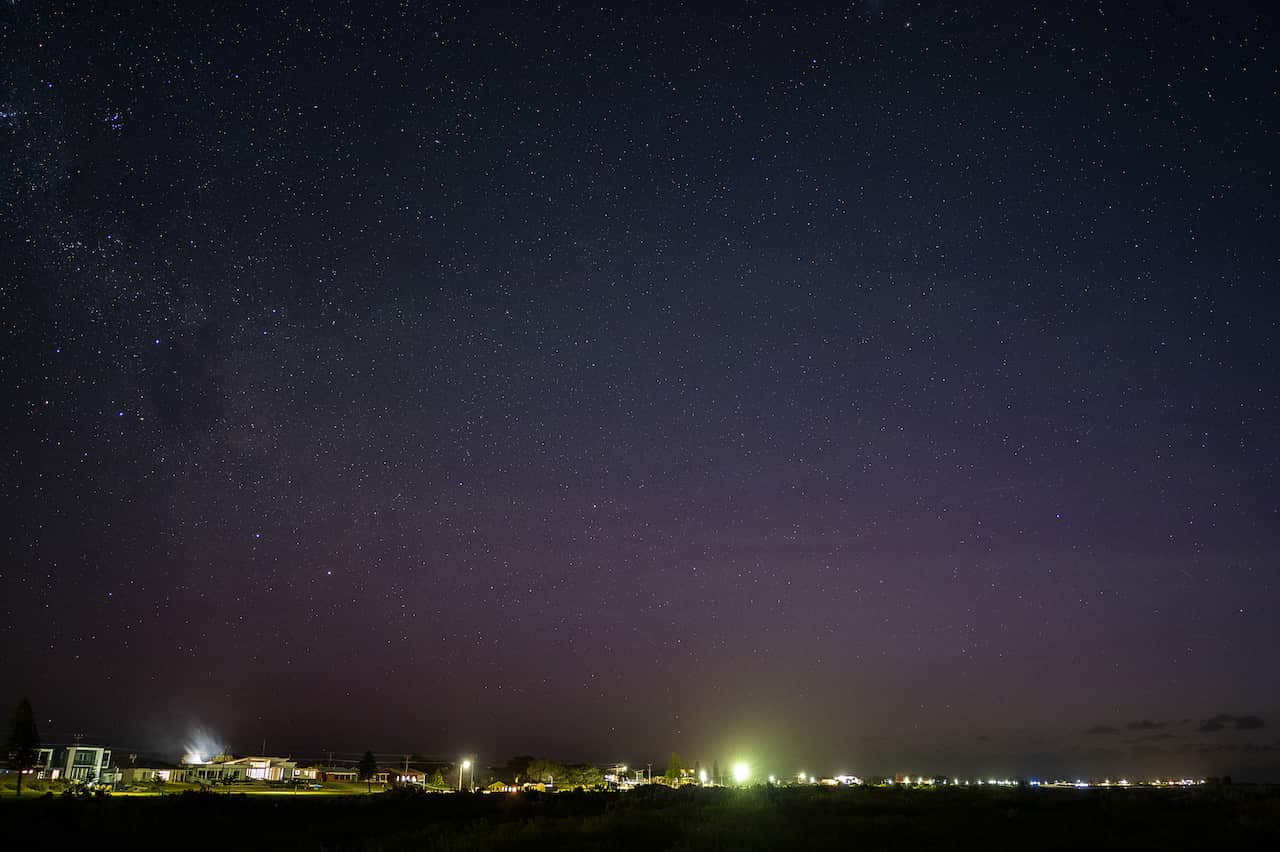
It's a sight familiar to many Australians who live under light pollution — the excessive or inappropriate use of artificial light at night. One form of light pollution is skyglow, in which artificial lighting brightens the night sky and reduces the visibility of celestial objects.
Recent satellite research published in the Nature journal in April suggests the problem is growing worldwide. A NASA-funded study from the University of Connecticut, which examined more than 1.1 million satellite images, found artificial light at night increased by around 16 per cent globally between 2014 and 2022.
Researchers say some regions are continuing to grow brighter while others have temporarily dimmed due to factors such as COVID-19 disruptions, changes in lighting policy and broader economic shifts.
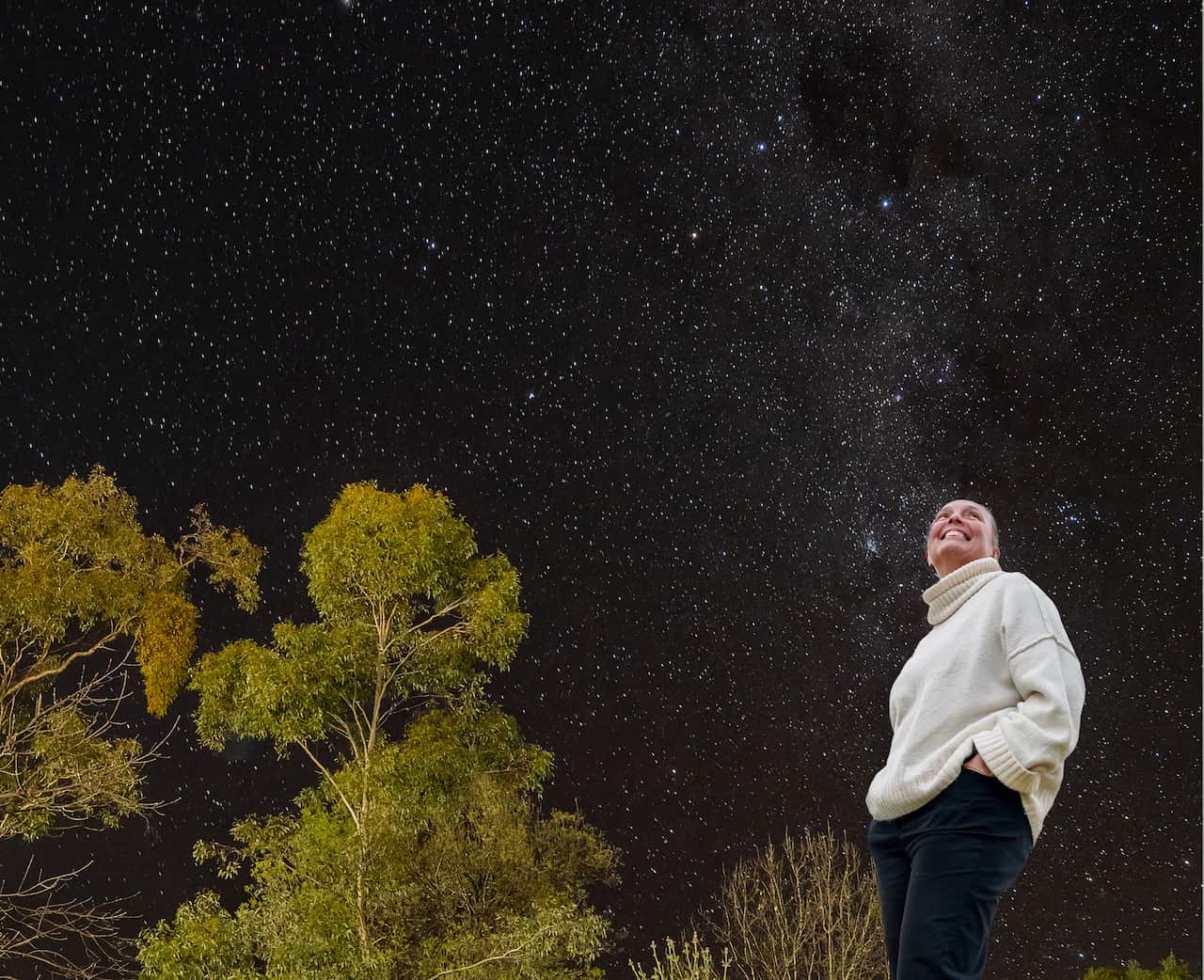
Marnie Ogg, founder and director of the Australasian Dark Sky Alliance, a not-for-profit charity dedicated to reducing light pollution, says the scale of change to the natural light is often underestimated.
"We've had 3.8 billion years of natural day, night cycles that were predictable and then [around] 150 years ago we introduced the electric light, and that's completely changed — is completely changing the nighttime environment," she tells SBS News.
"Things like LED billboards are probably one of our biggest threats. The other thing that is a threat to our night environment is solar batteries because people now can use their battery to run their solar lights around their house all night long ... there's no cost to it."
[Solar light is] free, so we can abuse it, basically.
Ogg and other researchers argue that disruptions also extend into behavioural and physiological systems across species.
'We took them for granted — and we lost them'
Dr Ken Wishaw, a former medical specialist, anaesthesiologist, and Australia's first full-time helicopter doctor, says the stars have been his companions since he was seven years old.
He recalls a post-retirement rafting trip to the Grand Canyon in 2016 that shifted his perspective on the cosmos.
"We were down [at] the bottom of the Grand Canyon, and it got out that I knew my stars. So, [the group] pleaded with me to give them a tour," Wishaw tells SBS News.
"One of the ladies from my raft … she started crying, and I stopped and said, 'Sorry if I offended you'. She said, 'No, no, no. I'm 42 years old. This is the second night in my life I've ever see a star'."
He says her first experience of a starry night sky was during Florida's 2008 electricity grid collapse, which blanketed the state's "undifferentiated orange [light] dome" in darkness.
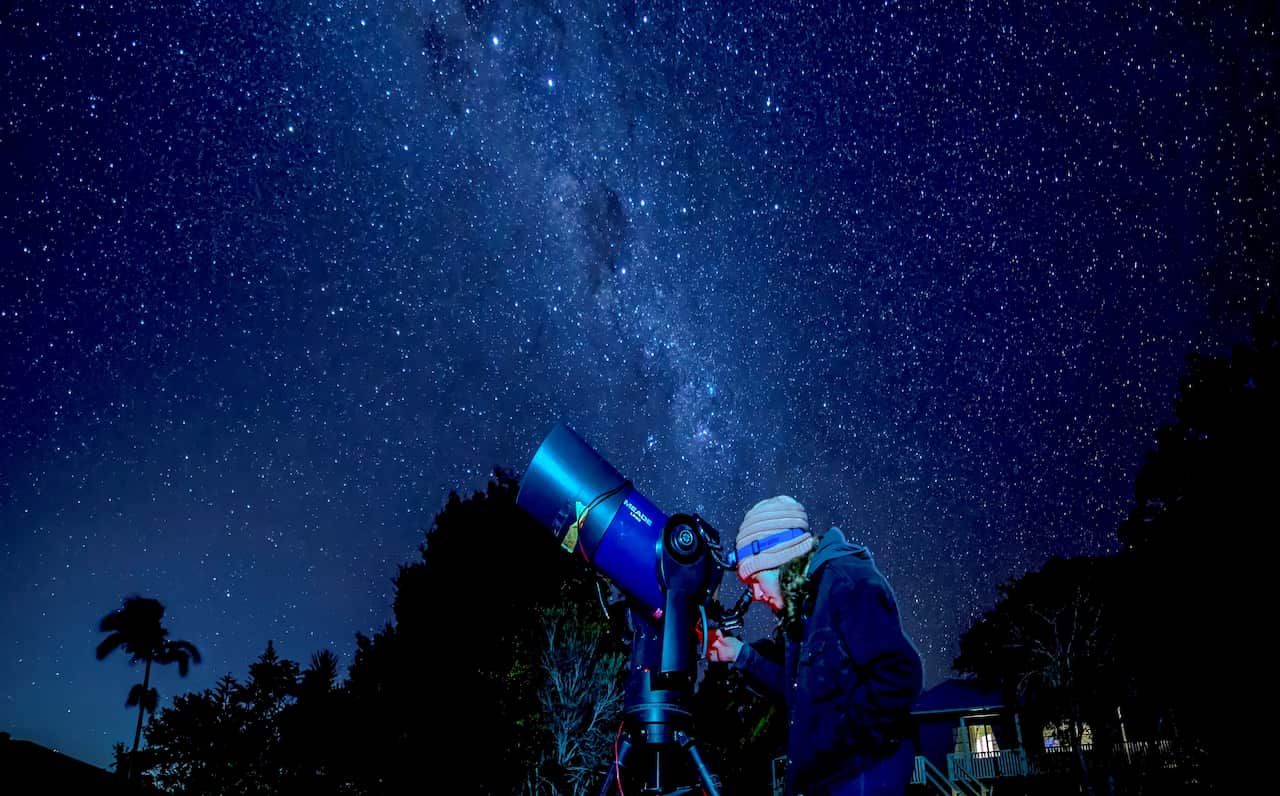
Today, Wishaw is one of the driving forces behind the Sunshine Coast International Dark Sky Reserve. It's Queensland's first official designation by DarkSky International — a non-profit organisation whose mission is to preserve the night skies — spanning more than 870 square km of protected hinterland.
The reserve also represents an ongoing commitment to protect natural night skies through responsible lighting, council and community partnerships.
Initial surveys have found the community has a 95 per cent positive response to the reserve, according to Wishaw, who hopes it will drive astrotourism in the region.
"In central Brisbane, Sydney or Melbourne on that same night, you would be lucky to see nine [stars]. On a clear winter night, we see 3,000," he says.
Although she's a dark sky advocate, Ogg believes living in a city shouldn't mean the stars are concealed from view.
In 2018, the Northern Beaches Council adopted her suggestion to create an Urban Night Sky Place along one of Sydney's most iconic coastlines — Palm Beach. The region has since recorded a 10 per cent reduction in light pollution over the past two years, according to Ogg.
She has approached other local councils regarding similar developments. She alleges, they "won't invest money into it, unless it's something that people are asking for".
Light pollution impacts more than the night sky
Associate professor Mariana Mayer Pinto from the University of New South Wales is a leading marine ecologist and co-founder of the Network for Ecological Research on Artificial Light, who studies how artificial light affects the natural world.
From seabirds that become disoriented and can fly up to 15km the wrong direction, to changes in aquatic food chains and disruptions to human circadian rhythm — she says the impacts of light pollution are widespread.
Even species without eyes are affected.
"We've seen that seaweed, for example, kelp, which is one of the most important habitat formers in the Great Southern Reef ... [It] underpins a lot of biodiversity. We've seen that light affects its growth. Combined with warming, it actually increases their mortality," Pinto tells SBS News.
She says some species may "benefit" from increased light at night, which can help attract small prey, but believes it creates an imbalance throughout the food chain.
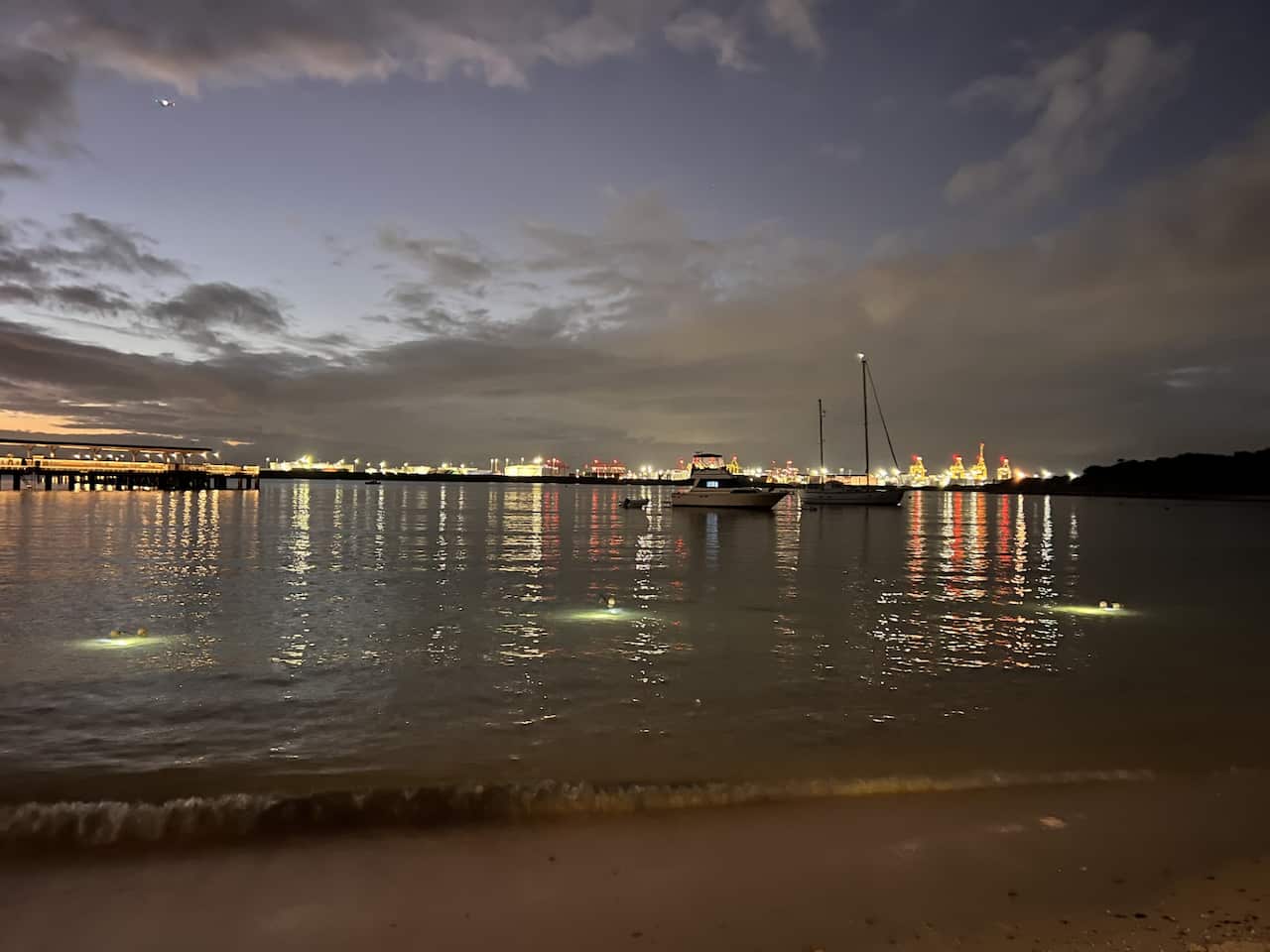
A 2016 study published in the journal Science Advances found Australia had the lowest proportion of light-polluted land among G20 nations. But on a per-capita basis, Australians were among the world's biggest contributors to light pollution — a finding based on population data that has since grown considerably.
While the government has National Light Pollution Guidelines for Wildlife, Pinto says they are not legally enforceable.
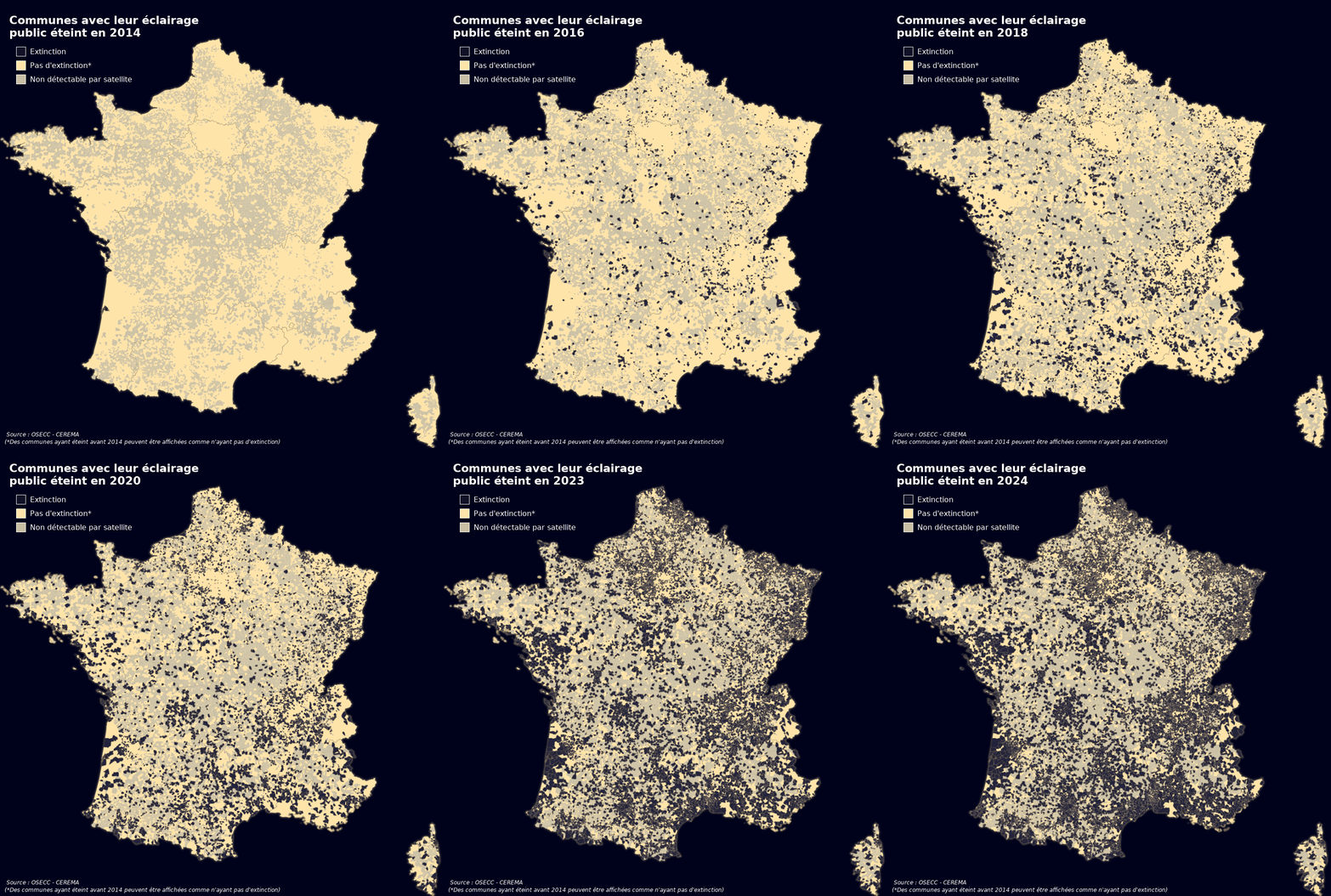
That's why Ogg took part in a campaign to establish national legislation on light pollution. Countries including Germany and Croatia have introduced similar laws, while France first issued a decree on light pollution in 2013.
The Australian petition garnered over 12,000 signatures and was submitted to the House of Representatives in September last year. In December, Environment Minister Murray Watt issued a response.
"The Australian government recognises that excessive or poorly designed lighting can affect human health, disrupt ecosystems, and contribute to energy waste and emissions," Watt said.
"The Australian government also works closely with Standards Australia to support improved lighting management ... the suggestion for further national legislation is noted."
Ogg says the reforms were also positioned as a potential cost-saving measure.
"It's a shame ... you know, it's using energy. I guess there's just so many other things on the table, but what I don't get is it's such an easy win."
Lane says rising light pollution is placing cultural obligations at risk by affecting Indigenous totems — in his case, the long-necked turtle and the microbat.
"When you get a totem, it's an obligation to look after it. When I'm hearing that both my totems are getting destroyed."
It does break your heart and there's so many other animals [too].
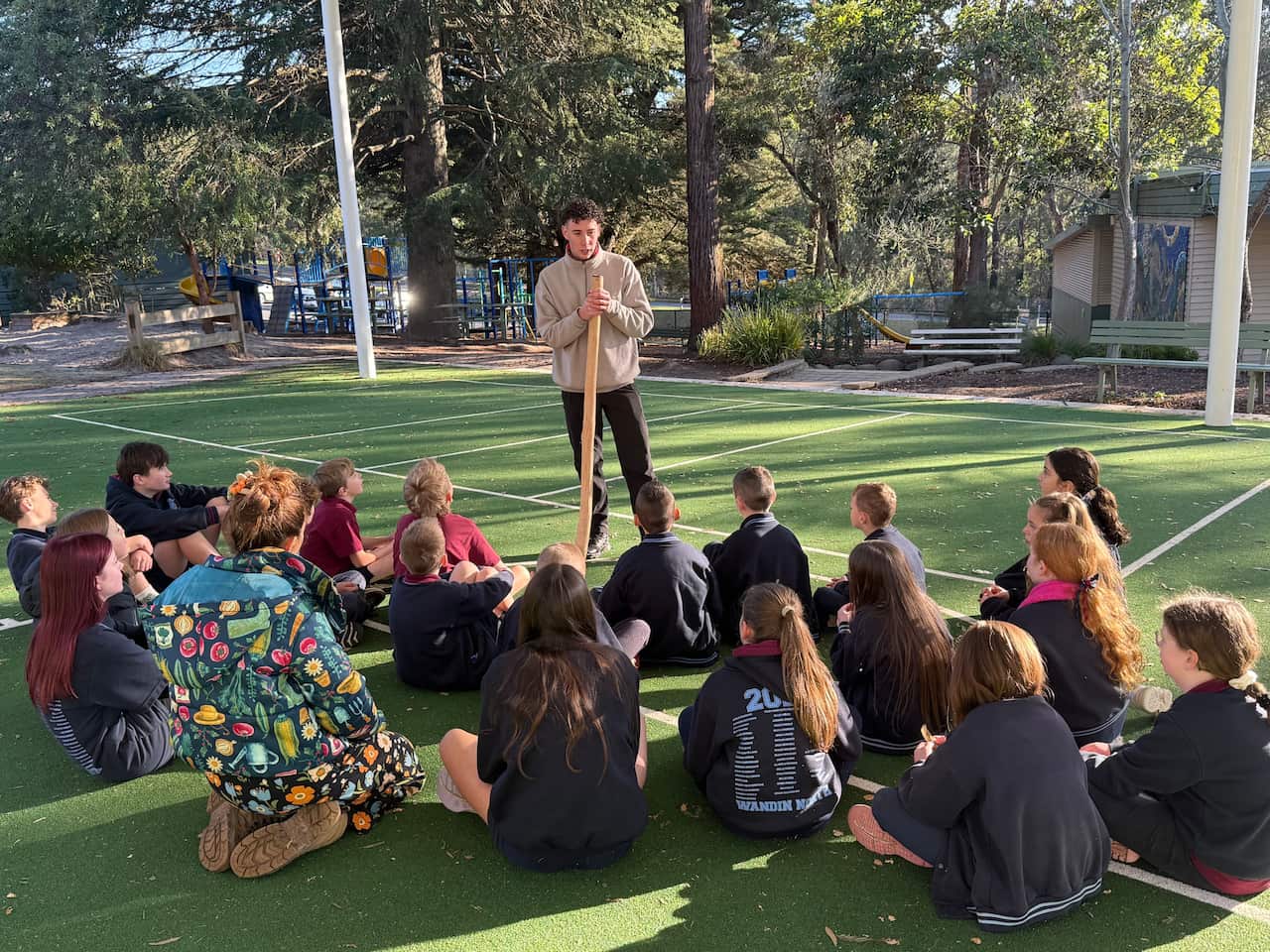
He also runs cultural heritage workshops at schools, where he says light pollution rarely features in the science curriculum.
In one exercise, Lane asks students to draw constellations before a white sheet is placed over their work, simulating the way artificial light obscures the sky.
He says many children leave the lesson pledging to ask their parents to install warmer LED lights or switch off excessive outdoor lighting.
For Lane, the hope is that future generations can experience a sky full of stars, whether from their bedroom window in outback Australia or a major city.
"I do believe that one day, when I'm an Elder ... I can sit on my back porch and look up at the night sky and see all the stars."
Hopefully, I can do this in Melbourne and metro areas and be able to put a smile on my face, seeing what I advocated for.
For the latest from SBS News, download our app and subscribe to our newsletter.







