IN BRIEF
- Warming is weakening glaciers and mountain slopes, increasing the potential for deadly cascading disasters.
- New Zealand has similar glacial hazards, with scientists warning a warming climate could make its mountains less stable.
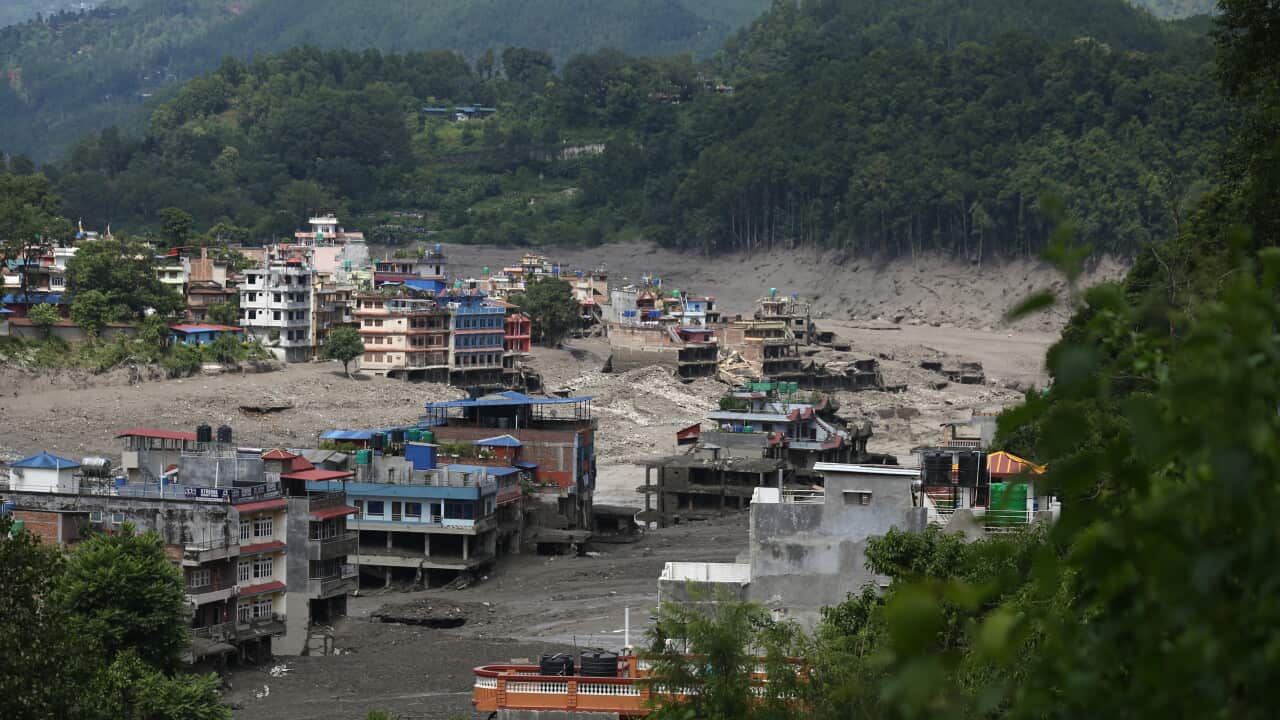
The catastrophic glacier collapse that devastated communities on the Nepal-Tibet border has highlighted a growing danger facing mountain regions around the world, as climate change alters the frozen landscapes that help hold them together.
Raising a bigger question: as the world warms, are other mountain regions becoming more vulnerable to disasters like this?
Scientists say it is too early to say global warming directly caused this week's disaster on the Nepal-Tibet border.
But rising temperatures are changing glaciers, snow and permafrost in ways that can make some high-altitude slopes increasingly unstable, potentially increasing the risk of catastrophic collapses, landslides and floods.
And experts suggest the danger is not confined to the Himalayas.
News that makes sense
Your trusted source for staying up-to-date with the world around you. Get free daily news updates and analysis, straight to your inbox.
New Zealand's Southern Alps have many of the same physical features, including glaciers, steep mountain faces, ice and snow, and valleys where a sudden collapse could send huge amounts of rock, ice and water downstream.
The country's exposure is different from Nepal's, with far fewer people living in its highest mountain areas.
But scientists say the underlying hazards are comparable.
How climate change can destabilise a mountain
The disaster in Nepal began high above the valleys below.
Preliminary analysis suggests a large mass of ice and rock collapsed from the slopes of Langtang Lirung, a mountain rising more than 7,000 metres above sea level.
The debris crashed into the Lhende Khola river, generating a huge surge of water, sediment and boulders that tore downstream.
Scientists are still working to establish the precise sequence of events.
One possibility is that the collapse temporarily blocked the river, creating a natural dam before the backed-up water burst through.
Water levels downstream rose by as much as nine metres in just 30 minutes, experts told AAP.
The sheer force of the collapse was initially mistaken for an earthquake after seismic instruments detected a magnitude 5.2 signal.
But scientists later determined the seismic energy was generated by the glacier collapse itself.
The question now is why the glacier failed.
But scientists say there is no single answer.
Mountain environments are naturally dynamic, particularly in a region as tectonically active as the Himalayas, meaning earthquakes, heavy rainfall, snow and the natural movement of glaciers can all trigger collapses.
But climate change can alter the conditions that determine how stable those systems are.
Experts urge that as temperatures rise, glaciers retreat and lose ice, which causes ice to act as a buttress, helping support steep mountain slopes.
When it disappears, previously ice-covered rock is exposed to warmer temperatures, rainfall and repeated cycles of freezing and thawing.
Meltwater can also penetrate cracks in rock, potentially weakening slopes.
And permafrost, ground that has remained frozen for years, can thaw, removing another source of stability.
Dr Simon Cox, Chief Scientist at Earth Sciences New Zealand's Mountains to Sea programme, told the Reuters news agency that climate change is generating conditions that can destabilise high-mountain rock and ice.
He said that could make collapses and the cascading hazards that follow them more frequent.
But he urges that does not mean climate change triggers every collapse.
Rather, scientists are warning that warming can create a landscape in which a natural trigger has the potential to produce a much more dangerous chain reaction.
The Himalayas are already changing rapidly
The Hindu Kush Himalaya is one of the world's most important glacier regions, and one that scientists warn is warming rapidly.
The region contains more than 63,000 glaciers, feeding major river systems and supporting the water and food security of billions of people.
But those glaciers are losing ice at an accelerating rate.
A 2026 assessment by the International Centre for Integrated Mountain Development found that glacier ice loss across the Hindu Kush Himalaya has doubled since 2000.
Experts say these changes can create several different risks.
Melting ice can enlarge glacial lakes, increasing the potential for sudden outburst floods.
Retreating glaciers can expose unstable slopes.
And thawing permafrost can weaken mountain faces that were previously held together by frozen ground.
That means the initial hazard may not be the most destructive part.
Scientists say the concern is not simply that warming could cause more glaciers to retreat, but that it could increase the potential for one mountain hazard to trigger another. A collapse of ice or rock can send debris into a river, where it can displace huge volumes of water, carry boulders and sediment downstream or temporarily block the channel.
If that natural dam then gives way, the resulting flood can surge through valleys with little warning, turning a relatively remote collapse into a disaster capable of affecting communities and infrastructure many kilometres downstream.
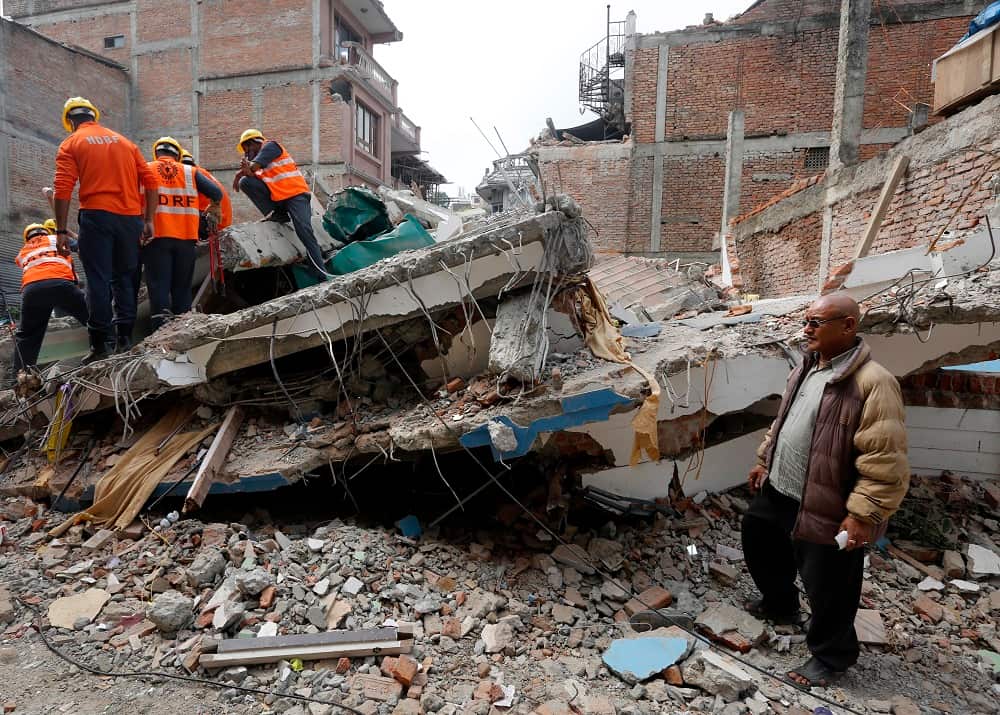
Benjamin Horton, dean of the School of Energy and Environment at the City University of Hong Kong, told Reuters the Nepal disaster could be an example of a "compound event," where different hazards interact to produce a more complex and damaging disaster.
He says that cascading effect is what makes climate-driven changes in high mountain regions particularly concerning.
Could New Zealand face the same thing?
New Zealand's Southern Alps are thousands of kilometres from the Himalayas, but scientists say the country is not insulated from these changes.
Aotearoa has steep, glaciated terrain where ice, rock and debris can fail and move rapidly downhill.
Large rock and ice avalanches have occurred in the Southern Alps before, generally in remote areas without major impacts on people or infrastructure.
Researchers are now examining how factors including glacier retreat, loss of ice support, heavy rain, meltwater, freeze-thaw processes and earthquakes can contribute to these events.
New Zealand is already seeing the effects of a warming climate on its mountains.
The National Institute of Water and Atmospheric Research says warmer temperatures are pushing snowlines higher and causing glaciers to retreat, with the country's mountains expected to become rockier and have less snow cover as the climate warms.
That does not mean a disaster on the scale of Nepal is inevitable.
Population density is a crucial difference.
The Himalayan valleys affected by this week's disaster contain communities, roads, bridges, hydropower infrastructure and major tourist routes directly downstream of unstable mountain terrain.
Many of New Zealand's glaciers are in much more remote locations, but remoteness does not eliminate the risk.
A large collapse in the Southern Alps could still affect people travelling through the mountains, tourism infrastructure, roads or rivers downstream, with experts warning that the physical process does not need to begin where people are living to eventually affect them.
A warning beyond Nepal
The significance of Nepal's disaster extends beyond the question of what caused this particular glacier to collapse. Scientists have long warned that rising temperatures are shrinking glaciers, thawing permafrost and altering snow and rainfall patterns, potentially destabilising high-mountain terrain.
Simon Cox told Reuters that climate change is “generating conditions” that can destabilise rock and ice, increasing the potential for one natural hazard to trigger another.
While scientists cannot yet say warming caused this week's collapse, they say the broader trend is clear: The world's mountain environments are changing rapidly.
For Nepal and other Himalayan countries, where millions of people live beneath these mountains, that could mean a growing risk of catastrophic floods, landslides and avalanches.
As glaciers continue to retreat, scientists say understanding how those changes could destabilise the mountain environment, and where the resulting hazards could travel, will be critical to preventing the next disaster.
— With additional reporting by Reuters and the Australian Associated Press.
For the latest from SBS News, download our app and subscribe to our newsletter.







