
This audio is voiced by AI and may occasionally mispronounce words.
Share your feedback and help us improve this feature. Read more about how we use AI at SBS here.
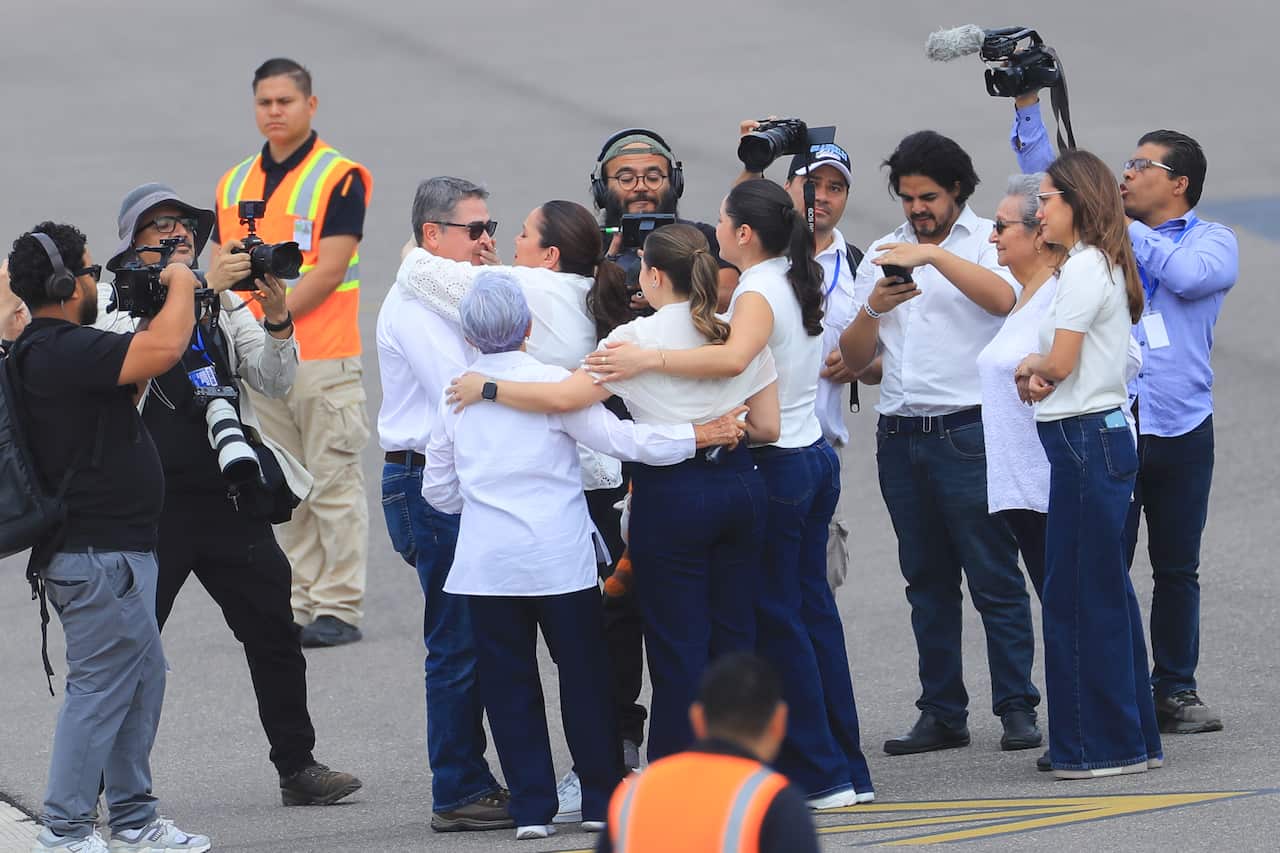
Less than a month after a former president serving time in a United States federal prison was released, another foreign leader was captured and indicted.
Their cases bear some striking similarities. Both were presidents targeted by US authorities in drug trafficking-related offences. Both ultimately found themselves in the US justice system. And in an unlikely coincidence, both were held at the same federal detention facility in Brooklyn, New York.
They are Honduras' Juan Orlando Hernández and Venezuela's Nicolás Maduro.
The sliding doors moment came in January when Maduro was captured — four years after Hernández was imprisoned, and just two months after Hernández was unexpectedly pardoned by US President Donald Trump.
Maduro's case now places two very different paths to a US courtroom side by side: one through extradition and prosecution after a president leaves office, the other through a military operation that removed a sitting leader from his own country.
News that makes sense
Your trusted source for staying up-to-date with the world around you. Get free daily news updates and analysis, straight to your inbox.
Why Maduro's US prosecution is so significant
Unlike Hernández, Maduro was captured while still Venezuela's president in a US military operation and flown directly to New York. Hernández, by contrast, was arrested after leaving office and extradited to the US through formal legal proceedings.
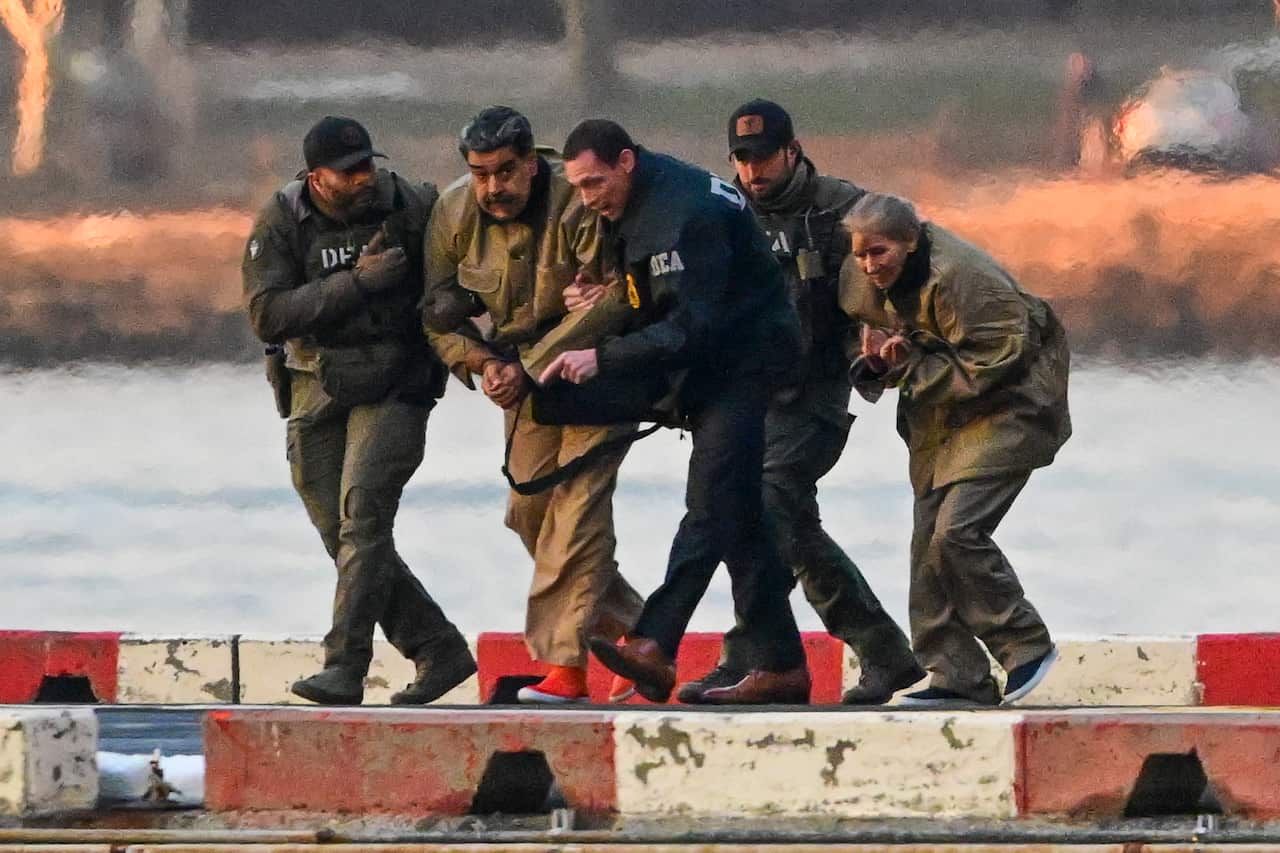
That distinction has put questions of sovereignty, head-of-state immunity and the limits of US power at the centre of Maduro's prosecution.
Maduro was first elected president in 2013, winning by a narrow margin in an election his opponents disputed. He remained in power through two further presidential terms, amid repeated allegations of electoral irregularities and repression.
The US has long accused Maduro and senior members of his government of facilitating cocaine trafficking through Venezuela. US prosecutors have alleged Venezuelan officials used state institutions and their positions of power to provide protection and logistical support to drug-trafficking organisations.
Maduro has repeatedly denied the allegations and described the US case as politically motivated.
He faces four federal criminal counts: narco-terrorism conspiracy, conspiracy to import cocaine, possession of machine guns and destructive devices, and conspiracy to possess machine guns and destructive devices. He has pleaded not guilty.
The charges carry lengthy potential prison terms, including a possible life sentence if Maduro is convicted on the narco-terrorism charge.
But the criminal allegations are only part of the story. The circumstances of Maduro's capture have raised a broader set of legal and diplomatic questions, including whether the US had the authority to seize a sitting foreign leader and bring him before an American court.
The Trump administration has defended the operation by arguing Maduro was not Venezuela's legitimate president and therefore could not claim the protections ordinarily afforded to a sitting head of state.
Critics, including some international law experts, have questioned whether that position is sufficient to overcome the principles of state sovereignty and non-intervention, particularly given that Maduro was removed by US forces rather than through an extradition process.
For many international law scholars, those questions have become just as significant as the criminal allegations themselves.
Yvonne Breitwieser-Faria, lecturer and co-director at Curtin Law School, who specialises in atrocity law, international human rights law, and state responsibility, says the manner of Maduro's removal from Venezuela is deeply troubling.
"My reaction is one of considerable unease — not because a former leader should be immune from accountability, but because of the way Nicolás Maduro was brought before the New York court," she tells SBS News.
She argues the reported unilateral US military operation bypassed extradition, cooperation with Venezuelan authorities and international judicial mechanisms.
That raises serious questions under the prohibition of the use of force, the principle of non-intervention, and the sovereignty of states.
Other leaders, different paths
Maduro's prosecution nevertheless joins a small group of cases in which the US has pursued foreign leaders through its own courts.
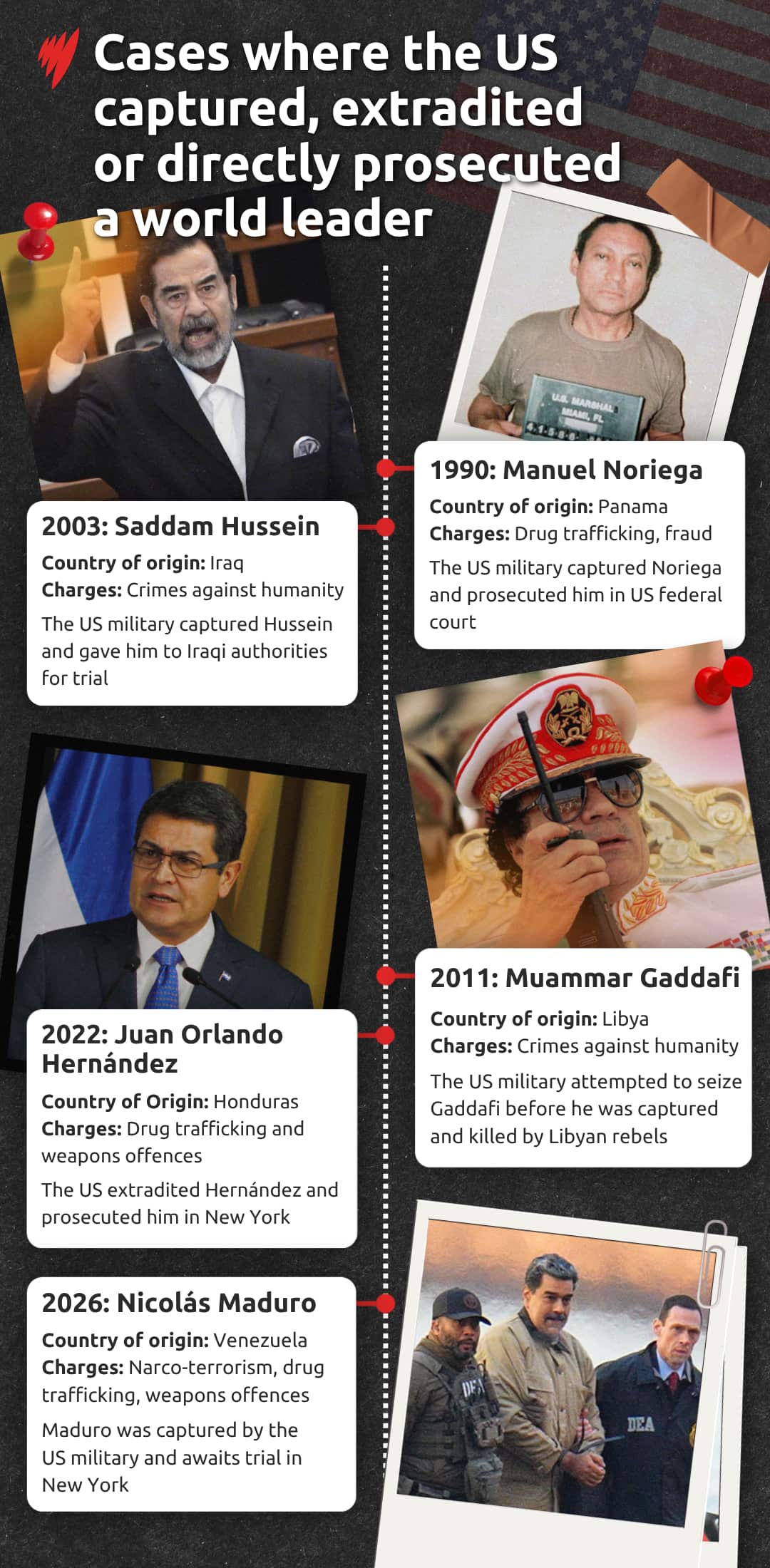
The closest historical parallel is Panama's former military ruler Manuel Noriega, who was captured during the 1989 US invasion of Panama before being prosecuted in the US.
The invasion itself was highly controversial, with the United Nations General Assembly condemning it as a violation of international law and Panama's sovereignty.
Like Maduro, Noriega argued he was entitled to head-of-state immunity — a form of immunity recognised in customary international law that can protect an incumbent head of state from the criminal jurisdiction of foreign domestic courts.
The rationale is to protect sovereign equality and stable relations between states.
That immunity, however, is not absolute in every context. Its scope can depend on whether a leader remains in office, the nature of the proceedings and the legal system in which the prosecution takes place.
In Noriega's case, the US rejected his claim to immunity after refusing to recognise him as Panama's legitimate leader.
Besides Maduro, Noriega and Hernández, the US has played a direct role in the capture or prosecution of only a handful of other world leaders.
In 2003, US forces captured Iraqi leader Saddam Hussein before transferring him to Iraqi authorities, who later tried and sentenced him to death. He was hanged in December 2006.
In 2011, the US joined an international military intervention in Libya that ultimately led to the capture and killing of Libyan leader Muammar Gaddafi by rebel forces.
Other high-profile prosecutions elsewhere that followed have very different legal pathways.
Former Chilean dictator Augusto Pinochet was arrested in Britain in 1998 after Spain sought his extradition on charges related to human rights abuses. In 2012, former Liberian president Charles Taylor was convicted of war crimes and crimes against humanity by the Special Court for Sierra Leone, while former Chadian leader Hissène Habré was tried and convicted of crimes against humanity, war crimes, and torture by the Extraordinary African Chambers in Senegal in 2016.
"These cases show that leaders can be held accountable outside of the International Criminal Court," Breitwieser-Faria says, "but they do not support the forcible military removal of a sitting leader from his own state".
That distinction is important. These cases involved different legal mechanisms, including extradition, domestic prosecution and international or hybrid tribunals. The circumstances of each case also differed, meaning they offer different points of comparison with Maduro's capture and subsequent prosecution in the US.
Breitwieser-Faria also points to Israel's capture of former high-ranking Nazi official Adolf Eichmann in Argentina as a reminder that the legality of an arrest and the jurisdiction of a court to try a defendant are separate legal issues.
Even where a defendant is ultimately tried, she says, questions over how they were brought before the court do not simply disappear.
Politics and accountability
Some academics argue the legal questions cannot be separated from politics.
Sarah Walsh, a lecturer in global history at the University of Melbourne, says Maduro's prosecution raises broader questions about how powerful political leaders are held to account and whether those standards are applied consistently.
"While Nicolás Maduro is objectively an authoritarian leader who has done virtually nothing to improve the lives of Venezuelans, the global community is asked to treat him as meaningfully different than Donald Trump ...," she tells SBS News.
Maduro's government rejects accusations of authoritarianism and wrongdoing, while international governments and human rights organisations have criticised its record on democracy and human rights.
"We are being asked to see these men as meaningfully different because Maduro is being tried for his involvement in alleged narcoterrorism, whereas Trump's myriad[s] of alleged financial crimes, human rights violations, and corruption scandals are seemingly irrelevant," Walsh says.
Debates over accountability have also surrounded political leaders in countries like Russia, China, Israel and Saudi Arabia, though the circumstances differ. For Maduro, those questions sit alongside unresolved issues over his capture and immunity claim.
Can Maduro get a fair trial after his capture?
The debate over Maduro's case does not end with the legality of his capture. A separate question is whether a court can still conduct a legitimate trial after a defendant has been brought before it through allegedly unlawful means.
In international law, there is no single rule that automatically invalidates criminal proceedings because a suspect was unlawfully apprehended.
Instead, courts may consider factors such as whether they have jurisdiction over the accused, whether due process is respected, and whether the defendant receives a fair and impartial hearing.
The legality of an arrest and the legitimacy of a subsequent trial can therefore become two distinct legal questions.
Maduro's case brings that contrast into sharp focus.
While critics argue that his forcible removal from Venezuela violated international law, others contend that those alleged violations do not necessarily preclude a US court from hearing the case or from providing the protections required for a fair trial.
For Juliette McIntyre, a senior lecturer in law at the University of Adelaide, the two issues cannot be so neatly separated.
While she acknowledges the New York court could ultimately conduct a fair trial — and may even find Maduro is entitled to head-of-state immunity — she argues the proceedings will always be overshadowed by the circumstances that brought him there.
No matter the result, these proceedings will be tainted by the unlawfulness of the US invasion of Venezuela and illegal capture of Maduro.
Professor Emily Crawford, deputy head of school and dean at the University of Sydney law school, takes a different view. She says the legality of Maduro's capture and the legitimacy of his trial are distinct legal questions.
"There is mixed practice around the world regarding whether unlawful rendition or extraterritorial abduction before a court or tribunal is such a violation of human rights that it taints any subsequent court case," she tells SBS News.
In other words, the fact that a defendant was unlawfully brought into a country does not necessarily deprive a court of jurisdiction or prevent it from conducting a fair trial.
That principle is reflected in US domestic courts. Crawford points to the 1992 US Supreme Court case United States v Álvarez-Machain, in which a doctor was abducted from Mexico and brought to the US to face criminal charges over his alleged involvement in the kidnap and murder of a US Drug Enforcement Administration (DEA) agent and the agent's pilot.
The court held that the circumstances of his abduction (he was abducted by men hired by DEA officials) did not, in themselves, prevent a US court from trying him.
A state with a strong separation of powers between the executive and the judiciary could still preserve and uphold due process rights for someone abducted to trial.
However, the decision was controversial and drew a strong dissent arguing the abduction violated international law and the US-Mexico extradition treaty.
Álvarez-Machaín was later acquitted.
Could Maduro's capture set a new precedent?
The question at the centre of Maduro's case is not only whether he can be convicted, but whether the circumstances of his capture could influence future arguments about the prosecution of foreign leaders.
One of the key principles at stake is head-of-state immunity.
Maduro's case presents an unusual complication: he was captured while serving as Venezuela's president but is now being prosecuted in the US as a former president after being removed from office.
That raises a question about the relationship between immunity and the circumstances of his removal. For international law experts, that is where the case's potential significance lies.
Breitwieser-Faria says the concern is not that domestic courts are prosecuting a former leader, but rather the process by which Maduro was brought before one.
"The dangerous precedent is not the use of a domestic court," she says.
"The concern is instead that a state may label a foreign leader illegitimate or criminal, use military force to remove that leader, bring them before its own courts, and then rely on the resulting loss of office to deny immunity."
For McIntyre, however, the case is unlikely to create a new legal precedent in the formal sense.
I would be hesitant to suggest it's a precedent in the legal sense.
"If anything, states prefer to uphold head-of-state immunity for self-interested reasons. It's a very old and well-established rule of customary international law," she says.
A single case may influence political debates or future arguments, but it would not, by itself, change customary international law.
Such a change generally requires sufficiently consistent and widespread state practice accompanied by opinio juris — the belief that the practice is legally required.
As one former president returns home after a US pardon and another faces prosecution in New York, the debate is no longer only about Hernández and Maduro themselves.
It is about the limits of US power beyond its borders, the protection — and limits — of sovereign immunity, and whether international law can adequately constrain state power when powerful countries pursue foreign leaders through their own courts.
For the latest from SBS News, download our app and subscribe to our newsletter.







