in brief
- The cohort of Australian women and children have spent years in northern Syria's al-Roj detention camp.
- The federal government maintains it has not provided assistance for their return to Australia.
When a group of Australian women and children linked to the self-proclaimed Islamic State (IS) group walked out of a Syrian detention camp last week after seven years, they were said to be "overjoyed".
"They had hoped to leave this camp again and start a new life," Hekmiyah Ibrahim, a Syrian Kurdish official overseeing the al-Roj camp in northern Syria, told SBS Kurdish as the group departed.
"They are still children, young children — they haven't seen anything of life, they haven't seen anything of the world."
The thirteen members of the group — four women and nine children — are now expected to arrive in Australia on Thursday after staunch opposition from the Australian government to their arrival.
News that makes sense
Your trusted source for staying up-to-date with the world around you. Get free daily news updates and analysis, straight to your inbox.
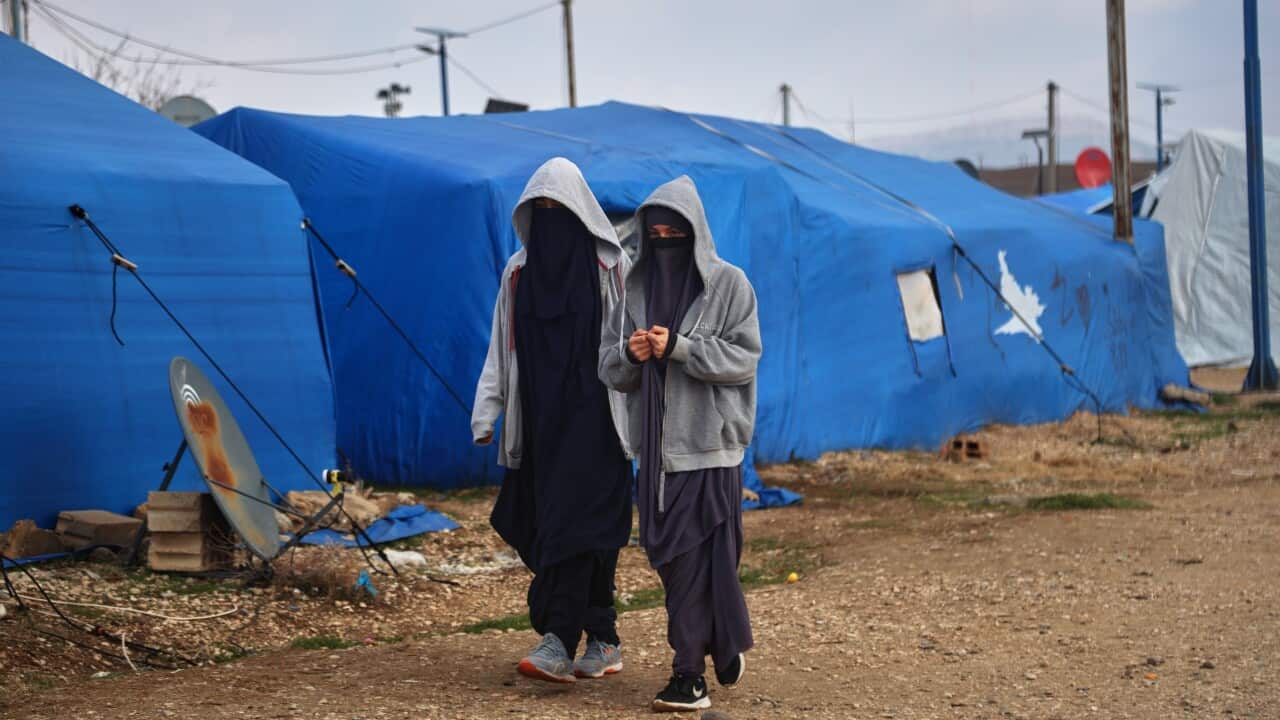
Al-Roj is a detention facility in northern Syria holding thousands of foreign women and children with alleged links to the IS group, where the cohort had been held since the group's collapse in 2019.
The families returning were among 34 Australian women and children, with the women often referred to as 'ISIS brides' given their perceived or real links to IS group fighters.
Previously, the camps had been run by Kurdish forces, with support from the United States. But, as the US announced it would pull back support for the Kurds earlier this year, power is transitioning to Syrian government forces.
Ibrahim says many of the children have never known anything else but the camp.
"They were probably one, four, and five years old (before they arrived)," she said.
A long journey home
Leaving the camp was just the first hurdle for the group, Ibrahim said.
After Syrian interior forces picked the group up from al-Roj in late April and drove them to Damascus, the families found themselves stranded — caught up in coordination issues between Australian authorities, the Syrian interim government, and the Autonomous Administration, the Kurdish-led body governing the region.
"The Australian government issued an official statement at the time saying it would not accept these ISIS-affiliated families in its country and demanded their return," he said.
SBS News understands that they are now expected to arrive in Australia on Thursday night.
The federal government maintains it "has not and will not" provide the group with any assistance, but Home Affairs Minister Tony Burke noted there are "very serious limits" on actively preventing citizens from returning home, short of issuing temporary exclusion orders.
Earlier this year a larger group of 23 children and 11 women with Australian passports attempted to return to Australia, but were ultimately sent back to al-Roj.
The attempt caused a political storm in Australia, and one of the cohort was issued with a temporary exclusion order, preventing her from travelling to Australia.
'They are not radicals'
Ibrahim pushed back on any characterisation of the families as a security threat, pointing out they had not been sent to Iraq and claiming "they are not radicals".
SBS News has not been able to independently verify how much contact the camp director had with the families.
Earlier this year, thousands of people imprisoned in Syria over alleged links to the IS group were transferred to Iraq, though it's unclear how many have been charged, let alone found guilty.
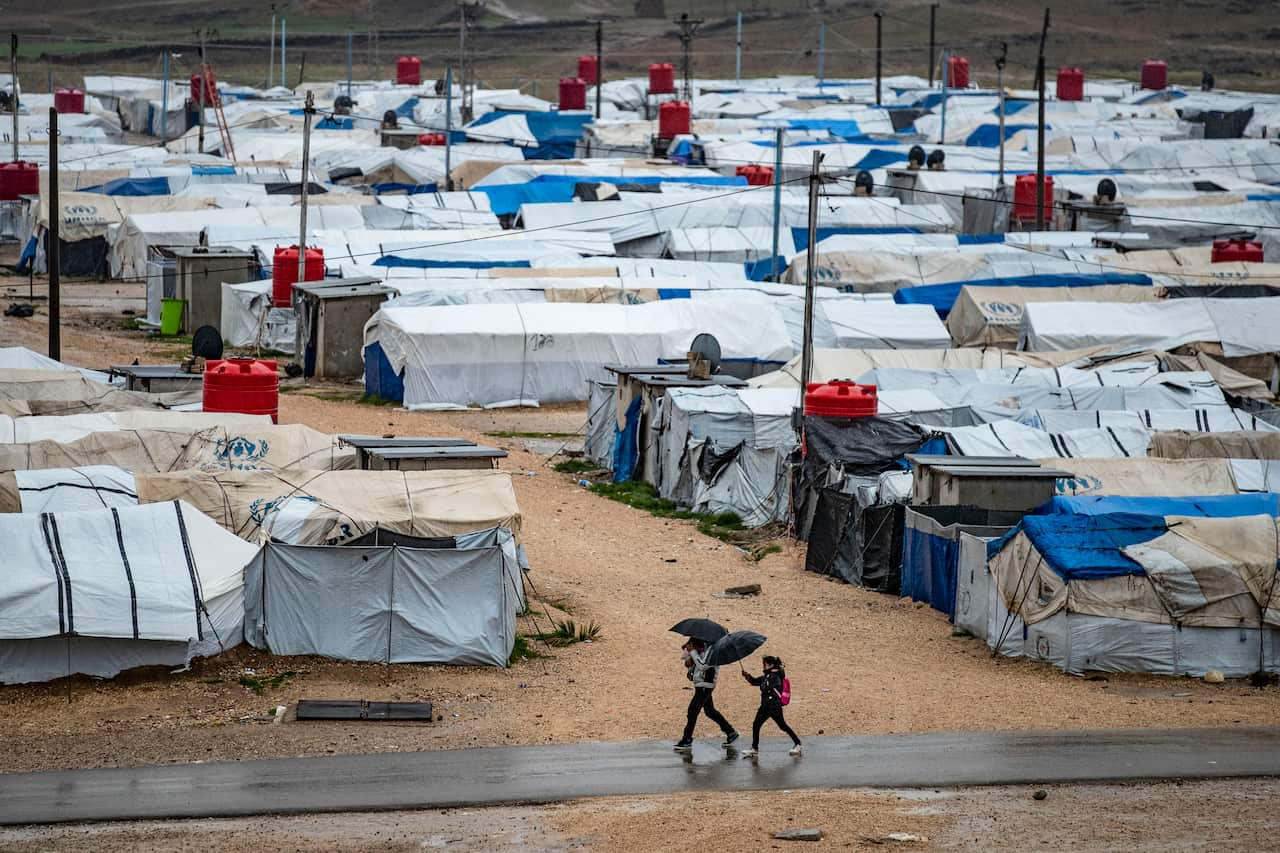
Ibrahim said the women were not afraid of what awaited them in Australia.
"They had the hope of returning to Australia. They were very happy … They were looking forward to that day. They were and their children were happy too," she sadi.
Prime Minister Anthony Albanese described those who joined IS as having made "a horrific choice" and said those suspected of crimes would face "the full force of the law."
He added that the members of the cohort had "placed their children in an extraordinary situation".
Australian Federal Police (AFP) commissioner Krissy Barrett confirmed some individuals will be arrested on arrival, with investigations ongoing into alleged offences including terrorism charges and crimes against humanity, such as slave trading.
Australian Security Intelligence Organisation (ASIO) chief Mike Burgess, however, said the return raised no immediate security concern and that the national terrorism threat level would remain unchanged.
Opposition home affairs spokesperson Jonathon Duniam has urged the government to prevent the cohort's arrival in Australia.
A years-long plea
Ibrahim said the Autonomous Administration had spent years urging foreign governments to reclaim their nations — and had been largely ignored.
"Every country that has a person in the camp — whether it is the Australian government, another country — we have made an official statement: come and take your family," he said.
"But the response has been very weak."
Children returning in the cohort will undergo community integration programs, therapeutic support, and countering violent extremism programs, the AFP said.
For the children especially, Ibrahim said the years of waiting have come at a cost.
"They haven't seen anything of the world," she said. "They haven't lived a real life."
The Australian government has carried out two successful repatriation missions since the IS group was toppled in 2019.
The Morrison government brought back eight orphaned children in June 2019, while the Albanese government repatriated four women and 13 children in October 2022.
— This story was produced in collaboration with SBS Kurdish, with additional reporting by Anna Henderson and Ewa Staszewska.
For the latest from SBS News, download our app and subscribe to our newsletter.







