
On the golden beaches of Waiben/Thursday Island in the Torres Strait, seven boys dance to the beat of a warup, a long traditional drum whose rhythm echoes across the shoreline.
Among them is 15-year-old Samuel Nai, who carries a 'Bu' or trumpet shell — a symbol of the deep connection the group has to land and sea.
Just months ago, that connection was tested when Nai was critically injured in a shark attack while swimming with a friend near a wharf on Thursday Island, which is about 35km north-west of Australia's northernmost tip.
The then-14-year-old managed to swim 20 metres to shore after the bite and told his friends to call for help. He was quickly airlifted to Townsville, where he spent four months in hospital undergoing 24 surgeries.
A CT scan later showed the bite, likely from a bull or tiger shark, had narrowly missed all of his organs.
News that makes sense
Your trusted source for staying up-to-date with the world around you. Get free daily news updates and analysis, straight to your inbox.
Nai was only able to walk after a month in hospital and spent many more weeks in rehabilitation regaining his strength.
Now, six months later, he has found comfort and support through Island Stars, a dance group that was close to his heart before the attack.
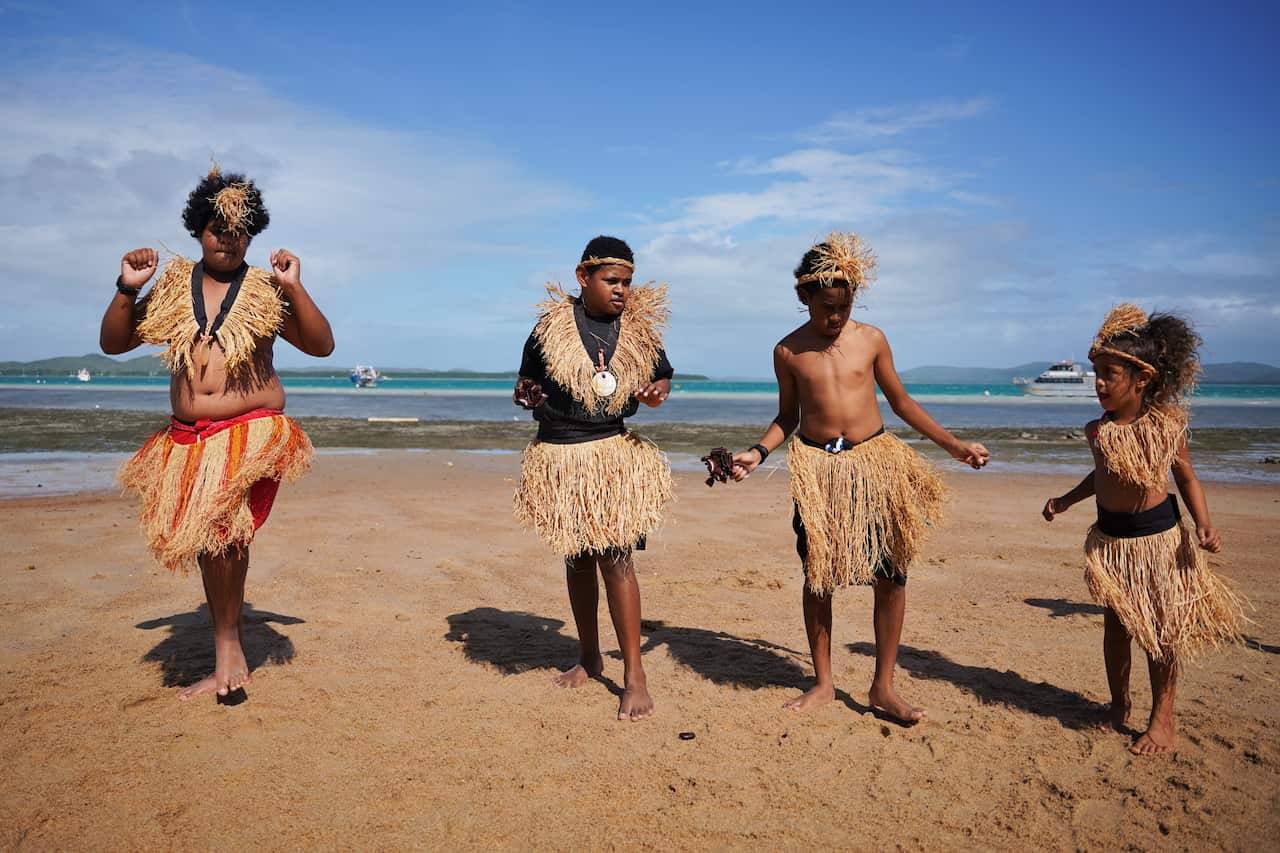
Nai's journey is also the story of a community using culture, language and dance to nurture the next generation — a reminder of the strength people can draw from those connections in times of hardship.
Healing through culture
Launched in 2019, Island Stars showcases Torres Strait 'Ailan Kastom' or Island Custom through dance, song and storytelling.
Founded by Joey Laifoo, a proud Kala Lagaw Ya man, the group provides a space for boys to connect with culture, language and kinship, while learning about their totems and heritage.
The dancers, some as young as two years old, have performed internationally. Their dances draw on the ocean, nature and the stories of two of the oldest living cultures in the world — Aboriginal and Torres Strait Islander peoples.
Nai joined Island Stars about six months before the shark attack, quickly developing a connection with the group and its cultural teachings.
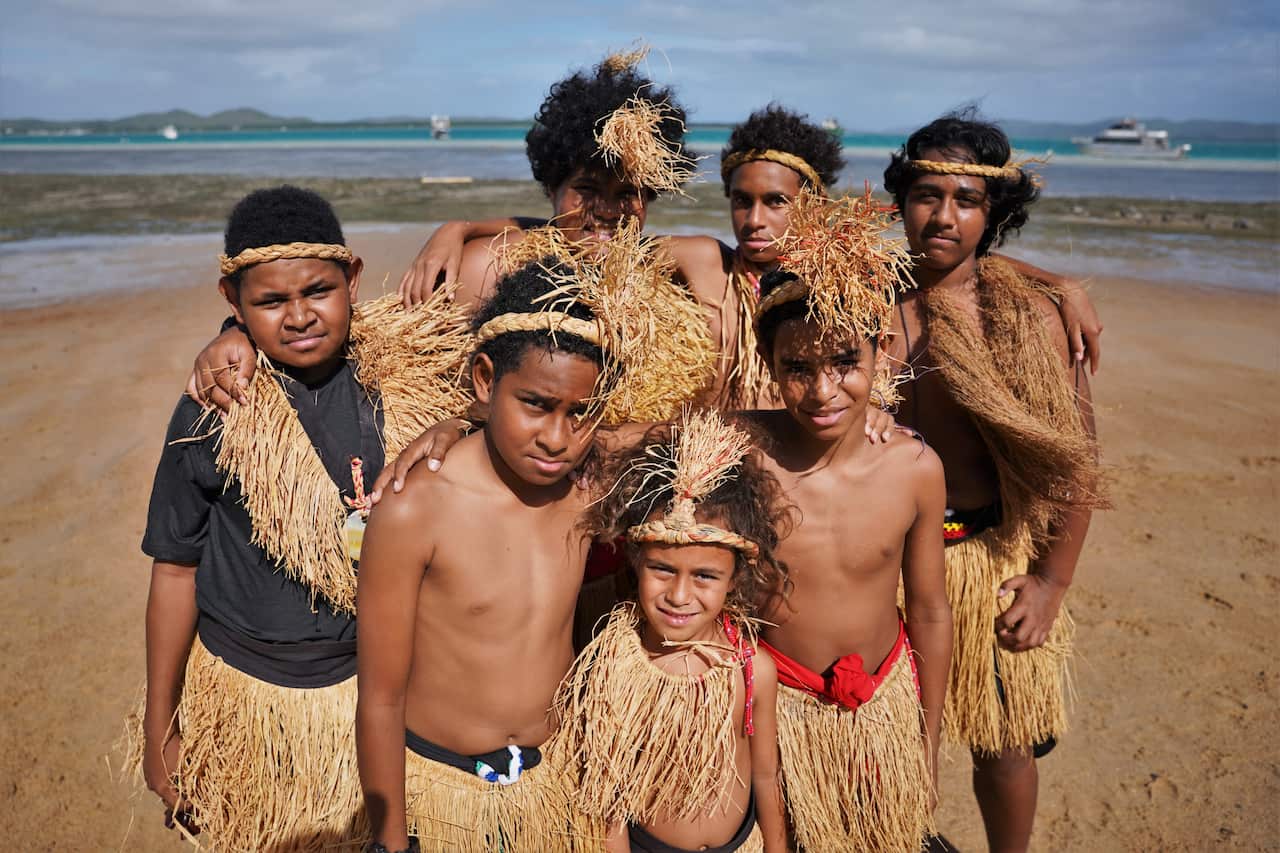
Laifoo says it was "amazing" to see Nai return to training just two days after arriving back on Thursday Island from Townsville.
"For him to come back to learn about his culture, to forget about what happened, and move forward in life is really powerful for us," he tells SBS News.
While Nai's recovery involved months of intensive medical treatment and rehabilitation, Laifoo says culture has also played an important role in helping him heal.
He uses his culture to heal him, where he comes from, his ancestors, to help him find his path.
Nai's mother, Shanna Mosby, says Island Stars has acted as a guiding light for her son.
"He's always had a love for dancing. He's my little dancer," she tells SBS News.
She says the attack had shaken her son's relationship with the ocean — a place central to both daily life and cultural identity across the Torres Strait.
"Dancing again with Joe, he's able to maintain that this incident hasn't put fear in him and hasn't swayed him," she says.
This incident doesn't define who Sam is. He's still able to do what he loves, maintaining that link between identity and culture.
Although Nai has not yet returned to the ocean, dance has helped him begin rebuilding his confidence around the sea.
The Island Stars' building doubles as a cultural centre and cafe on Thursday Island. Its colourful facade is painted with turtles, fish and coconuts, while a stretch of beach next door serves as a practice ground for the boys' dances.
Preserving Torres Strait tradition
For Laifoo, the dance group is about more than performance. Each routine carries lessons about hunting, fishing and navigating by the wind — knowledge traditionally passed down through generations.
"The number one key was to educate our young ones about culture in today's world," he says.
"Everyone wants to be like someone down south or from overseas, hats backwards and stuff. We teach them about culture, bring them back to be proud of who they are."
Alongside dance, the boys learn about their bloodlines, totems and family histories, deepening their understanding of where they come from and their responsibilities to the community.
Many of the boys move from outer islands to attend school on Thursday Island, often away from the day-to-day guidance of Elders and extended family.
Laifoo says Island Stars helps fill that gap, offering mentorship and a sense of belonging.
"It's to make the person feel they're part of a team, that they have people they can talk to," he says.
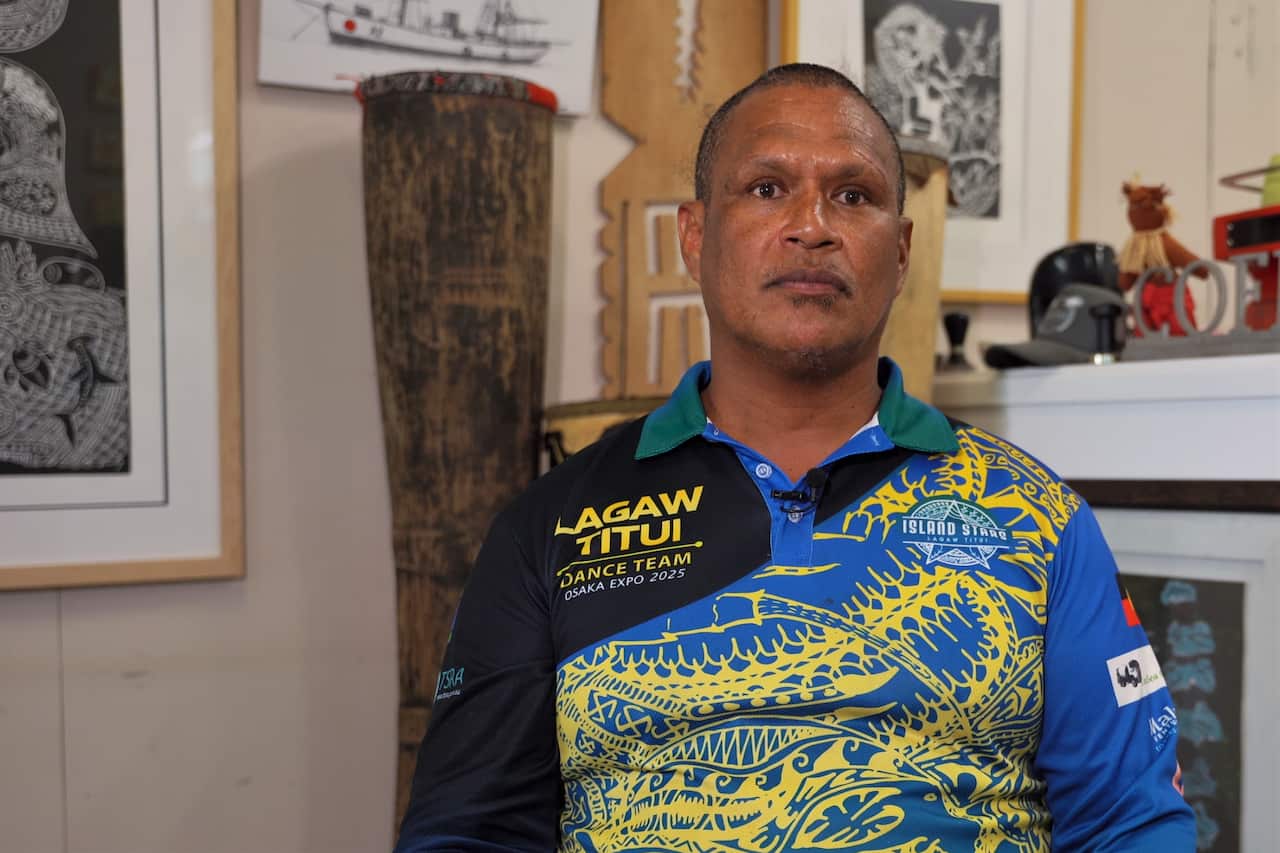
Covering just 3.5 square kilometres and home to around 2,800 people, according to the 2021 Census, Thursday Island may be small in size, but the island's dance troupe has built an international profile.
Island Stars has performed in countries including Egypt and Japan, and at some of the world's major events, including the Commonwealth Games. The group has also performed for the royal family in Monaco.
Laifoo says dancing has also helped prepare Nai for cultural practices marking the transition from boyhood to manhood, including hunting trips on the water with his uncles.
He believes his connection to culture has given him the confidence to move forward after the attack.
It's happened, it's done. He's able to say that's not who I am, that's a part of my story.
Indigenous relationship with sharks
First Nations people around Australia have long ancestral connections to sharks, reflected in stories, language and cultural practice.
Just about every coastal community in Australia has traditional words to describe them, which researchers say is evidence they're deeply embedded in cultural knowledge systems.
Research by Southern Cross University in 2018 argues that sharks are "one of the most maligned apex species on Earth".
The report by Zan Hammerton and Akkadia Ford said media representation "fuelled public imagination, perpetuating fear and negative stereotypes of sharks and hysteria around human-shark interactions".
While often framed through fear in Western discourse, sharks hold a very different place in many First Nations cultures, including in the Torres Strait, where they are often regarded as totems and spiritual guides.
In a publication by the Australian Museum, Torres Strait Islander man Obery Sambo from Mer Island describes that when the Baizam constellation (hammerhead shark) appears in the sky, local people can expect a change in season.
He says it's a warning to the Meriam people to start tying everything down in preparation for destructive winds.
Other types of sharks also carry meaning.
"Tiger shark to me means that he is the boss. He is the boss of all sharks, is almost like a protector," Sambo states.
We do not feed it because when we do feed it, then he would hang around. He would hang around and then once you get into the water, then he will feed on you.
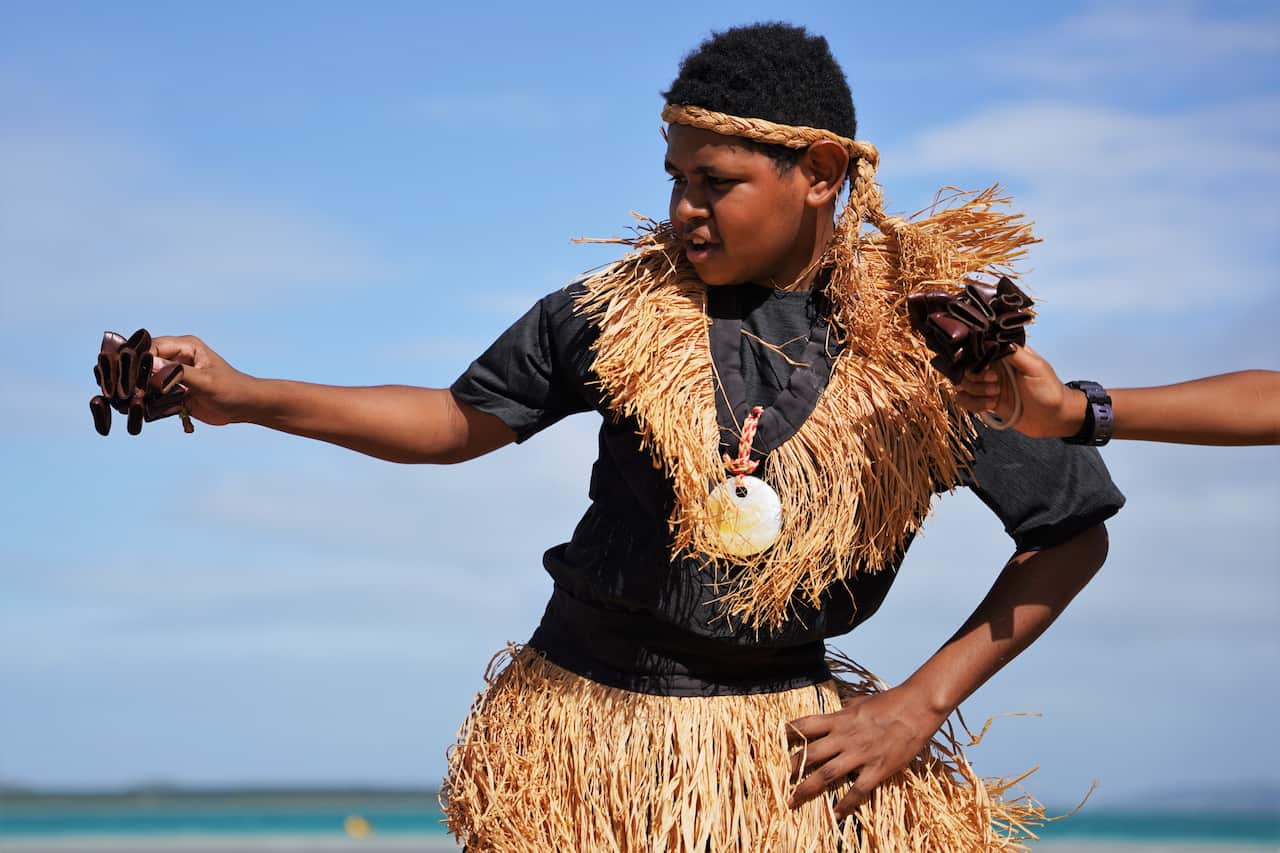
Since the shark bite, Nai has learnt more about totems — which for him include the crocodile, shark, and green turtle — deepening his understanding of sea country.
"It taught me too, when you go diving, you have to go diving at low tide," he says.
Laifoo says that "our ancestors are always there and direct us in the right road. That's why we have our totems that lead us to our right direction".
He says these connections are not only symbolic but also a way of understanding place, responsibility, and identity across generations.
"We believe that we imitate that to the next world when we're ready to travel."
This story was produced in collaboration with the Pulitzer Center.
<hr></hr>For the latest from SBS News, download our app and subscribe to our newsletter.







