
in brief
- Sixty-day prescriptions have been available since late 2023 for eligible medicines on the PBS.
- New research suggests a few simple changes could save Australians millions each year on medications.
New research suggests Australians are missing out on cheaper medicines and spending millions more on smaller quantity prescriptions.
Health practitioners have been able to prescribe some medicines in 60-day, rather than 30-day, doses since 2023, reducing the daily cost of life-saving medication for patients.
However, survey results suggest some reluctance among GPs and pharmacists to prescribe and supply higher doses of medications, with some hampered by time constraints and out-of-date software.
Dr Tian Wang, a research fellow at the George Institute for Global Health, said blood pressure patients had saved $65 million in the months since 60-day prescribing came into effect for medicines of this type.
But there is untapped potential.
News that makes sense
Your trusted source for staying up-to-date with the world around you. Get free daily news updates and analysis, straight to your inbox.
"The government has projected that if around half of blood pressure medication was prescribed at a larger 60-day dose, Australians would save $165 million each year," she told SBS News, citing figures repeated by health minister Mark Butler.
Only 20 per cent of medications, including blood pressure medication, are being prescribed in 60-day portions, according to the Grattan Institute.
Australians could be saving millions more on medications for other common conditions — not just those for high blood pressure.
"If a patient has multiple conditions, not only high blood pressure, but also high blood lipid or high blood glucose, and they have more than one medication, then it could potentially save the patient more money," Wang said.
Sixty-day supply introduced
Sixty-day prescriptions have been available since late 2023 for eligible medicines on the Pharmaceutical Benefits Scheme (PBS).
Since its implementation, 300 medications — primarily those that treat blood pressure, cholesterol, diabetes and mental health issues — have been added to the eligibility list.
Statins (for cholesterol) and antihypertensives (for high blood pressure) are the most heavily prescribed drugs in Australia, according to the Royal Australian College of General Practitioners (RACGP), and are available at 60-day doses.
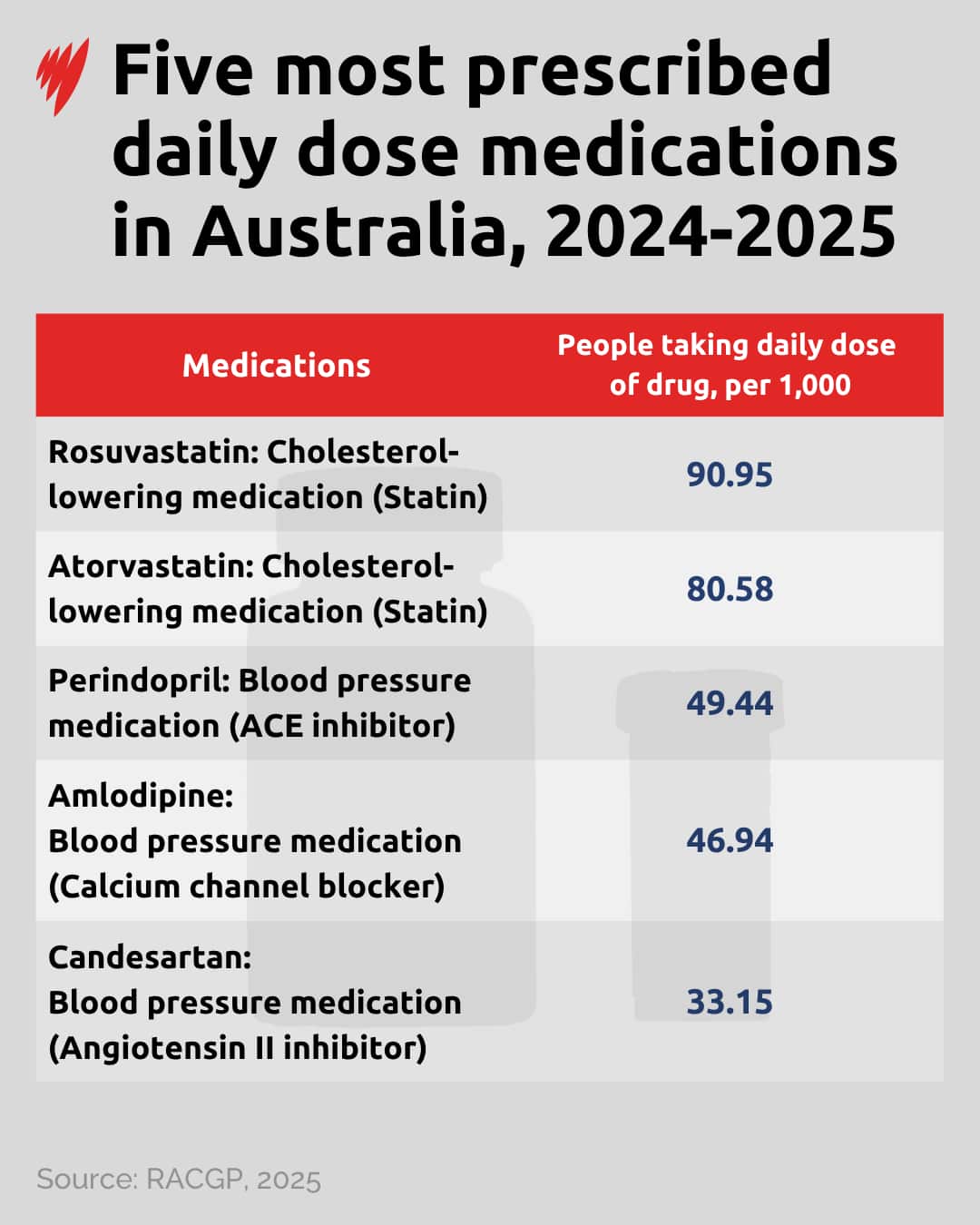
Adjunct professor Greg Kyle, an expert in medicines at the Queensland University of Technology, told SBS News that the 60-day dispensing model was designed to reduce the number of trips people would need to make to the pharmacy, easing pressure on the health system.
But even if a medicine is eligible for a 60-day dose, a practitioner won't always prescribe it.
"There are a number of reasons a GP won't subscribe to a bigger dose. One example is that if someone is just starting out on blood pressure medication, for example, a GP may want to see how they go over 30 days before switching to a larger prescription," he said.
Some medicines, such as those for short-term conditions or those with a "high potential" of being abused, will not be eligible for a 60-day dose, according to the PBS website.
"Ultimately, it's up to the individual practitioner to prescribe what they deem to be the appropriate type and amount of medication," he said.
He added that pharmacists won't always carry a 60-day dose of a prescription, despite a GP's recommendation.
RACGP President Dr Michael Wright told SBS News the body "strongly" supports 60-day dispensing, but not for every patient.
"Prescribing decisions should always be made by GPs, based on individual patient needs, to ensure safety and continuity of care," he said.
Reluctance from some GPs, pharmacists
Wang's survey shows that most GPs and pharmacists are "proactively" writing 60-day scripts for blood pressure medication; however, barriers to uptake remain.
She described some as confused due to regular updates on which medicines were eligible for 60-day dispensing.
This is particularly a barrier for some of the GPs who were surveyed.
"When the 60-day policy was introduced, they were having trouble with keeping track of which medicines were eligible for the 60-day, and they had some initial confusion around the rules," she said.
Prescribing software also tends to default to a 30-day prescription, she said, which means extra paperwork for GPs who have to manually prescribe 60-day doses.
"GPs are very busy. Every consultation is only 10 to 15 minutes. And if the patient has other priorities or other questions to be addressed, then changing the prescription to 60-day will not be the priority, given all these things in the GP consultation," she said.
Wright said 60-day prescribing has been harder to implement than it should be.
"Particularly because eligibility isn't clearly integrated into prescribing systems," he said.
"It's also a real concern to hear reports of pharmacists discouraging longer prescriptions; prescribing duration is a clinical decision, and patients need consistent advice across the system."
Wang's survey found that some pharmacists were concerned about incorrect dispensing and potential medicine shortages due to 60-day supplies. Others were worried about a loss of income for pharmacy owners.
'There's a gap in information'
After the policy was introduced 20 months ago, there was initially pushback from some pharmacists about a potential loss of income and jobs.
The government introduced the Additional Community Supply Support (ACSS) payment program in April 2024 to offset the financial impact on pharmacies, at a cost of $46.5 million between April 2024 and April 2025.
The Pharmacy Guild of Australia said the "decision to prescribe a 60-day supply is made by the patient's doctor based on what is clinically appropriate for that individual" and "the level of uptake reflects these clinical realities".
"Pharmacists dispense medicines based on what is prescribed and play a critical role in supporting patients to use their medicines safely and effectively," a guild spokesperson told SBS News.
"This includes helping patients understand their options, ensuring continuity of care, and managing the impact of ongoing medicine shortages, which continue to affect hundreds of medicines across Australia."
Wang recommends checking the PBS website and searching for your medicine's name to see if it's available as a larger 60-day prescription. Then you can ask your GP if it would be appropriate for you.
"There's a gap in information, and patients are still not aware of this 60-day policy," she said.
"Asking a simple question about whether it's right for you could save you a lot of money and time."
For the latest from SBS News, download our app and subscribe to our newsletter.







