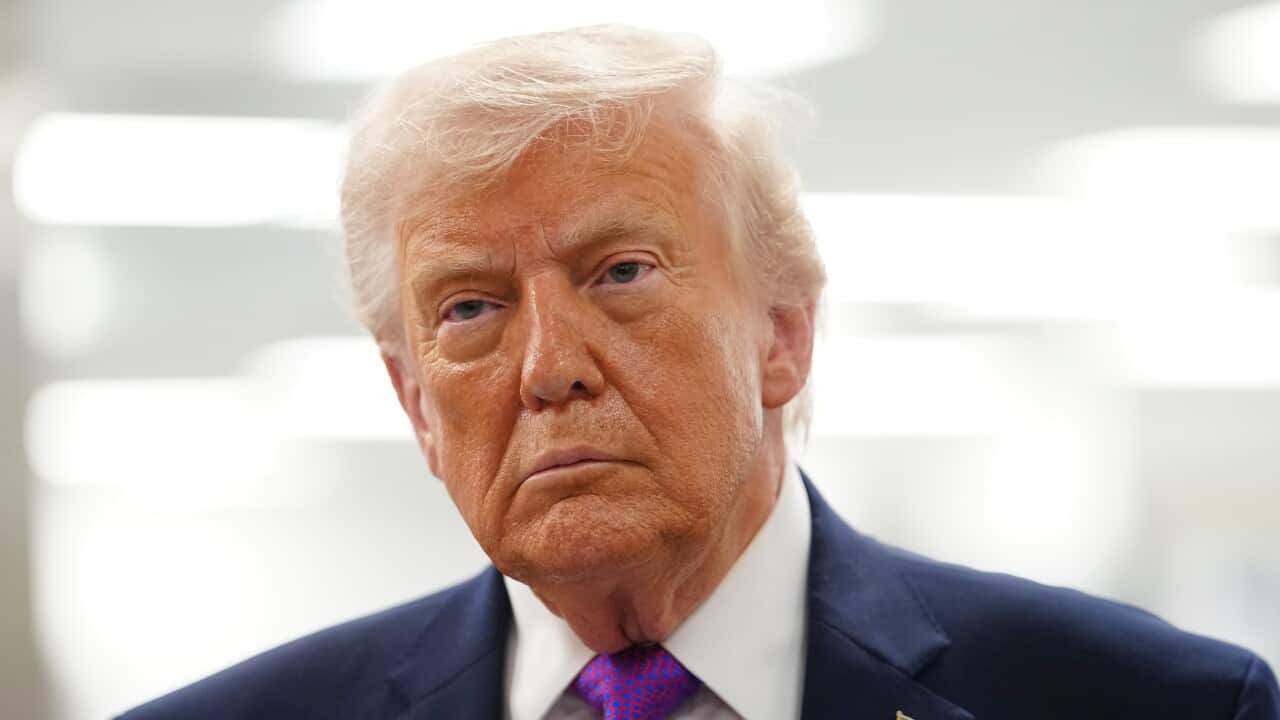
United States President Donald Trump said the tallest bridge in Iran had been destroyed, hours after threatening to bomb the country "back to the Stone Ages."
Trump had said operations would be intensified and gave no timeline for ending hostilities, drawing threats of retaliation from Iran and sending share prices lower.
"We're going to hit them extremely hard over the next two to three weeks. We're going to bring them back to the Stone Ages where they belong," Trump said in a speech on Thursday.
Trump persisted with his threats after his address, saying on Truth Social "IT IS TIME FOR IRAN TO MAKE A DEAL BEFORE IT IS TOO LATE".
He posted footage of smoke rising from the B1 bridge in Karaj, around 35km southwest of Tehran — and warned that there would be "much more to follow" unless Iran comes to the table to end the five-week war.
News that makes sense
Your trusted source for staying up-to-date with the world around you. Get free daily news updates and analysis, straight to your inbox.
Ghodratollah Seif, the deputy governor of Alborz province where the B1 bridge is located, said the strike had killed eight people and wounded 95 others, according to state TV and Fars news agency.
The B1 bridge, which was still under construction, is the Middle East's tallest according to Iranian media, with a 136m column.
The war, which was started more than a month ago by US-Israeli strikes on Iran, has spread throughout the Middle East and roiled the global economy.
As the war continues, US Army chief Randy George was sacked by defence secretary Pete Hegseth on Thursday local time.
The Pentagon said George, who had more than a year left in his term, "will be retiring from his position as the 41st Chief of Staff of the Army effective immediately".
The department did not give a reason for his departure, which comes as the US military builds up its forces in the Middle East.
Iran trades threats, strikes
After Trump's address, Iran threatened "crushing" attacks on the United States and Israel, firing missiles at Tel Aviv.
After strikes on the Iranian bridge, the country's Fars news agency listed several bridges in Saudi Arabia, Kuwait, Abu Dhabi and Jordan as potential targets for Iranian military operations.
Iran also offered a competing vision for future control of the Strait of Hormuz, which carries about a fifth of the world's oil consumption in normal times but is now virtually closed.
An official said Iran was drafting a post-war protocol that would supervise the strait's maritime traffic with Oman, though it said it was yet to begin negotiations with Muscat.
Trump said the war could escalate if Iran did not give in to Washington's terms, with strikes on its energy and oil infrastructure possible.
He told countries that rely on fuel shipments through the Strait of Hormuz to "just grab it".
However, European and other states have said they will only help secure the strait if there is a ceasefire.
Dozens of countries meet to discuss Strait of Hormuz
The United Kingdom chaired a virtual meeting of some 40 countries to explore ways to restore freedom of navigation in the Strait of Hormuz, saying the focus was on diplomatic and economic tools.
Foreign Minister Penny Wong said she was among the countries on the ministerial call "as part of Australia’s support for international efforts to ensure critical waterways are not held hostage by the Iranian regime."
"The focus of last night’s meeting was diplomatic and civilian initiatives countries could pursue to make the Strait of Hormuz accessible and safe. Ministers agreed on the importance of continued coordination and collective action," she said in a statement on Friday morning.
"Australia is not taking offensive action against Iran and we are not deploying troops on the ground in Iran."
Meanwhile, French President Emmanuel Macron said restoring freedom of navigation in the waterway could only be done in consultation with Iran.
Italy called for a "humanitarian corridor" to be opened through the strait for fertiliser, to head off a food disaster in Africa.
Although the meeting ended without any specific agreements, there was a consensus Iran should not be able to introduce transit fees on ships using the waterway and all nations should be able to use it freely, one official said.
For the latest from SBS News, download our app and subscribe to our newsletter.







