This audio is voiced by AI and may occasionally mispronounce words.
Share your feedback and help us improve this feature. Read more about how we use AI at SBS here.
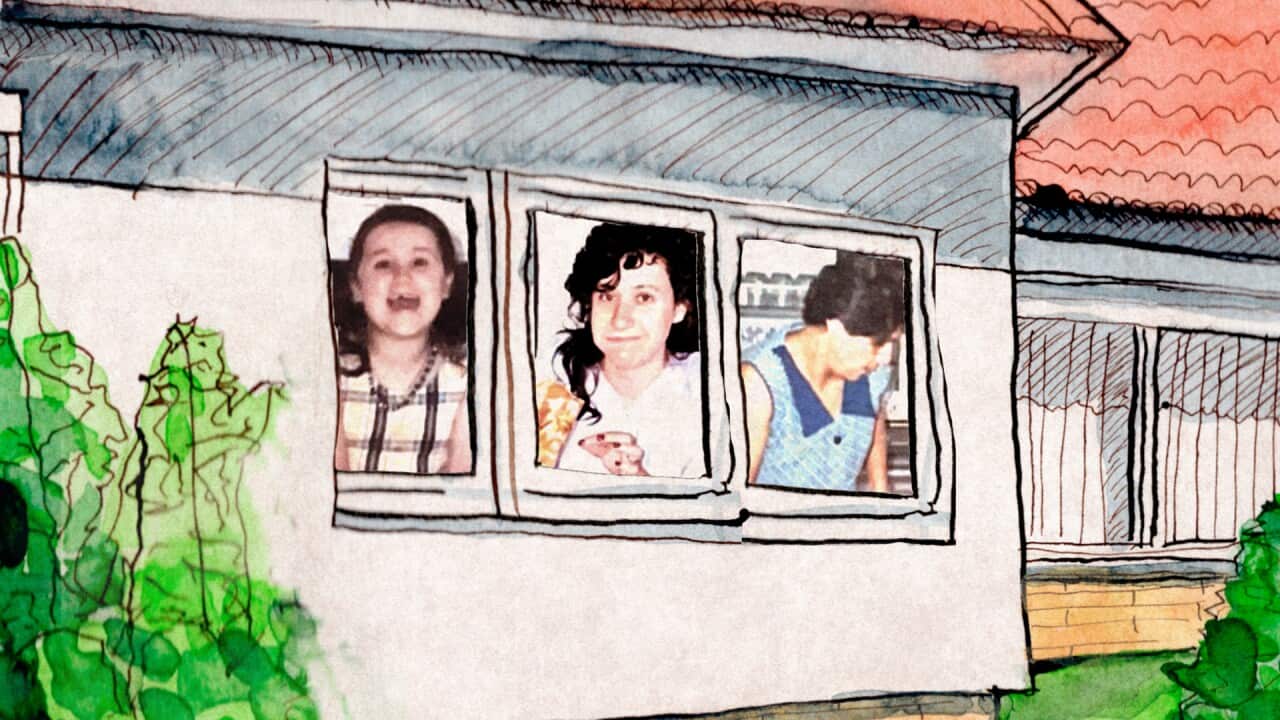
I wake up to the aroma of baharat — a common Lebanese seven-spice blend — filling my nostrils, and the sound of my tayta (grandmother), clattering around the kitchen.
She's seasoning the meat for Sunday lunch.
As I move down the hallway to see if she needs help, smoke wafts through the back screen door, almost obscuring the sun's rays.
For the average person, this may cause alarm: Is it a fire? But I know it's just Jidor, my grandfather, poking the burning coals on the barbecue.
"Where's Mum?" I think to myself. And, as though it had been beckoned, I hear the washing machine jolt and shake in response, like it's shouting "I'm here!"
News that makes sense
Your trusted source for staying up-to-date with the world around you. Get free daily news updates and analysis, straight to your inbox.
Of course, I smile. She's taking advantage of the sunshine.
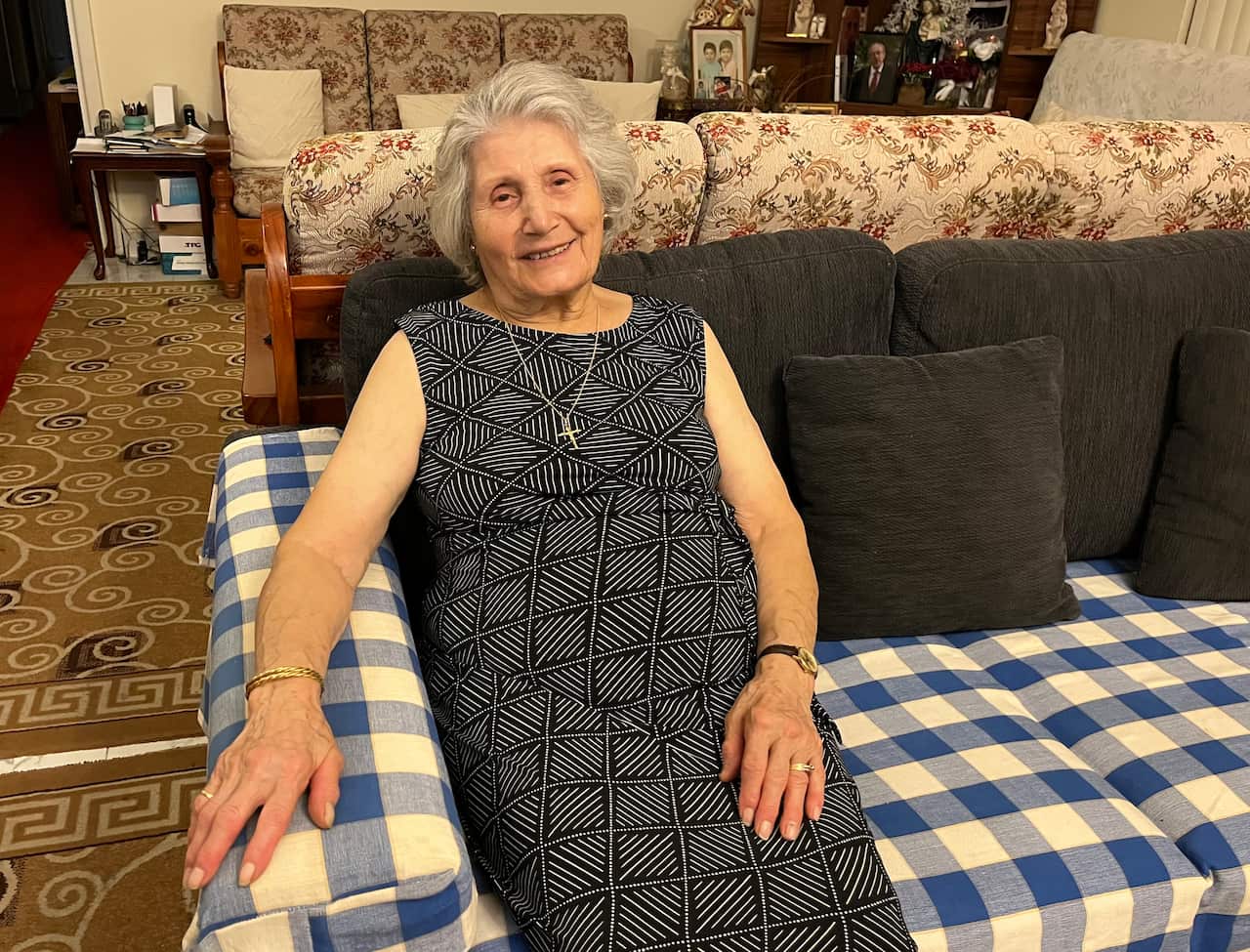
I take my spot next to Tayta, hovering over a chopping board. I've been tasked with dicing the tomatoes for the tabbouleh (Mediterranean salad).
A way of life
I've lived with my tayta and jidor, Hasna and Sayed, or near them, for as long as I can remember.
I'm the eldest of their 13 grandchildren, and many of us have called their four-bedroom house in Sydney's inner-west home at some point — whether living there full-time or sleeping over on school nights so our parents could get to work in the morning.
Sometimes I wish I could be a fly on the wall — oh, the stories they would tell me. The memories they hold — of laughter, of joy, but also of heartbreak and tragedy.
After our weekly family lunch with my grandparents' children and their families, I manage to catch Tayta as she finishes sorting through the last of this summer's vine leaves, which she's picked from her now bare-looking grapevine. They'll be preserved in brine so we can make warak enab (stuffed vine leaves) year-round.
I want to know how this living arrangement makes her feel.
"It makes me feel happy that the family is together," the 78-year-old says.
"I feel happy when I get up early and see them, and take my daughter's son to school."
Steeped in culture
Tayta says what makes it work is that everyone has a role.
We help each other. Each person does something. One will clean, one will cook, one will mop, clean-up, and we finish faster.
Multigenerational living isn't a new idea, and living with family members isn't unusual in many cultures.
In fact, in some cultures, it's the opposite — leaving the parental home can be seen as abandoning one's parents.
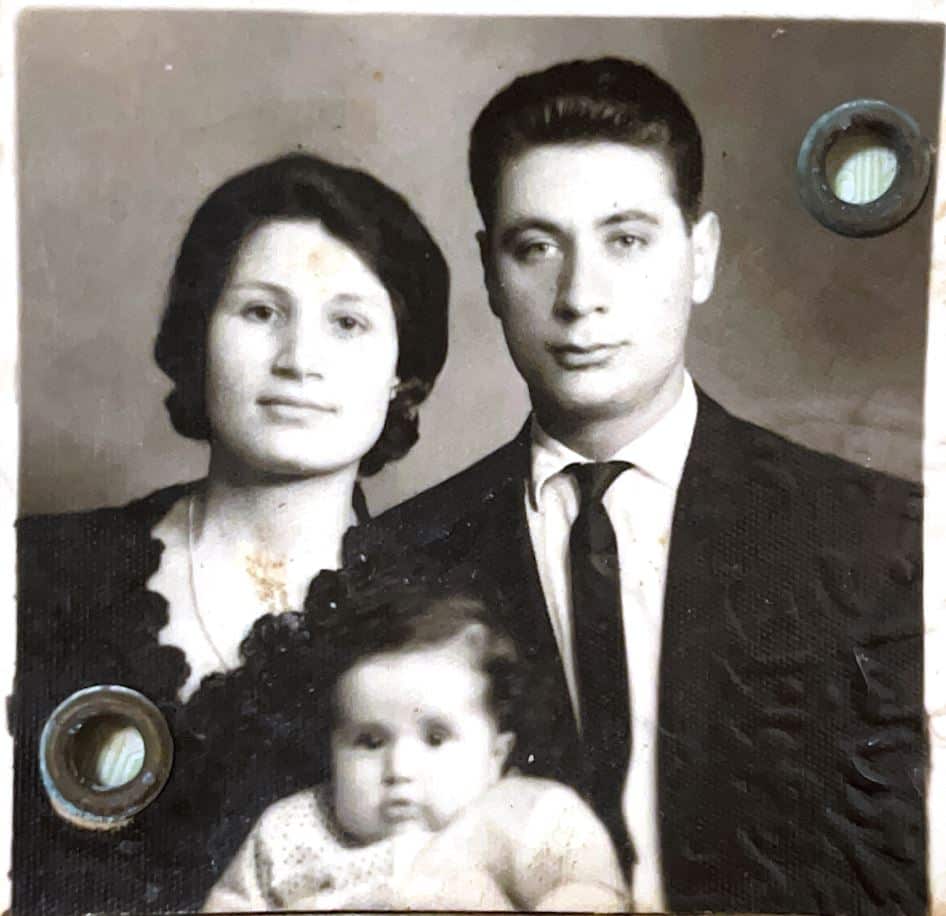
For Tayta, it's a living arrangement she's been accustomed to since she was a little girl, growing up in the mountains of Lebanon.
"We were seven children, and my mum and dad, and we were [all living] together," she says. "And my siblings got married and lived with them because the house was very big."
Once her married siblings had children, or the house became too full, Tayta says they would build a home close to her parents' so they could stay close by.
"Everyone in the village lived like that," she recalls.
"They'd keep their children with them until they marry. They have children, and once the family got too big … they would live in a house near their parents, so they could keep seeing each other every day."
Tayta says many homes in Lebanon are built to be multiple storeys, so that different families of the clan can reside on each level.
"They'd make bread together, wash together, hang up the laundry together, and get the wheat from the field and pick through it together so they can make flour. And that's how they'd live."
It's something she brought with her when she migrated to Australia in the 1960s.
"When we came to Australia, a lot of cousins came from Lebanon and didn't know anyone, so they came and lived with us," she recalls.
"And I would look after them, cook for them, wash their clothes, and we lived together. And once they also got married, they bought homes in the same street as me, and lived near me. And like that, we've always been together — in Lebanon and in Australia."
It's a way of living that's picking up steam in Australia.
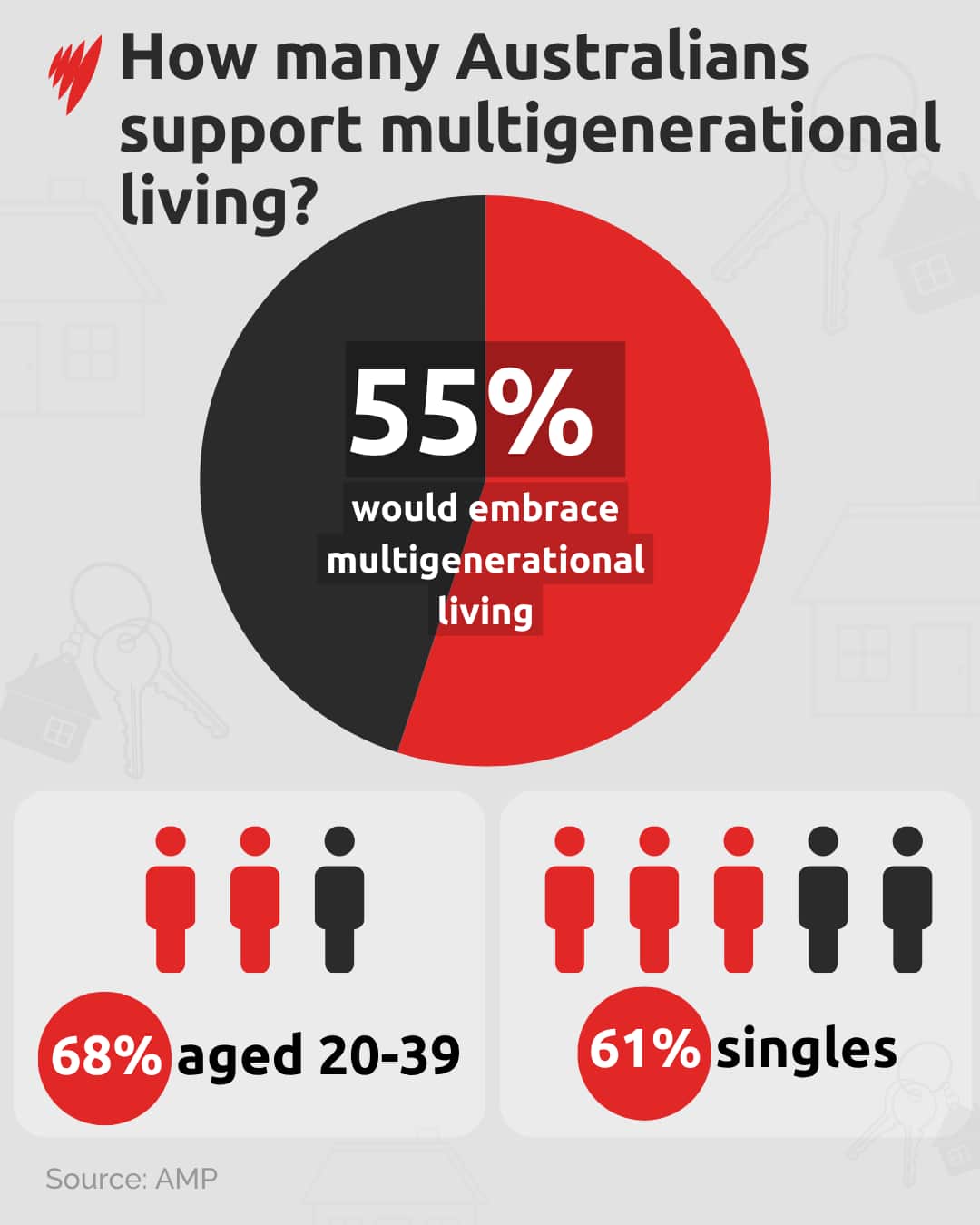
In a survey of 2,000 Australians by financial services firm AMP, more than half (55 per cent) of respondents were open to the idea of multigenerational living, with support highest among 20 to 39-year-olds (68 per cent) and singles (61 per cent), two groups increasingly squeezed out of the property market.
This growing openness reflects more than a lifestyle preference — it signals a structural shift in how Australians are thinking about housing, family and financial survival.
'The great Australian dream of home ownership is gone'
According to the 2024 Household, Income and Labour Dynamics in Australia survey, 54 per cent of men and 47 per cent of women aged 18 to 29 lived with their parents.
This trend has continued, with a growing number of Australian adults living or returning to their parents' homes amid housing affordability and cost-of-living pressures.
The price of a typical home has risen from about four times the median household income two decades ago to more than eight times that level, according to property research firm Cotality. At the same time, rents have surged, making it increasingly difficult to save for a deposit while living independently.
Housing market commentator Eliza Owen warns the trend could leave lower-income earners and single people behind.
"They don't have as much buying capacity, they don't have as much borrowing capacity," she tells SBS News.
These pressures are shaping how and when people can afford to live independently.
It's something that was seen during the COVID-19 pandemic — people either moving back in with family or moving away to save money.
For many, that shift has lasted beyond the pandemic.
What was once seen as a temporary fallback seems to be becoming a long-term strategy, particularly for younger Australians locked out of home ownership.
"Everything's become more expensive, and people can no longer keep up. Because of that, they live together to save some money," Tayta says.
"For us, we were able to get a house. Our children were able to get houses, but for our grandchildren, it's harder because everything changed and became more expensive. Because of that, we live together so they can save a bit so they can buy a house later."
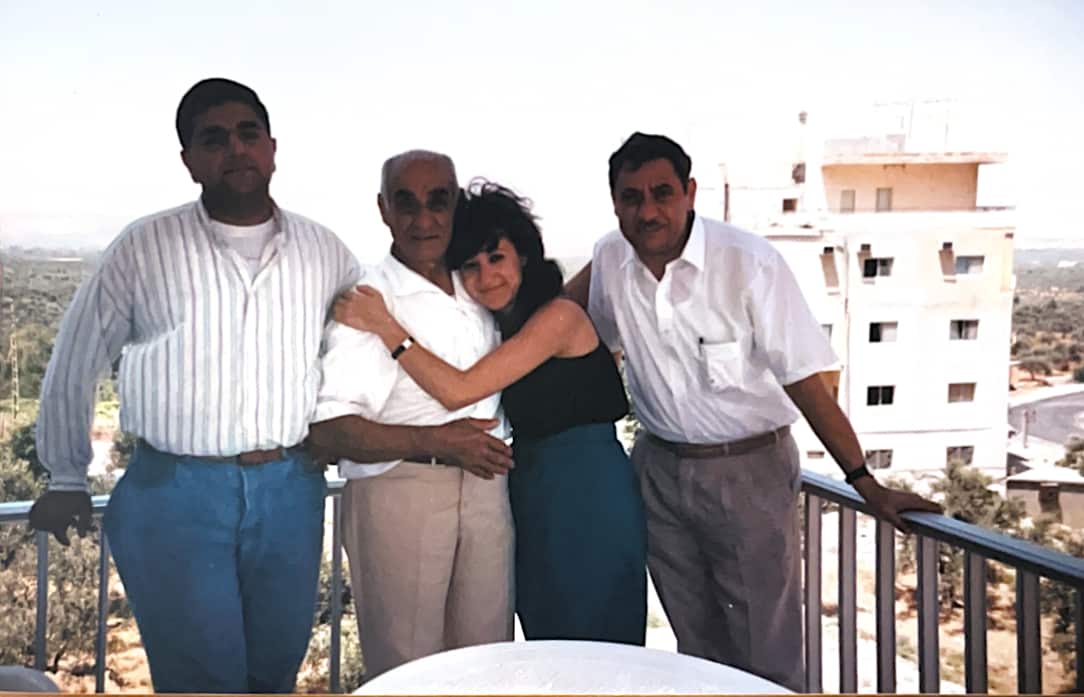
For some families, living together is less about preference and more about pooling resources to get ahead.
Liz Allen, demographer at the Australian National University's POLIS Centre for Social Policy Research, says people are getting creative with Australia's housing crisis — which she says is born out of necessity — and, as a result, there's also been a shift in the way housing is sold.
"If you look at real estate listings, bigger, older homes are often sold as capable of being adapted to suit multigenerational accommodations of households," she tells SBS News.
There are signs the housing market is responding, with some builders and developers offering flexible floor plans that can accommodate multigenerational living.
But what about that long-held dream of owning a home with a white picket fence?
That great Australian dream of home ownership is well and truly gone.
"Not because Australians have given up on it. It's because Australians have been given up on," Allen says.
Is history repeating itself, or are we unprepared?
Allen says multigenerational living arrangements are not a new idea in Australia.
"In the aftermath of World War Two, and then in the 60s and 70s, there was quite a degree of multigenerational and multifamily living to maximise the housing supply to ensure that as many families were housed as possible," she says.
Back then, however, these arrangements were more common and were supported by broader post-war nation-building policies focused on housing supply and infrastructure.
Multigenerational living also reflects long-standing cultural practice among First Nations Australians, where extended family structures and shared households have long been a feature of community life.
According to the 2021 Census, of 352,000 First Nations households, at least 5.1 per cent (or 19,000) were multiple-family households.
"So we have a country then that welcomes migration, where we've got this black history of families that are connected in very different ways, and then we've got multiculturalism, and so it's unsurprising that we see that notion of family, that notion of living, be atypical from the rest of the world," Allen says.
But she notes that the political rhetoric of 'building for the future', evident in the 1950s in the physical and social infrastructure, is missing today.
"We don't have that same sentiment here and it worries me that we are borrowing from the past but not adapting for the future," she says.
"It concerns me that we don't have the necessary social infrastructure to support families, particularly where they're making a constrained choice of living in a household with multiple families."
Where to from here?
Allen says Australia is no longer building resilience into the housing market, and that there's "an enormous mismatch".
"In the short term, things will just plod along, but in the medium- to long-term future, we'll see the mismatching housing; people living alone in homes that do not meet their needs, particularly from a physical perspective, and [that] do not accommodate their physical needs as they age," she says.
"On the other side, we've got families living in small homes, on small blocks and in apartments to get by. So, what are we going to see in the short-term future? Well, we're going to see individuals and families adapt and make decisions in accordance with what they can afford."
Allen says this mismatch — underutilised space on one end and overcrowding on the other — must be addressed by better matching people to housing or "the crisis will only deepen".
She notes that Australia is becoming a country of "class built on housing" and urges policy changes.
"We'll see housing be the dividing factor in class in Australia, and that is an absolute indictment on the sluggish and reluctant policy making we've seen since the 1950s."
Demographers say shifting life patterns are also keeping younger Australians at home longer, with people marrying later, studying longer, and delaying starting families.
Taken together, these shifts are reshaping not just when people leave home, but what 'home' even looks like.
More than survival: rebuilding the village
For Tayta, it's ultimately about community and that age-old idea that 'it takes a village'.
Whether under one roof, down the street or across suburbs, parents, grandparents, aunts and even family friends come together — cooking, laughing and raising children side by side.
"And when the children get older and we get old, then they'll start to look after us," Tayta says.
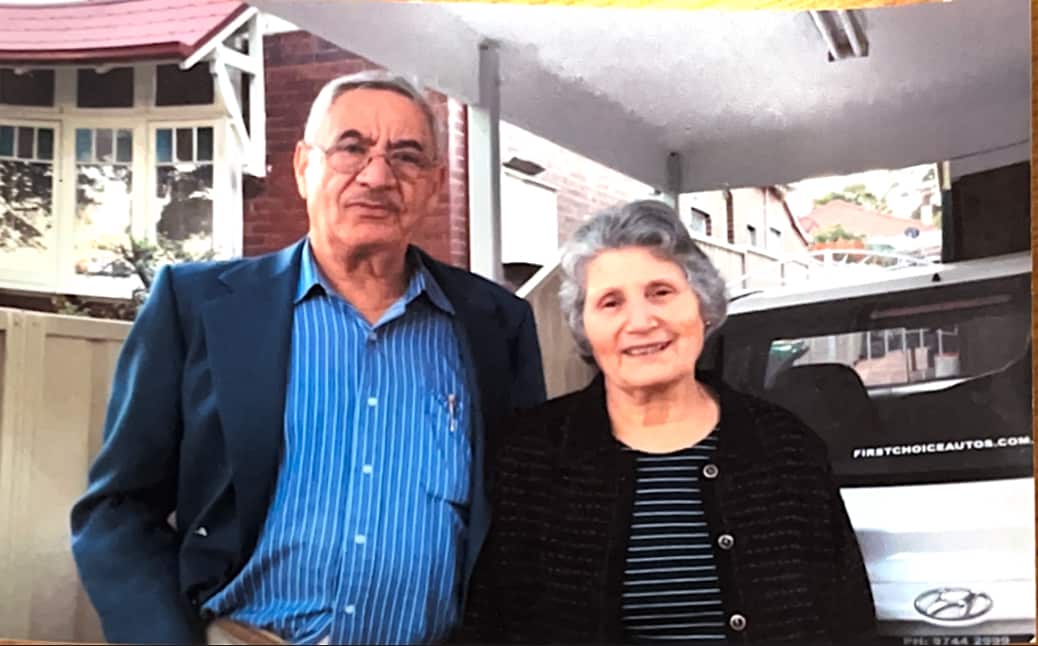
I nod. Because what I'm seeing isn't just a response to a housing crisis. It's care, responsibility and a deep sense of belonging, lived out every day.
Yes, that's what my future may look like. Not because it's expected of me, but it's the least I can do to show gratitude to my elders who have instilled that sense of home in me.
And maybe that's the paradox at the heart of this shift: what begins as economic necessity may yet reshape something deeper — how we define family, how we share resources, and how we look after one another.
For the latest from SBS News, download our app and subscribe to our newsletter.







