
This audio is voiced by AI and may occasionally mispronounce words.
Share your feedback and help us improve this feature. Read more about how we use AI at SBS here.
Aged care advocates are calling on the government to double its funding commitment for aged care beds, warning that homes are reaching capacity and leaving some older Australians at risk of homelessness.
The government funded space for 800 beds in 2025, falling well short of the 10,000 additional beds industry peak bodies say are needed each year to keep pace with Australia's ageing population.
Experts say aged care funding has long been a "conundrum" for the government, as it weighs up how to fund growing demand for care services while finding sustainable revenue streams to support the sector.
Tracy Comans, the director of the National Ageing Research Institute, says aged care is ready for a shake-up.
"We do have an ageing population, and there is an increased need … we do have to think carefully about how we fund that," she tells SBS News.
News that makes sense
Your trusted source for staying up-to-date with the world around you. Get free daily news updates and analysis, straight to your inbox.
Supporting older Australians is a growing challenge for the government as life expectancy increases and birth rates decline.
Comans said the rising cost of aged care is a "pain point" for countries worldwide, as they seek ways to fund a sector that largely does not generate revenue for governments.
As these pressures intensify, policymakers face a difficult balancing act: expanding aged care capacity and funding while demand is rising faster than the system can keep up.
Ageing population drives spending pressures
At the start of this year, more than 22 per cent of Australians were aged over 65 — up from 16 per cent in 2020 and already more than double the 8.3 per cent recorded at the start of the 1970s.
By 2063, the government will be spending billions more to support "critical sectors", with aged care expected to account for around 40 per cent of this increase, according to the latest Intergenerational Report, released in 2023.
The report states that the five main spending pressures — health, aged care, the National Disability Insurance Scheme, defence, and debt interest payments — are projected to rise from around one-third to around one-half of all government spending.
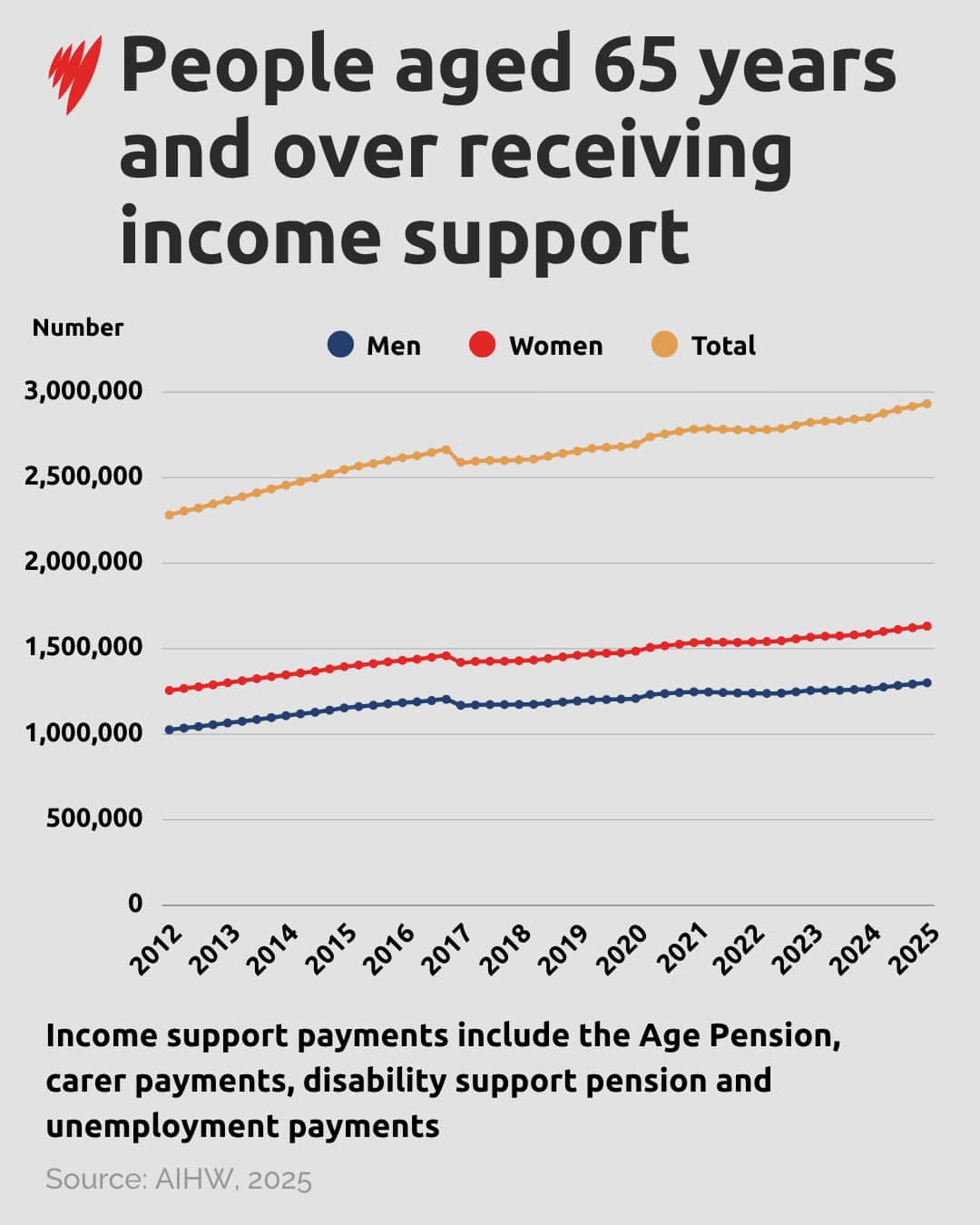
Just under three million Australians aged 65 years and over received income support from the government in 2025, according to the Australian Institute of Health and Welfare. This included pensions and other payments, totalling part of the estimated $39.8 billion allocated in the 2024-25 budget.
The Intergenerational Report also highlights a growing imbalance between the number of older Australians requiring support and the shrinking population of working-age Australians contributing to the tax base. Looking ahead, it projects the population will continue to age over the next four decades, alongside a gradual decline in workforce participation.
The number of Australians aged 65 and over will more than double and the number aged 85 and over will more than triple. The number of centenarians is expected to increase sixfold.Intergenerational Report
At the same time, the overall participation rate in paid work is projected to gradually decline from 66.6 per cent to 63.8 per cent by 2062–63.
Comans says these costs can't be offset by aged care facilities themselves.
"There are ongoing reforms to the means-test who receives certain amounts of financial support and to allow some providers to charge clients more for extra services," she said.
"But those changes aren't enough to cover costs now and certainly aren't enough to allow organisations to raise capital to build new beds."
Challenges in the sector
The aged care sector's biggest challenges are a lack of infrastructure and workforce shortages, according to some industry peak bodies.
Comans says increased spending on buildings and staff alone will not solve the broader pressures, as it does not address the underlying issues.
She says the government also needs to address cost of living pressures facing older Australians, many of whom are retiring later than previous generations.
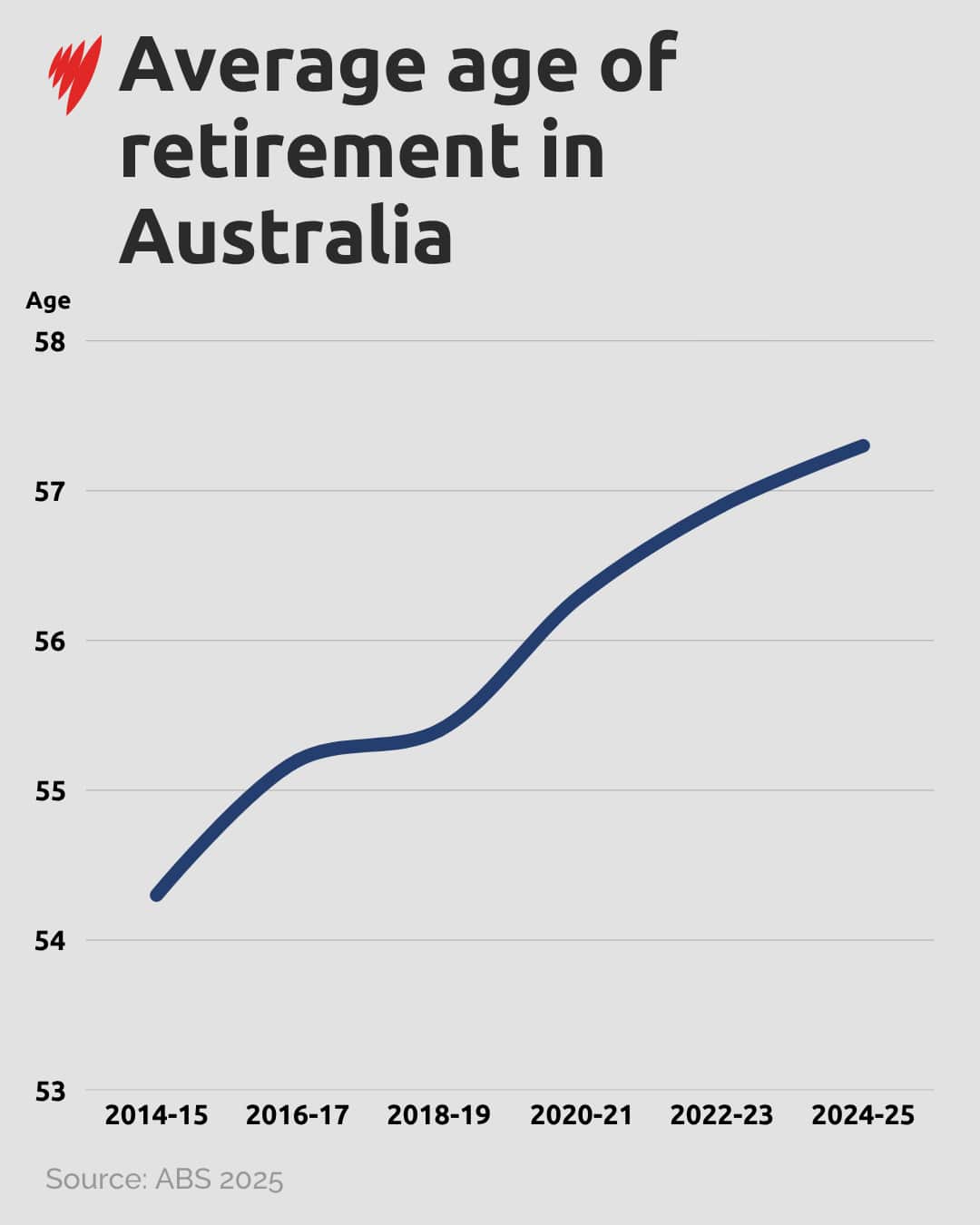
The average retirement age was 57.3 for all retirees in 2024-25, several years older than it was a decade ago.
"This isn't necessarily a bad thing, as Australians are healthier for longer and many will be choosing to work later in life," Comans says.
"But there will also be Australians who are struggling to afford retirement."
The Australian Human Rights Commission (AHRC) has found that retirees are becoming increasingly reliant on pensions and are facing greater financial vulnerability.
A little over half of Australians aged 65 and over accessed a government pension last year, and one in four were living in poverty.
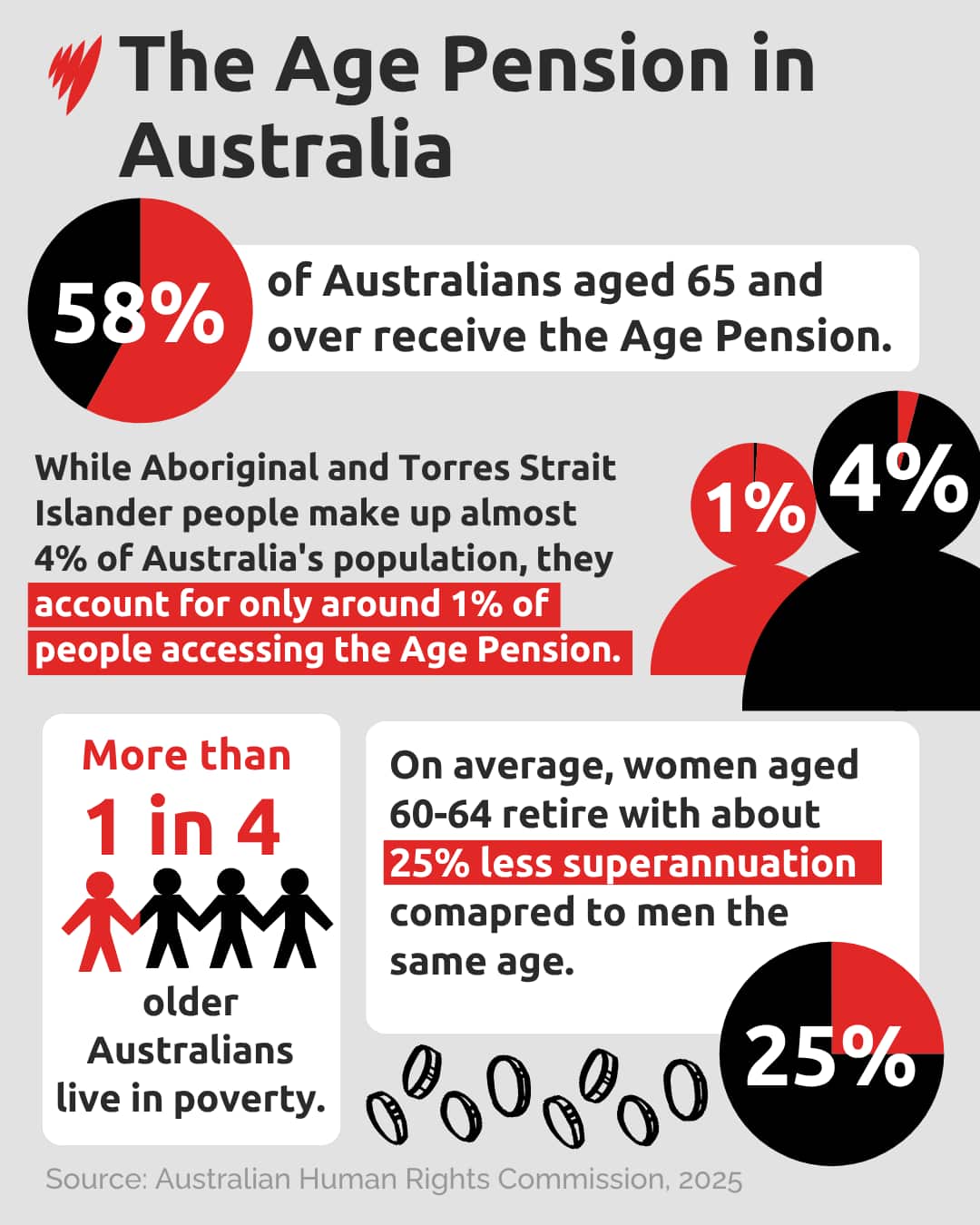
There are also barriers to accessing pensions, the AHRC said, with Aboriginal and Torres Strait Islander people underrepresented in support programs.
Women also tend to retire with around 25 per cent less superannuation than men and are more likely to leave the workforce early to take on carer responsibilities.
What's been announced ahead of the federal budget
The federal government has so far announced a $3 billion investment in the aged care sector in its 2026 budget, including an additional 5,000 beds per year for older Australians.
As part of the package, the government has pledged $1 billion to the Support at Home program, making it and other clinical assistance free for eligible patients.
The projected spending from the current budget is around $41.6 billion, suggesting total aged care spending in Tuesday's budget will sit closer to $45 billion. Looking back at previous years, the government typically adds a further $1 to 3 billion annually to aged care spending.
It has also confirmed $200 million for 20 specialist dementia care program units, alongside the expansion of the Hospital to the Aged Care Dementia Support Program.
In a press release last month, Health Minister Mark Butler said: "This $3 billion investment builds on our commitment to deliver more beds, more packages and better care for older Australians, to ensure they get the support they deserve."
What peak bodies want changed
Ageing Australia has welcomed the $3 billion aged care package, describing it as an "important first step" towards tackling a nationwide shortage of residential aged care beds.
Ageing Australia CEO Tom Symondson says the investment was needed urgently as the sector struggles to keep pace with Australia's ageing population.
"We welcome any investment in aged care that can provide more beds at a difficult time for the Australian economy," Symondson tells SBS News.
However, the national peak body warns significantly more funding will be required to meet long-term demand.
We have been very clear with the government that much more will be needed if we're going to build 10,000 additional beds every year over the next two decades.
It also highlighted concerns that some existing facilities could close under current funding arrangements, noting the government's announced $5 daily increase for existing beds falls short of the estimated $13 gap between funding and accommodation costs.
The sector is already under pressure, with residential aged care operating at around 94 per cent capacity nationally and some capital cities reporting full occupancy.
"More and more homes are putting up the no vacancies sign every day," Symondson says.
Meanwhile, National Seniors Australia (NSA) has called for broader reforms in its 2026 budget submission to ease rising financial pressure on older Australians.
Drawing on feedback from more than 285,000 members, the organisation has outlined 13 recommendations focusing on rising healthcare costs, insurance premiums, housing affordability and energy prices.
NSA CEO Chris Grice says older Australians were increasingly being forced to make difficult choices.
Older Australians should not be forced to choose between their health and their household budget.
Among the group's key recommendations are a Productivity Commission review of private health insurance, a Seniors Dental Benefit Scheme providing eligible pensioners $500 annually for dental care, increased rent assistance, a $150 energy credit, and expanded concessions for pensioners.
The aged care funding sits alongside broader budget measures expected to benefit older Australians across other areas of government spending.
The question now is whether the federal budget measures go far enough to ease pressure on aged care services and the cost-of-living challenges faced by older Australians, or whether more reform will still be needed.
Correction: A previous version of this story had an incorrect figure for the average retirement age in 2024-25. This has been corrected.
Clarification: A previous version of this story included a chart showing the projected proportion of Australians aged over 65 based on data from 2024. This has been removed.
For the latest from SBS News, download our app and subscribe to our newsletter.







