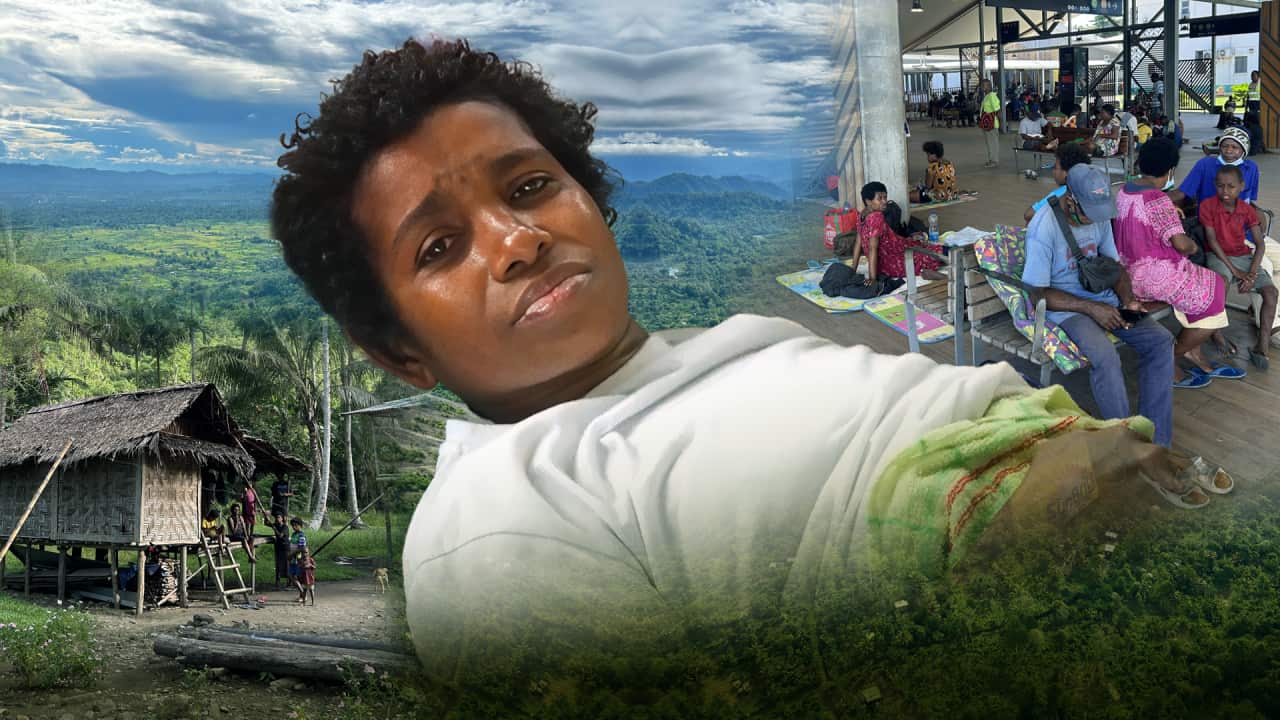
Go inside Papua New Guinea's healthcare crisis with SBS Dateline. Watch The World's Most Remote Rescue? now on SBS On Demand.
The rescue helicopter arrives in the remote, picturesque village at dawn, the team ready to collect their patient and transport her to hospital. But she isn't there.
A woman with severe acute abdominal pain had left the village the evening before with a group of helpers to embark on a 16km bush trek to their closest health care centre.
News that makes sense
Your trusted source for staying up-to-date with the world around you. Get free daily news updates and analysis, straight to your inbox.
In Papua New Guinea, journeys like this are familiar for much of the population.
No phone reception in the village meant the woman and her helpers didn't know a Mountain Area Medical Airlift (MAMA) Foundation helicopter had been dispatched to pick them up. The rescue team have had no contact with their patient. It's an 8km walk from the village just to get a phone signal, which is how one of the villagers alerted the team to Lucy's case.
The helicopter crew now needs to spot the patient from the air along the lush, forested bush path.
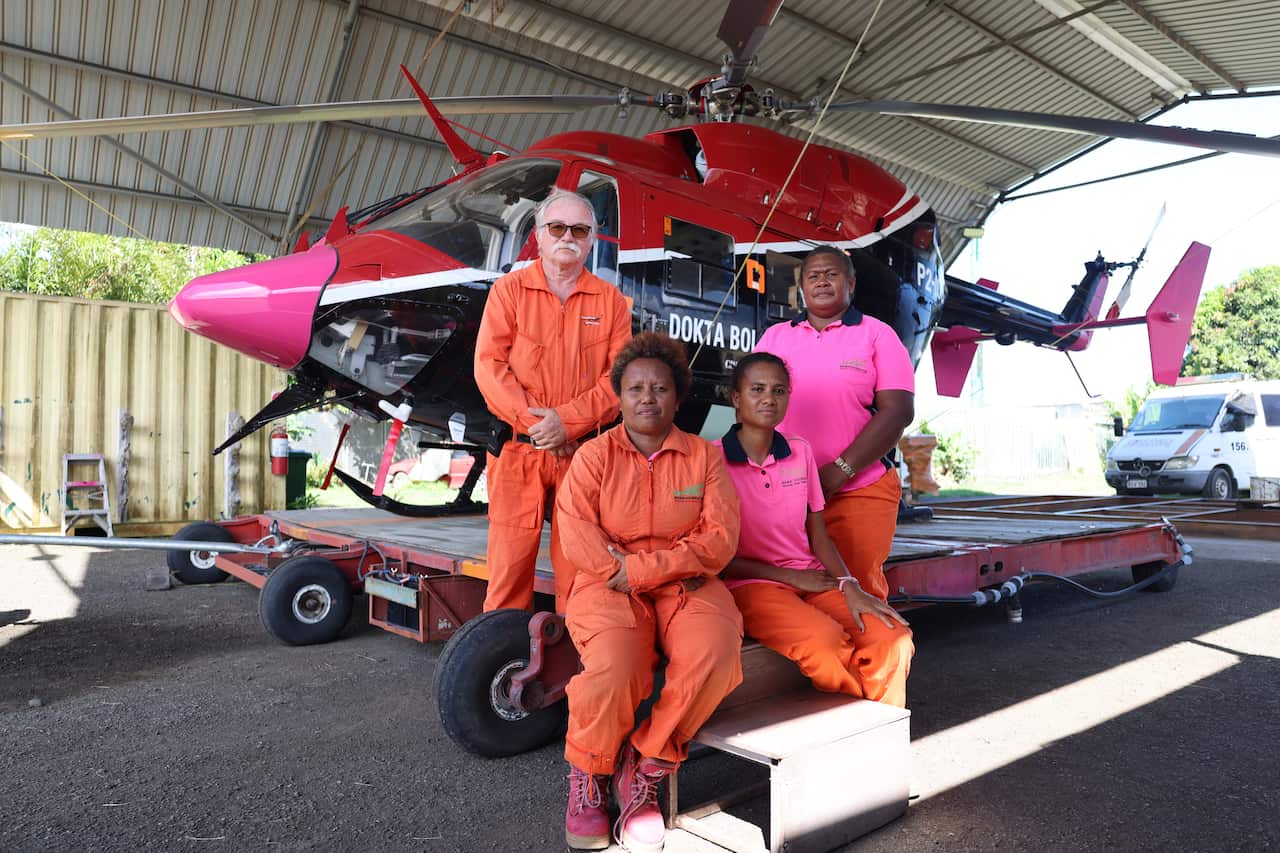
Luckily, it doesn't take chopper pilot Jurgen Ruh and his in-flight nurse team long to find them and land at a spot on the path.
The woman is being carried on a stretcher fashioned out of sticks and a log, shouldered by two men. They all slept the night on the track.
Lucy, 35, is a mother of five and has been in unexplained pain for a week. As head nurse Audry Taula examines Lucy, one of the local men describes the problem:
"The pain started around her belly button, went up her side to her collarbone and then down to her abdomen and stayed there."
Audry checks Lucy's vitals and bundles her into the chopper for the flight to hospital.
This is more care than Lucy could have hoped for out here in PNG's Morobe province, where medical care is virtually non-existent.
Papua New Guinea's health care crisis
Papua New Guinea is home to about 11 million people, but there are just under 500 doctors in the country. It's one of the lowest doctor-to-population ratios in the world. Most people live in the bush, in small, remote villages with next to no public services, let alone a healthcare worker.
The UN's World Health Organization recommends countries have a minimum of 4.45 skilled health workers (doctors, nurses, and midwives) per 1,000 population.
PNG has only one health worker per 1,000 people, according to the country's health minister.
Lucy's village of Mubo, with a population just shy of 1,000, hasn't had a healthcare worker for three years.
"Why has the government made us suffer for three years?" asks Mai Adam, Mubo's village leader.
He says serious medical cases are literally carried through the bush to the closest medical centre on the coast. Even when they reach the coast, there's still an additional boat ride to get to a hospital.
"For other things such as fevers and malaria, we suffer. We suffer."
To address the dire lack of access to healthcare services across the country, PNG's prime minister has pledged that by the end of the decade, everyone should be able to reach medical help within an hour's reach by "walking, by boat, by vehicle, or by a plane ... wherever they are in the country".
Papua New Guinea is Australia's closest neighbour — and the Australian government is the country's largest donor, funding half of all foreign aid here.
But at the moment, for patients like Lucy, an expensive rescue helicopter is their only fast way of seeing a nurse.
Why Jurgen became a medevac pilot
Pilot and MAMA foundation owner Jurgen Ruh says if he didn't operate rescue helicopter flights, "there are lots of people who would lose their lives".
The German pilot has lived in PNG for 43 years and says he's conducted over 3,000 rescues, mostly of pregnant mothers. His helicopter service is the only dedicated operation like this in PNG.
The foundation's headquarters are in an old airstrip in Lae, PNG's second-largest city.
"I think it's a beautiful job ... with the few tools I have, to be able to turn a mother's worst day of her life into her best day, within a few hours."
But he "didn't really plan" to end up running a medevac foundation.
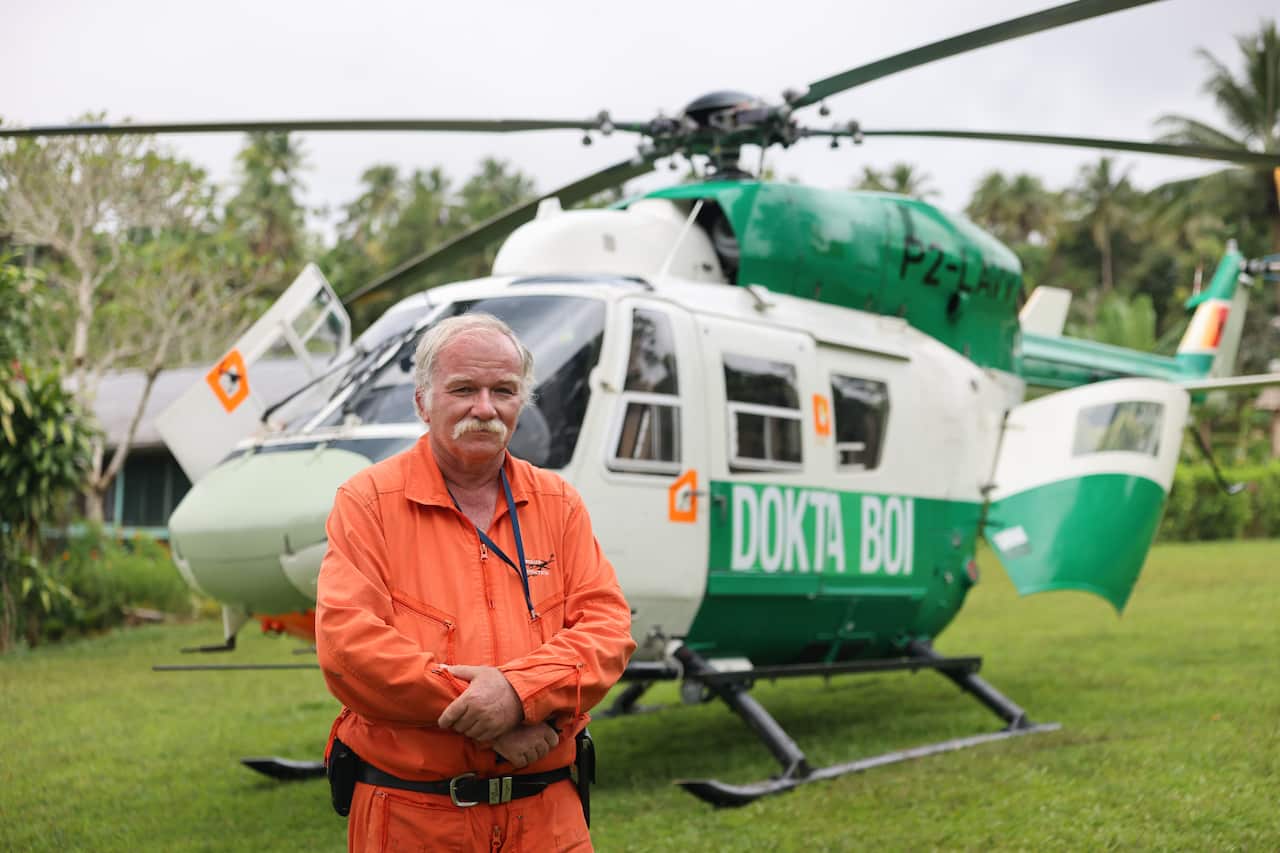
"I got into helicopters to support my marine salvage business, and then I saw the need when doing one or two medevacs in between," he says.
PNG's healthcare concerns, however, are not limited to its isolated villages.
Across the country, the healthcare system is plagued by shortages of medicine, equipment and staff, abandoned aid posts, and sector-wide mismanagement and corruption.
"I don't know if you can call it healthcare," says Ruh, "from top to bottom, it's defunct".
Quality healthcare in an hour's reach
PNG's health minister Elias Kapavore acknowledges there are "weaknesses" in the system. But he says his government has a "clear policy direction on what must happen for health".
"I believe we will meet the required level of health system that we would like to see for the country," he tells SBS Dateline.
For doctors and other healthcare workers, it's a system in acute stress.
Dr Esther Apuahe, the country's first female surgeon and an executive member of the Medical Society of Papua New Guinea, says the root cause of many of the country's healthcare problems is money.
"Funding is what is not available readily," she says.
"We've seen an increase in the budget this year for drugs, but it's a question that every health worker is asking: Where does that money translate in terms of the service delivery that we are offering to patients?"
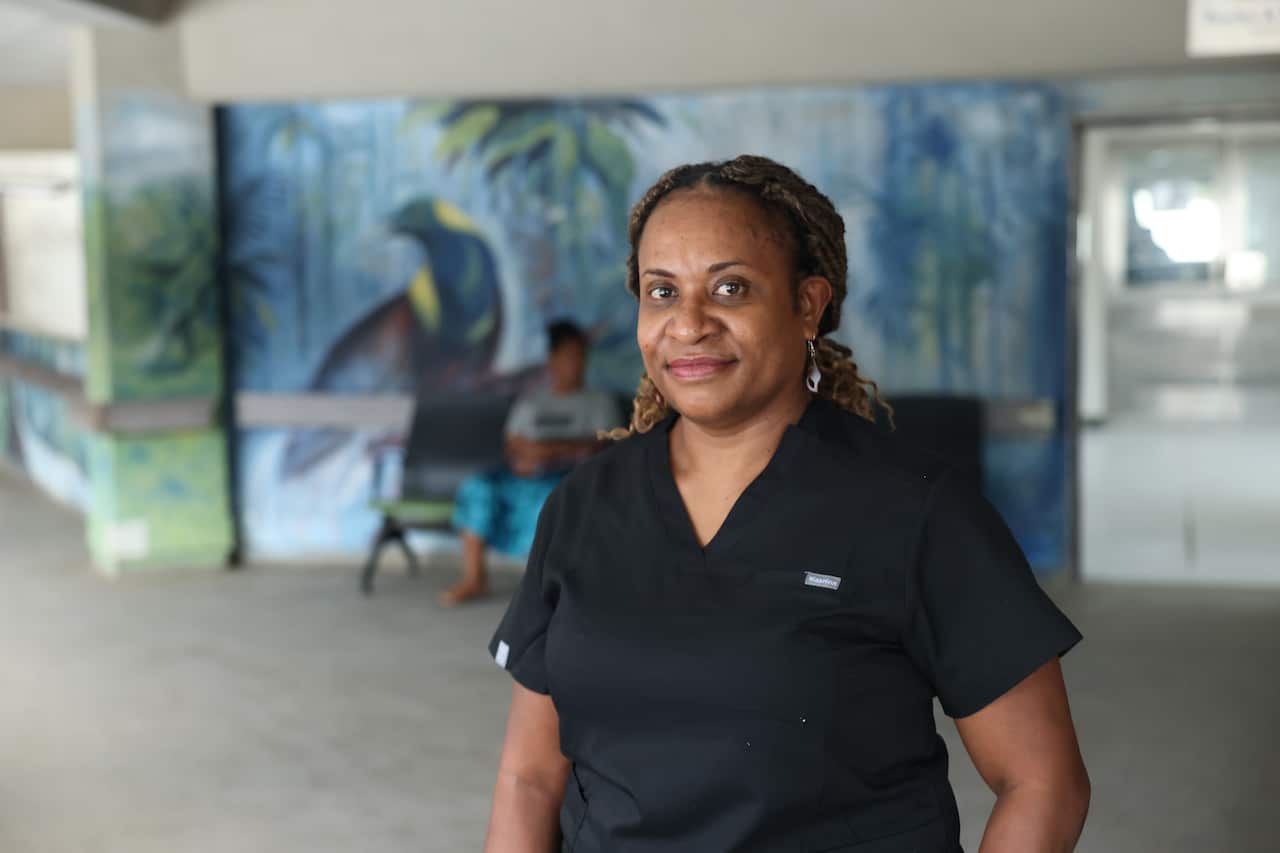
She says PNG's healthcare problems are often blamed on the challenges associated with the country's remote, mountainous geography. But problems like medicine and equipment shortages also exist in the capital city's biggest hospital, Port Moresby General. It's because of this that many are sceptical of the government's plans to ensure everyone in the country has access to quality healthcare within an hour's reach.
To achieve the vision, Kapavore says PNG needs five more years.
"That dream is becoming reality now because we are now seeing health facilities constructed in some of the most remotest part of our country," he says.
Esther also blames corruption, which she says is "everywhere in PNG".
"You cannot say that corruption is not present in health. It is."
According to anti-corruption organisation Transparency International's 2025 Corruption Perception Index, Papua New Guinea has a score of 26 out of 100, where 0 means 'highly corrupt'. The Index ranks PNG at 142 out of 182 countries.
Kapavore says he is aware of "some corruption matters", and says there is a police system in place to prosecute corruption.
"I don't think there's a serious level of corruption in the health sector."
A nation with 'substantial' challenges
Jurgen Ruh, the helicopter pilot who frequents PNG's most remote quarters on medical rescue missions, is more circumspect.
"It's a good vision to have, and I think as long as we keep working on it, hopefully we get there one day," he says.
Ensuring all Papua New Guineans have this access to healthcare would be "great". But he questions the feasibility of the plan.
"How close are we to get there? It's still a long way.
"We are still a developing nation with substantial developing challenges and that will stay that way for some time."
Lucy, the patient Ruh and his team evacuated from her remote village, was taken to Angau hospital in Lae.
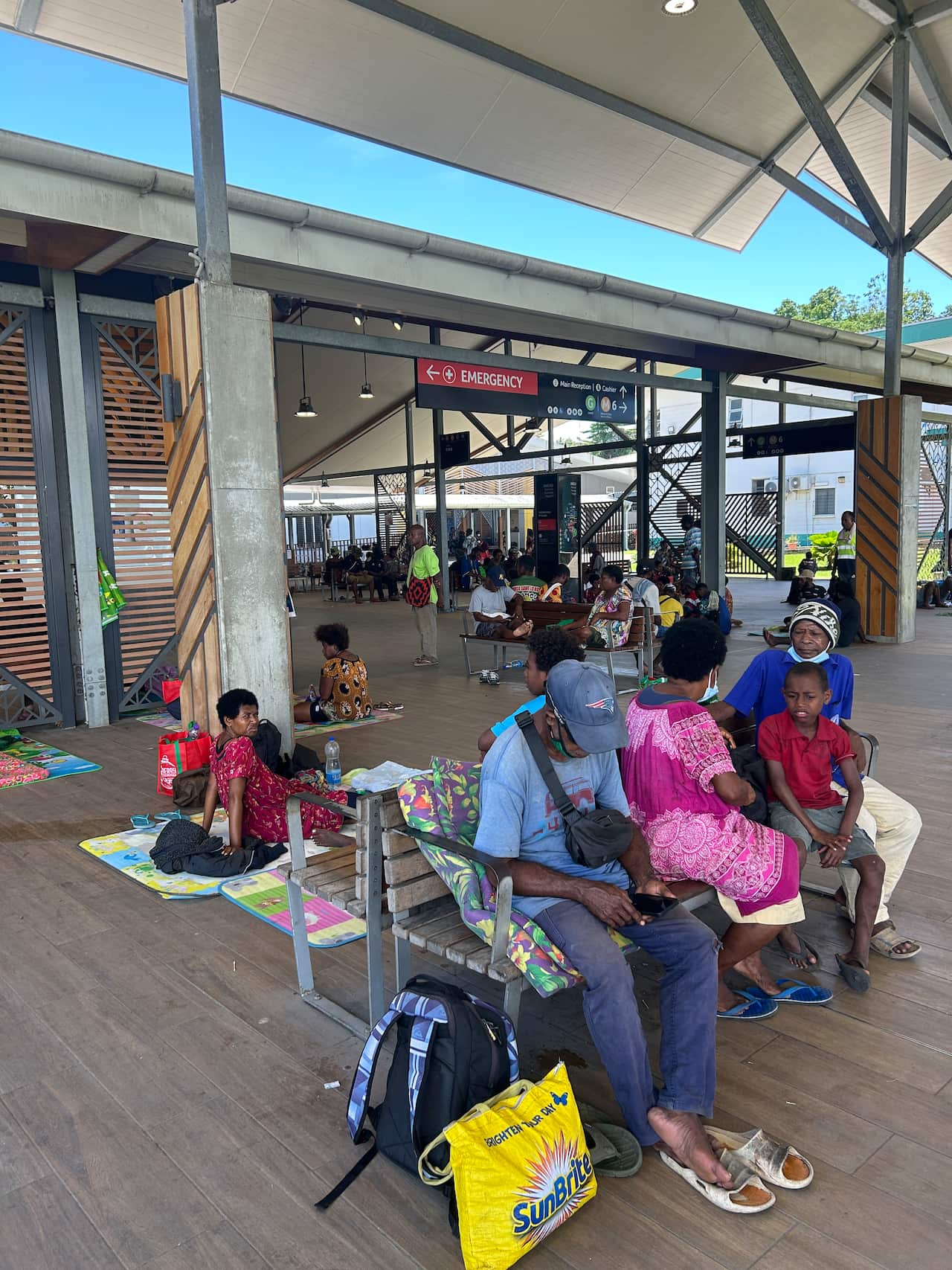
The Australian government has invested nearly $250 million in the hospital's redevelopment.
Lucy was initially treated on a bed in the emergency department, and has been given an IV and medicine. A few days later, she is sleeping outside the department with other patients due to hospital backlogs.
"We need to come and sleep in good beds," she says.
"If we could stay in good beds and take our medicine, that would be good."
Watch your favourite Dateline episodes around the clock on SBS On Demand's dedicated Dateline channel. For the latest from SBS News, download our app and subscribe to our newsletter.

Dateline is an award-winning Australian, international documentary series airing for over 40 years. Each week Dateline scours the globe to bring you a world of daring stories. Read more about Dateline

Have a story or comment? Contact Us







