
Caleb is an undeniably cute kid. Affectionate, he sidles up to you on his bottom for a cuddle on the carpet. Playful, he sticks his finger in his ear while making silly noises or chewing something crunchy, so he can hear the sound magnified in his head.
Mischievous, he sometimes bites and pinches… ok, that bit’s not so cute. But it’s all pretty normal behaviour for a toddler.
The problem for Shirley Turner is that although her son has the mental age of a toddler, he turns ten next month, and weighs around 35 kilograms.
Caleb was born healthy, but six weeks premature. When he was just two days old he suffered from a bleed on the brain, resulting in severe cerebral palsy.
“I’ve been told he’s going to be around 6 foot,” she tells me. “It’s actually quite daunting thinking, ‘How am I going to dress a six foot child who likes to kick, hit, bite?’ It actually terrifies me.”
News that makes sense
Your trusted source for staying up-to-date with the world around you. Get free daily news updates and analysis, straight to your inbox.
Every centimetre and every kilo counts where Caleb’s concerned. We’d heard that Shirley regretted not having taken steps to prevent him from growing any bigger, and we wanted to find out more about the challenges she faces caring for him.
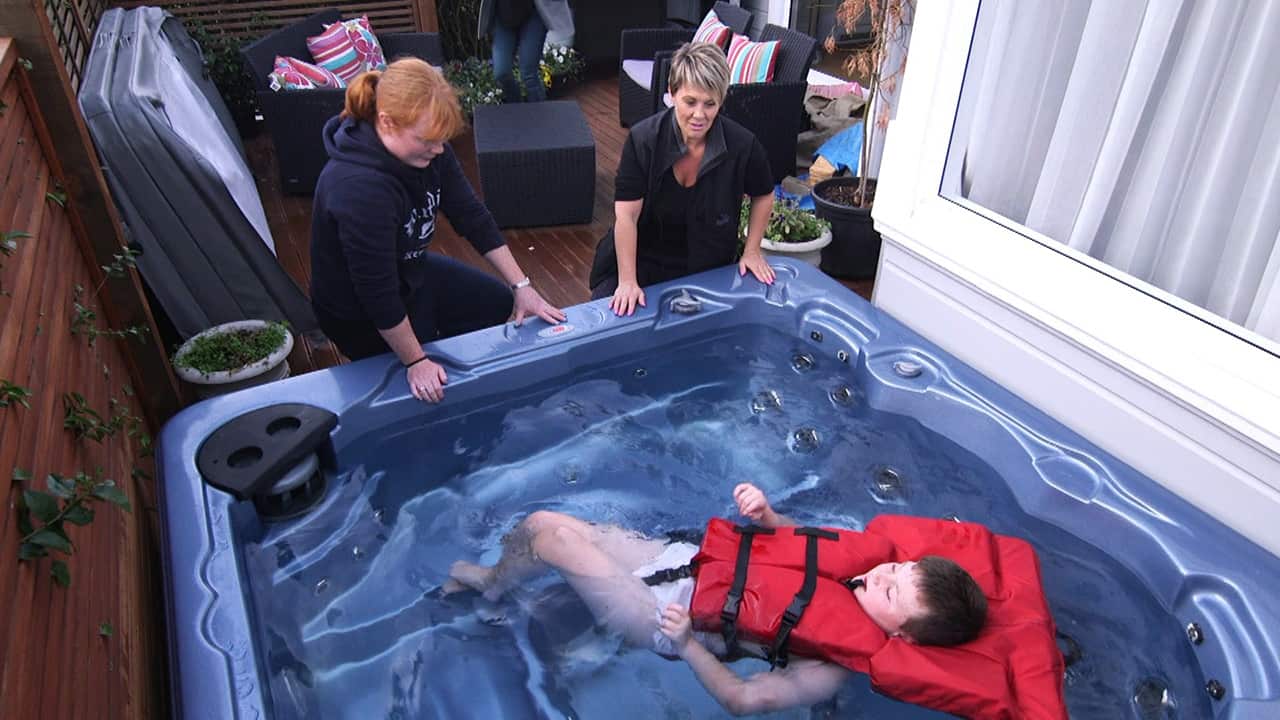
When we visited their home in Dunedin, Shirley decided to let Caleb have a splash in her outdoor spa pool. It took three people – Shirley and a couple of paid carers – just to carry him in.
As an icy wind blew off the nearby beach, Caleb floated happily in the steaming, bubbling water, and Shirley stroked his hair.
“Even though he’s disabled, he’s still my wee boy. Caleb’s my youngest and I love him to bits. My biggest fear is that I’m not going to be able to have him at home for much longer. He’ll probably go into a home. He’s nearly as tall as me now and in three years time he’ll be taller than me.”
Even now it’s a struggle to get Caleb out of the spa, or onto a playground swing or slide, or sitting on his mum’s lap – and Shirley doesn’t think those things will be possible at all for much longer.
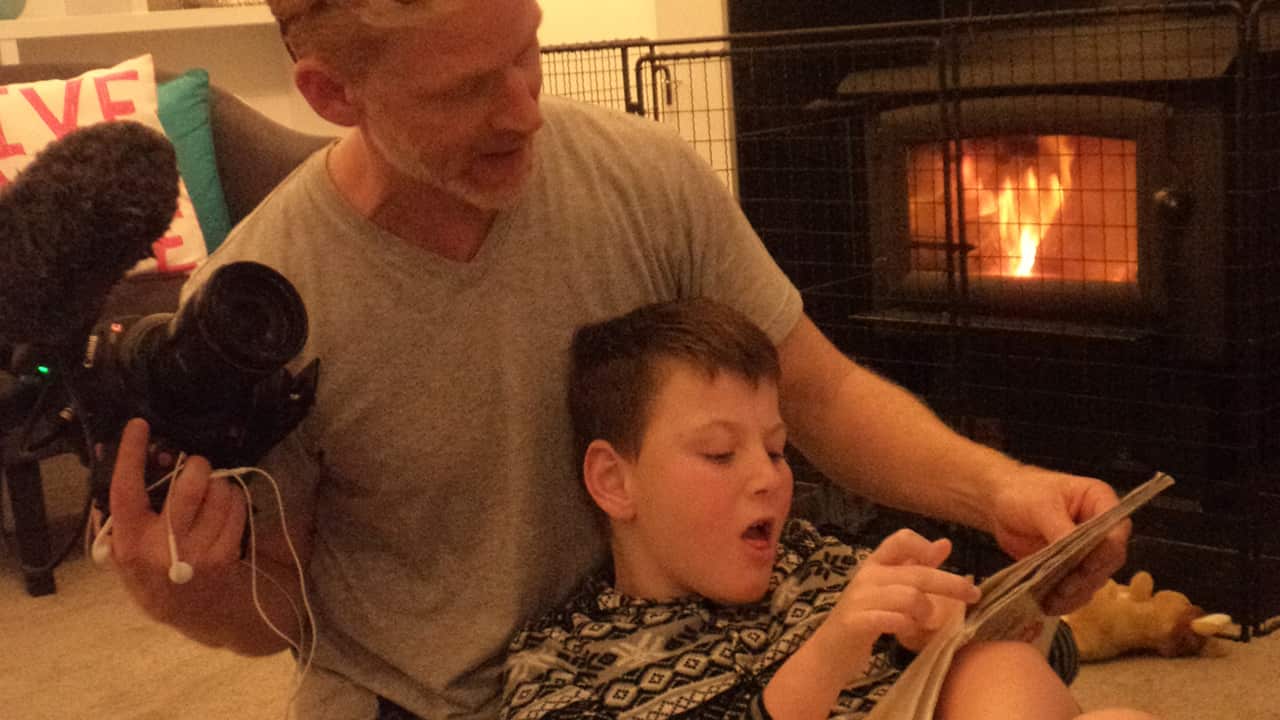
She feels as though Caleb’s doomed to grow up physically, but not mentally. He’ll be unable to do many of the things he enjoys most, and unable to stop himself doing the things that his carers enjoy least.
“He does like to bite people and he does hit, as well as pinch. So I end up getting a good smack around the face. I’ve got bruises on my arm where he’s pinched me. He doesn’t know he’s doing it, and he doesn’t know his own strength either. I suppose I treat him as a baby, and I often forget [that although] he has the mentality of a baby… he still has the strength of a normal nine year-old.”
Caleb would have been a perfect candidate for Growth Attenuation Therapy, Shirley reckons. But when she mentioned it to her paediatrician, he told her it was unethical and would never be approved, so she gave up on the idea.
Now that she’s met Janine Bolton, who stopped her disabled daughter Daryl-Ann from growing (with approval from ethicists), she regrets not pursuing it further. She believes that parents like her should be told that the option exists.
“You don’t realise at the time when they are little, how hard it’s going to be when they get bigger. Everyone that has a child similar to Caleb should be given the opportunity to make those decisions for themselves so that they can keep their family together and have a bit more quality of life. No one should tell them what they should be able to do with a child as severe as Caleb.”
But Caleb’s not quite as severely disabled as Daryl-Ann – or Kahn, a 12-year-old in Auckland who’s currently receiving Growth Attenuation Therapy.
Advocates of the treatment all agree it should be reserved for the small number of children whose physical and cognitive disabilities are severe, but Caleb’s case raises an interesting question of where one should draw the line.
My heart goes out to any parent trying to work out what’s best for their child in circumstances this difficult. Although critics of growth attenuation argue that the real solution is more support for parents, New Zealand already seems relatively generous.
The parents we spoke to say that this support – whether from carers, equipment or home modifications – can only achieve so much, and it sometimes comes at a cost.
I observe as Caleb’s two carers dry and dress him on the living room floor while Shirley prepares his dinner. They take an arm and a leg each in order to hoist him into his wheelchair.
Later they’ll take him to the toilet, bathe him and get him ready for bed. Shirley’s grateful for everything they do, but she’s still not used to sharing her home with strangers.
“I always have to have carers here, so I don’t get that special time with Caleb on our own, because he’s just too big. It breaks my heart, really. Looking back even about two years ago, I was actually coping with Caleb on my own. I took him to school by myself, dressed him by myself, was able to do quite a lot with him. It should be me doing that. It should be me being able to do it by myself.”
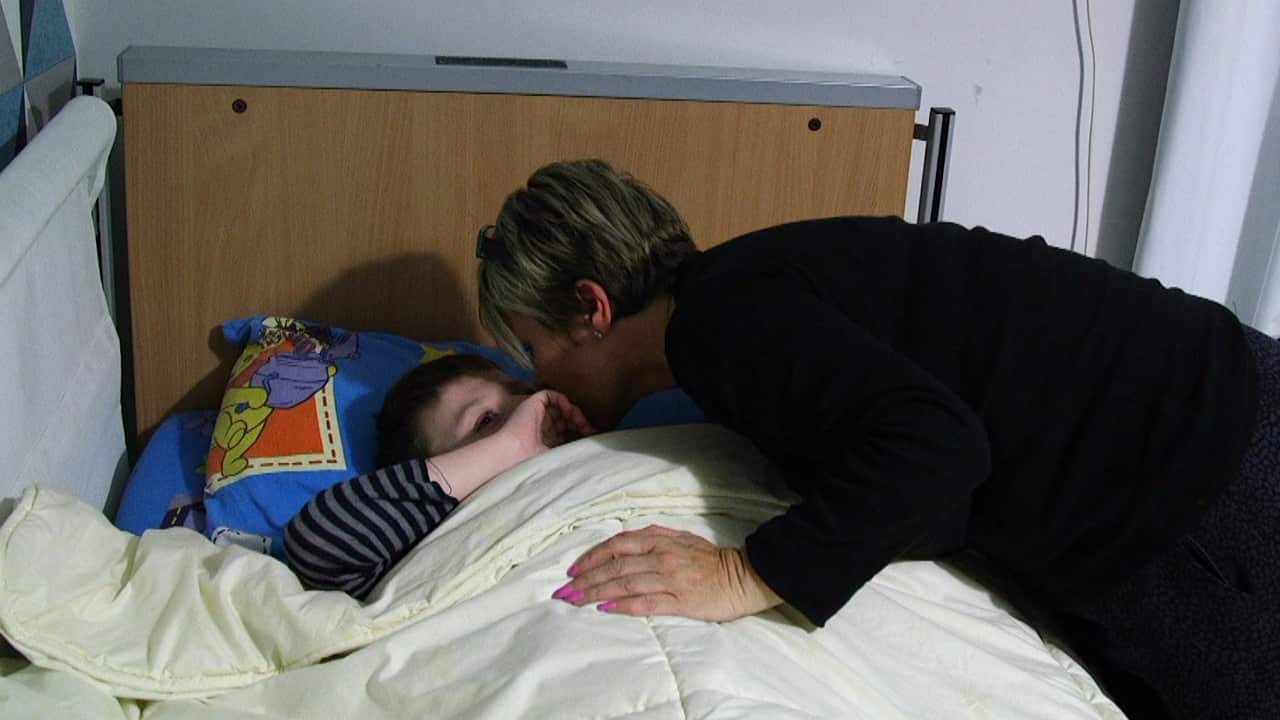
The carers leave when Caleb’s put to bed, but it’s becoming difficult for Shirley to manage on her own at night. Last night she discovered that he’d filled his nappy and decorated his room (and himself) with the contents. She had to try to get him out of the bed and shower him, dry him, dress him and get him back into bed on her own.
“That’s really, really hard. It’s physically draining trying to lift him by myself. So as he gets bigger I’m probably going to have carers stay overnight.”
Shirley dreads the day when she’ll be unable to keep Caleb at home. She’s haunted by the idea of her “wee boy” being looked after by strangers.
“What’s your biggest concern…” I asked, “when it comes to him being in a home?”
“I suppose being loved.” Shirley replied, her voice catching as tears come. “He’s my boy, and he should be with me. He knows who I am – he knows I’m his mum.”
See Amos' story, Growing Pains, in full:

Dateline is an award-winning Australian, international documentary series airing for over 40 years. Each week Dateline scours the globe to bring you a world of daring stories. Read more about Dateline

Have a story or comment? Contact Us







