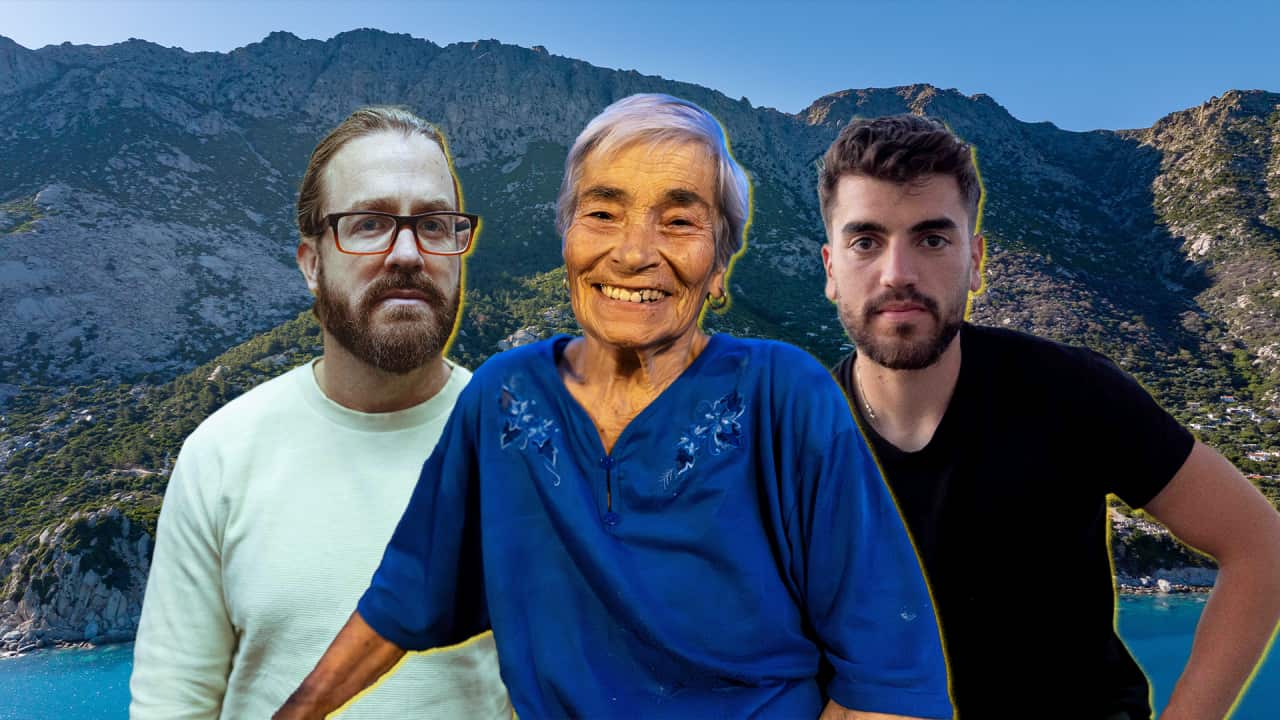
In Dateline's latest episode, Janice Petersen travels to a Greek island famous for being a 'Blue Zone'. Watch The Greek Longevity Puzzle now on SBS On Demand.
The Greek island of Ikaria is a place where, according to legend, people forget to die.
The first thing I notice on my arrival isn't an abundance of old people. It's the hush where there's usually rush. Each morning my internal clock readies itself for peak hour, the traffic and the noise of progress. That doesn't happen here. I can hear birds. Nothing else.
The rhythm of life feels different. Groups of men gather for coffee that stretches into an afternoon of cards, a yiayia (grandmother) wanders up a hillside to forage for wild herbs, and George, 92, decides what grapes to crush for his homemade wine.
News that makes sense
Your trusted source for staying up-to-date with the world around you. Get free daily news updates and analysis, straight to your inbox.
Ikaria is one of the world's famous Blue Zones, places said to produce unusually high numbers of centenarians.
George offers his wine to anyone passing by, which is how I ended up clinking glasses with him in his kitchen.
I'm not on island time yet, so I cut to the chase.
"How do people here live to 100?" I ask.
"No stress. No overindulging," he says.
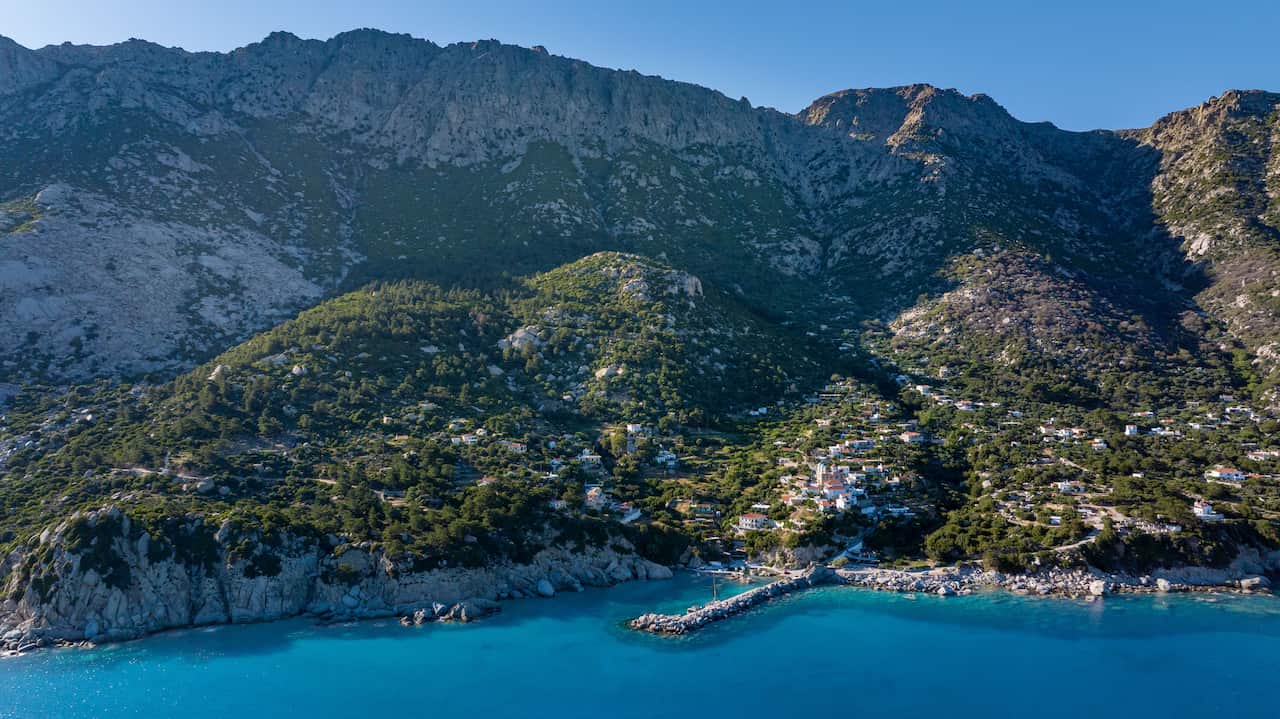
George's friends span in age from 23-year-old Christos to his oldest friend, who's 106.
"Does that keep you young, having friends of all ages?" I ask.
"Maybe," he shrugs. "Maybe it's because I like girls. Pretty girls like you."
I chuckle since George is evidently more interested in collecting phone numbers than extra years of life. And yet people like him are the accidental ambassadors of this island's reputation.
How Ikaria came to be considered a Blue Zone
In the early 2000s, Belgian demographer Michel Poulain and Italian physician Gianni Pes began marking confirmed cases of extreme age on a map of the Italian island of Sardinia, circling the clusters in blue pen.
American writer Dan Buettner, working with National Geographic, teamed up with them and in 2008 helped add Ikaria to the list of Blue Zones, which also included Nicoya in Costa Rica and Okinawa in Japan.
These 'Blue Zones' have, according to Buettner, nine shared traits called the "power nine".
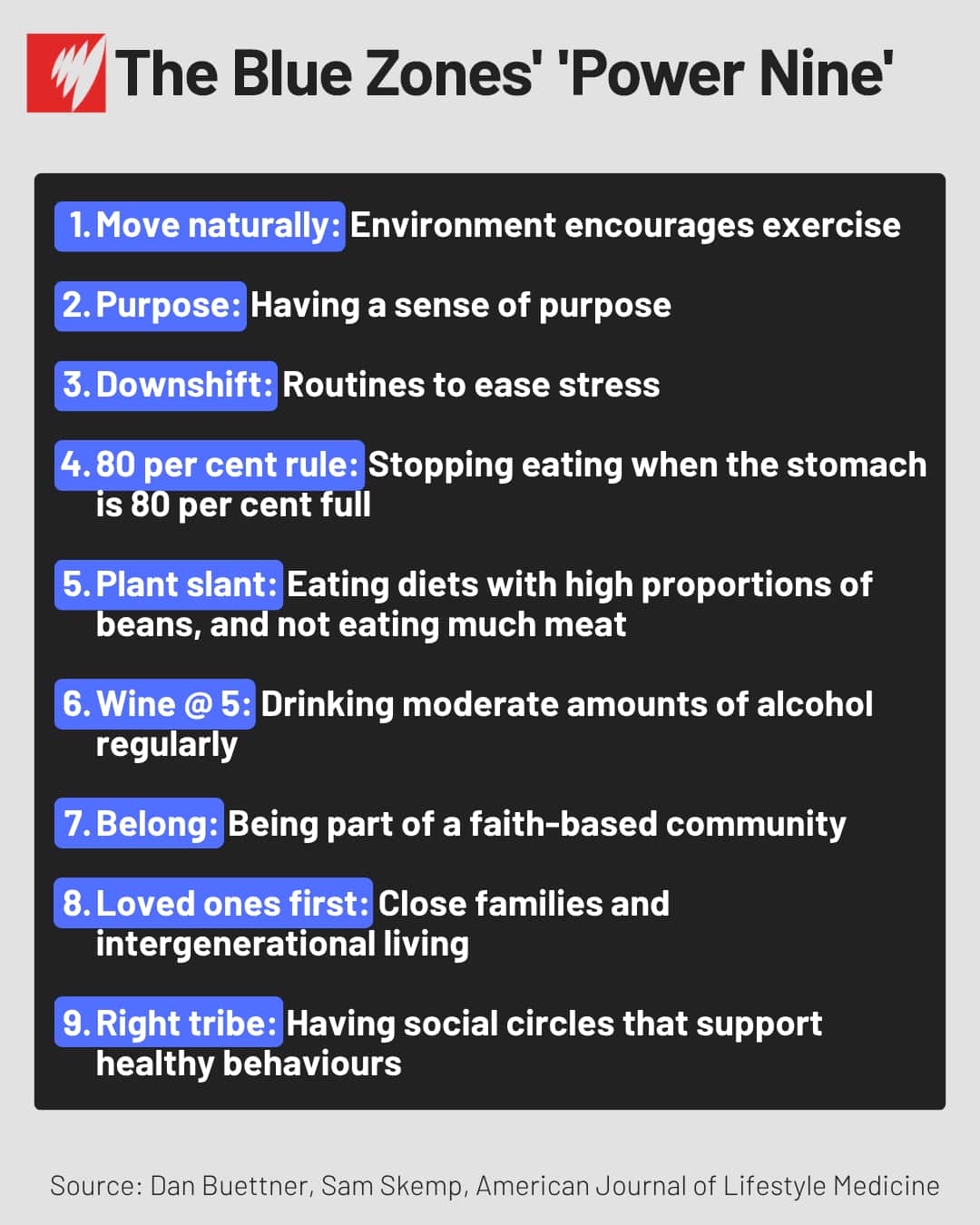
Buettner expanded the concept into bestselling books, a Netflix series and a trademark.
The key argument from Blue Zones proponents is that while genes play a role in longevity, the environments we create for ourselves matter far more.
'We forget to die'
When Dan Buettner asked a 101-year-old woman how Ikarians lived so long, she shrugged and told him, "We just forget to die."
He liked the line enough to use it as the headline of his 2012 New York Times piece, after claiming Ikarians reach 90 at two and a half times the rate people in the US do.
The idea that there's a code that can be cracked, netting a few extra years of life, is a dream plenty of us are willing to spend good money chasing. The global wellness industry was worth around $2.85 trillion last year, according to McKinsey.
Longevity is one reason why this remote island is famous. Yet nobody I meet here seems especially interested in cheating death. They're too busy being immersed in life to track, measure and optimise it.
But the Blue Zones label has made the island a hub for tourists — some of whom hope it holds the key to a longer life.
Christos, my guide to the island who also runs a tour company, thinks it's the Ikarian attitude and way of life — something that can't necessarily be replicated.
"I think you guys lost your purpose, chasing material things just to look rich, cars, big houses," he says.
"Here, we are already rich. We have nature, good diet, strong community. The whole package."

Everyone seems to live by some version of the same formula.
"The garden is the biggest thing," another local tells me.
"If you have leftovers, you give it to a neighbour."
Existing beyond longevity
In Ikaria, the oldest homes sit high in the mountains. They weren't built there for the view but rather to hide from it.
For centuries, pirate raids made the coastline too dangerous. Later, thousands of political exiles were sent here during Greece's civil war, which was fought from 1946 to 1949.
Islanders who had little themselves shared what they had. Longevity was never the goal here. Leaning on each other is how they've survived.
Yet nobody I meet here seems especially interested in cheating death. They're too busy being immersed in life to track, measure and optimise it.Janice Petersen
Thanasis Karimalis is a third-generation beekeeper. Sales of his honey exploded since the Blue Zone label took hold. I ask him what he thinks would happen if it disappeared tomorrow.
"We existed before longevity, and I want to believe that if this ends one day, we will still exist. We came before it, and we'll leave after it," he says.
The researcher trying to debunk Blue Zones
Ikaria takes its name from the Greek myth of Icarus, the boy who flew too close to the sun and fell into the sea right here.
The Blue Zones story is one of communities pushing the limits of human possibility. It's attracted numerous devotees — and more recently, detractors.
Far from Ikaria's sunny climes, I meet Australian academic Saul Newman on a bitingly cold Canberra morning. In 2024, he won an Ig Nobel Prize, the satirical award that rewards research that "makes people laugh, then think", for work pulling apart the data behind the world's purported longevity hotspots.
He isn't interested in why people reach 100. Instead, he wants to know if anyone can prove they really did.
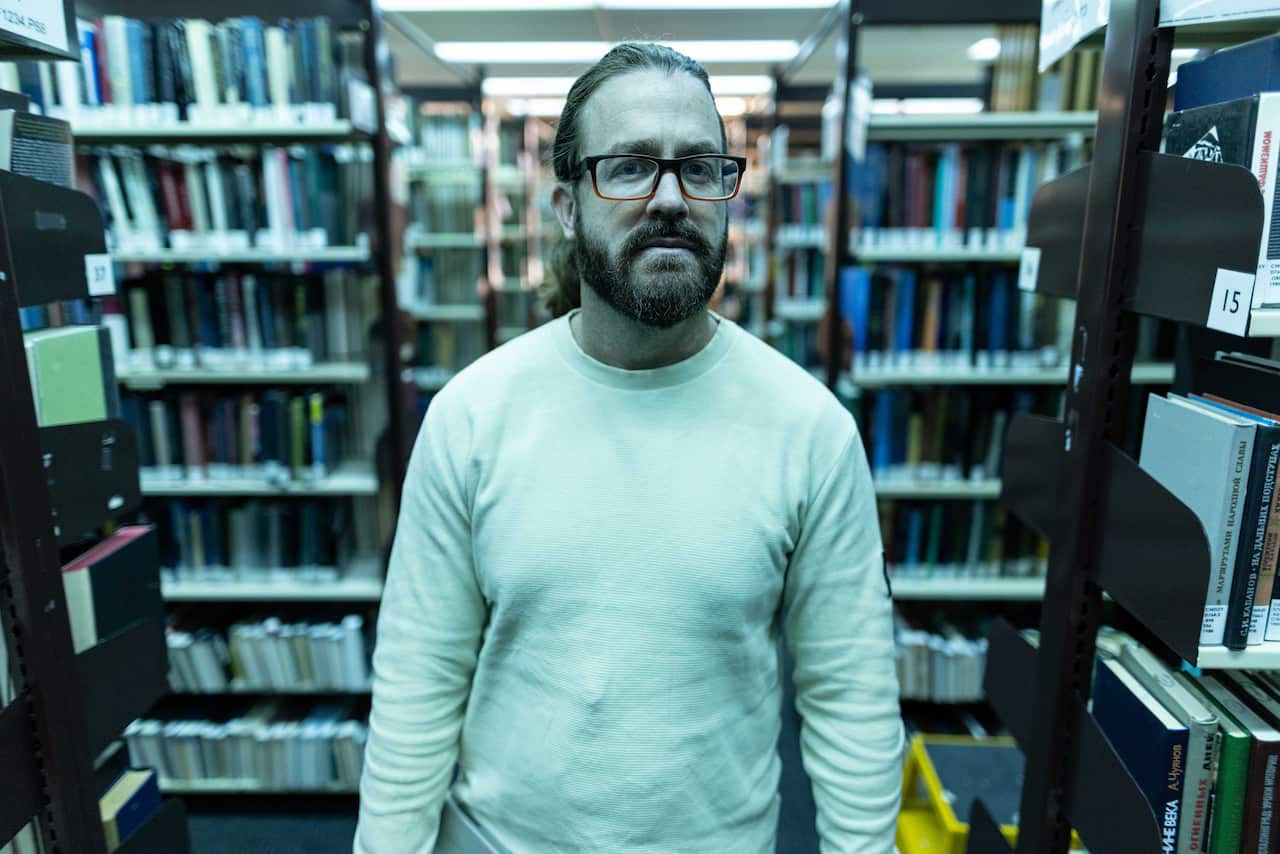
He believes the Blue Zones story is less about remarkable longevity and more about poor record-keeping.
"We don't know who the oldest people in the world are," he said.
"There's no machine that I can take someone to … put them inside it and it says, 'Oh, they're 42.' 'Oh, they're 105.'
"So if the paperwork is consistently wrong, we just have no idea."
Saul's work points to a scandal in Greece, where audits of pension records found at least 72 per cent of the country's 9,000 registered centenarians were already dead. Their pensions were still being collected by relatives.
"The Greek ministry involved said at least 2 per cent of the population was engaged in pension fraud," he says.
According to Saul, this isn't evidence against Ikarians specifically but instead against the record-keeping systems behind claims of extreme longevity across much of the world.
But Saul's own research is still in preprint — meaning it hasn't been published in a scientific journal. This is a criticism raised often, including by Dan Buettner.
Saul says his paper has been peer reviewed "triple the normal amount", and that it hasn't been published because many in his field can't accept a popular idea might be wrong.
But since this paper hasn't yet been held to the same standards he demands of others, I ask him if he ever wonders if he's the one who's got it wrong?
"No, because I would have every demographer in the world telling me," he says.
Record keeping on Ikaria
Ikaria's mayor, Fanourios Karoutsos, rejects the pension fraud claims.
"There was never such an example or such a case here," he said. He says local records were rigorously maintained and deaths properly registered. He says he can't show me the documents because privacy law forbids it but insists, "They are genuine."
Another element of longevity is healthcare: that people aren't just living long lives, but living long and healthy lives.
Dan Buettner points to Ikaria's reported rarity of dementia as further evidence of his broader argument that environment outweighs genetics.
Dr Gregoris, the island's only orthopaedic surgeon, is more cautious. He says the island lacks the resources to regularly screen older residents for dementia.
"In Ikaria, we haven't tested a lot of this. So probably we don't know," he says.
The debate of Blue Zones
Dan Buettner was given the opportunity to respond to Saul Newman's claims by SBS Dateline.
In a statement, he said: "The Blue Zones findings are based on more than two decades of demographic and scientific research, with methods and conclusions documented in peer-reviewed literature and examined by independent researchers.
"Age validation and record-keeping have already been carefully investigated and addressed.
"Presenting conspiracy theories or allegations that have already been disproven as equivalent to a large, well-established body of evidence is misleading to the public."
Saul Newman was given the opportunity to respond and said in a statement: "I was hired into the best demographic institute on earth after writing this paper, which seems like an odd reaction to a conspiracy theory."
An intergenerational community
On my final night in Ikaria, I head to a traditional Panigiri festival on the island's north. It's an event where everyone comes together to eat, talk and dance until the birds start singing.
"We don't make any profit from it," Christos tells me.
Any money made from the festival is used for community causes, like supporting a family through illness or helping repaint a house.
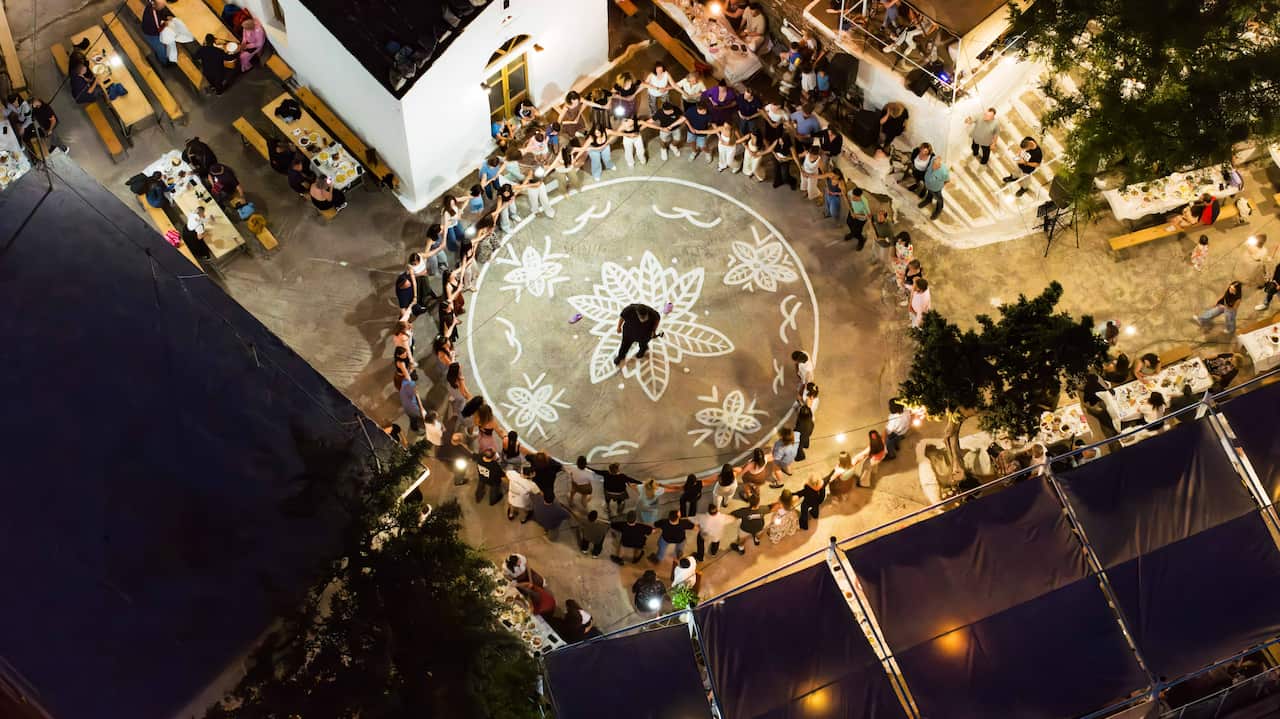
"We do not have any gap generations here," he says. "From two years old to 90 years old, they're sitting at the same table."
I still don't know if Ikarians live longer than anyone else. But I do know that no one at that Panigiri was overly concerned with the answer to that question.
Some people travel to places like Ikaria hoping to find a better version of themselves, something they can bottle and bring home.
But nobody I met seemed overly focused on working on themselves. They were more invested in one another.
Watch your favourite Dateline episodes around the clock on SBS On Demand's dedicated Dateline channel. For the latest from SBS News, download our app and subscribe to our newsletter.

Dateline is an award-winning Australian, international documentary series airing for over 40 years. Each week Dateline scours the globe to bring you a world of daring stories. Read more about Dateline

Have a story or comment? Contact Us







