
Watch South Africa's Slay Queens now on SBS On Demand.
This article includes references to sexual assault and trafficking.
Habiba Makgatho is getting ready for a night out in Sandton, the wealthiest district in Johannesburg.
In front of a mirror, she presses on a pair of false lashes and slips on a faux fur coat. On the table beside her sits a designer handbag.
News that makes sense
Your trusted source for staying up-to-date with the world around you. Get free daily news updates and analysis, straight to your inbox.
Tonight, she's on the hunt.
Habiba calls herself a "slay queen" — slang for a young South African woman who openly seeks out wealthy older men to fund her luxury lifestyle. For Habiba, the men she dates are largely senior politicians.
"I'm young and beautiful. I'm dressed up and it feels like I have something that they want."
For Habiba, that only means one thing: "Men, they want sex. Either you sell it or you give it for free."
But she rejects the idea that slay queens are sex workers.
"There are many girls who are slay queens, but they are not selling their body," she says.
Instead, she describes the arrangement like a social contract.
"You give them your fame, they give you money," she explains.
In other words: everyone knows the deal.
Romance — and receipts
Across metropolitan cities like Johannesburg, the slay queen phenomenon has shaken up the dating scene. It's been particularly elevated by social media, where glamorous young women post on Instagram and TikTok with designer handbags, luxury cars and expensive apartments. Often, they openly credit their wealthy older partners — known locally as "blessers" — for funding the lifestyle.
To their fans and followers, slay queens are unapologetic entrepreneurs simply leveraging their good looks to climb a social — and economic — ladder.
To their critics, they represent a new kind of transactional dating culture that has become a pain point for many South African bachelors.
Some have begun complaining that casual encounters with women are increasingly followed by the expectation of 'mavuso', a colloquial term referring to money given to a woman the morning after sex.
One married man, who spoke anonymously, says those expectations have made men vulnerable to scams and blackmail.
"If you're going to go spend the night with a woman, automatically the next morning you must give her money," he says.
"You'll be forced to make that payment because failure to make it … [means] a rape case will be reported against you."
He says he met a young woman in a club who seemed independent and successful, but after checking into a hotel together, he alleged he was drugged, and that she had used his fingerprint to transfer money out of his bank account.
"Slay queens are very, very dangerous," he says. "It’s more like a virus."
He also claimed slay queens will sometimes threaten to reveal a man's infidelity.
"If they did not manage to rob you, they can do anything to extort money from you. 'I'm going to tell the world about you', or, 'I'm going to tell your wife.'"
In Habiba's experience, this system only exists because of mutual interest in the arrangement.
"It's like an exchange," she says. "They are all targeting each other."
The promise of luxury
Habiba's assets are a testament to why the lifestyle can be so alluring. She says one of her blessers even bought her an apartment.
In South Africa, where more than a third of the population lives below the poverty line, it's an attractive prospect.
"You end up having a life that even a teacher in South Africa cannot afford, just because of your looks," she says.
But while good looks can reel in a seemingly glamorous life, the "slay queen" lifestyle conceals a dangerous reality for some South African women and girls. The pursuit of transactional relationships, particularly for those living in poverty, can ultimately lead to a heightened risk of violence, abduction and trafficking.
South Africa remains one of the most dangerous places in the world to be a woman, with more than one in three women having experienced physical and/or sexual violence in their lifetime, according to 2024 data published by South Africa's Human Sciences Research Council.
The latest national police statistics show an average of 115 rapes were reported each day in 2024/25.
The girls who disappear
Leonardo Green spends his days searching for girls who disappear.
He runs the National Neighbourhood Watch and Missing Persons Unit, a volunteer group that works with police to track down missing women and girls.
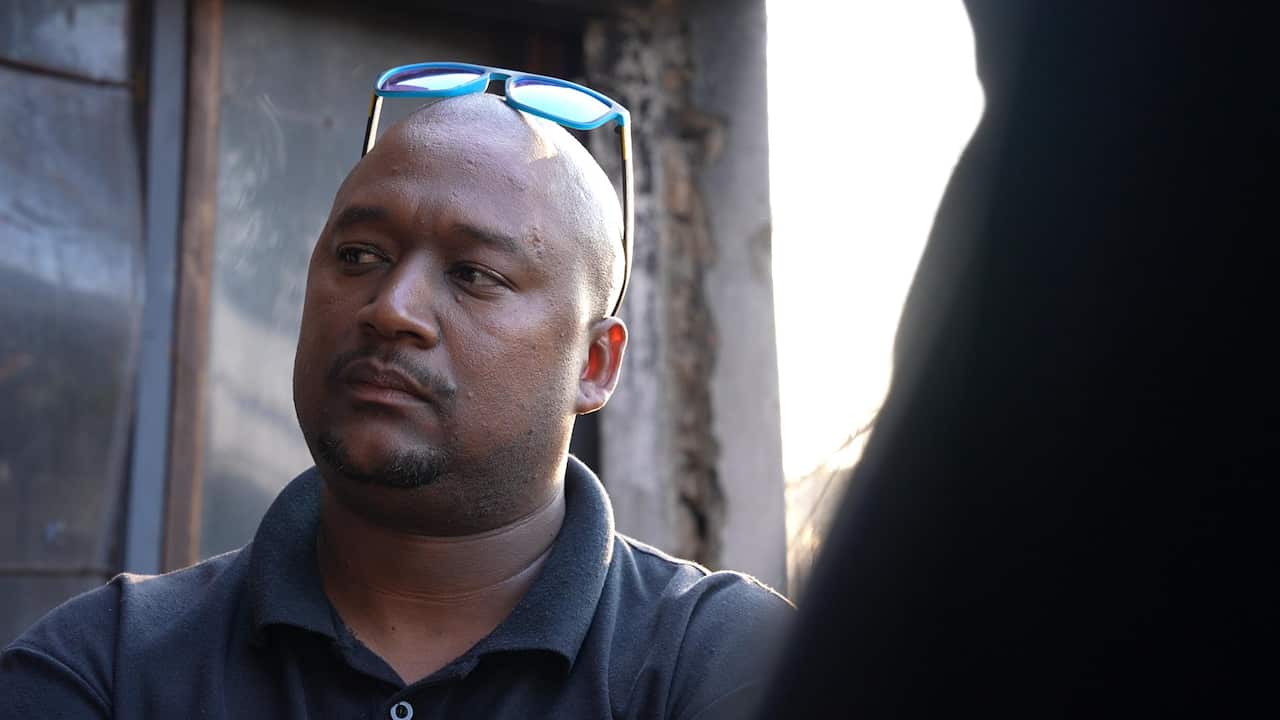
His team regularly scours abandoned buildings in neighbourhoods like Rosettenville, which has high gang activity.
Often, what results are horror stories of women tricked and trafficked, with little hope of rescue.
"This area is well known for child trafficking, human trafficking, sex slaves," he says.
In one case, Green said he found 15 girls drugged and held in two rooms of a building.
For Green, a clear pattern has emerged. He says many of the cases he pursues start in the same place: with the promise of security and a better life.
"These girls were definitely taken advantage of and were probably promised something lucrative or something beautiful," Green says.
Despite the potential dangers of those promises, many are still willing to take the risk to their lives for a better livelihood.
Escaping Winterveld
Habiba understands better than most why young women are tempted by that dream.
She grew up in Winterveld, a town originally created as a settlement during apartheid to host black residents who were forcibly removed from the city of Pretoria. Her mother and grandmother still live there, and are raising Habiba's children. Habiba is the main provider for her family.
"This area — yuck — there is no hope," she says of her childhood home.
Winterveld and its broader municipal area face an unemployment crisis — with more than a third of residents without work — so for Habiba and others like her, relationships with wealthy men offered a pathway out.
But that escape has come at a cost.
"I experience a lot of emotional, physical and financial abuse," she says.
The cost of the slay queen dream
Despite the risks, Habiba continues to promote the lifestyle online and through a podcast. She also now connects other young women with wealthy older men.
For many followers, the appeal is obvious: a chance to escape poverty and access the wealth displayed across social media. But the reality can be devastating.
One aspiring slay queen featured on Habiba's podcast, Thebiso, says she was just 16 when she began meeting older men.
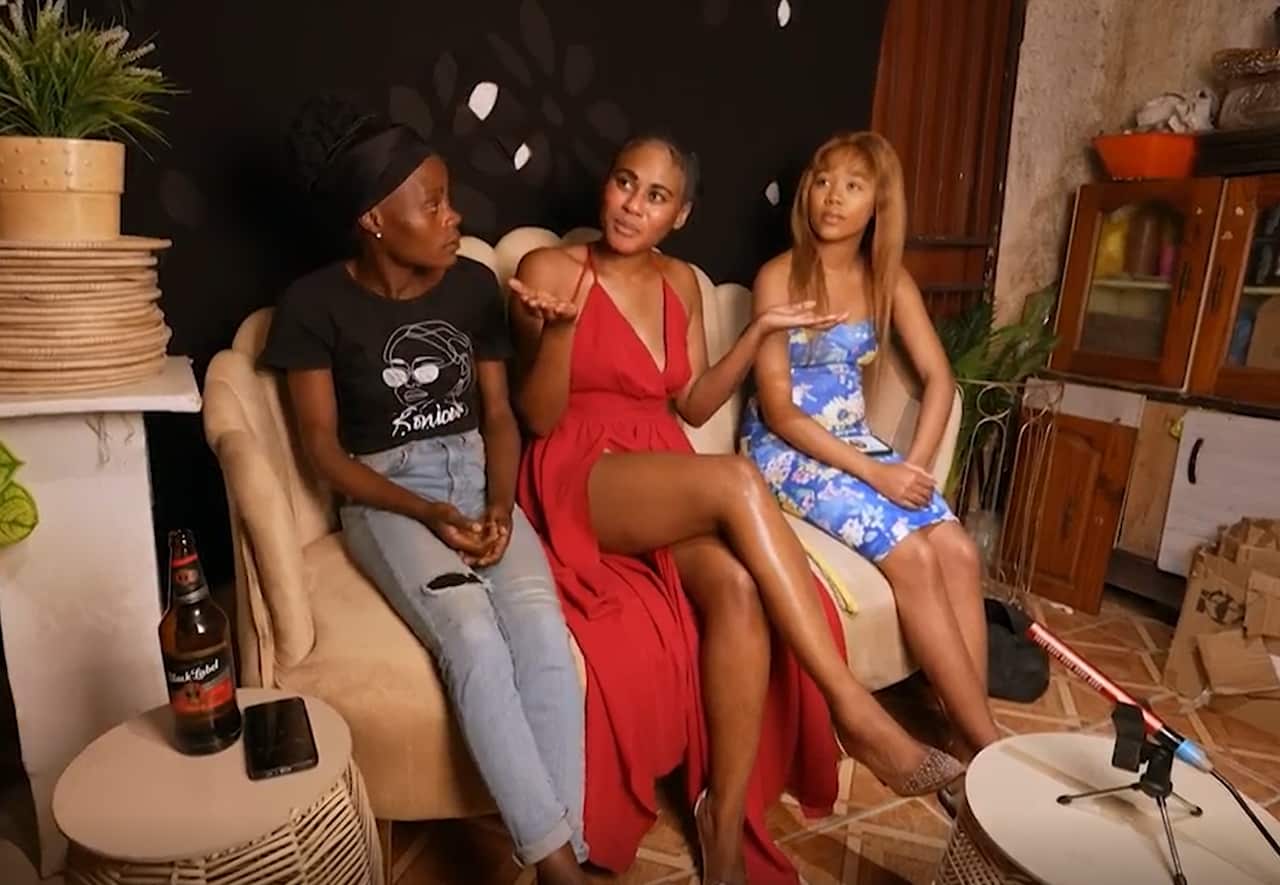
Not long after, she contracted HIV from a man more than thirty years older than her.
"I wanted to be seen just like other people," she says quietly.
"But in the end I got diseases and I don't have a life."
If you or someone you know is impacted by sexual assault, call 1800RESPECT on 1800 737 732, text 0458 737 732, or visit 1800RESPECT.org.au. In an emergency, call 000.
Readers seeking support can ring Lifeline crisis support on 13 11 14 or text 0477 13 11 14, Suicide Call Back Service on 1300 659 467 and Kids Helpline on 1800 55 1800 (for young people aged 5 to 25). More information is available at beyondblue.org.au and lifeline.org.au.
Anyone seeking information or support relating to sexual abuse can contact Bravehearts on 1800 272 831 or Blue Knot on 1300 657 380.

Dateline is an award-winning Australian, international documentary series airing for over 40 years. Each week Dateline scours the globe to bring you a world of daring stories. Read more about Dateline

Have a story or comment? Contact Us







