
It was once a dream of many: work hard and retire in your 60s. Now, more Australians are employed into their 70s, 80s and even 90s. Insight meets those still working by choice, those who can't afford to stop, and asks what happens when you keep working later in life? Watch Insight episode Working Later in Life on SBS On Demand.
I was devastated when I turned 65.
I was working as an interpreter for a government telephone interpreter service, and at the time, 65 was the compulsory retirement age from the public service.
My body and mind felt young — I was perfectly capable of work — and people needed my help. I couldn't believe that an arbitrary age meant I had to stop working full-time.
News that makes sense
Your trusted source for staying up-to-date with the world around you. Get free daily news updates and analysis, straight to your inbox.
I went to the union and to a solicitor, but they couldn't help me, so I had to retire — kicking and screaming on my way out. But I found a workaround: freelance work.
I'm now 94 years old, interpreting and translating in both the private and public sectors (including Centrelink), and have no plans to retire soon.
A natural path
Becoming an interpreter was always a natural progression for me; I speak a few languages, and I love dealing with people.
I was born and raised for the first 12 years of my life in Hungary. But in 1945, near the end of World War Two, my parents and I fled as refugees to Germany after the Soviet Red Army invaded and occupied our country.
I already knew Hungarian, but I learnt German, English, Latin and French through my six years of schooling in Germany, which have been very helpful to know.

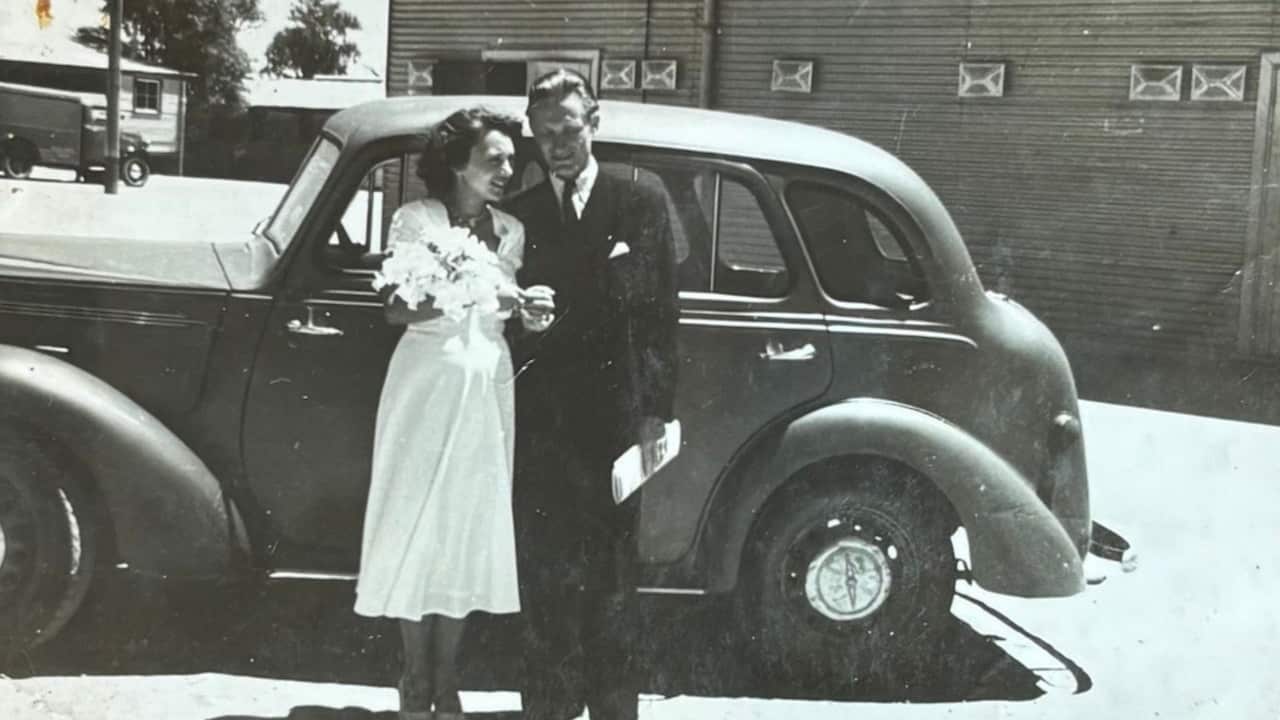
I arrived in Melbourne with my family in January 1951, after 65 days of travel, as displaced persons from the war.
I was 18 years old and still remember feeling a heat I had never experienced in my life when we were taken to Bonegilla, an ex-army camp near Albury in northern Victoria that was then used as a camp to process post-war European migrants.
Because the camp was full, we were put in an army tent — and that is how I started my life in Australia.
Finding my purpose
It wasn't until the late 1950s, when I was in my late 20s, a mother and working an admin role, that my interpreting career began.
The 1956 Hungarian Revolution brought a wave of Hungarian migrants to Australia in the years that followed. But there was no community interpreter service here at the time, and people needed help.
So I stepped forward as an interpreter. I believe it's important to be understood as a person — to say what you want to say and be able to express yourself. And if you don't speak the language of a place, that's very hard to do.
One memory that stands out in my career was working with the Department of Immigration's telephone interpreter service, when a phone call from a hospital somewhere in rural Western Australia came through late one evening.
A young woman was in labour, and I had to interpret for her and the medical team: telling her when to push, when not to push and that she was going to get through it.
Then, when she had given birth, I had to tell her husband he was a father to a "lovely baby boy".
It was a special moment, and I felt privileged that my work let me be a part of it.
Across my six-decade-long career, I’ve also been involved in starting several of Australia's interpreting and translating services.
I was one of the founding members of the Telephone Community Interpreting Service and Australian Institute of Interpreters and Translators, and I helped set up the National Accreditation Authority for Translators and Interpreters — as well as the Hungarian branch of Catholic aid organisation Caritas.
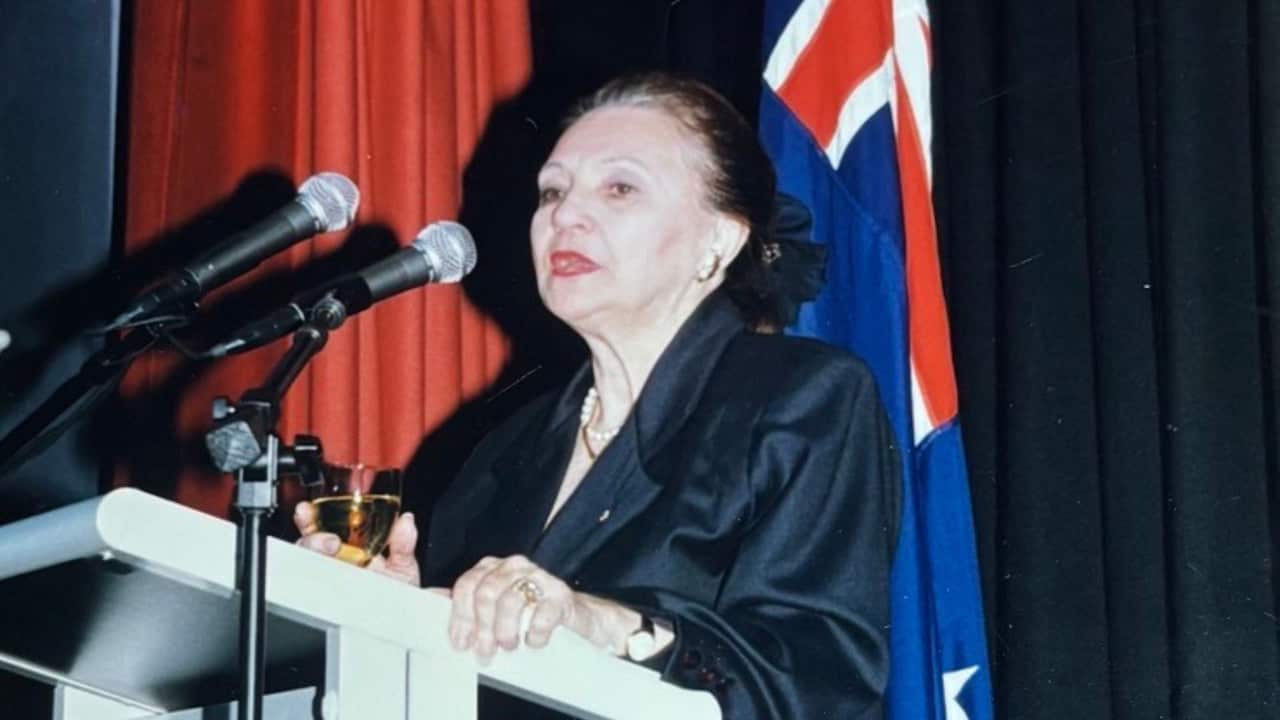
It's been a privilege to help others feel understood, and I especially feel connected with the Hungarian communities both here and abroad.
Some Hungarian Australians have somewhat adopted me as their mother, which is a role I'm happy to fulfil.
I also chaired the Hungarian Olympic Committee during the 2000 Sydney Games and served as the Ethnic Affairs Commissioner of NSW. And I have been awarded the British Empire Medal, Order of Australia Medal, and this year, the Interpreters and Translators Medal.
If my mind works, I still work
At 94, I'm still working five days a week — usually three or four hours a day. I don't have any plans to stop working, but I know it'll be time to do so when my mind gives up.
I try to work as much as I can and feel energised by it.
If my mind works, I will still work.
I used to travel a lot for work as I mostly interpreted onsite. I worked in Cairns, Townsville and Brisbane in Queensland; in the courts in Adelaide; in Broken Hill and Lightning Ridge in rural NSW — all over the place.
But these days, I mostly work over the phone. I still drive, so I work onsite if I can find a parking spot — otherwise I do a lot of telephone and video call interpreting.
Although German was like a mother tongue to me, it's become rusty; so, I now only interpret in Hungarian and English Hungarian.
I get a pension and my freelance work does mean extra income — not as much as when I worked full-time, but it's still very good.
And my work keeps me busy.
In all truth, I wouldn't know what to do with my mind if I stopped working.
And I know that I'm good at my job and I'm needed.
Watch your favourite Insight episodes around the clock on SBS On Demand's dedicated Insight channel. For the latest from SBS News, download our app and subscribe to our newsletter.

Insight is Australia's leading forum for debate and powerful first-person stories offering a unique perspective on the way we live. Read more about Insight

Have a story or comment? Contact Us







