This audio is voiced by AI and may occasionally mispronounce words.
Share your feedback and help us improve this feature. Read more about how we use AI at SBS here.
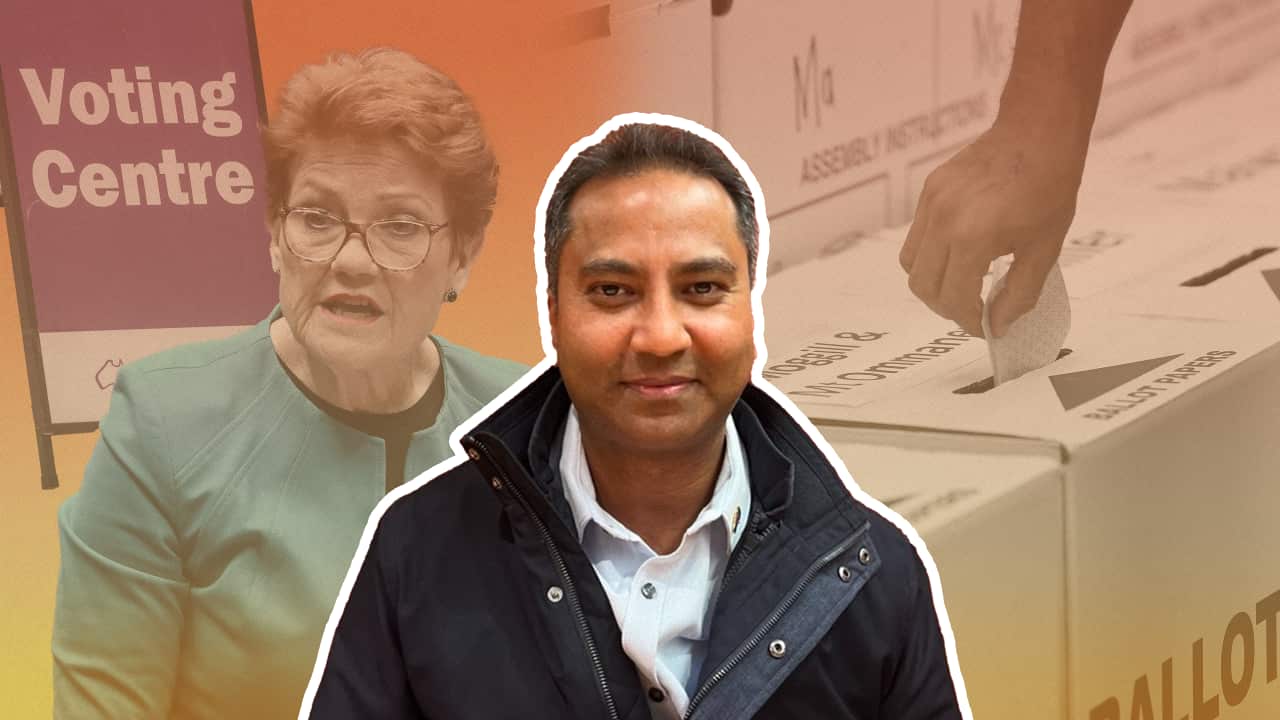
Pauline Hanson's One Nation is polling stronger than ever and is presenting a genuine threat to the Coalition. Insight asks voters from across the political spectrum to 'please explain' who they're voting for, and why, in episode One Nation Wave on SBS On Demand.
One Nation supporter Ronil Prasad moved to Australia with his family from Fiji following a military coup there 40 years ago.
"We came here to be Australian, and I call myself Australian — I don't call myself Fijian or Indian," he told Insight.
News that makes sense
Your trusted source for staying up-to-date with the world around you. Get free daily news updates and analysis, straight to your inbox.
Today, the Melbourne small business owner proudly flies the Australian flag in his front yard, and says Pauline Hanson is "fantastic" because she "loves her own country so much — [and] that's not racist".
"It's like you come to this country, embrace the Australian way of living, or you know what, stay where you are — that's my view."
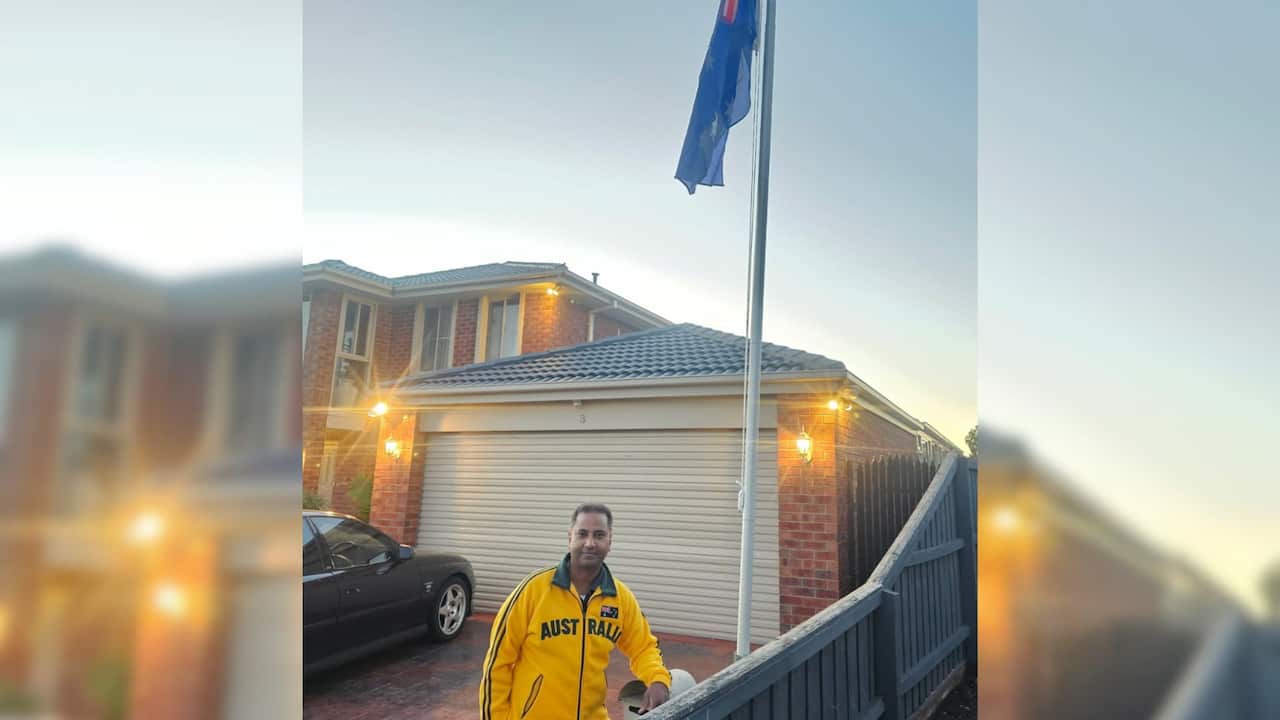
Ronil says he understands how some might think Hanson's party promotes racist ideas, but believes "she [is] really only trying to protect her own country".
"Like, if someone comes into my house, I will protect my house ..." he said.
"If they're bringing different values into my house and trying to teach my kids something different ... you're not welcome ... "
As a migrant, Rohil admits some people are surprised to hear he supports One Nation, but he stands firm in his plans to support the right-wing party at the next federal election.
'No one political party should have that right'
Anti-racism activist Neha Madhok and their family migrated from India to Sydney in 1991. The Labor-Greens swing voter says they have a vivid memory from age six of watching Pauline Hanson's 1996 first speech to federal parliament when she famously said, "I'm afraid we're in danger of being swamped by Asians."
"Later that night, when my parents thought that I was asleep and they were talking ... about possibly needing to leave Australia," Neha told Insight.
"And I just remember feeling when they said that because I just thought, I can't go anywhere else. This is the only home I've ever known."
Neha says that as they grew up, they came to realise that: "we can never let someone decide whether myself — or anyone in this country — is welcome or not. No one person, no one political party should have that right."
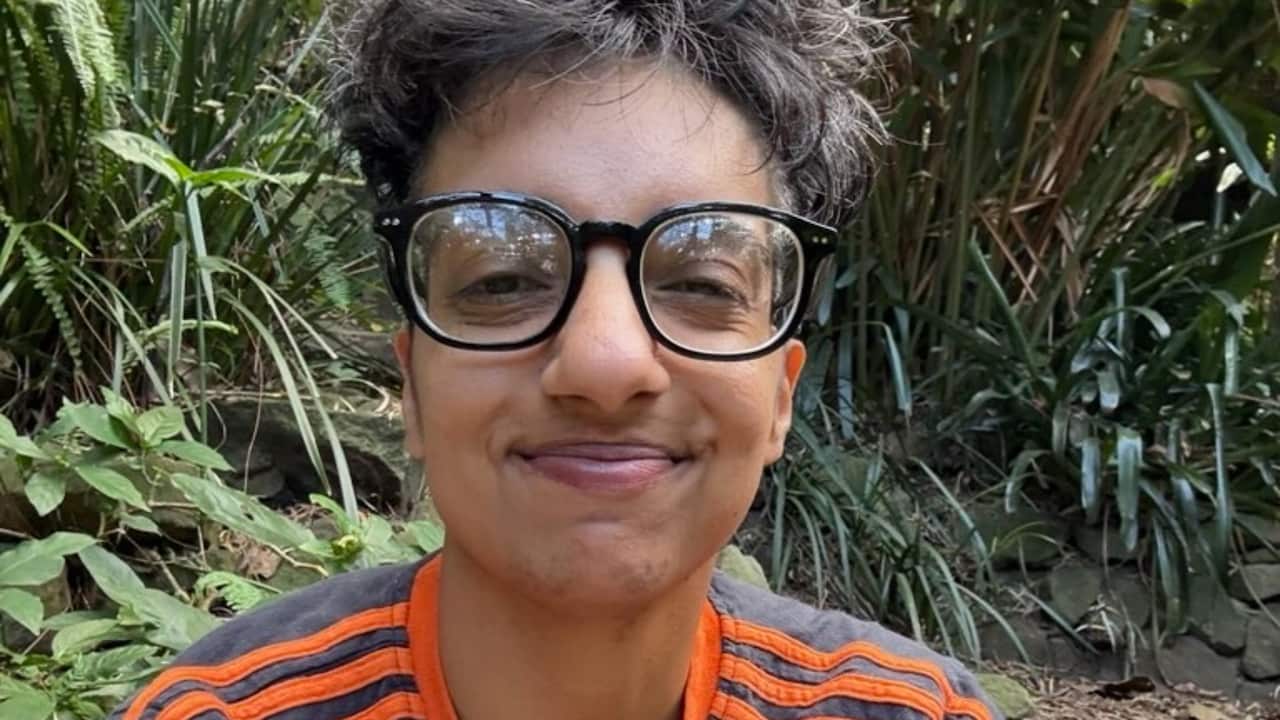
Neha doesn't agree with One Nation's political stance on most issues but thinks that there is more common ground between One Nation voters, left-leaning voters and migrants than people might realise.
"We all want to see great services for Australians. I think we all want housing that we can all afford to live in," they said.
Neha says that when someone is saying things such as "those immigrants are taking our jobs" or "they're taking our housing", it's misdirected.
"But what is true is that that person can't access that service… that's what they're angry about," Neha said.
"They're not as angry about the Syrian refugee who maybe can access that service for some reason ... They're angry that they're paying their tax dollars ... and they are not getting access to the services that they deserve."
Rising support for One Nation
One Nation secured a seat in the House of Representatives for the first time in its 29-year history after its candidate, David Farley, won the seat of Farrer, in south-western NSW, in the recent by-election.
At the South Australian election in March, One Nation picked up four lower house seats.
At the 2025 federal election, One Nation received 6.4 per cent of first preference votes. Kos Samaras, a pollster with Redbridge Group, said recent polls show this first-preference support has risen to about 25 per cent or more.
Samaras, a former Labor Party strategist, said these nationwide surveys "mask" the strength One Nation has in specific seats around the country — describing the Farrer victory as a "mid-level result".
"There are other federal seats, particularly in regional Australia, that will most likely exceed 50 per cent of the primary vote for One Nation," Samaras told Insight.
Many of One Nation's voters have historically voted for the Coalition, and Samaras said that if nothing changes soon in Australia's political landscape, One Nation will "dominate the regions [as the opposition], and Labor will dominate the cities".
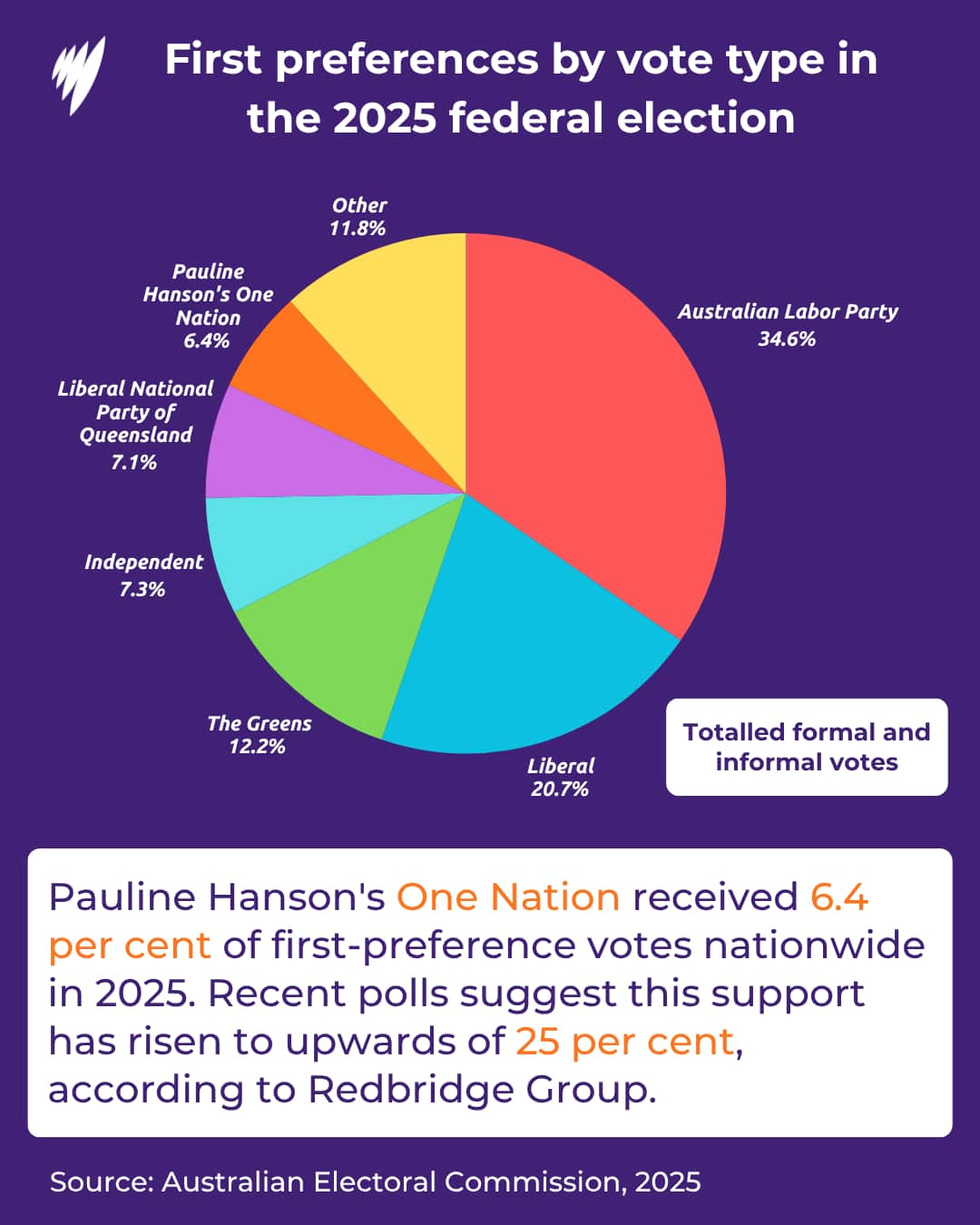
Redbridge's polling found that the average One Nation voter often comes from a working-class background and lives in regional areas, where infrastructure differs from that in metropolitan areas.
Samaras also describes the average One Nation voter as a member of the sandwich generation: someone in their 40s or 50s who is simultaneously caring for their adolescent children and aging parents, which often puts a financial strain on the family.
While Hanson has a reputation among her detractors for promoting anti-immigration sentiments, Samaras said polling shows that feelings of economic frustration and political abandonment are the primary reasons voters are turning to One Nation.
"The epicentre of all of it, the frustration, is a sense that they've been voting for a political party for a long time — and they're going backwards," he said.
"There is an epiphany amongst voters that they're sick of the established political system ... The main issue is they're sick of the duopoly."
Common ground across the political spectrum
Queensland cattleman Jock doesn't agree with all of One Nation's policies, but he does support the party because he believes "they can't do any worse" than the National Party, which represents his area.
Moving around regional Australia in his youth, the 33-year-old says he "never ended up on the electoral roll" and only voted for the first time last year. Like Ronil, Jock, intends to vote for One Nation at the next election because he wants change.
"I just want to see the break-up of the two-party system — and for future planning," he said.
"Stop having knee-jerk reactions every time the GDP falls or rises. Do something about it and put a plan in place. Like, stick to it."
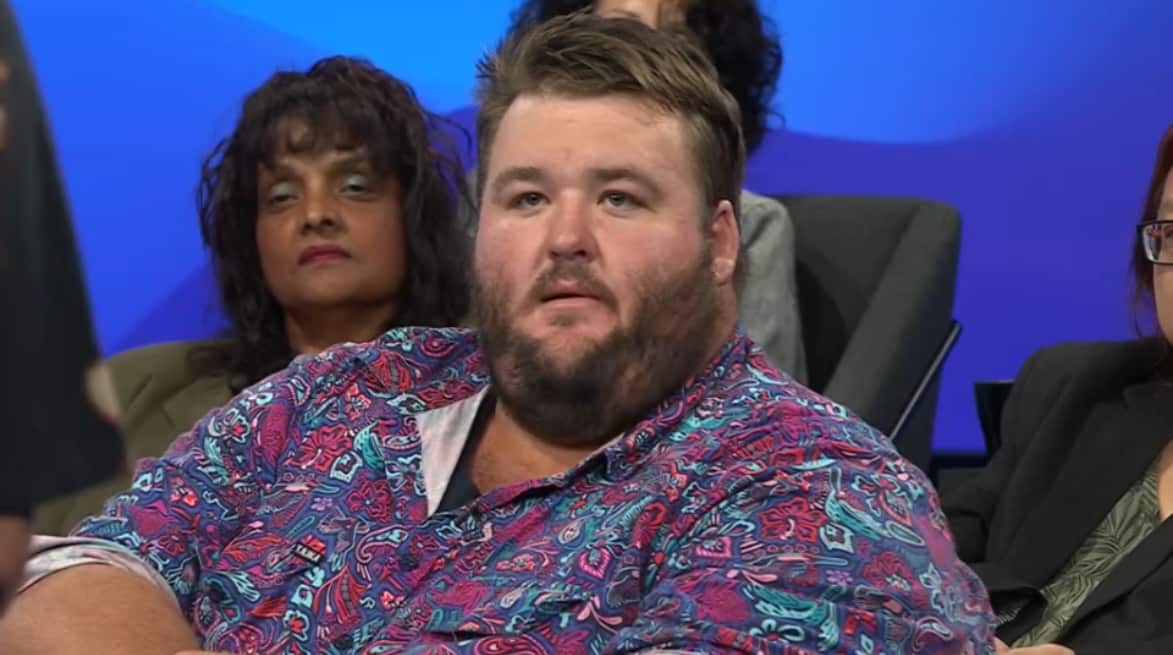
Jock, who now posts political commentary videos online, says he was drawn to Pauline Hanson for her consistency.
"She's never changed on very many things ... There's a lot of things that I do agree with her. There's a lot that I don't ..." Jock told Insight.
Hanson has made many comments over her three-decade-long political career that have been heavily criticised. In February, she suggested there were no "good" Muslims, which she partially apologised for later.
Jock disagrees with Hanson, saying he had a problem with her statement.
"I've worked in and around the meatworks industry a lot and openly support [the Islamic practice of] halal slaughter," Jock said.
From right to left
Andrew Lewis identifies with the political left but sympathises with the frustrations of people who are turning to One Nation.
Andrew says he struggled with self-confidence after being bullied in high school, and as a young man felt he was being told: "because I'm white, because I'm a man, I'm flawed as a human being. I'm bound to say the wrong thing".
The Adelaide resident told Insight that arguing with progressive voices online helped him develop confidence, and he was drawn to conservative political views such as those of Canadian right-wing commentator Jordan Peterson.
It was only when Andrew increasingly saw content that clashed with his fundamental personal values, and that he felt the right didn't care about First Nations peoples, that he consciously stepped away from conservative online spaces.
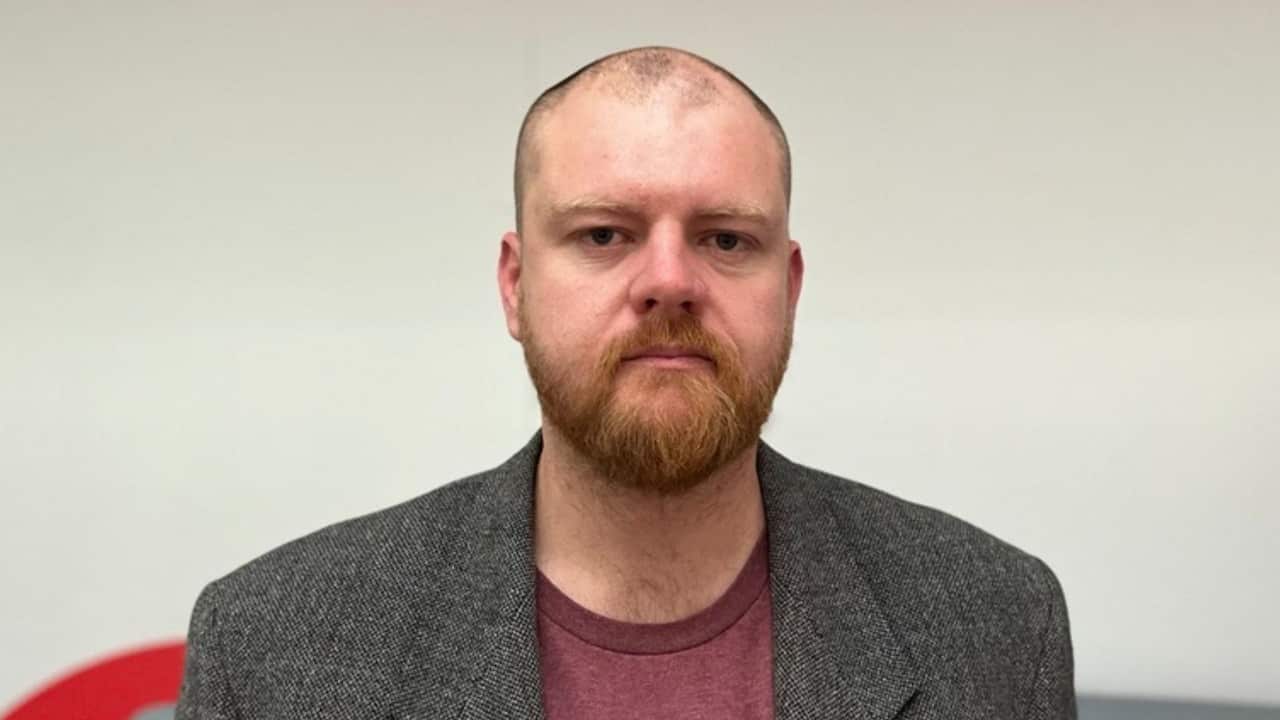
Andrew thinks some people are turning to One Nation because he believes its messaging "makes them feel better about who they are — their identity".
"Pauline Hanson is a bit like the kid who's running for class president and goes, ‘I'm going to put vending machines at the front of every classroom'," Andrew said.
"And all the kids ... vote for it — it doesn't matter if she can do it."
Diversity of parties and opinions
Sydney-based Adrian Juarez is also sceptical One Nation can deliver on the change many of its supporters are hoping for.
"We're all feeling the cost-of-living pressures. We're all feeling housing affordability issues," he told Insight.
"One Nation may choose to blame that on immigration as one lever. [But] managing an economy is quite a complex thing."
Adrian, who works in banking, continues to vote for the Liberal Party, believing the Coalition manages the economy well when it's in power. Also, often preferencing the Greens, he believes it's important to have minor parties "ruffle the feathers, shake the cage up a bit," for governments to refocus what they act on.
"There's always a good, strong debate and meaningful change that does come from the diversity of parties and opinions," he said.
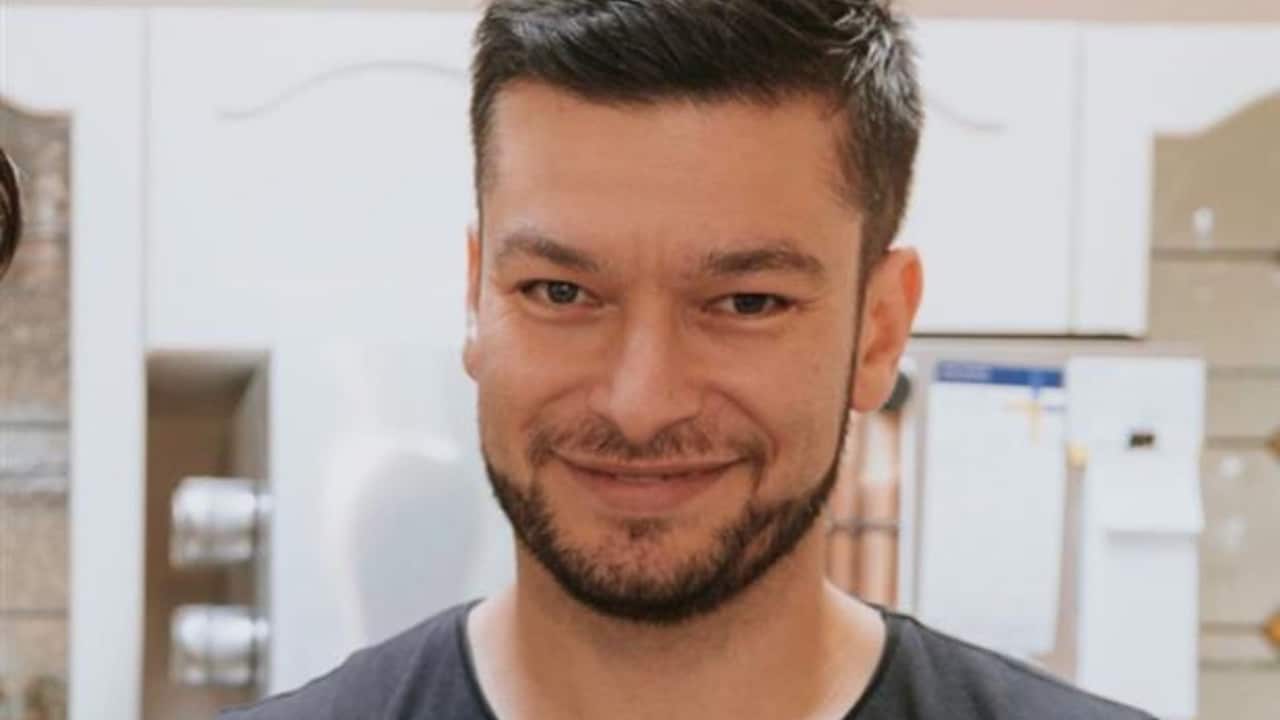
As a first-generation Australian born to Argentine migrants, Adrian says he feels well represented by the current makeup of federal parliament, but this does not include One Nation.
"One Nation is one of those parties that will never resonate with me, as an Australian," he said.
"I fundamentally believe that multiculturalism, diversity ... makes us better as individuals, as a society, as one — I don't think that's what [Pauline Hanson] means when she says, ‘One Nation'."
Watch your favourite Insight episodes around the clock on SBS On Demand's dedicated Insight channel. For the latest from SBS News, download our app and subscribe to our newsletter.

Insight is Australia's leading forum for debate and powerful first-person stories offering a unique perspective on the way we live. Read more about Insight

Have a story or comment? Contact Us







