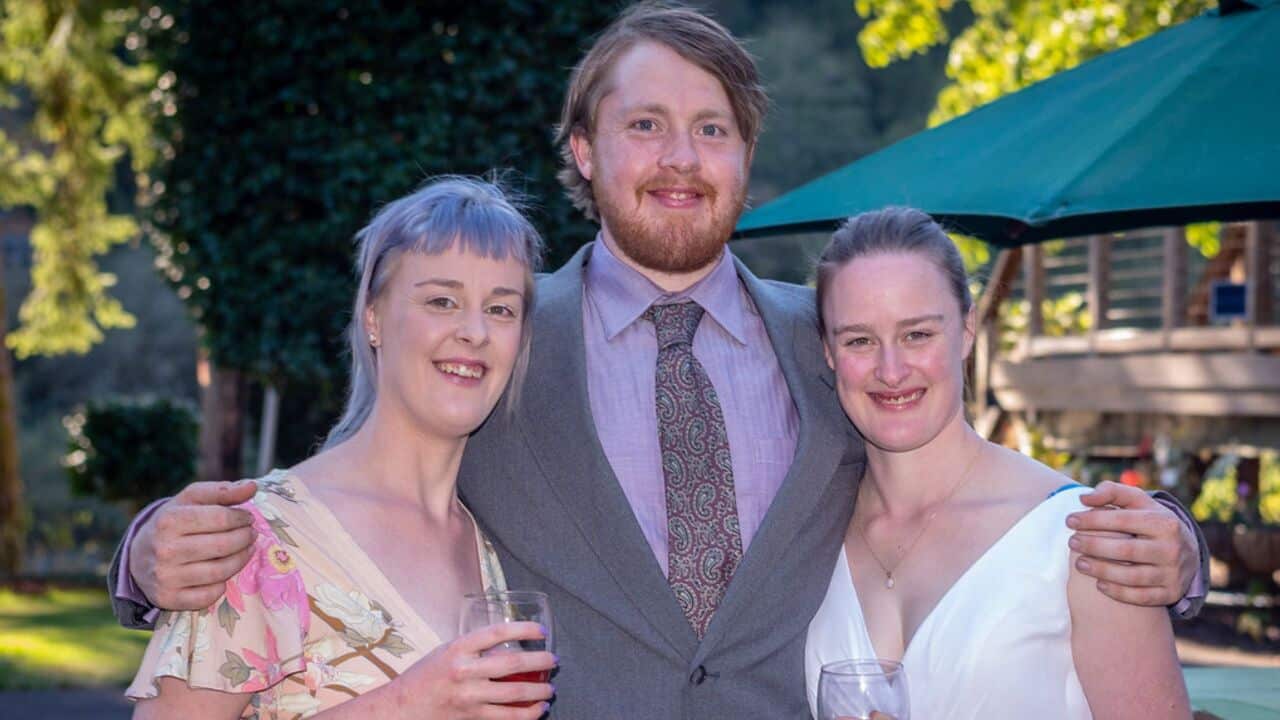
Triplets are rare, with fewer than 60 sets of triplets born in Australia each year. Insight explores what life's like for those individuals and those around them, asking how easy is it to be oneself and what happens to the broader family when triplets grow up in the mix? Watch Insight episode Triplets on SBS On Demand.
One of the most unique things about me is that I'm an identical twin but also a triplet.
The other unique thing is that out of the three of us — my brother, sister and me — I am the only one with a disability. And growing up with an identical twin gave me a direct example of what my life could have looked like had I not been disabled.
News that makes sense
Your trusted source for staying up-to-date with the world around you. Get free daily news updates and analysis, straight to your inbox.
Despite cerebral palsy being a core difference between my identical twin sister and me, we still looked the same. This often confused people.
Right after high school, I moved from our regional NSW town to Sydney for university, while my sister stayed in the area for a bit (until she made the permanent move some years later to the US).
One time when I was visiting home over the semester break, there was a guy down at the local pub who kept looking over and trying to talk to me.
I finally said: "I don't know who you are."
He was horrified and told me we had kissed before.
I then had to break it to him that I hadn't lived at home for years and that the girl he had kissed had an identical twin-triplet: me.
The benefits of being a triplet
Aside from finding out my sister's secrets and embarrassing a boy she had kissed, being an identical twin within a set of triplets came with a lot of other benefits.
I had two people permanently in my corner, and the popularity of being a triplet meant that making friends was quite easy for me.
Our identity was tied together for most of our upbringing — often referred to as "the triplets" or "Hudson One, Two, Three".
Being a triplet meant that I never missed out. For most of our childhood, I was in the thick of it with them.
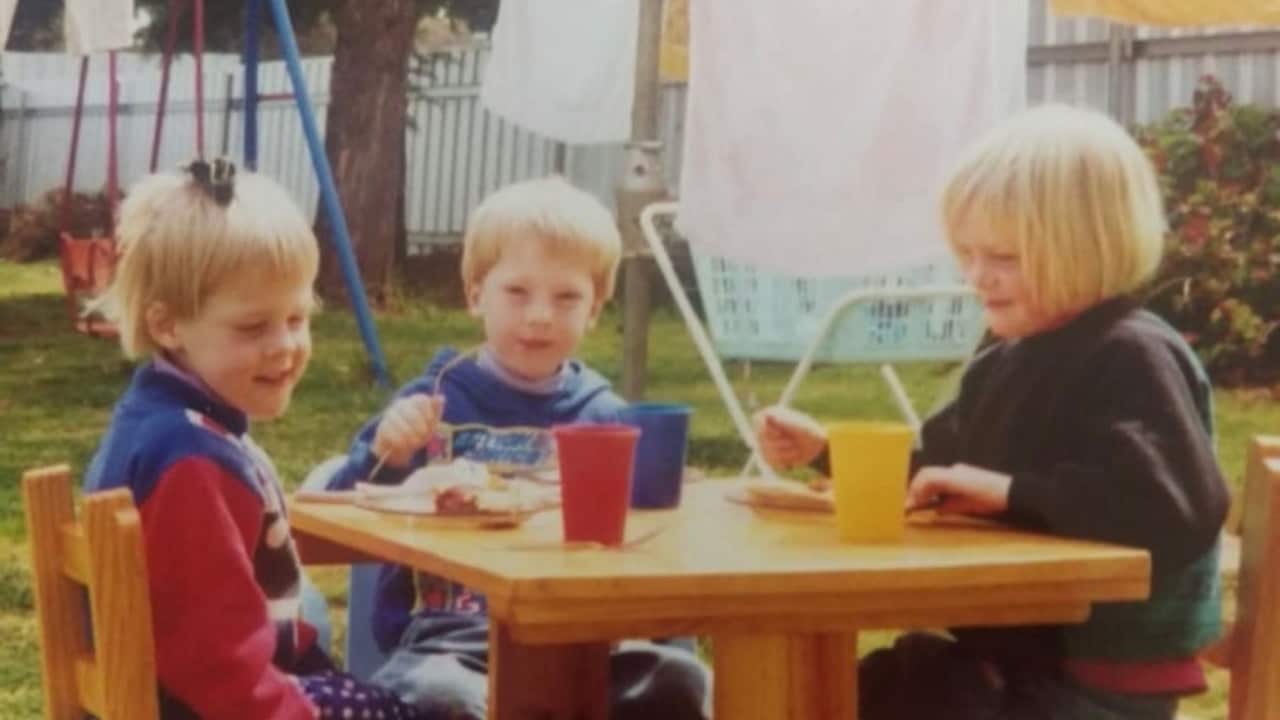
We grew up for the first years of our life in Urana, a regional NSW of no more than 300 people. We moved to Temora, a 'thriving metropolis' of 4,600 people about two hours away when we were about four years old.
I almost have no memories of the inside of our homes, as we spent so much time outside. We lived on the edge of town, and we were always across the road — exploring the sprawling paddocks with the neighbourhood kids.
We climbed through thorn bushes to gain the praise of our older sister and the other older kids. We were always busy discovering abandoned shearing sheds, digging holes and climbing rocks — only coming in at dusk.
We never really spoke in the family about my disability as a negative, and my triplets always treated me the same. It felt separate from everything else and never mattered much — until it did.
Putting the'trip' in triplet
I can't remember when I started to realise that I was different from the other two. Nor can I remember when being disabled started to truly affect me.
I wore glasses until I had my first surgery at age five to straighten a strabismus, an eye misalignment, and I always wore ankle-foot orthoses (custom-made braces that help with mobility, stability and how I walked).
I always had grazed hands and knees from falling — I put the 'trip' in triplet.
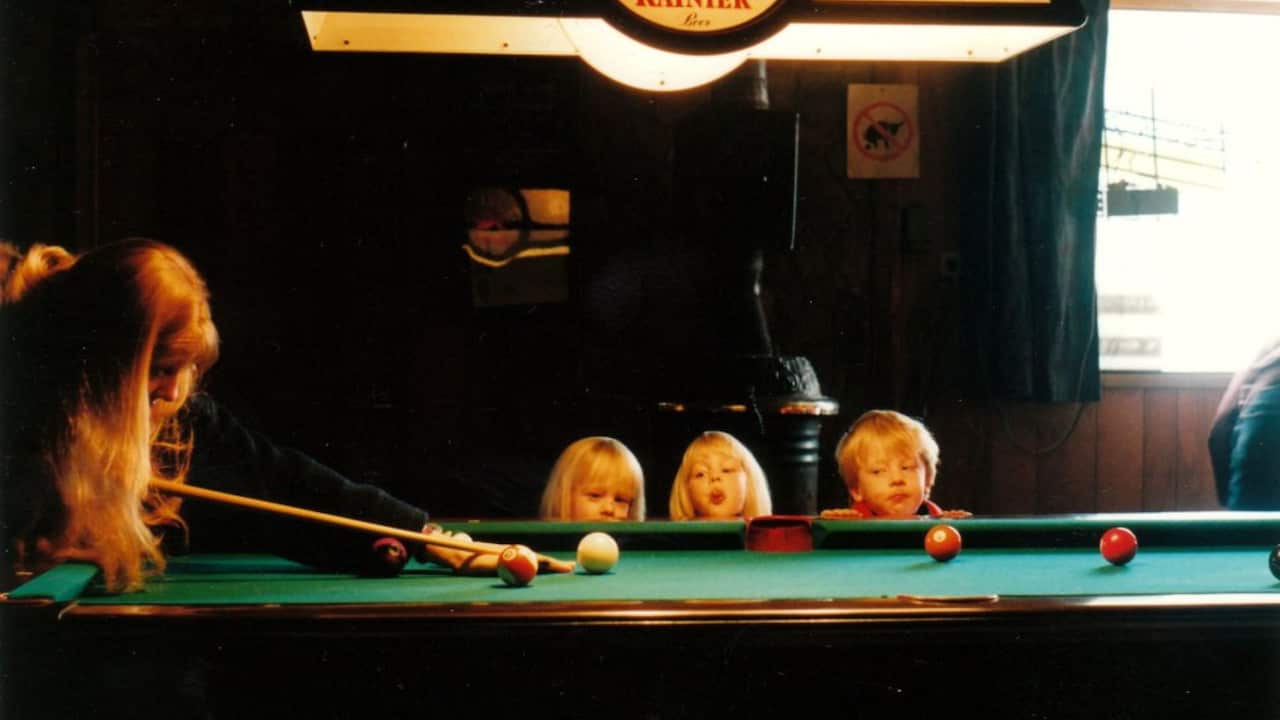
My siblings were running around; I walked on my toes and my gait (the way I moved) resembled a slow staggered gallop.
They were climbing to the highest branches in the tree and swinging off things; I was sticking to the low branches and clinging on for dear life.
They learnt how to ride bikes; I never moved past training wheels.
From participant to observer
In primary school and high school, they played every sport. Monday, volleyball; Thursday, swimming club in summer, more volleyball in the winter, Saturday morning, soccer.
In primary school, I did Riding for the Disabled, which was slow-moving people riding on even slower-moving horses.
I also did really cool classes called "gross motor skills", and at age 13 became an excellent cook of Monday's spaghetti bolognese — the dinner we had because all my siblings and dad were at the stadium for volleyball.
Sport was the biggest social currency in my hometown; I think that was my turning point as a teenager.
At 15, while nearly every kid played nearly every sport, I had Achilles tendon lengthening surgery and was learning how to walk again.
Unlike the participant I always was when I was younger, I had become an observer.
I sat in more bleachers — watching my siblings compete in sports across Australia — in my late teens than I care to think about.
I think this inadvertently put me on the path to a comedy career because I used the hours upon hours languishing to justify the comedy material about my triplets, which I would use years later.
Demystifying disability
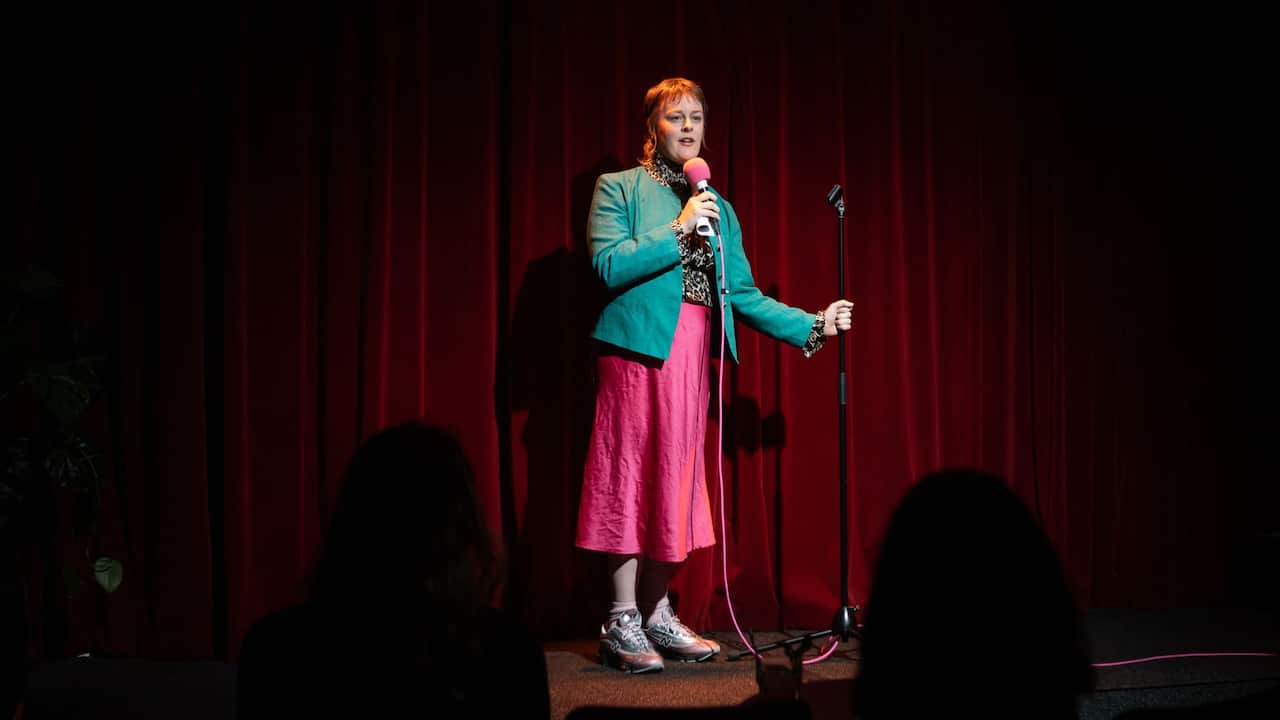
I stumbled into comedy after doing a stand-up workshop in 2019.
I did not intentionally set out to use comedy to challenge how the wider community thinks about and interacts with disability; I joke about it because it really is the funniest stuff that occurs in my life.
I don't make fun of my triplets too much ... other than holding them responsible for my brain damage that occurred when we were born and making me the 'criplet'.
Of course, it's not true — and I have run-of-the-mill cerebral palsy, but I go down that line of jokes to get to the point and give the audience something unexpected.
It also scares non-disabled people, which is a joy to deliver, especially in front of disabled audiences.
I did not intentionally set out to use comedy to challenge how the wider community thinks about and interacts with disability; I joke about it because it really is the funniest stuff that occurs in my life.Alexandra Hudson
Like being a triplet, being disabled is all I have ever known.
Being the disabled triplet is a bridge between the disabled world I'm a part of and the non-disabled world, which I observed from the front row growing up.
Now, joking about it onstage is fun, and I love comedy because I found a space where I can demystify disability — a misunderstood but inevitable human condition.
My fellow triplets are happy for me for what I do and the life I am creating — and I am happy for them for the same things.
As adults, we have evolved from being known as "the triplets" to being our own individuals. We each live in different places, and one of us annoyingly lives overseas.
Sometimes, I get sad that we live apart.
I miss the days of kicking my twin sister's bunk from below, or us two never leaving our brother alone.
But what I love more is that we each live a life that makes us happy.
Watch your favourite Insight episodes around the clock on SBS On Demand's dedicated Insight channel. For the latest from SBS News, download our app and subscribe to our newsletter.

Insight is Australia's leading forum for debate and powerful first-person stories offering a unique perspective on the way we live. Read more about Insight

Have a story or comment? Contact Us







