This audio is voiced by AI and may occasionally mispronounce words.
Share your feedback and help us improve this feature. Read more about how we use AI at SBS here.
Triplets are rare, with fewer than 60 sets of triplets born in Australia each year. Insight explores what life’s like for those individuals and those around them, asking how easy is it to be oneself and what happens to the broader family when triplets grow up in the mix? Watch Insight episode Triplets on SBS On Demand.
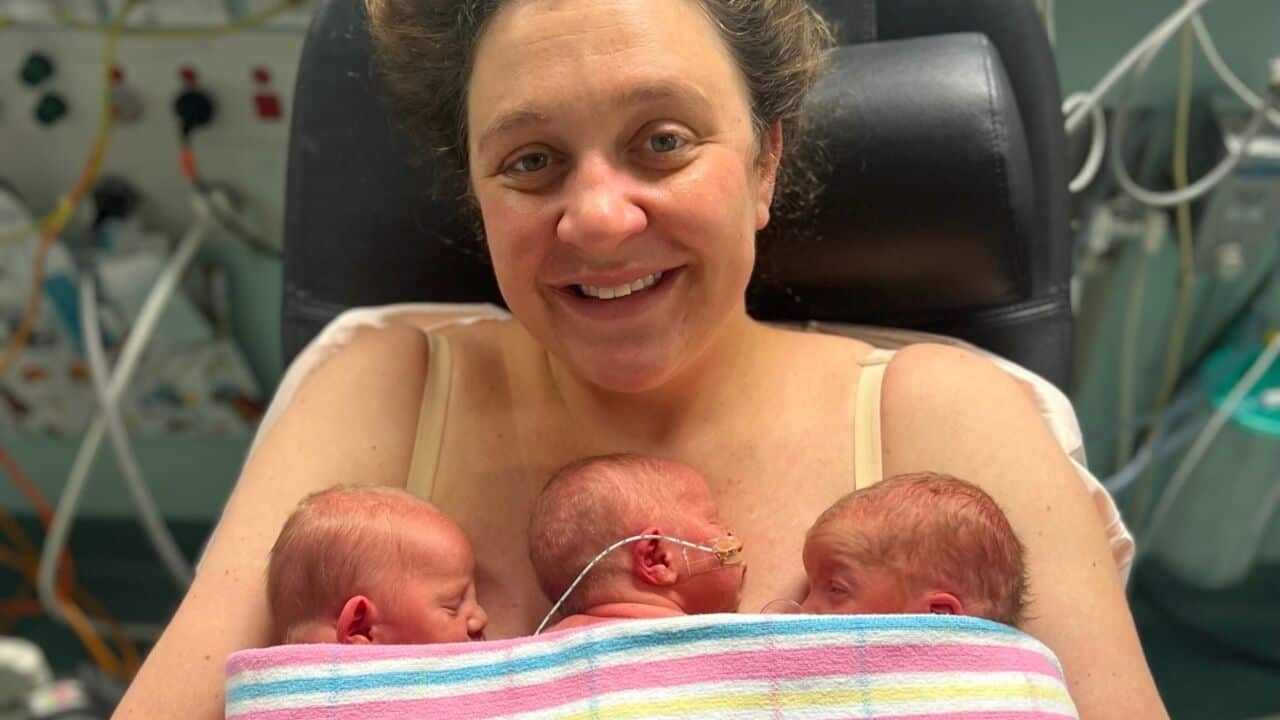
Myfanwy Schostokowski, 37, says she was not prepared for her family of three to go to six in the space of three minutes.
"Of course, I chose to have another child, but I had no idea that there was going to be two others in there," she told Insight.
News that makes sense
Your trusted source for staying up-to-date with the world around you. Get free daily news updates and analysis, straight to your inbox.
The mother of triplets and her husband rent a 2.5-bedroom apartment in Sydney, and as their family live interstate, they do not have regular in-person familial support to help with their three toddler daughters and eight-year-old son.
"I see the magic in it, but it is really overwhelming and taxing ..." Myfanwy said.
"It’s basically a military operation every day — I just don't have an army."
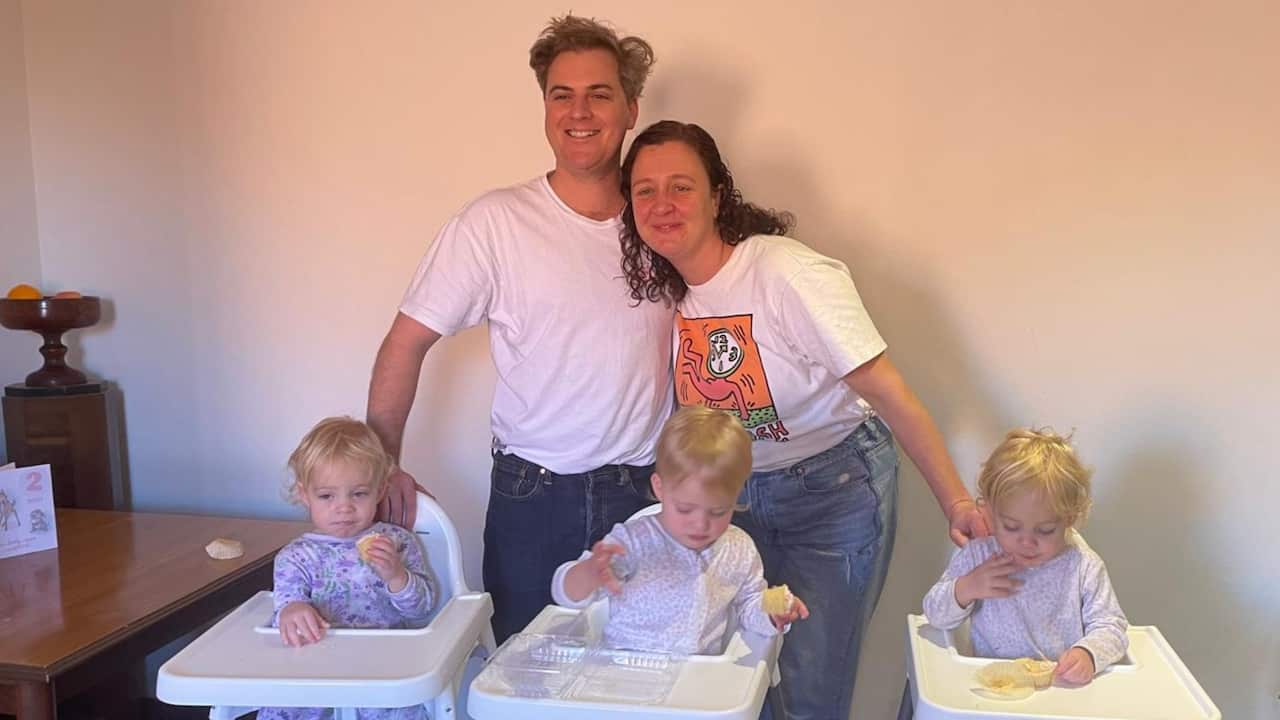
Myfanwy believes she has changed as a person since giving birth to triplets; and partly due to sleep deprivation, she feels she hasn’t been able to fully recover from the pregnancy.
"I'm so stressed and it's actually panic ... it would be entirely a different experience if I was given more support," Myfanwy said.
"Early access to affordable, accessible childcare would allow me to restore my batteries."
The mum of four now works part-time but says going back to work full-time while the girls are under age five feels like an impossible task.
"Even with the [Child Care Subsidy], it roughly ends up being around $660 a week for two days' care for the three girls," Myfanwy said about privately run childcare centres.
"That's breaking it down to about 300-and-something dollars a day, which I just wouldn't earn."
As for community childcare centres, Myfanwy said most of them are unable to offer placements or waitlist positions for all three children — to allow more families to access the centres.
"If I could get access to childcare, it would change the world."
Triplets in Australia
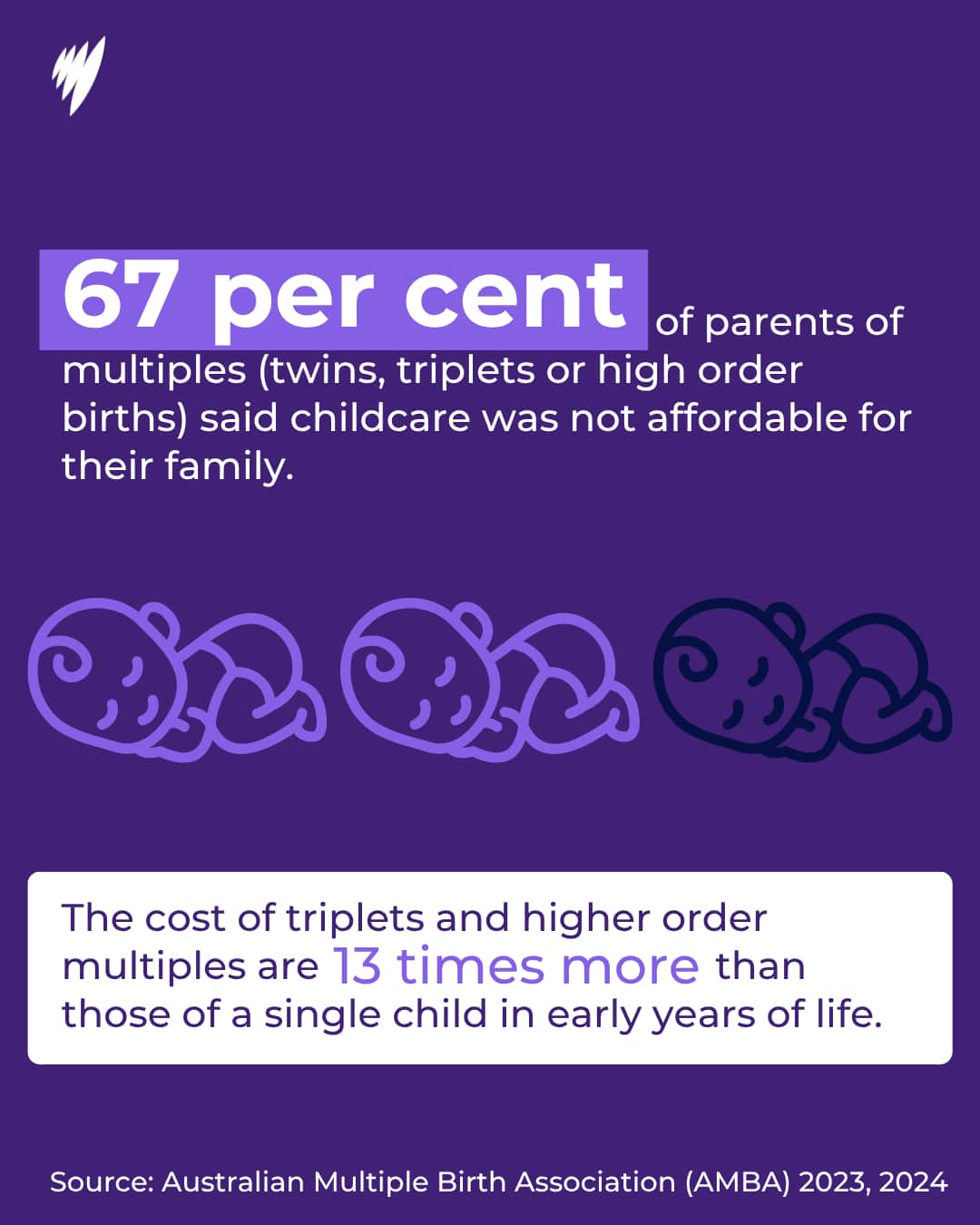
Myfanwy is not alone in her concern about childcare accessibility. Sixty-seven per cent of parents of multiples (twins, triplets or high-order births) said childcare was not affordable for their family, according to a 2024 report by the Australian Multiple Birth Association (AMBA).
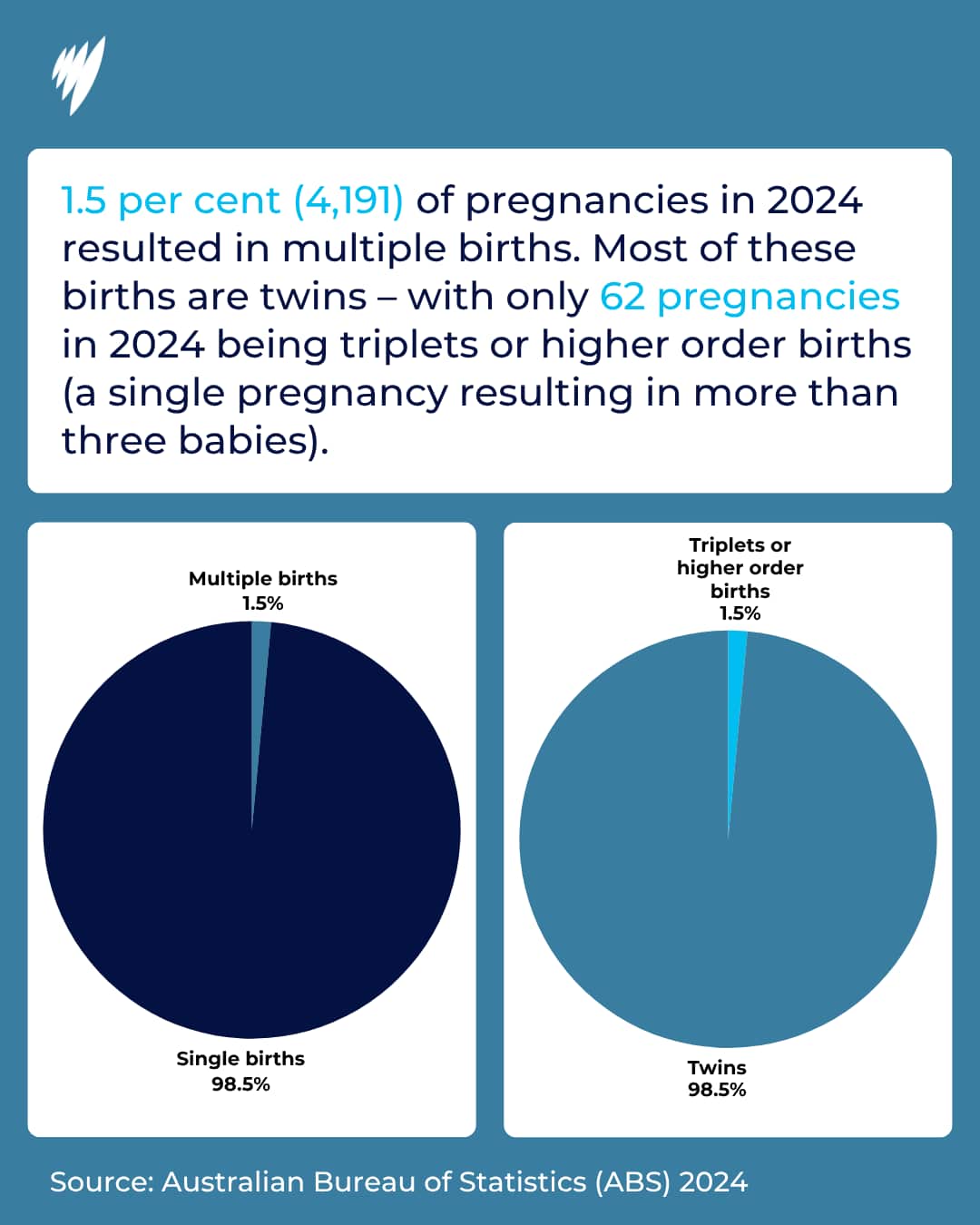
The latest Australian Bureau of Statistics (ABS) data from 2024 reported 1.5 per cent (4,191) of pregnancies resulted in multiple births, which has been relatively consistent over the past decade. Most of these births are twins — with only 62 pregnancies in 2024 being triplets or higher order births (a single pregnancy resulting in more than three babies).
But according to a 2023 AMBA report, the cost of triplets and other higher order multiples are 13 times more than those of a single child in early years of life.
In Australia, the federal government's Parental Leave Pay is paid by birth, not child.
This means that parents of twins, triplets or other multiples receive the one Parental Leave Pay. Whereas a parent who has three children over three pregnancies would receive three lots of Parental Pay Leave.
The current payment is $189.62 a day before tax (or $948.10 per five-day week) which is based on the weekly rate of the national minimum wage. The rate of payment depends on when in the financial year you take your leave — and the rate of Parental Leave pay usually changes on 1 July.
Community support
Like Myfanwy, Philomina had no family living nearby to support her when she became a mother to triplets.
When she and her husband Patrick had their first ultrasound nine years ago, the sonographer initially thought Philomina was having twins.
"I was very excited. A minute later, [the sonographer] was like, 'it's actually three,'" she told Insight.
Sydney-based Philomina says she needed time to process the news that she was carrying three babies, so decided not to tell her family in Ghana straight away.
"Even though they knew I was pregnant … I didn't tell them that I was having triplets until I actually saw three babies on a bed."
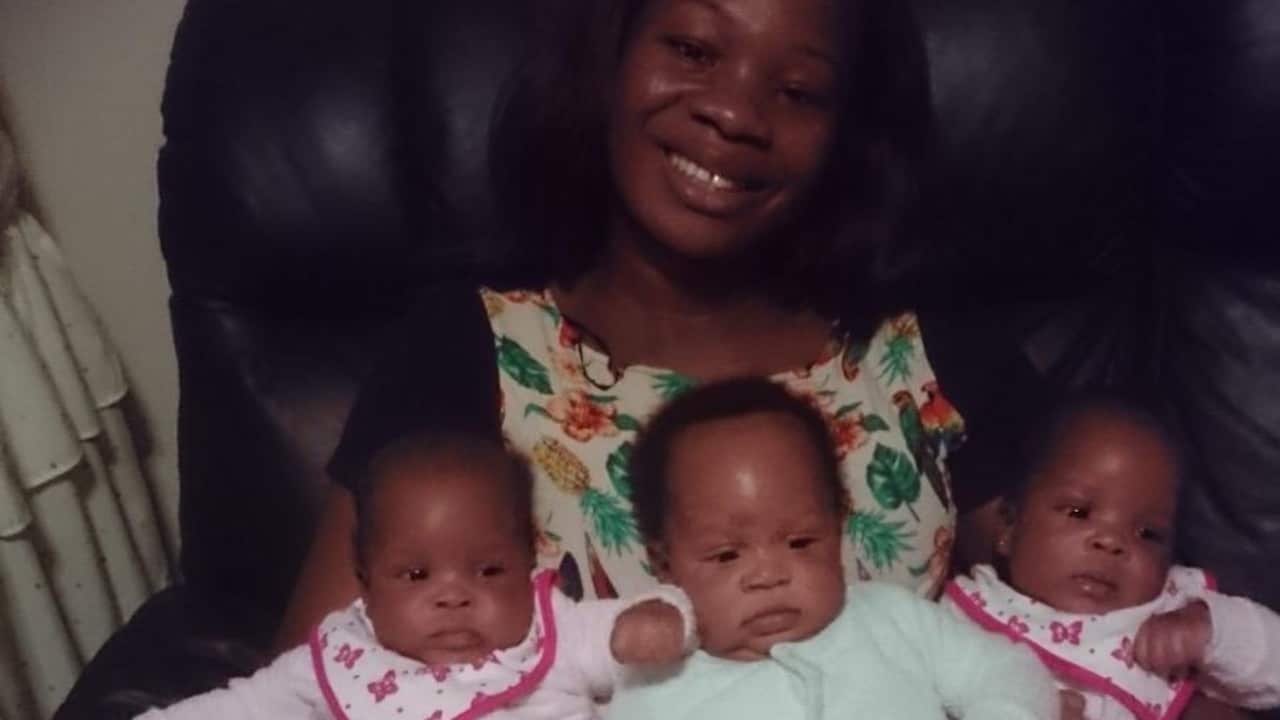
Bringing home and caring for their newborns Shane, Shanelle and Shanette was challenging at times for the couple.
Philomina primarily cared for the triplets — with some support from their church friends — as Patrick needed to work two jobs to financially support the family.
"It was very difficult for us. At that time, I was new in Australia. I didn't have any family," Philomina said.
"When we got home it was just me and my husband, and three children."
Becoming a widow and single mum
When the triplets were 18-months old, Patrick started to get fevers.
"Life was already hard with just the two of us and the three kids. We were living in our two small bedroom apartment trying to manage ... then all of a sudden he fell sick," Philomina said.
"He got the flu — that's what we all knew at that time. So, we did not take it seriously."
Patrick went to the doctor and was prescribed medication, but his fever worsened. Philomina called an ambulance and he was taken to hospital.
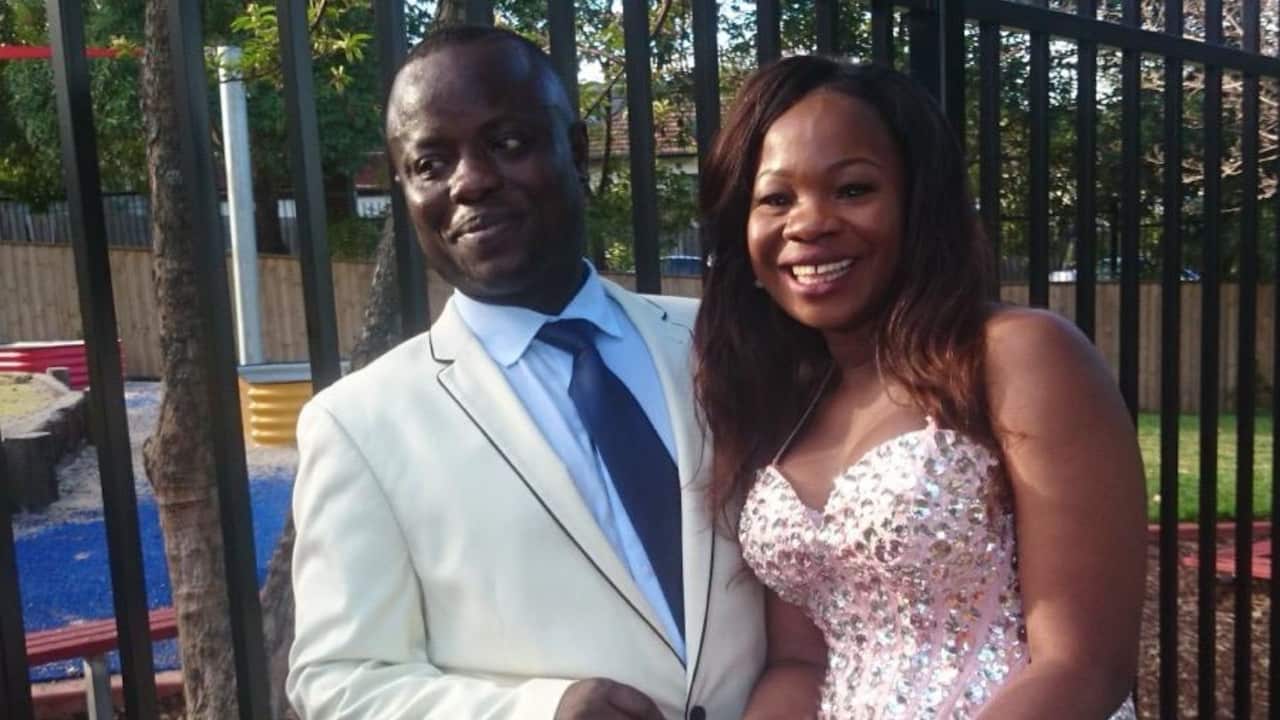
There she found out he’d had a heart attack.
"Unfortunately, he passed away a day after the heart attack."
Philomina was now a widow and single mother to three under two.
She did not have permanent residency in Australia at the time, which meant the family couldn't access financial support from the government.
Fortunately, Philomina’s church community stepped in to provide support until she could manage on her own.
"We [had] people coming to our house all the time to bring food, to bring nappies, to make sure we [were] okay — checking on them," she said.
"It just gave us the chance and an opportunity to live every day ... they supported us [at] every step because we didn't have anything, like nothing, at the time [Patrick] left."
Getting help at home
Like Philomina and Myfanwy, having triplets has not been easy for Brisbane mum Leonie Fitzgerald. She says that going through her pregnancy is the hardest thing she’s done.
The day before her planned caesarean, Leonie had a seizure as a result of eclampsia at almost 33 weeks.
"The girls were out within 20 minutes of me seizing … then I ended up in a coma," Leonie told Insight.
After coming out of a 16-hour coma, she finally met her daughters.
"It was in the afternoon, around lunchtime on day two. I had a lot of drugs in my system, so I don't remember a lot of it," she said.
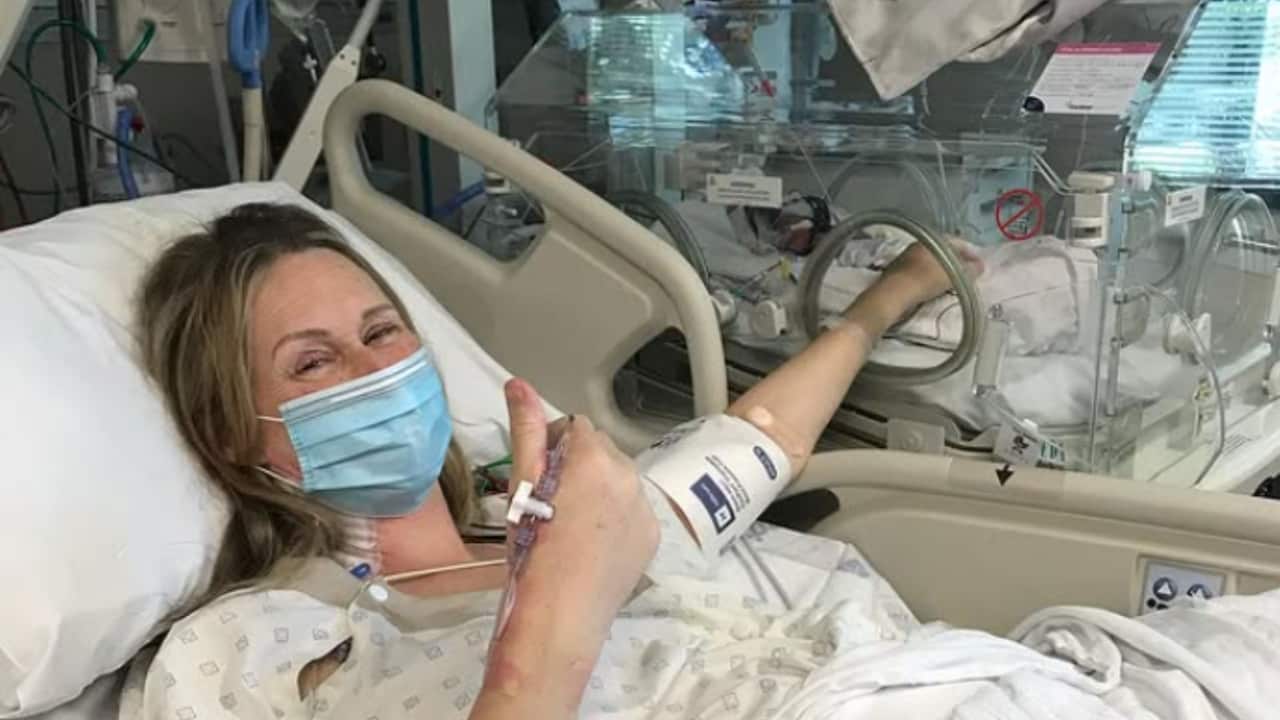
Leonie and her husband Pete took their babies home from the Neonatal Intensive Care Unit after about five weeks.
While having her mum live around the corner and make regular visits was a big help, extra paid support at home was non-negotiable.
Leonie and Pete hired a nanny to assist them with their three new daughters up until they turned three.
"Nanny would do bath time, put a load of washing on, put the clothes away, heat up the dinner, do all the mundane things," Leonie said.
"The nanny would do all the stuff that would take time away from the kids, which meant that Pete and I could hang out with them, cuddle them, play with them, and not have to be slaving away cooking dinner."
'The burnout is real’
But looks different for Philomina these days. She has found love again with her new husband Giuseppe and says that raising the triplets is easier — now they’re nine years old.
"I'm working — and thank God I've also met a new partner who is also helping," Philomina said.
"It's good things are better now… things are good."
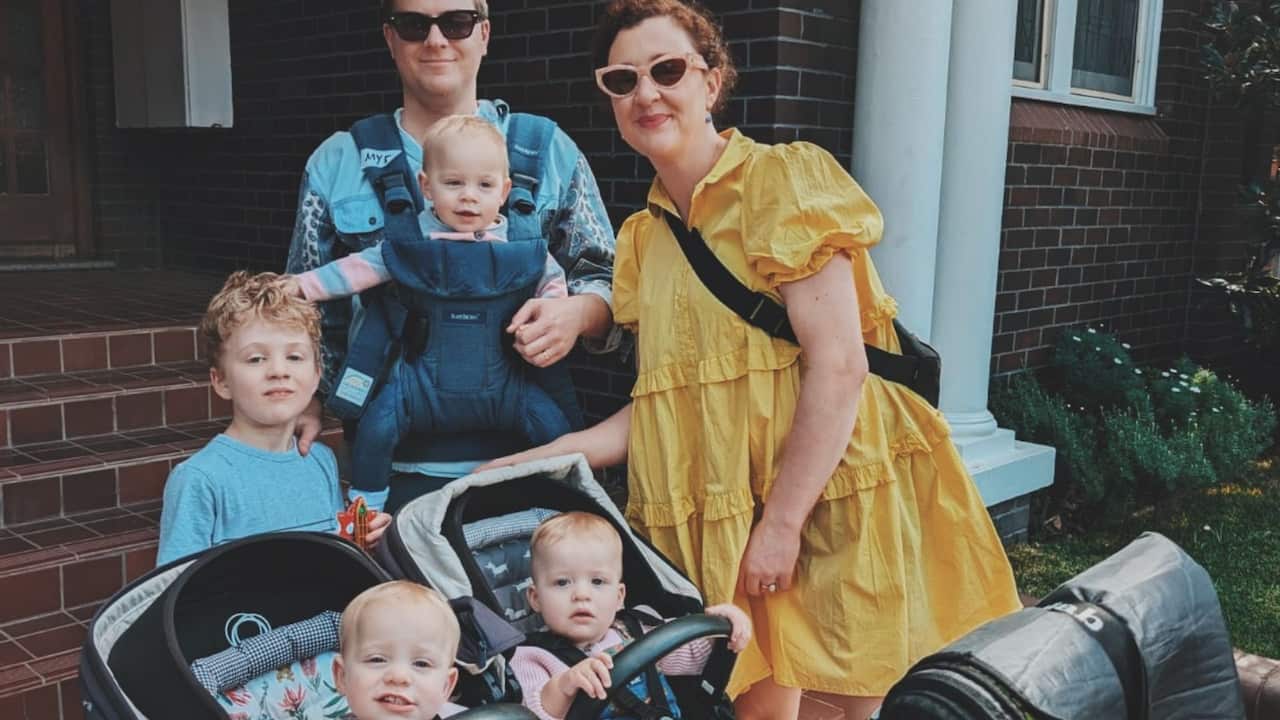
Similarly to Philomina, Myfanwy says she’s learnt to roll with all the moments that come with having triplets.
But she stresses how taxing it can be being the primary caregiver for three children the same age.
"The burnout is real, and you are too busy — with your hands full in day-to-day, dishes, nappies — that you can't lift your eyes higher on the like, ‘Is this the best way to do things?’"
She says that she knows she just has to keep them "happy and safe".
"But ‘happy and safe’ is a really hard thing to do — when you don't have the framework around to support that."
Watch your favourite Insight episodes around the clock on SBS On Demand's dedicated Insight channel. For the latest from SBS News, download our app and subscribe to our newsletter.

Insight is Australia's leading forum for debate and powerful first-person stories offering a unique perspective on the way we live. Read more about Insight

Have a story or comment? Contact Us







