Albanese says grandfathering negative gearing is the 'fair' approach
Prime Minister Anthony Albanese has responded to criticisms that grandfathering negative gearing doesn't go far enough.
Property owners and buyers who signed a contract prior to budget night will be exempt from the changes, meaning they can continue to offset investment losses against their taxable income.
From 1 July 2027, the government will limit negative gearing from residential property investments to new builds.
Albanese said the change will protect people who made decisions under the existing rules, while levelling the playing field for young people in the future and encouraging investment in new housing.
"I think it's a matter of getting the balance right and doing what's fair. We've done that by grandfathering so that even if you bought a house on Saturday and it's contracted, then the existing system that was in place when you bought that home will stay," he said on ABC News.
"The difference is, going forward, it will change the balance."
"You can still negatively gear a property ... as well as being able to invest in an investment property to help yourself and your future income and wealth, you'll be helping the nation if you invest in a new home, rather than an existing home that's already there."
— Josie Harvey
Jim Chalmers defends 'contentious' property tax changes
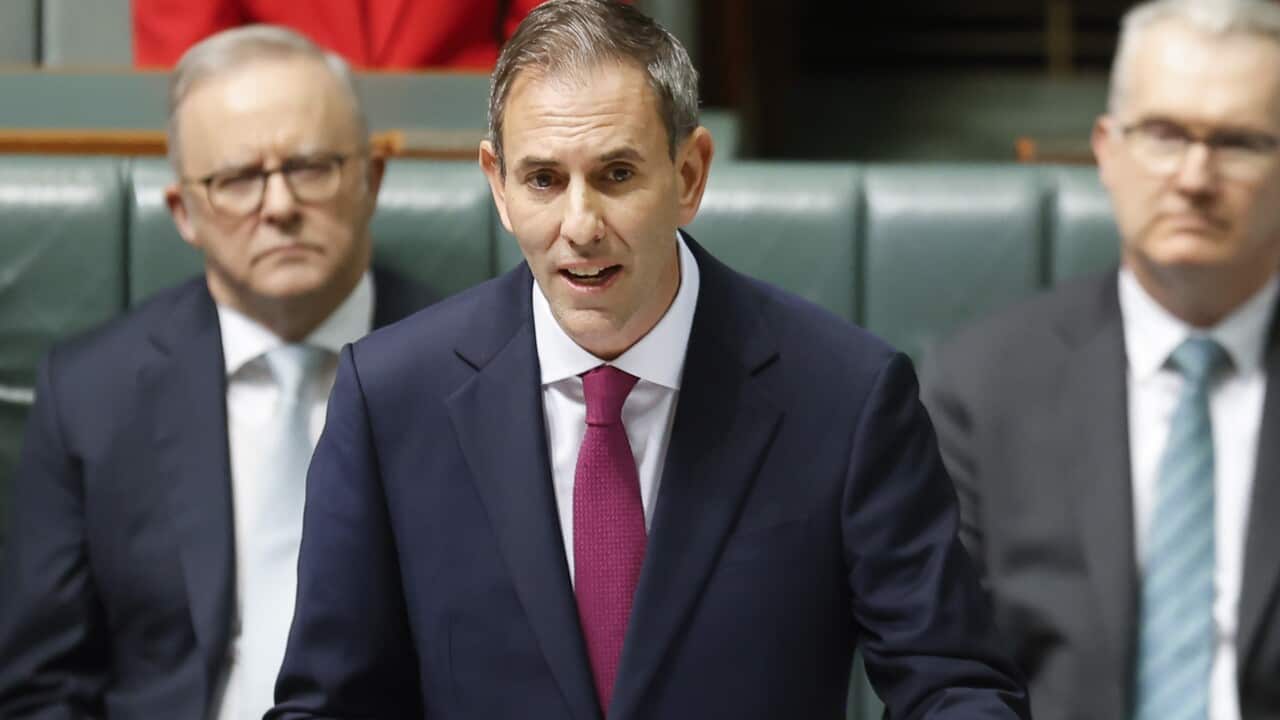
Speaking to ABC News in Canberra, Treasurer Jim Chalmers acknowledged the budget's tax reforms were "contentious", but argued the measures are "about trying to level the playing field for first–home buyers, and particularly younger Australians, who've been locked out for too long".
He said the capital gains tax (CGT) discount had created a "big distortion when it came to how investment is encouraged in our economy" since it was introduced in 1999.
"What this tries to do is it tries to normalise the benefit that people get. There's still a capital gains discount, but it's calculated in a more rational way based on real earnings," he said.
The current CGT system allows Australians to halve the taxable portion of a capital gain on assets held for more than 12 months.
Under the proposed changes, the system would largely revert to one that was used last century.
Under this system: when investors sell an asset, its purchase price would be adjusted for inflation using the Consumer Price Index. Tax will then apply to the portion of the capital gain above that indexed amount. From 1 July 2027, the tax rate on those gains will be at least 30 per cent.
People investing in new builds can choose to be exempt from these changes, opting to be taxed under either model.
— Josie Harvey
A simple breakdown: If the federal budget were just $100, where would it go?
The budget consists of hundreds of pages of facts and figures but visualising it as a $100 note helps in seeing how the government plans to spend your tax dollars.
The federal government is set to spend $833.2 billion in this year's budget, an increase of $47.5 billion, with pensions and social support programs contributing to over a third of the nation's expenses.
Most of the spending will go to social security and welfare payments, which will receive 37.1 per cent of the total projected spending. This is almost identical to last year's spend.
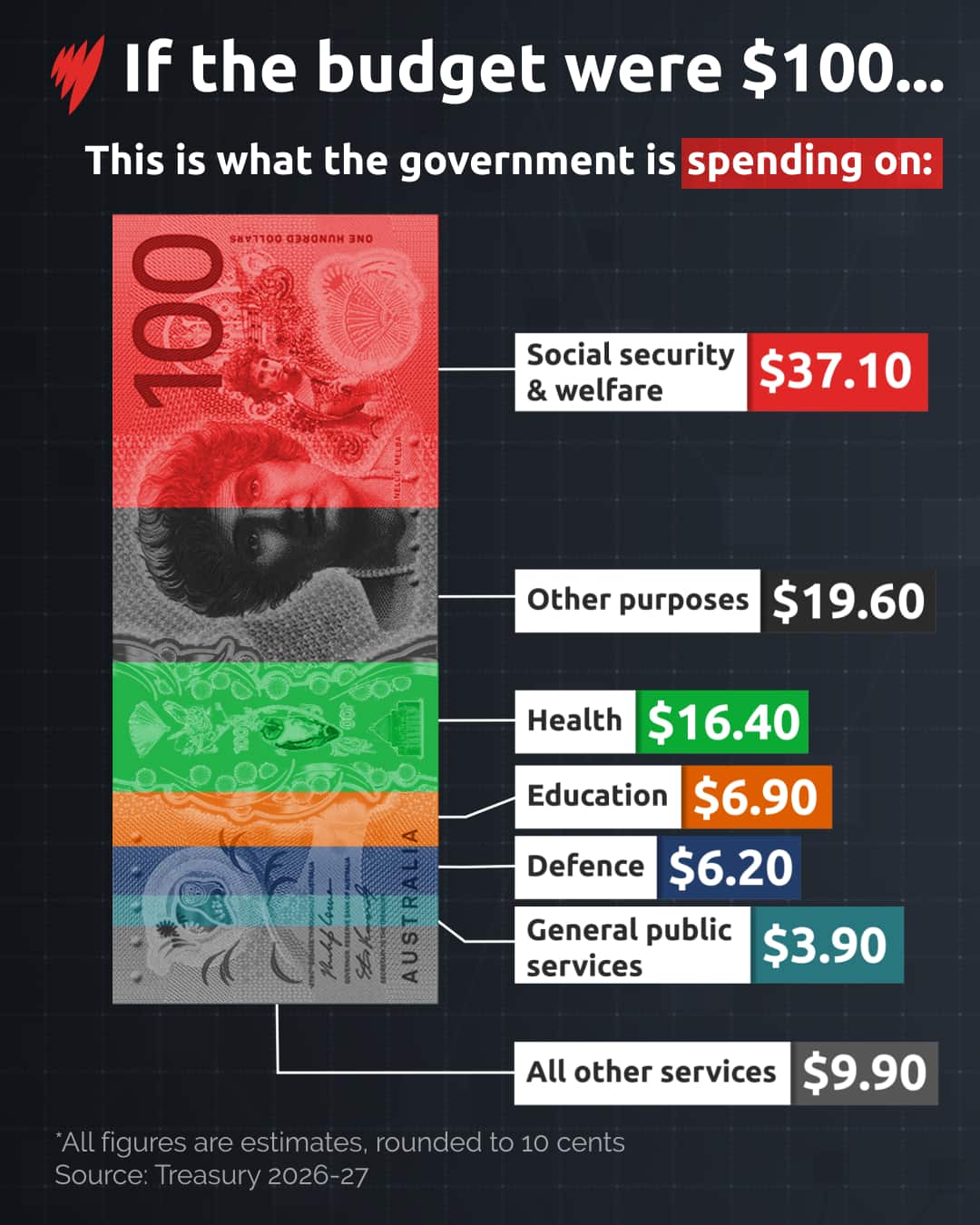
Social security payments are expected to grow to almost 40 per cent of all spending by 2030, driven by demand for disability support programs and aged care services.
Health is the next big area of spending for the government at 16.4 per cent, then education at 6.9 per cent and defence at 6.2 per cent.
The government has also forecast a spend of 19.6 per cent for "other purposes" which include expenses incurred in servicing public debt and natural disaster relief.
The remainder of spending or "all other services" includes housing, transport and energy.
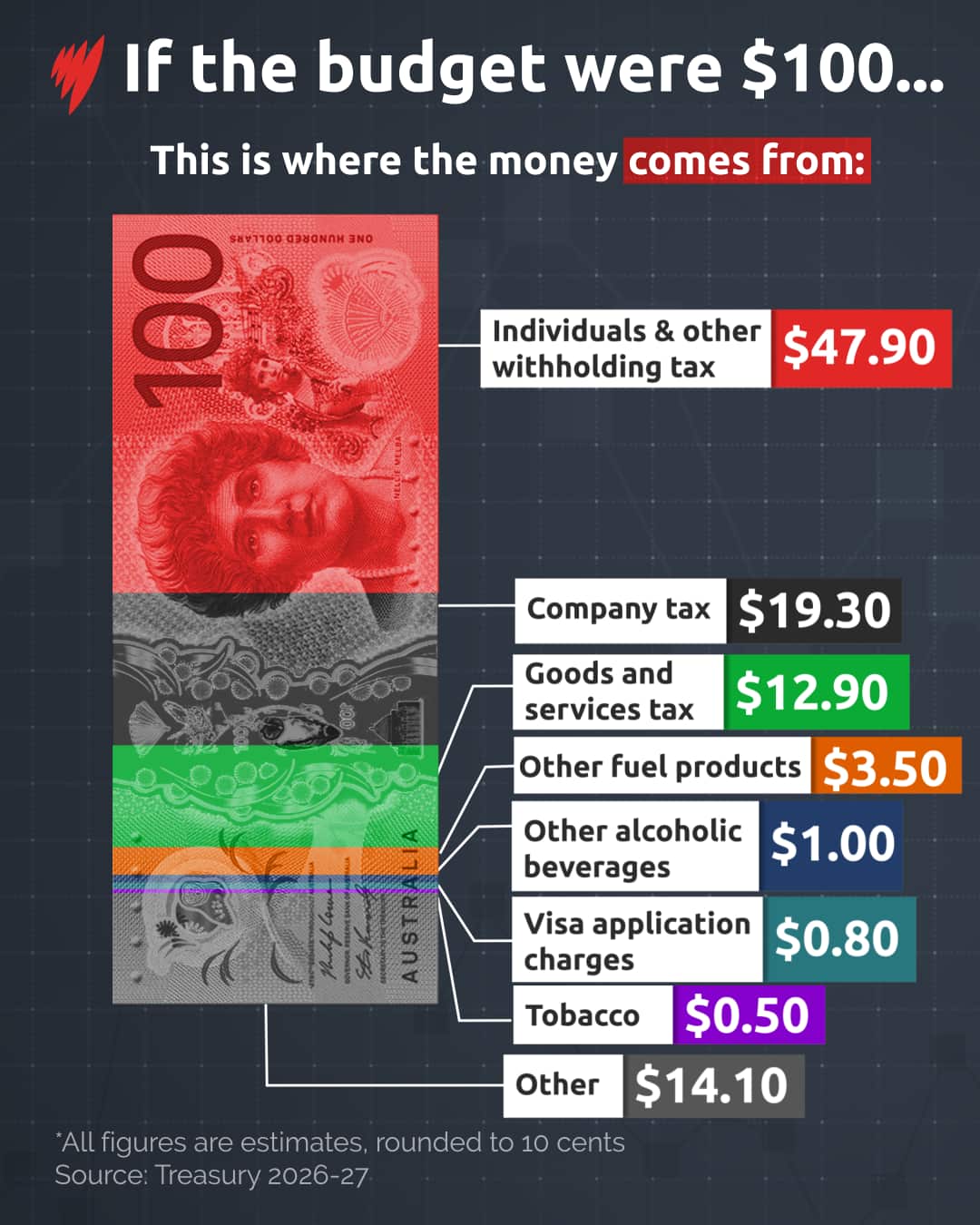
Where does this money come from? Almost half of its projected revenue comes from individual and other withholding tax, followed by company tax and goods and services tax.
Read more from our reporter Cameron Carr below:
Who are the winners and losers of the budget?
Small business owners, first home buyers, migrants and travellers are just some of the Australians impacted by the 2026-27 federal budget.
Winners include taxpayers, small businesses and older Australians, while travellers, foreign investors, trust recipients, property investors and the economy will face more difficult conditions.
Winners
Working Australians will get a new $250 Working Australians Tax Offset (WATO), effective from 1 July 2027, on top of the $1,000 instant tax deductions that Australians can claim, without producing receipts, coming into effect in this year's tax return.
For small businesses, the budget will reintroduce a loss carry-back scheme, allowing small businesses to invest in their operations and claim a tax refund if they consequently run at a loss during the prior two income years.
For older Australians, there will be an additional 5,000 aged care beds created as part of a $3.7 billion aged care package.
Migrant tradies will benefit from rules allowing an additional 4,000 trade workers to enter the workforce each year, as the government accelerates skill assessments and occupational licences in a move that's expected to reduce the time taken to enter the workforce by at least six months.
Losers
The economy: the government's updated gross domestic product forecasts are down for the next three years, expecting slower growth. Treasurer Jim Chalmers partially attributed the slower growth rate to price pressures resulting from the war in the Middle East.
Foreign investors will face an extended ban on buying Australian homes, with the government saying the measure is aimed at supporting housing supply for residents. The ban will now remain in effect until 30 June 2029.
Property investors will have to navigate highly-anticipated changes to capital gains tax (CGT) and negative gearing tax breaks. Under the new system, negative gearing will be limited to new builds, and the previous CGT discount will be replaced with a discount based on total profits minus inflation.
Trust recipients will pay a minimum 30 per cent on capital gains from trusts from 1 July 2028, in a move that attempts to address tax rate differences that arise when trusts are spread across multiple beneficiaries.
There will also be changes to the permanent migration points test, which affects two-thirds of migrants, with the government prioritising younger and more educated workers.
Read more here:
— Ewa Staszewska, Josie Harvey
Welcome to our live coverage following last night's federal budget
Good morning and welcome to SBS News' federal budget live blog.
Today, we'll be following along with all the reactions and washup after Treasurer Jim Chalmers handed down the Albanese government's fifth budget last night at Parliament House.
The budget contained sweeping tax reforms that Chalmers described as the most ambitious in decades, targeting negative gearing, capital gains tax (CGT) and discretionary trusts — and breaking an election promise not to touch negative gearing and CGT.
It also introduced a new $250 annual tax offset in a move set to benefit over 13 million Australian workers from 2027-28.
The budget documents detail $833.2 billion in spending for the 2026-27 financial year, an increase of $47.5 billion, delivering a projected deficit of $28.3 billion.
Read more about the major changes here:
— Josie Harvey







