What we learned today
The federal budget has drawn a significant — and mixed — response.
The centrepiece of the budget, controversial reforms to negative gearing and capital gains tax, has attracted both backlash and praise.
Here's a recap of this morning's developments:
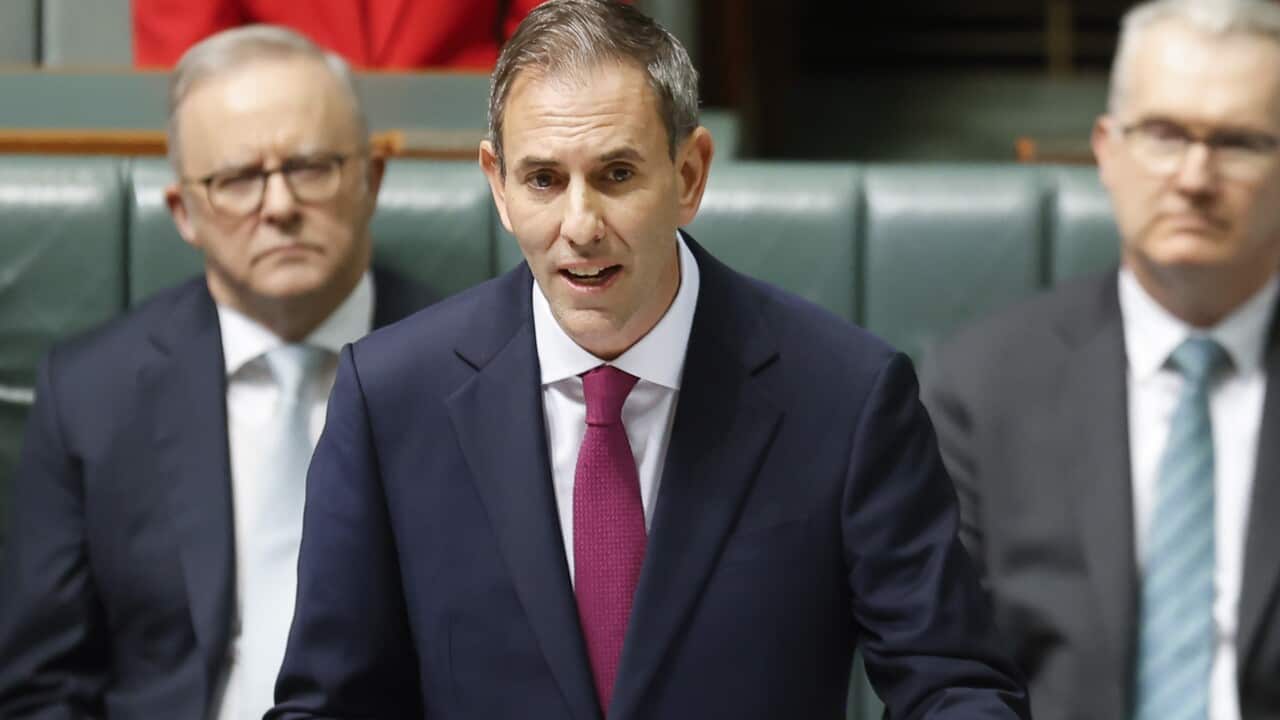
- Treasurer Jim Chalmers has defended the "contentious" changes, but argued they are about "trying to level the playing field" for young people.
- The government has faced criticism for grandfathering negative gearing, meaning existing investors will retain the tax benefit after it is phased out. Prime Minister Anthony Albanese said this was about "doing what's fair" for people who made decisions under existing rules.
- Opposition figures have been fiercely critical of the investment tax measures and have vowed to oppose them, or seek to repeal them if they regain government and the changes are enacted. The government has also faced fierce backlash for breaking an election promise not to touch capital gains tax and negative gearing.
- Opposition treasury spokesperson Tim Wilson said the Coalition supports the $250 tax offset, permanent accelerated depreciation for small businesses and a $2 billion investment in infrastructure to build new homes. He also said they would work with the government to make sure the NDIS is "sustainable".
- Former Labor leader Bill Shorten, who took housing tax reforms to the 2019 election and lost, said the changes were vindicating, and demographics had changed significantly in the years since that loss.
- The Greens have said the changes to property taxes did not go far enough, with Senator Nick McKim saying they were "abjectly lacking in courage and ambition".
- Independents have also offered mixed feedback. Senator David Pocock praised the changes to housing taxes, but criticised the government's decision not to introduce a gas export tax. MP Allegra Spender said the money raised from the reforms should be given back to Australians as income tax cuts.
- One Nation leader Pauline Hanson said it was wrong for the budget to target baby boomers who worked hard for their wealth.
- Disability, multicultural, Indigenous and small business leaders also offered mixed reactions.
We're closing out our live coverage now. Thanks for following!
— Josie Harvey
Hanson labels budget 'wrong' for baby boomers
One Nation leader Pauline Hanson said it was "wrong" for budget to target baby boomers who worked hard for their wealth.
"We were the baby boomers. We didn't have a lot. We had to go without," she told reporters on Wednesday morning.
"We had second-hand furniture, second-hand clothes. We had to, you know, go without. We didn't go the restaurants and we didn't have all this. Then we saved and we invested into wealth to create that wealth.
"All the government is doing now is stripping that wealth and handing it to others."
She labelled it a Sheriff of Nottingham budget, a reference to Robin Hood's antagonist, a tyrant who taxes the poor.
— Ewa Staszewska
Queensland treasurer says state was 'overlooked'
Queensland treasurer David Janetzki said the state was "let down" and "overlooked in a variety of ways" by the federal budget, pointing to several infrastructure projects.
He said funding for Inland Rail, a now scaled-back project intended to connect Melbourne and Brisbane, "has now been given to Victoria for their suburban rail loop".
He declined to say if he supported changes to negative gearing and capital gains tax.
The state's transport and main roads minister, Brent Mickelberg, said the budget had "shafted Queensland" and ignored projects such as a proposed rail line linking Brisbane to the Sunshine Coast.
"We’ve seen a reallocation of funding and priority from Queensland to prop up a failing Victorian government on the suburban rail loop," he said.
— Josie Harvey
NSW treasurer says 'it's not good enough'
NSW treasurer Daniel Mookhey said the government is treating the state "like a cash cow", according to the Sydney Morning Herald.
He said forward estimates showed NSW receiving the lowest per capita infrastructure spending of all states, and "it's not good enough".
— Josie Harvey
Victorian treasurer says tax reforms complement the state's policy settings
Victoria's treasurer Jaclyn Symes told reporters the budget was "great" for Victoria, and is "really complementary of the Victorian government's policy settings".
Victoria introduced changes to property taxes in 2022 that contributed to a slowdown in investor activity in the state.
"What I like about the announcements from the federal government last night is it’s all about ensuring supply. It is encouraging investment into new builds and ensuring that the established homes, particularly for first home buyers ... they’re not competing with as many investors as they have previously been in the past," she said.
— Josie Harvey
Hanson defends One Nation volunteer
One Nation leader Pauline Hanson and Farrer MP-elect Dave Farley have faced questions over a volunteer hailed on stage the night of the by-election victory.
Allan Beale, a volunteer who clashed with Liberal senator James Paterson during the Farrer campaign, has also defended the police murder by Dezi Freeman and shared posts on social media supporting Neo-nazis.
Asked whether they knew about the comments and condoned that kind of behaviour, Hanson shut down the questions:
"It is not going to be commented on here," she said.
Hanson said she was not aware that a court judge had previously described Beale as a “thuggish” bully.
"I have not seen it so I will not comment on that. I do not like bullying or violence of any type, that's my comment," she said.
She defended his presence at the function given his role as a volunteer.
- Ewa Staszewska
Deputy Liberal leader says 'younger generations are going to suffer from this'
Deputy Liberal leader Jane Hume said proposed tax reforms in the budget are an "assault on those that are trying to accumulate wealth" that will make it harder for young people who are trying to build wealth.
"This idea that we have pitted older generations against younger generations is abhorrent in the first place, but the fact is, it's been a fraud and a lie, and younger generations are going to suffer from this," she told Sky News.
Hume said the budget's $2 billion investment in infrastructure to enable housing does not go far enough.
"They've said that that proposal will build 65,000 new homes, but their taxes will reduce that by 35,000, so there's only 30,000 new homes that are expected to be built from this budget over the next ten years," she said.
Budget papers state the changes to negative gearing and capital gains tax are expected to reduce new housing supply by about 35,000 homes over a decade due to weaker investor demand.
However, the government says this will be more than offset by taxpayer-funded housing initiatives, including infrastructure spending designed to unlock new housing developments. Overall, the government estimates its housing policies will add a net 30,000 dwellings over four years.
Hume also blamed "excessive migration" for placing strain on housing, infrastructure and healthcare.
— Josie Harvey
'Serious concern' about trust tax changes for small businesses, body says
The government is introducing a minimum 30 per cent tax on discretionary trusts from 1 July 2028, arguing that the growing use of the structures is unsustainable.
According to budget papers, 90 per cent of total private trust wealth is held by the wealthiest 10 per cent of households, and introducing the new tax rate will mean a "fairer rate of tax" will be paid on discretionary trust income.
But the Council of Small Business Organisations Australia (COSBOA) says the move will also hurt small businesses.
"I think it's really important to recognise that trusts aren't just used by high-wealth individuals," COSBOA chief executive Skye Cappuccio told ABC radio on Wednesday.
"They're quite a common mechanism used by small family businesses. And for many of those small family businesses, this will effectively increase the tax they're paying each and every year. And it comes at a time when they're really experiencing quite significant pressure."
She also raised concerns about the changes to the capital gains tax discount across asset classes.
Cappuccio welcomed other measures, including making the instant asset write-off permanent, which allows eligible businesses to immediately deduct the cost of some assets rather than depreciating them over time.
— Josie Harvey
A recap of our coverage
The SBS News team has put together a range of stories about last night's budget and what it means for Australians.
Here's a summary of our coverage:
- Your five-minute guide to the budget: Key changes Australians should know
- Where your tax money goes: Breaking down the federal budget as $100
- Who are the winners and losers of the 2026 federal budget?
- 2026-27 federal budget migration numbers: What's changing and who's affected
- Why the budget might not 'shift the dial' on home ownership
- Treasurer Jim Chalmers delivers the 2026 federal budget — as it happened
— Josie Harvey
Allegra Spender calls for tax reform revenue to be given back in tax cuts
Independent MP Allegra Spender has called on the government to commit the money raised from tax changes — estimated at $77 billion — back to Australians in income tax cuts.
"They should commit now to giving that back as lower taxes, particularly reducing bracket creep," she told Sky News.
"That’s what they should be doing, is lowering all those different rates because that will also reward people who are working and also investing."
Speaking to the ABC last night, she said the changes were sensible, but flagged concerns about the way capital gains tax changes (CGT) could affect startups.
The proposed CGT changes are not limited to property investments, instead applying more broadly across asset classes.
Some critics argue that could disproportionately affect younger Australians seeking to build wealth through investments such as shares or cryptocurrency, particularly as housing affordability worsens.
— Josie Harvey
Missed our budget coverage last night? Watch here
Our reporters were at the budget lock-up last night, where hundreds of journalists hand over their phones and spend hours without internet poring over budget documents before the government announces them at 7.30pm. At that time, the embargo lifts and stories they've prepared can go live.
Here's SBS World News' special coverage of the federal budget last night.
— Josie Harvey
David Pocock says tax reforms 'long overdue', but criticises 'missed opportunity'
Independent senator David Pocock, a key advocate for the introduction of a gas export tax, said changes to capital gains tax, negative gearing and trusts were "long overdue".
He described the budget proposals as a mixed bag.
The changes "mean that we'll finally start to treat housing more as a human right in this country than as simply an investment vehicle for wealth creation", he said in a video posted on his social media.
But he criticised the budget's failure to raise additional revenue from gas exports, describing it as a "tragic missed opportunity".
There was significant public support for a gas export tax, but Labor shot down the idea.
Seven in 10 voters nationwide agreed that gas export companies should pay a 25 per cent gas export tax, according to a poll by uComms and the Australia Institute last month.
"The budget holds nothing for Australians who have fallen on hard times. Nothing to help students struggling with record debts, and some huge cuts to important programs and portfolios that run into the billions. No significant additional funding for nature," Pocock added.
— Josie Harvey
What is negative gearing again?
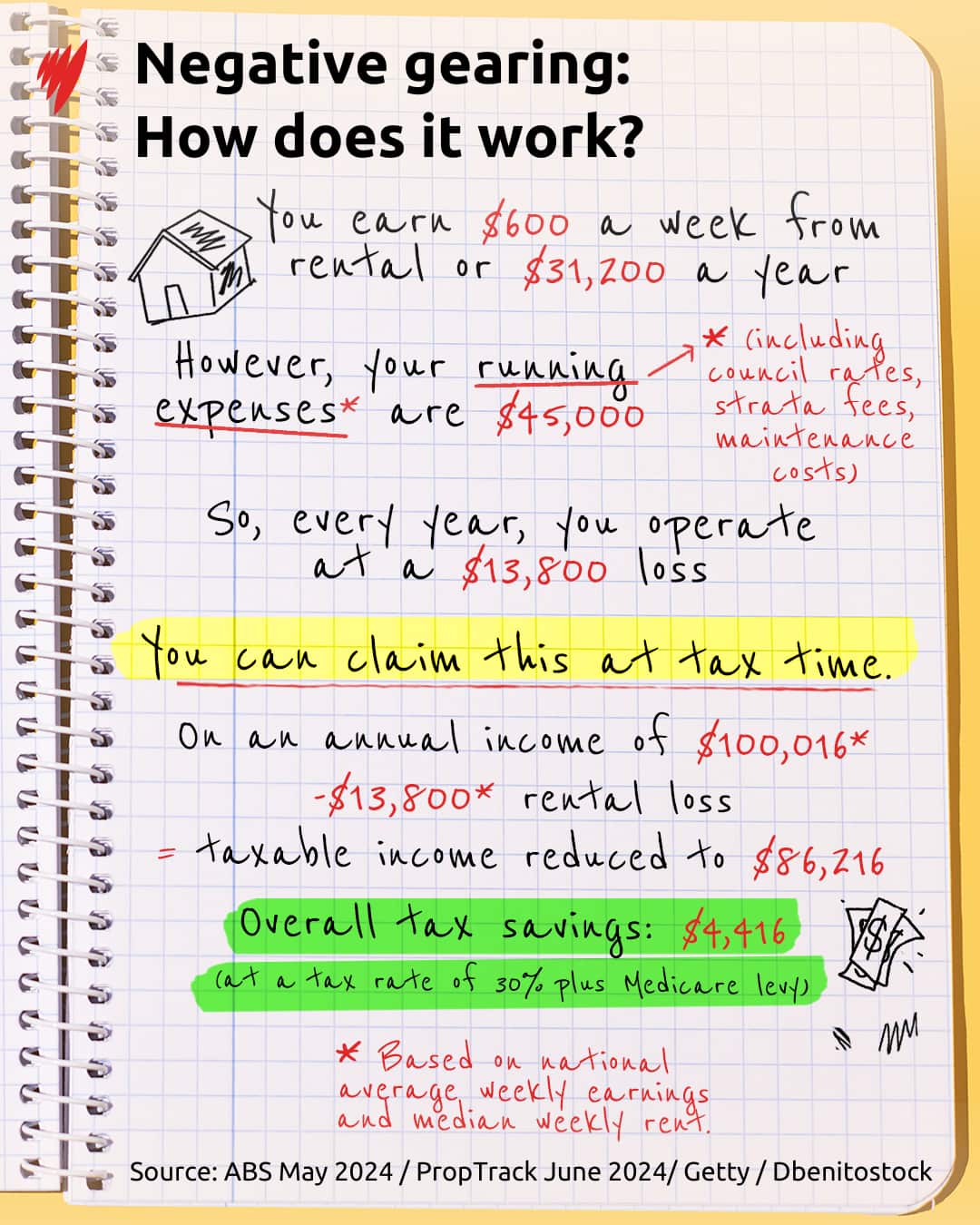
Negative gearing allows property investors to deduct losses from a rental property — for example, when expenses such as interest repayments and maintenance costs exceed rental income — from their other taxable income, like wages, reducing their overall tax bill.
Some investors use negative gearing because they expect the property's value to increase over time, meaning future capital gains will outweigh the short-term rental losses. In the interim, negative gearing benefits make it more cost-effective to hold the property while it turns a loss.
— Josie Harvey
Finance minister responds to Coalition backlash
Finance Minister Katy Gallagher has hit back at Opposition treasury spokesperson Tim Wilson's comments that 35,000 fewer homes will be built as a consequence of changes to capital gains tax and negative gearing.
"If an Opposition person comes out and complains about housing supply when they actually did nothing about housing supply and helped contribute to the issue that we're trying to deal with now, that should be called out," she said on ABC Radio Canberra.
She argued that capital gains tax and negative gearing policy settings had made it more difficult for young people to enter the housing market.
"Yes, there'll be people who think this is going too far, and there'll be people who don't think we're going far enough, and we think we've made the right decisions," she said.
The budget documents anticipate that the tax changes will lead to about 35,000 fewer homes being built, but that other tax-funded measures will boost supply and drive an overall rise in housing stock of about 30,000 homes.
It expects the reforms will move 75,000 properties from investors to homeowners.
— Josie Harvey
Tim Wilson says the budget is 'built on broken trust'
Speaking to Sky News this morning, Opposition treasury spokesperson Tim Wilson reasserted that the Coalition would oppose and, if elected, seek to repeal the changes to negative gearing and capital gains tax if they're enacted.
He said the budget is "built on bad faith" and "broken trust" and argued that the changes will lead to fewer new homes and an increase in rental prices.
Some real estate analysts have forecast a rise in rents due to tax reforms they say would make it more expensive for investors to hold properties, potentially reducing rental supply. However, the government's budget papers forecast a more modest rise of about $2 a week for someone paying the median rent.
— Josie Harvey
Bill Shorten says he feels vindicated
Former Labor Opposition leader Bill Shorten, who took housing tax reforms to the 2019 election and lost, told ABC's RN Breakfast the changes were vindicating.
"In 2016 and 2019, we took tax reforms to the electorate, and I think that we were probably ahead of our time, and I do think this is important for the nation," he said.
He said there had been a significant shift in demographics and attitudes since then, with younger voters now making up more of the electorate than baby boomers.
Labor has faced intense scrutiny over its decision to go ahead with the changes after repeatedly pledging during the 2025 election that it would not pursue reforms to capital gains tax or negative gearing.
Asked about that broken promise, Shorten said he believes the principles of the changes are fair.
"This is very like our 2016 and 2019 policies in terms of capital gains tax, in terms of negative gearing, in terms of trusts. And I think the proposition is, it’s a long-term reform. It’s not a quick sort of change."
— Josie Harvey
Will changes to property taxes reduce housing prices?
Treasury modelling forecasts that under the tax reforms, there will be a 2 per cent reduction in property price growth.
"Prices will continue to grow, but about 2 per cent slower," Treasurer Jim Chalmers said on Wednesday morning.
"What we're doing is not targeting a particular price. What we are trying to do is to make sure there are more affordable options for people to buy, particularly people who are buying their first home."
Ernst & Young's Oceania chief economist Cherelle Murphy told SBS News that "does help a little bit, but does it actually move the dial? I don't think it does".
She said grandfathering the changes to negative gearing create a "hybrid system designed not to hurt too much those who already have an investment, and also to put everyone on a more sustainable track going forward".
She explains how the changes could impact people below, in an interview with SBS chief political correspondent Anna Henderson.
— Josie Harvey
Disability, multicultural and Indigenous leaders share mixed views
Disability, multicultural and Indigenous sector leaders have shared their views about this year's budget and how it will affect their communities.
The government will reform its permanent migration system to select "better educated", "higher-skilled" and younger migrants to address worker shortages.
The permanent migration program will remain capped at 185,000 places, with over 70 per cent of places reserved for skilled migrants.
The Federation of Ethnic Communities' Councils of Australia (FECCA) said that while it was relieved there were no cuts to migration numbers, the organisation is concerned about its impact on the economy.
"We're looking at this very carefully. Obviously, how it's implemented will determine the success of the policy," FECCA chair Peter Doukas said.
In the area of disability care, the government has confirmed changes in the budget to cut access to the National Disability Insurance Scheme (NDIS) in a bid to save almost $38 billion over the next four years.
"Drastic is an appropriate word. I think we are going to see some unprecedented changes with the scheme, including access," said Cherry Baylosis, chief of policy advocacy and programs at Disability Advocacy Network.
"We can anticipate that there will be a large amount of people exiting the scheme, difficulties accessing the scheme as well, as well as seeing a reduction to plans as well."
The government is also investing $1.2 billion in First Nations communities and Closing the Gap over five years as part of last night's budget.
Catherine Liddle, chief executive of SNAICC — the biggest national non-governmental body advocating for Indigenous children — said the budget represented a missed opportunity for Aboriginal children and families.
"I think this budget was flagged as the budget for generation fairness ... There's very little funding dedicated to Aboriginal responses."
"There were plenty of community-led solutions on the table, and very little commitment at a time when Aboriginal and Torres Strait Islander children and families and the services that support them are under scrutiny and needing support the most."
— Peggy Giakoumelos, Josie Harvey
Opposition 'dead against' property tax reforms, Angus Taylor says
Opposition leader Angus Taylor said the Coalition was "dead against" reforms to taxes on capital gains, negative gearing and family trusts.
"They are an assault on aspiration. They are going to undermine wealth creation," he said on ABC News. "So we will fight them all the way to when the legislation comes to parliament and beyond if necessary."
"I think the government will be forced to recant on significant parts, or all of this, I hope. And we're going to be fighting for that."
Asked how the Coalition proposes to address the housing crisis, Taylor said migration would play a key role.
"I've already said that central to this has to be getting immigration into balance with our housing supply," he said.
"We will cap net overseas migration .... to within the available housing in this country."
He said the Opposition supports the $250 tax offset, permanent accelerated depreciation for small businesses and a $2 billion investment in infrastructure to build new homes. He also said he supports "making sure the NDIS (National Disability Insurance Scheme) is sustainable".
"We'll work with the government on this ... I think there's a lot of work to do to get that right," he said.
— Josie Harvey
What's the reaction been like so far?
Opposition treasury spokesperson Tim Wilson said last night the Coalition did not support the proposed changes to negative gearing and capital gains tax.
"We’ll repeal these measures if necessary, but our objective is to defeat them and to make sure that they’re never legislated," he told Sky News last night.
He told SBS News he won’t stand in the way of the $250 tax offset measure, however, he maintains that by the time it arrives in 2028 it will be eaten away by inflation.
The Greens said the changes to property taxes didn't go far enough, and also criticised the government for declining to introduce taxes on gas exports.
"In the face of a generational opportunity to respond to inequality and the housing crisis, Labor’s changes to negative gearing and the capital gains tax discount are abjectly lacking in courage and ambition," Greens economic justice spokesperson, Senator Nick McKim, said in a statement.
"This budget betrays the overwhelming majority of Australians. By refusing to impose a gas export tax to fund essential services, Labor will fuel people’s anger at a system that isn’t working for them."
One Nation MP Barnaby Joyce said the budget was "lazy".
"It's the same old rubbish. They're going back to the taxpayer to pay more tax because they can't cover the promises they've made," he told Sky News.
— Josie Harvey







