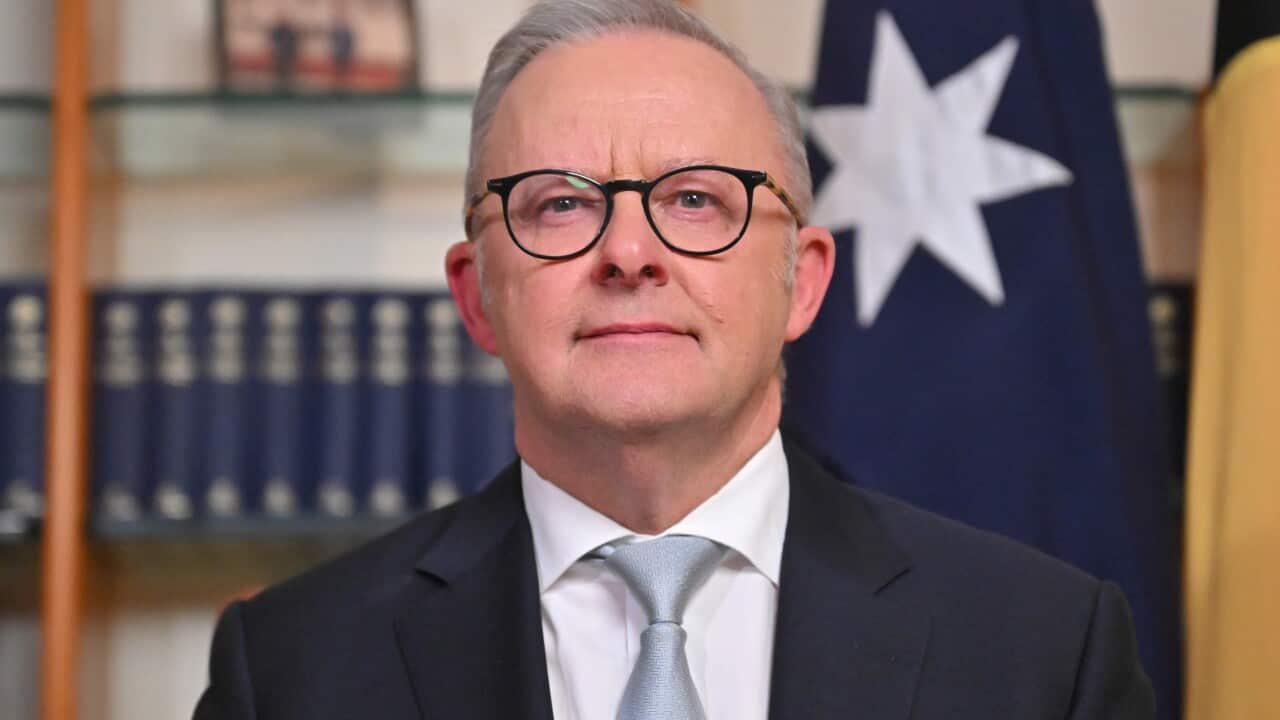

Prime Minister Anthony Albanese's national address on the country's struggling economy, driven by the global energy crisis has received both backlash as well as support. As the nation grapples with what the Prime Minister refers to as the biggest rise in petrol and diesel prices in history, Australia will be joining other world leaders for talks on reopening the Strait of Hormuz.
Listen to Australian and world news and follow trending topics with SBS News Podcasts.
"The months ahead may not be easy. I want to be upfront about that. No government can promise to eliminate the pressures that this war is causing. I can promise we will do everything we can to protect Australia from the worst of it. These are uncertain times. But I am absolutely certain of this: we will deal with these global challenges, the Australian way. Working together - and looking after each other."
That was Prime Minister Anthony Albanese in his first national address since being elected in 2022, urging Australians to remain calm and support each other amid the fuel crisis.
To address the issue, he's advising Australians to avoid panic buying of fuel and opt for public transport.
In his three-minute speech, Mr Albanese called for Australians to fill up their vehicles as normal for the upcoming Easter holiday.
"Think of others in your community, in the bush and in critical industries. And over coming weeks, if you can switch to catching the train or bus or tram to work, do so. That builds our reserves and it saves fuel for people who have no choice but to drive."
He stressed that his government would work on ensuring fuel supply for Australians - a move criticised by Opposition leader Angus Taylor.
Mr Taylor told Channel 10 there's a lack of transparency by the federal government over the state of Australia's fuel system.
He says they need to give more details about Australia's current fuel storage.
"What we need now is we need a plan, we need detail about the situation we are facing, Australians want to know if they are able to go away for Easter and get home again. We know 600 servos or more have not had petrol, we need a plan from the government in how we will get fuel to those servos, so Australians and can have confidence that they can go on holiday and get home again."
Mr Taylor told ABC Radio that the PM's speech could have been a social media post.
The last time a Prime Minister gave a national address, was during the COVID pandemic.
Calling a scheduled televised address to the nation out of the blue had raised concerns of significant developments in Australia's response to the war in the Middle East.
Mr Albanese warned that the economic shocks caused by the war in the Middle East could last for months.
Opposition politicians say this was a scaremongering address that did not reveal much.
Nationals Senator Bridget McKenzie told Channel 9 the wartime style address caused great anxiety among the public.
She says the country feared for restrictive measures to preserve the nation's fuel supply.
"Australia stopped and they tuned into the prime minister. Instead of getting a sense of a plan, they got a lot of platitudes, a lot of cliches. I think it was very foolish advice of the Prime Minister to say 'keep calm and carry on' in the face of the grave situation our nation is actually facing."
But Aged Care Minister Sam Rae defended the PM in the same interview.
He says the government needed it to be clear to Australians that they have a plan in place, and that Australia is best protected from international pressures.
Defence Minister Richard Marles echoes a similar sentiment, saying the address struck the right cord at a time when Australians are anxious.
When questioned about the decisions in the Middle East, he told reporters in Canberra that Australia will act in its own national interest.
"Australia will act in its own national interest in terms of our engagement in the Middle East, and you've seen that in terms of the decisions that we've made and we are providing a significant platform, in the E7 Wedgetail (Aircraft) to help in the support of the countries of the Gulf, in particular the UAE and back home we will be doing everything we can to ensure the supply of fuel to the country, the distribution where it's needed but also managing questions of price."
Mr Albanese is expected to announce further financial support for businesses impacted by the global fuel crisis in a speech to the National Press Club.
As the nation grapples with what the Prime Minister refers to as the biggest rise in petrol and diesel prices in history, leaders from 35 countries, including Australia, are set to join a snap summit to assess how to facilitate the reopening of the vital shipping route.