People who join or support government-designated hate groups will face 15 years jail, under new legislation in response to the Bondi terror attack. Some Coalition MPs have already voiced concern about the laws' impact on freedom of speech - while one prominent extremist group has announced it will disband.
Listen to Australian and world news and follow trending topics with SBS News Podcasts.
TRANSCRIPT
The profile of Neo-Nazi group, the Nationalist Socialist Network has been growing since a white supremacist attack on a First Nations protest camp at an anti-immigration rally in Melbourne last August.
Its leader Thomas Sewell has been charged in relation to the attack, and the group had recently announced plans to launch a political party.
Now, it has announced it will disband in response to the government's proposed hate speech legislation.
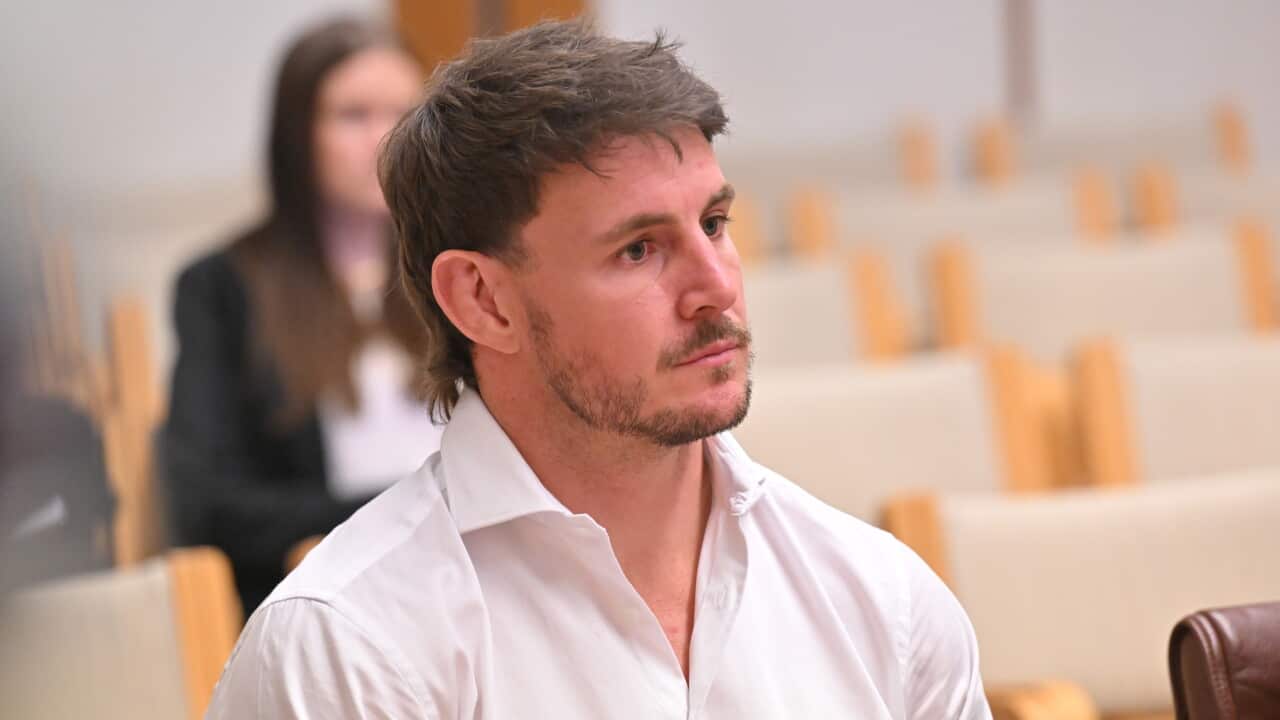
Jewish Labor MP Josh Burns told SBS the government is treating the announcement cautiously, but says the dangers of Nazi ideology affect all of society.
“I know, the history of the Jewish community is one where it wasn't just the Jewish community that were targets of Nazi ideology, it was also the LGBTIQ community.”
The NSN is one of two extremist groups - along with the Islamic fundamentalist organisation Hizbut al-Tahrir - identified as a threat to social cohesion by Australia's intelligence agency ASIO.
This week, its chief Mike Burgess told a Senate committee examining the new hate speech bill, extremist rhetoric has been allowed to ferment.
“Words matter, because inflamed language can lead to inflamed tension that can lead to violence. And as I've said, we've certainly seen a transition and a rise of more permission for politically motivated violence or communal violence in our society, and we've unfortunately as a nation, allowed behaviours to be normalised.”
The proposed laws will be introduced into parliament next week, after the government released a draft on Tuesday.
The laws will lower the threshold under which the government can outlaw groups for hate speech and increase penalties for their associates.
Organisers, supporters and recruiters will face 15 years in prison while members will face seven.
New offences will also be created for publicly promoting or inciting racial hatred.
Labor's Josh Burns is urging bipartisan support for the bill for the sake of national unity.
“It's really important that the parliament comes together, that we have a condolence motion on the first day, and then we get down to the business of passing a strong set of reforms that are going to make hate and violence against another group of people much, much harder and the consequence much greater.”
The Coalition is yet to formally announce its position on the draft bill, but some members have already raised concern about the impact on free speech.
Nationals Senator Matt Canavan told Channel Nine the government is trying to stifle scrutiny of its policies.
“The government's facing a lot of criticism rightly, in my view, about its migration policies, and there's no doubt in my mind that under these laws, legitimate criticism of migration policies, of the integration of peoples into our country, the importance of maintaining the Australian way of life could easily be construed here somehow a racist attack and you can be prosecuted for it.”
Liberal Senator Alex Antic told Sky News he will not support the laws either.
“It opens up new categories of crimes. It gives the ASIO director the ability to recommend that certain groups be dictated to be hate crimes groups. Now you know where that leads to is anyone's guess. Once the door is open to this, this becomes a very difficult precedent for freedoms in this country and free speech.”
Greens Senator Sarah Hanson Young says the party is also considering the proposed legislation before committing its support.
“We need to strike a balance to ensure that people's political freedoms are not undermined in the process.”.
The government has announced that January 22nd will be a day of national mourning to remember the fifteen, mainly Jewish victims of the Bondi Beach massacre that targeted a Chanukah festival one month ago.
Peter Wertheim is the co-chief executive of the Executive Council of Australian Jewry.
He has welcomed elements of the legislation such as the vilification offence and the new listing regime for extremist organisations.
But he says he is concerned about a potential loophole that allows the quoting of religious texts for the purpose of religious teaching or discussion.
“The offence will require a prosecutor to prove beyond reasonable doubt somebody intended promote racial hatred. Now, in those circumstances, seeking to excuse that sort of behaviour, where it's intentional, deliberate, knowing by hiding behind religion is inexcusable, and that exemption should not be in the legislation. In our view, it is entirely misconceived.”
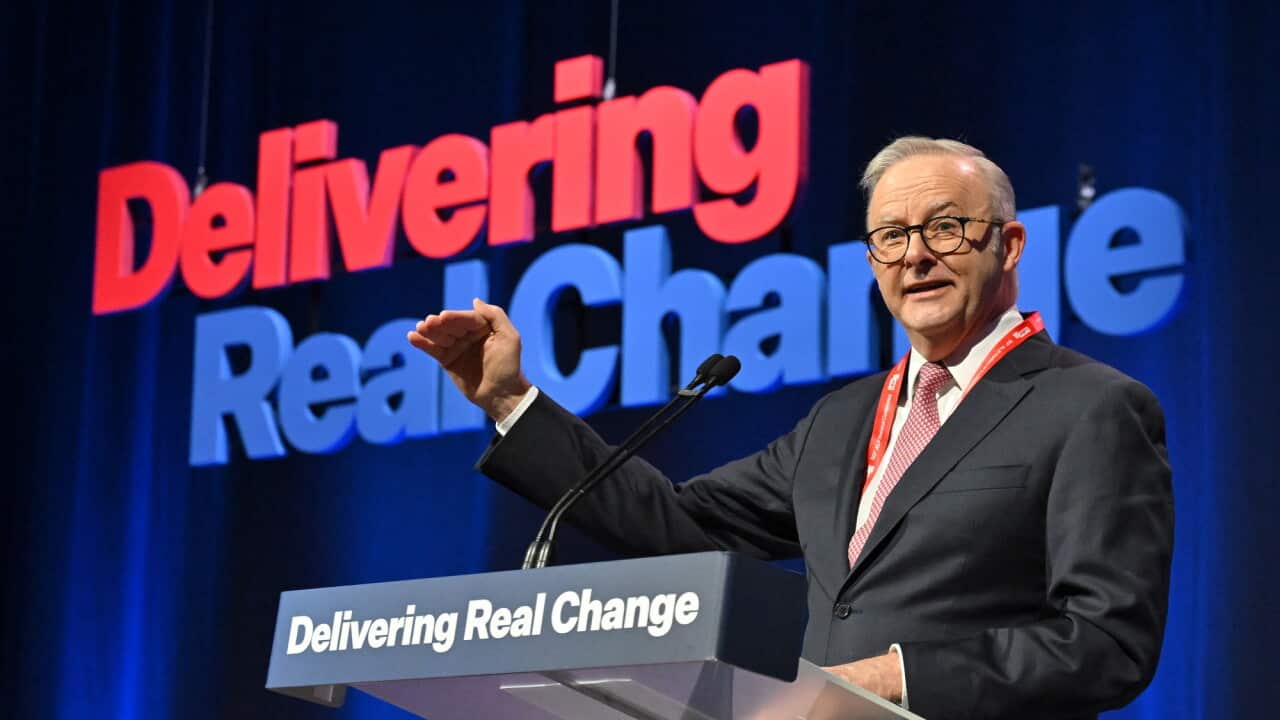
But Prime Minister Anthony Albanese says the exemption is important to avoid unintended consequences of the legislation.
“I encourage you to read the Old Testament and see what's there and see if you outlaw that, what would occur. So we need to be careful. We consulted with faith groups.”
The government also risks losing the support of the Coalition by grouping the hate speech legislation in the same bill as a gun buyback scheme and firearm controls that will tighten background checks and expand intelligence-sharing with ASIO.
The Nationals are against the gun laws with Senate leader Bridget McKenzie telling Sky News:
“Firearm owners in this country are insulted, incredibly offended at law abiding Australians targeted in this bill alongside Islamic preachers, as if there's somehow an equality of guilt between those two cohorts. Nothing could be more efficient.”
Also fronting yesterday's Senate inquiry , Australian Federal Police Commissioner Krissy Barrett was asked how the proposed laws would help police in operations to protect the community from extremist threats.
“Aspects of the bill that will enable us to keep the community safe in terms of what, where the legislation, where the drafting is, but again, a lot of this, of course, will be case by case basis.”