

A WARNING THAT THIS STORY MAY BE DISTRESSING FOR SOME LISTENERS The New South Wales government is investigating the circumstances surrounding the escape of two patients from the same hospital, who days later were allegedly involved in separate incidents where three people died. Mental health professionals say it's again thrown the state's mental health care crisis into the spotlight.
Listen to Australian and world news, and follow trending topics with SBS News Podcasts.
TRANSCRIPT:
Last weekend, two women aged 60 and 84 were killed in a car crash in Sydney's south-west.
A 31 year-old man allegedly driving a stolen vehicle has been charged over their deaths - and it's since been revealed he was an involuntary patient at Australia's largest mental health facility at Sydney's Cumberland Hospital, who escaped a week before the crash in Camden.
Just a day earlier - another patient escaped from the same facility during a transfer to another hospital.
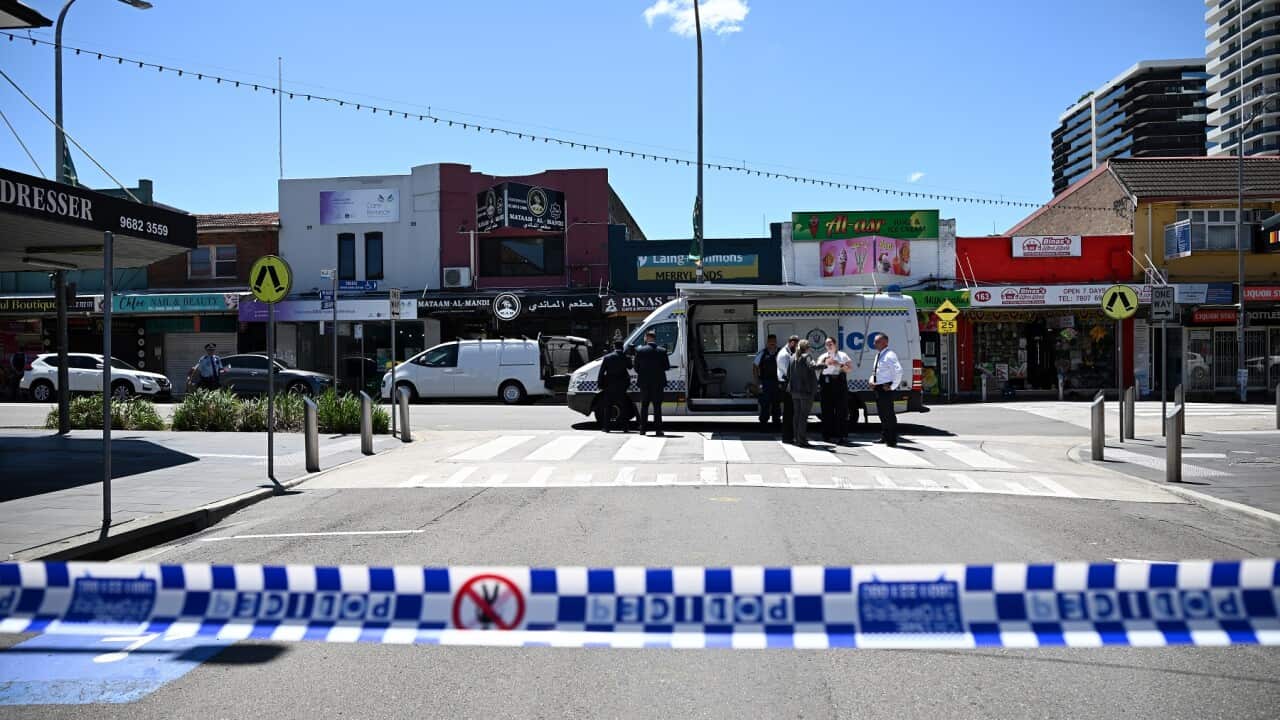
New South Wales Police Superintendent Simon Glasser says the 25 year-old allegedly stabbed three people in Merrylands ten days after he absconded, killing one.
"It appears it was a random attack... The male has a history for low level crime, but most of his history with us is mental health-related."
These two more recent incidents have reignited criticism of the state's mental health crisis.
Advocates say the state's grossly underfunded mental health system is too focused on waiting for a crisis before initiating treatment.
Nick Howson is the Cumberland delegate for New South Wales' Nurses and Midwives' Association.
He says the system is broken, and nurses at Cumberland Hospital are struggling with that systemic failure.
"The reality of it is you can see the outcome of what happens when there's not enough people around to provide the care that we're supposed to provide. We're doing what we can with very little resources behind it, you can't blame an individual hospital or an individual health district because they are hamstrung by the funding from the government."
Last year, dozens of public hospital psychiatrists resigned in protest over a lack of funding.
The Chair of New South Wales Royal Australian and New Zealand College of Psychiatrists [[RANZCP]] says a recent temporary pay rise is insufficient to address a lack of community care, housing and hospital beds.
Dr Ian Korbel says funding for mental health has always been an issue.
"It's been a long term decline in funding for mental health. We've seen that since the de-institutionalisations that happened in the late 80s to early 90s. The money that was saved from closing those old institutions just didn't move to the community care where they needed to be. So it means the patients are ending up in hospital more than they should. We have over 50,000 people in New South Wales who have severe mental illness who are not accessing care. This is neglect by the state of its most vulnerable patients."
Giancarlo de Vera is the chief executive of BEING, a mental health consumer group.
He says greater focus must also be given to community support to prevent people being left in positions where they are held for treatment against their will.
Dr Korbel has told SBS he agrees more support is needed.
"These levels of funding are just insufficient. We need more mental health outreach in the community. We need more supported housing for people who have serious mental illness both short-term and long-term. And to a degree we need more beds as well. Look, we're looking at some of the lowest levels of beds in the Western world. We're down to less than 30 beds per 100,000 people in New South Wales, where the average is about 60."
Others are calling for a coordinated national approach.
Dr Rahul Khanna is the Chief Clinical Officer from SANE Australia.
He says it comes down to funding responsibilities between state and federal governments.
"We've seen that failure across a nation really, and part of it comes down to funding responsibilities between state and federal governments end up with a really fragmented system, that's really hard to understand and hard to access."
The Western Sydney Local Health district says while the two men allegedly involved in the two separate incidents in Sydney this month remain before the courts, it supports discussions about ways to improve the safety of patients, staff and the broader public.
It's undertaking a formal review, including with an external senior psychiatrist, into the care and treatment of the patients and security protocols at the hospital.
Meanwhile, the Premier says his government is still considering the findings from a coronial inquest into the Bondi Junction stabbing, which found perpetrator Joel Cauchi slipped through the cracks of the mental health care system.
"There's a practical suggestion from the coroner in relation to expanding the wanding powers for New South Wales Police. Now, that's not directly in the psychiatric health space, but it would make the public safer. These are things that we need to look at."
He says there will be also be an urgent government review into security protocols at Cumberland.
"We need to keep the public safe in the circumstances where someone has a psychiatric episode and is a danger to themselves or members of the public. This is a deeply distressing situation and I feel terrible for the family members of those that have been affected."
[[If you need support, contact Lifeline 13 11 14 or beyondblue 1300 22 4636]]