

Australian and Indian drowning prevention experts have come together for a two-day workshop to explore new ways to reduce drowning deaths in both countries. Drowning causes tens of thousands of deaths a year in India, and in Australia, experts say the Indian diaspora is among groups that are worryingly over-represented in the country's drowning fatalities. Through exchanging ideas and building stronger cultural knowledge, workshop participants have explored new, sustainable ways to improve water safety.
Listen to Australian and world news and follow trending topics with SBS News Podcasts.
TRANSCRIPT
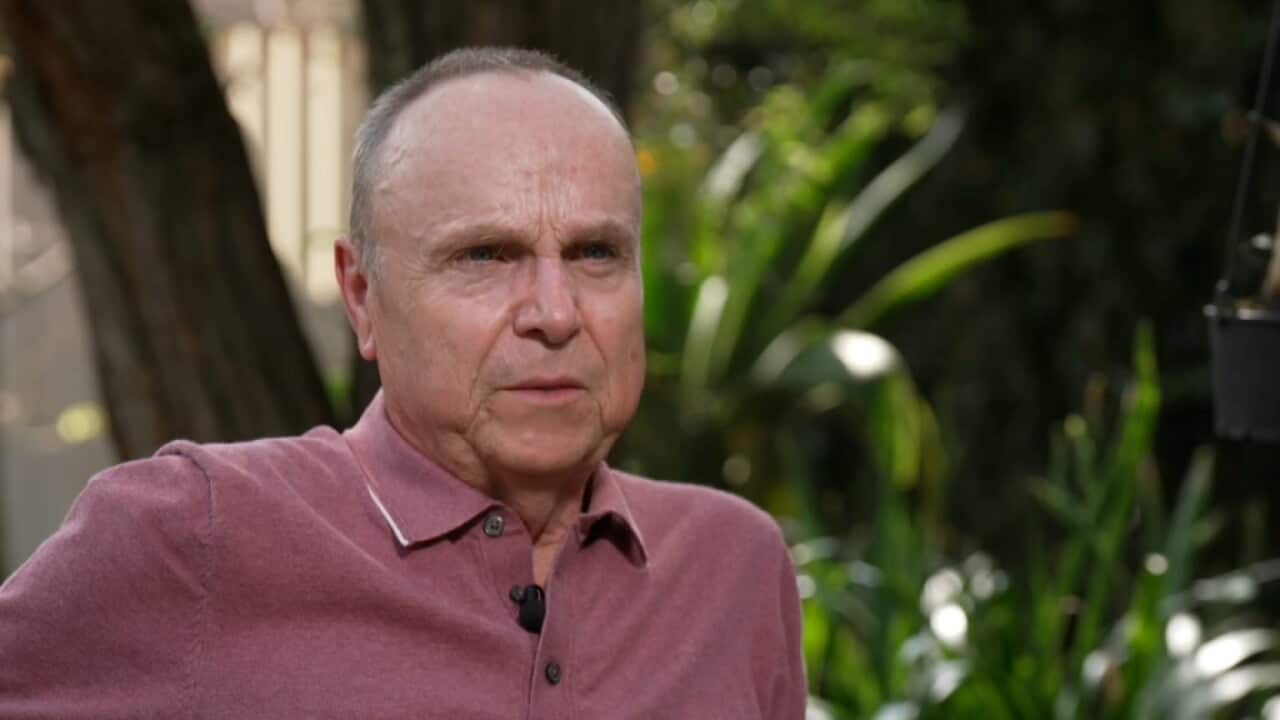
It's been decades since Harpreet Singh Kandra came dangerously close to drowning as a young boy in his home country, India.
He had travelled around 200 kilometers with his mother and father to take a holy dip in a sacred pool at a Sikh temple in the city of Patiala Punjab.
“I was in the sacred pool and I kind of tripped and lost my balance and I was drowning. And my mother, who was sitting 50 meters away, she thought something weird was happening and she realized I was drowning. So she jumped into the sacred pool immediately to save me. None of us knew swimming, and both of us were drowning and someone appeared from somewhere, pulled us out and disappeared.”
Since moving to Australia in 2007, this memory still brings him fear and taints his experience of being in the water.
“Any time, every time I get into the pool to practice or enjoy swimming with my family, I have that incident coming in front of my eyes and it scares me all the time. “
Working as a Sikh community leader in Officer on the outskirts of Melbourne, Mr Kandra says he realised just how many people from his own community, and other migrant communities, had similar fears of the water.
He says a number of migrant drowning incidents, including the deaths of two international students from the university he worked at, prompted him to set up a program teaching adult migrants to swim and safely enjoy the water.
“We wanted to create a connection between the community and water. We did not just talk about water safety. We said water is fun. If you are in a pool once a week, it can rejuvenate your bodies. Water is a great healer. We told people, if you're in the pool with your families for an hour or two every week, that's the best time for families to stay away from devices and connect with each other.”
Mr Kandra is now one of 40 water safety experts from across Australia and India who have gathered in Sydney for a two-day drowning prevention workshop facilitated by Royal Life Saving Australia.
The workshop has brought government figures, water safety practitioners, medical and weather professionals and others from both countries together to explore new ways to reduce drowning deaths in both countries.
In India, drowning causes a significant number of deaths each year, with the latest official data from India's National Crime Records Bureau revealing more than 38,000 people died from drowning in India in 2022.
Manas Pratim Roy from the Ministry of Health and Family Welfare, also a workshop participant, says the number of annual drowning deaths is likely much higher, due to under-reporting.
“So drowning remains one of the major causes of accidental deaths in India. So the annual record that is collected mostly from police files, it says that the quantum of the magnitude is to the tune of 37,000 deaths per annum. But again, there is also kind of some apprehension that this is only the tip of the iceberg. So many-a-time cases are not being reported to the police.”
He says tackling these high rates of drowning deaths requires new policies and practices that focus on collaboration and input from multiple sectors.
“Drowning is not only something to be tackled by the Department of Health or Department of Meteorology or something like that. It's also Department of Education. So we need to convince the kids that it's a kind of a real danger and we need to convince their parents and as well, we need to bring in our department of social security as well.”
Mr Roy says the workshop has offered a valuable opportunity for policy-makers from both countries to share knowledge and experience in how to improve water safety in a holistic way.
“Both the countries have many things that are yet to be learned and with the exchange of our ideas and experiences, both of us could achieve better than where we are now.”
Water safety is also a significant concern here in Australia, with the latest drowning report from Royal Life Saving Australia revealing there were 357 drowning deaths in Australia in 2025-- the highest number of drowning deaths since records began.
The latest data reveals people born overseas accounted for more than 30 per cent of these deaths.
CEO of Royal Life Saving Australia Justin Scarr is facilitating the India-Australia drowning prevention workshop.
He says the Indian diaspora in Australia is one group that is worryingly over-represented when it comes to drowning fatalities.
“Increasingly we're concerned about people of Indian origin living in Australia, exploring waterways, learning to swim. But unfortunately, drowning is sort of creeping up in that community. So the Indian delegates here are helping us understand some of the social cultural elements of water safety. And we're also learning really closely with people in the room about how they're going about presenting water safety as a choice, an opportunity for people living in Australia that come from the Indian community. “
While India and Australia share a common interest in reducing drowning deaths, Mr Scarr says the cultural context in which drowning occurs differs greatly in the two countries.
“Australians are fairly familiar with the idea that drowning tends to happen in recreation while we're swimming or falling off a boat while we're going to the beach, or perhaps we're going swimming in the local river. The context of drowning in India tends to be everyday life. It's people that are bathing in the local pond or stream because they don't have necessarily plumbing in their house just yet. It's people drowning on the way to school or on the way to work because their transport systems are in local rivers on canoes.”
Through building stronger understanding around the cultural context behind water use, Mr Scarr says we can develop more informed and sustainable approaches to drowning prevention.
“So I think that's something we overlook often in Australia is what brings people to the water. We tend to generalize to say we all love the beach, we all love the local pool, but in India it seems that the cultural element is really important to the exposure of water and it's really important in terms of the way the community works together itself. And I think there's some learnings and lessons there for Australians.”
He says in the exchange of ideas that's taken place over the two-day workshop, alongside important insights on cultural difference, one very clear commonality has also emerged.
“We all agree that the impact of drowning is felt most acutely by the family, by the local community. And it's really important together, whether that's Australia or India, that we recognize that burden and that opportunity. From a prevention perspective, this is not numbers, these are real people and the real people themselves, the local communities are the ones that are more likely to drive solutions.”