
A new Human Rights Commission report highlights the devastating impacts of discrimination against communities in Australia - targetting Jewish, Muslim, Palestinian, Arab and Israeli communities - since the October 7, 2023 attacks. The federal government is facing urgent calls to implement the National Anti-Racism Framework - which they've had access to for almost two years - to combat racism.
Listen to Australian and world news and follow trending topics with SBS News Podcasts.
TRANSCRIPT
“If you don't name the beast, you can't slay it.”
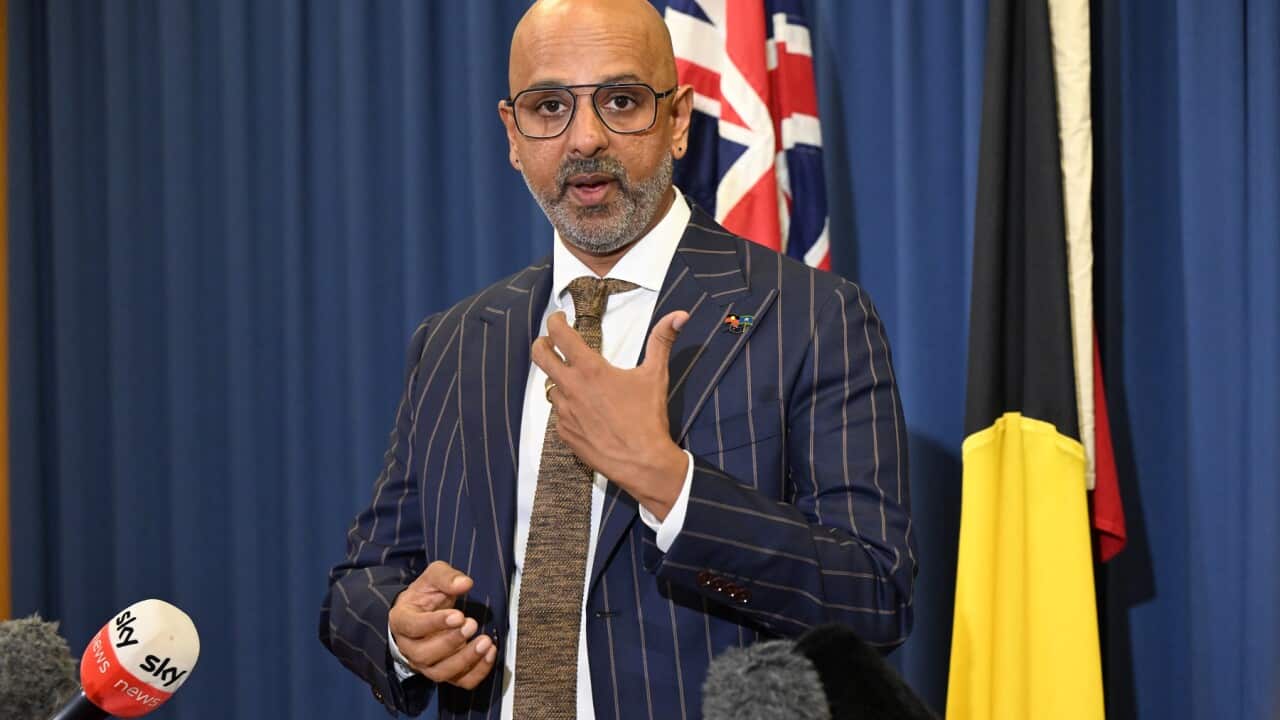
That's Human Rights Commission's Discrimination Commissioner, Giridharan Sivaraman.
He's calling on the government to implement the National Anti-Racism Framework following a recent HRC report,"The Struggle to Be Seen, The Power in Being Heard", which highlights the impact of the conflict in the Middle East has been devastating against communities in Australia.
Since the October 7, 2023 attacks, Jewish, Muslim, Palestinian, Arab and Israeli communities have faced racism.
He says the report shows racism is institutional and it's systemic, and that the target keeps changing but the problem remains.
“If all these communities that are continuously impacted by racism, and if it surges after events overseas, it means we've got a problem over here. It means we need to improve our education, workplace, justice, media, and other systems. The Roadmap is there to improve the systems, it's in the National Anti-Racism Framework - which is a whole of government, a whole of society approach to tackling racism. The problem is that the government has had this for framework for a year and a half and they're yet to endorse it, let alone fund and implement its recommendations.”
A total of 27 sessions ran from 19 February to 15 August 2025 with 476 participants aged between 18 to their early 80s.
Everyone they spoke to came from different backgrounds, but one thing was common.
They felt dehumanised, isolated and that they couldn't be open about their religion in public, or that they have lost faith in institutions, and didn't feel culturally safe.
Commissioner Sivaraman has told SBS the communities have faced more racism at public spaces, online, at work, schools and all aspects of their lives.
“I remember talking to a Muslim woman who wore a hijab who said, everyday I wonder what would happen when I walk out the door, whether someone will say something or do something to me and my family. For some people it was a case of not wanting to log on, and not wanting to look at comments on post or not wanting to have a social media presence because they're worried about the retaliation that might happen. For some it was a daily occurrence of not finding work or struggling to get gainful employment.”
Commissioner Sivaraman says some in the communities felt a sense of betrayal, and having to prove themselves to be a part of Australia.
The report doesn’t cover the period of the Bondi attacks as it was originally scheduled for release in December, but Commissioner Sivaraman says both antisemitism and Islamophobia have risen significantly since the attack.
“I've engaged with Jewish communities, Palestinian communities, Muslim communities after the horrific antisemitic attacks at Bondi, and all of them have told me that racism has increased - it's increased online, it's increased in terms of threats or slurs on the street, that just shows that our they structures are broken. They can't be papered over with motions of social cohesion, they need genuine committed anti racism work from governments and other institutions.”
The report highlights threats to psychological and physical safety which has also led to the erosion of trust in public spaces.
“People feel scared about sending their kids to schools, to public institutions like universities because they're worried about what might happen there. They're worried about catching public transport, because they don't feel safe there. They might even be worried about going to shopping malls or to other places, they're worried about what will happen if they try to engage with public services and providers. So that's the is that domino effect of structural racism, which makes people disengage from society, disengage from services which often compounds the various struggles that they're having at the time.”
It also highlights the legal system entrenched in with racial bias, particularly civil law processes.
Commissioner Sivaraman says they were told people were afraid to access the legal system.
“They didn't think they would be culturally safe, they didn't think they would be understood. Might have been English wasn't their first language, and they wouldn't be able to communicate the issues. They were worried that biases whether it be within police, within judiciary, within whatever level of the legal system would mean that they wouldn't be believed or that they would have negative outcomes, in every step of engagement that's required with the legal system people felt like they won't be safe, they won't be treated fairly and that they wouldn't have the outcomes that they deserve.”
The report also mentions political discourse has a big influence and shapes public attitudes as well as fuelling division.
Commissioner Sivaraman says there are two main points here.
Firstly, the National Anti-Racism Framework calls on all politicians to undergo anti-racism training and to build their racial literacy.
And secondly it requires government to actually name racism, and to pursue solution.
He expressed disappointment in Opposition leader Angus Taylor's comments on migration earlier this week [[15 April, Tuesday]].
“Comments that will incite racism, comments that dehumanise migrants, comments that whole countries and whole populations with a negative brush. And that is all part of the political discourse. Words have consequences, the words of leaders when they dehumanise people and when they dehumanise migrants, there's a direct through line from that to the racist violence that will appear on the street.”
In a statement to SBS, the Office of the Special Envoy to Combat Islamophobia [[OSECI]] says harms from "both antisemitism and Islamophobia often escalate simultaneously and should be addressed consistently."
They have also stated it’s important to look at the evidence base provided by their report, “A National Response to Islamophobia”, alongside HRC's recent report.
They point out that both reports identify a consistent pattern: racism intensifies during periods of heightened global and local tension and agree that both antisemitism and Islamophobia have risen.
CEO of Australian Jewish Association Robert Gregory says people have been living in fear.
“We receive many reports about antisemitic incidents every single day and some of them is truly horrifying to even hear, it begins to affect you. The Australian Jewish community is living in fear. We are hearing from more and more people that they are considering if they even have a future in this country.”
Moones Mansoubi is the Manager of Women, Youth and Communities at Settlement Services Australia [[SSI]], who works as part of the humanitarian settlement program.
SSI provide a range of services from domestic and family violence, supporting newly arrived refugees through humanitarian program, employment support and other range of services including community engagement.
She says the report reflects what their staff and case workers have experienced on the ground for the past two and half years.
“Community members have reported growing pressure to dress in ways that confirms the western norm when they are in public spaces. Especially I can give an example of women wearing hijabs, they have described avoiding public spaces, particularly in some areas due to verbal abuse.”
Bart Shteinma from the Jewish Council echoes a similar sentiment.
“Just as we would see that blaming or holding collective responsibility to an entire group, whether it would be Muslims or Palestinians with that event - just exactly the same case as it would be as Jewish Australians have been conflated with Israel and with its actions.”
He says the political debate almost seems to always deviate from the other concerns.
“Antisemitism is certainly an issue, it's a form of racism, and racism is an incredibly important issue in this country to address. What I think this report does very well is it seeks to link the different forms of racism together, they are linked we know they are linked. But so much of the political debate often seeks to talk about antisemitism completely separate from all these other concerns.”
Mansoubi stresses that implementing the National Anti Racism Framework is important.
“If we want an Australia where everyone belongs, we will have to create a system that protects the belonging. There's no doubt. Which starts with implementing the National Anti Racism Framework.”