
Australia has one of the highest rates of skin cancer in the world with Melanoma being typically the most serious type. But new research has discovered in the last 20 years, deaths from a high risk form of non-melanoma skin cancer have doubled.
Listen to Australian and world news, and follow trending topics with SBS News Podcasts.
TRANSCRIPT
"I thought there was a good chance I could die, I was terrified I was very scared. I remember laying on the couch with my fiance and we just cried for a very long time, for hours."
Joey was first diagnosed with Melanoma when he was 25 years old.
He was featured in a New South Wales government campaign to raise awareness of the potentially fatal skin cancer last year.
But although Melanoma is typically the most serious type of skin cancer in Australia, there's a type of non-melanoma skin cancer causing concern.
Sunshine Coast Health pathologist Dr Andy Dettrick has led a recent study revealing an increase in non-melanoma skin cancer deaths.
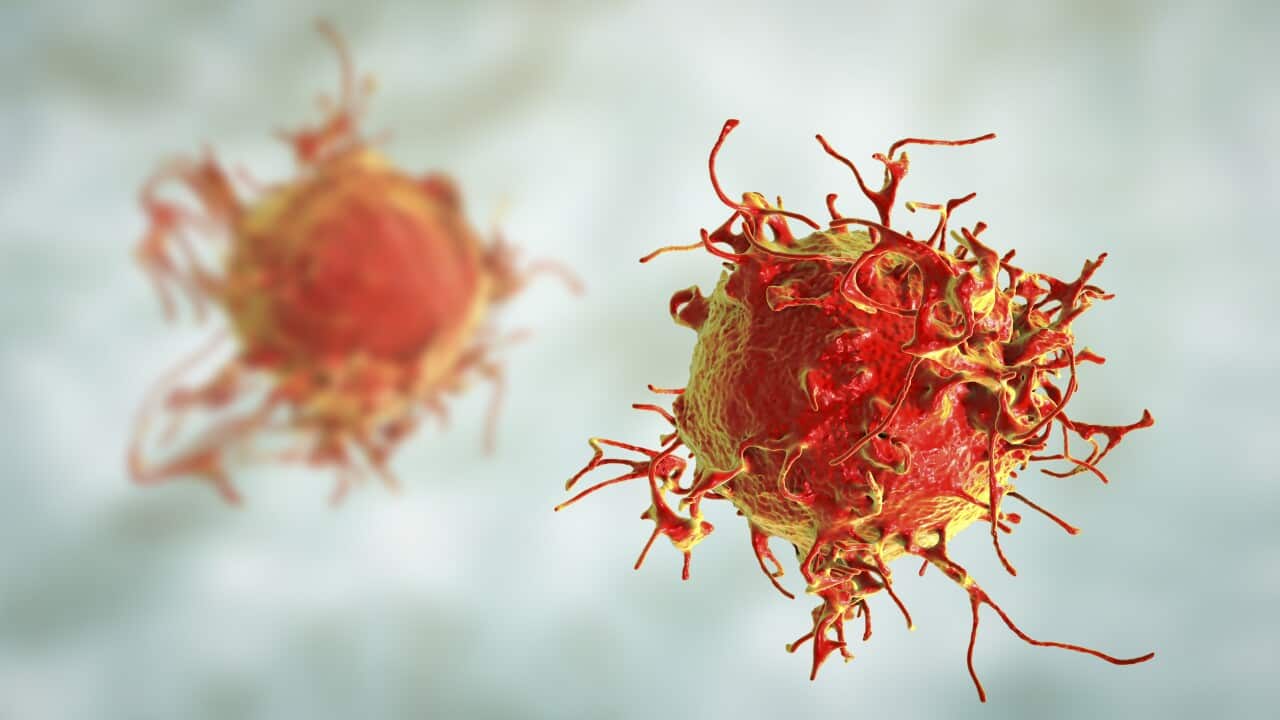
"Principal among those are two tumours called Squamous Cell Carcinoma or SCC or basal cell carcinoma bcc. These are really common, they're the most common human cancers and Australia has the highest incidents in the world, in fact they're so common here 2 in 3 Australians will have at least one incident in their lifetime."
Researchers at the University of the Sunshine Coast have found while cure rates are between 91 and 95 per cent, there's a subgroup which is proving fatal.
They have discovered deaths from SCC have doubled over the past 20 years from 400 to 800.
The true impact of those deaths is believed to be under reported as they aren't recorded on cancer registries.
But Chair of the National Skin Cancer Committee Anne Cust says sun exposure is a main contributor.
"I think there is some complacency among the Australian population particularly the older generation feel that the damage is already done and so they slip, slop, slap, seek and slide which is our prevention messages"
Doctors say there are some visual differences to identify the types of skin cancer.
Most melanomas appear as flat patches or raised nodules and have a brown or black pigment - you may also notice a change in appearance to an existing mole.
SCCs will typically start out as a scaly spot, and generally grow to become a raised tumour without a strong colouring, unlike Melanoma pigmentation.
With early intervention the best chance of treating it before it spreads, Anne Cust says people need to be aware of the dangers the Australian sunshine poses.
"Sun protection is important for people of at any age and from all backgrounds so it's important to be wearing a hat, sunscreen, wearing long sleeve clothing being in the shade and using your sunglasses, people obviously are at different levels of risk."
Researchers hope this latest study will pave the way for improved diagnosis and treatment plans to better patient outcomes.